+86 29 8881 0979

default

3 differences between microwave transmission and radio wave signals

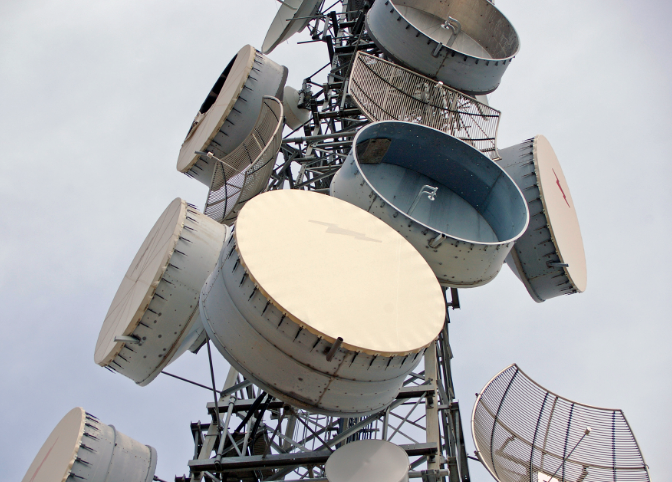
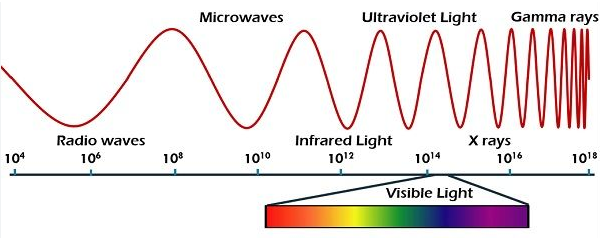
Microwave signals (1-100 GHz) offer high bandwidth (up to 10 Gbps) but require line-of-sight transmission, while radio waves (3 kHz-300 MHz) penetrate obstacles with lower data rates (1-100 Mbps). Microwaves use parabolic antennas for focused beams (1°-5° width), whereas radio employs omnidirectional antennas. Atmospheric absorption (e.g., 60 GHz oxygen absorption) affects microwaves more than radio […]

3 differences between microwave transmission and radio wave signals Read More »
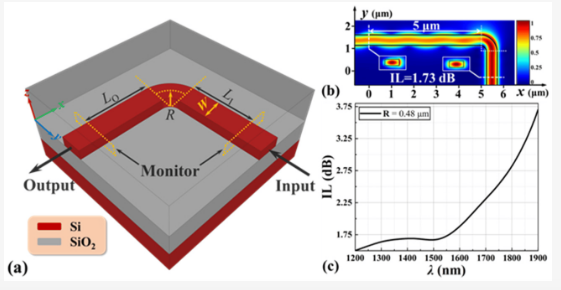
6 side effects of introducing corners and bends into waveguides

Introducing bends in waveguides can cause ​​mode conversion (10-20% power loss)​​, increased ​​VSWR (up to 1.5:1)​​, and ​​attenuation spikes (0.1-3 dB per bend)​​. Sharp corners may trigger ​​higher-order modes​​, ​​field distortion (5-15% phase shift)​​, and ​​arcing risks​​ above 1 kW. Use ​​smooth 90° E/H bends​​ with radius ≥2× wavelength to minimize losses. For ​​Ka-band (26-40

6 side effects of introducing corners and bends into waveguides Read More »

3 differences between GSM antenna and microwave antenna

GSM antennas operate at lower frequencies (900/1800 MHz) for mobile communication, while microwave antennas use higher bands (2-60 GHz) for long-distance data links. GSM antennas have omnidirectional coverage (360°), whereas microwave antennas focus signals directionally (5°-30° beamwidth). Microwave antennas require precise alignment (±1° accuracy) for optimal performance, unlike GSM antennas’ plug-and-play installation. Size and Shape

3 differences between GSM antenna and microwave antenna Read More »

Top 5 reasons parabolic dish antennas are most commonly used in microwave applications

Parabolic dish antennas dominate microwave applications (1-100 GHz) due to their high gain (30-50 dBi achievable with 1-10m diameters), narrow beamwidth (1-5° for precise targeting), excellent directivity (>60dB front-to-back ratio), wide bandwidth (up to 40% fractional bandwidth), and efficient power handling (kW-level capacity). Their simple feed design (horn or dipole at focal point, typically 0.4-0.5×

Top 5 reasons parabolic dish antennas are most commonly used in microwave applications Read More »

The 7 benefits or advantages of an RF waveguide

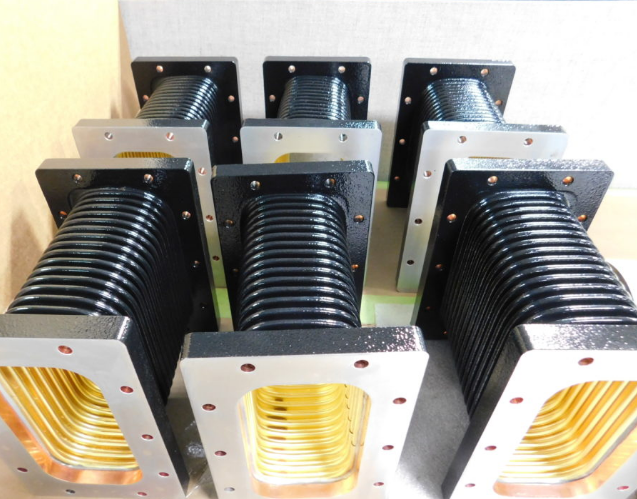
RF waveguide has seven major advantages: 1. Low loss (only 0.1dB/m at 10GHz); 2. High power capacity (supports 10kW continuous wave); 3. Anti-interference (metal enclosed structure); 4. Wide bandwidth (WR-90 covers 8.2-12.4GHz); 5. High temperature resistance (>500℃); 6. High isolation (>80dB); 7. Suitable for millimeter wave transmission, commonly used in radar feeders and satellite communication

The 7 benefits or advantages of an RF waveguide Read More »

4 steps to calculate the cutoff frequency of the waveguide

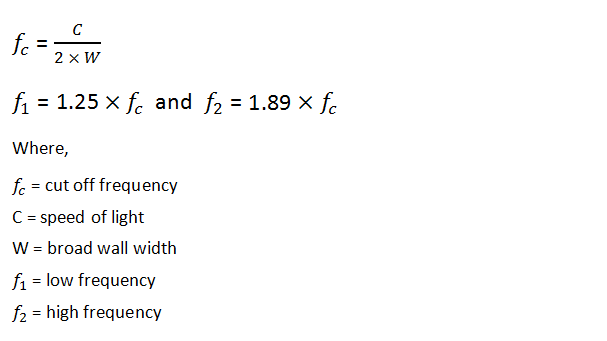
To calculate a waveguide’s cutoff frequency (fc), first measure its width (a, typically 10-100mm for standard waveguides), then determine the mode (e.g., TE10 mode has n=1). Use the formula fc = c/(2a)√(1-(λ/2a)²), where c is light speed (3×10⁸ m/s). For rectangular waveguides, the dominant TE10 mode’s fc occurs when a = λ/2, with practical examples

4 steps to calculate the cutoff frequency of the waveguide Read More »

What 4 factors are useful to consider when comparing the relative ranges of antennas

When comparing antenna ranges, key factors include transmit power (typically 1-100W affecting range exponentially), gain (6dB increase doubles range), frequency (lower frequencies like 900MHz propagate farther than 2.4GHz), and environmental conditions (urban areas may reduce range by 50-70% versus open terrain). Receiver sensitivity (-110dBm to -80dBm) and antenna height (optimal 5-30m elevation) also critically influence

What 4 factors are useful to consider when comparing the relative ranges of antennas Read More »

What are the 5 parameters that can be used to describe the performance of an antenna

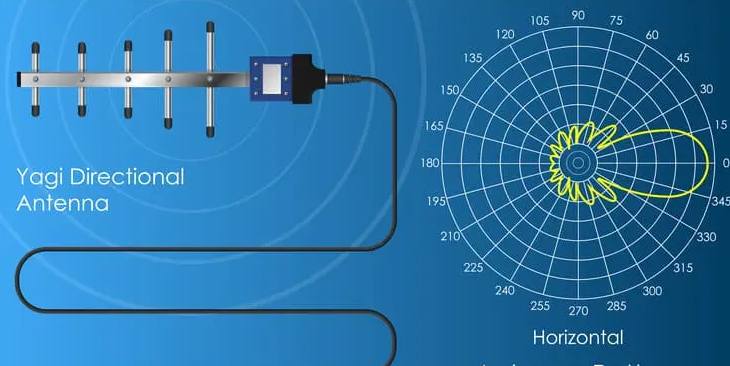
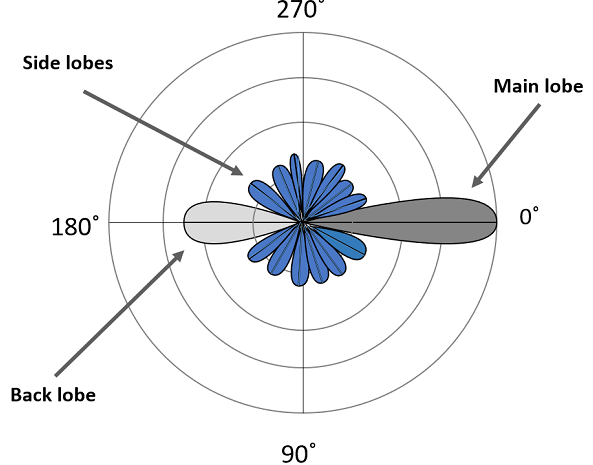
The five key antenna performance parameters are gain (typically 3-15 dBi for directional antennas), bandwidth (e.g., 2.4-2.5 GHz for WiFi), radiation pattern (main lobe beamwidth of 30°-120°), impedance (standard 50Ω matching with <1.5:1 VSWR), and efficiency (60-90% for well-designed antennas). Polarization (linear/circular with axial ratio <3dB) also critically impacts performance, especially in multipath environments at

What are the 5 parameters that can be used to describe the performance of an antenna Read More »

What are the 4 main factors discussed to consider when making an antenna selection

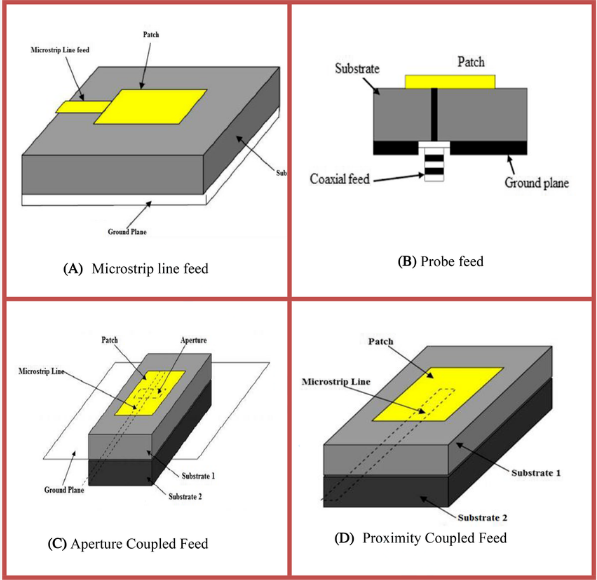
Microstrip patch antennas commonly use four feeding methods: edge feeding (50Ω impedance matching with λ/4 transformer), probe feeding (1-2mm diameter pin at optimal 30-40% patch length), aperture coupling (1-3mm slot with 1-2dB lower cross-polarization), and proximity coupling (2-5mm overlap for wider bandwidth up to 15%). Each method balances bandwidth (2-5% vs 10-15%), complexity, and spurious

What are the 4 main factors discussed to consider when making an antenna selection Read More »

What are the 4 feeding methods for microstrip patch antenna

Microstrip patch antennas commonly use four feeding methods: edge feeding (50Ω impedance matching with λ/4 transformer), probe feeding (1-2mm diameter pin at optimal 30-40% patch length), aperture coupling (1-3mm slot with 1-2dB lower cross-polarization), and proximity coupling (2-5mm overlap for wider bandwidth up to 15%). Each method balances bandwidth (2-5% vs 10-15%), complexity, and spurious

What are the 4 feeding methods for microstrip patch antenna Read More »

Scroll to Top
Blank Form (#3)