
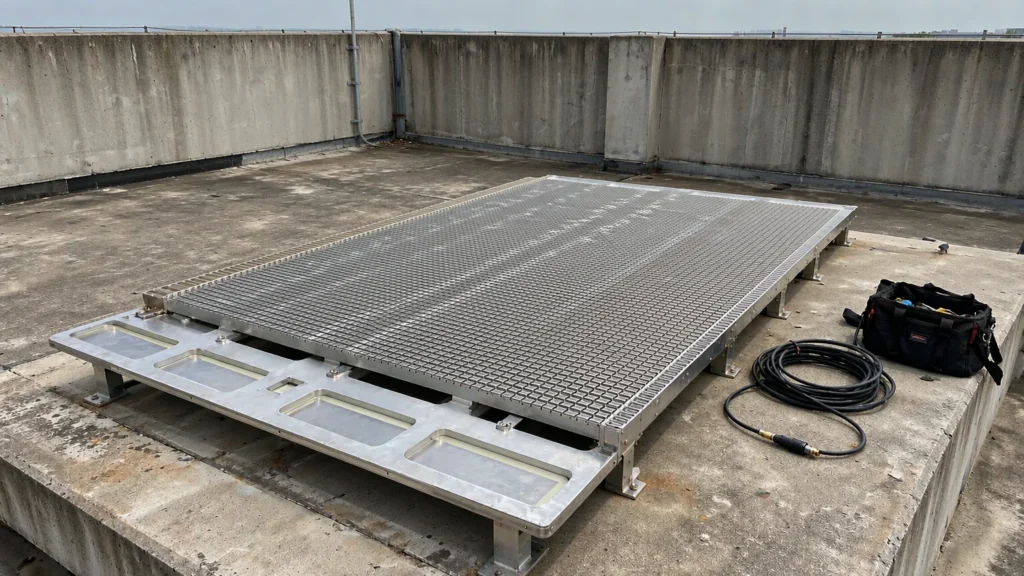
What Is X-Band Radar Used For?
Explore X-band radar uses in ship navigation, weather monitoring, satellite mapping and defence, with verified examples, frequencies and practical limitations.
What Is X-Band Radar Used For? Read More »
Explore X-band radar uses in ship navigation, weather monitoring, satellite mapping and defence, with verified examples, frequencies and practical limitations.
What Is X-Band Radar Used For? Read More »

Ku-band generally covers 12–18 GHz. Compare U.S. satellite uplink, downlink and extended Ku ranges, and learn why some Ku reception starts below 12 GHz.
What Frequencies Does Ku-Band Cover? Read More »

Convert GHz to wavelength in mm, cm or meters with exact free-space formulas, a checked conversion table, worked examples and spreadsheet calculations.
How Do You Convert GHz to Wavelength? Read More »
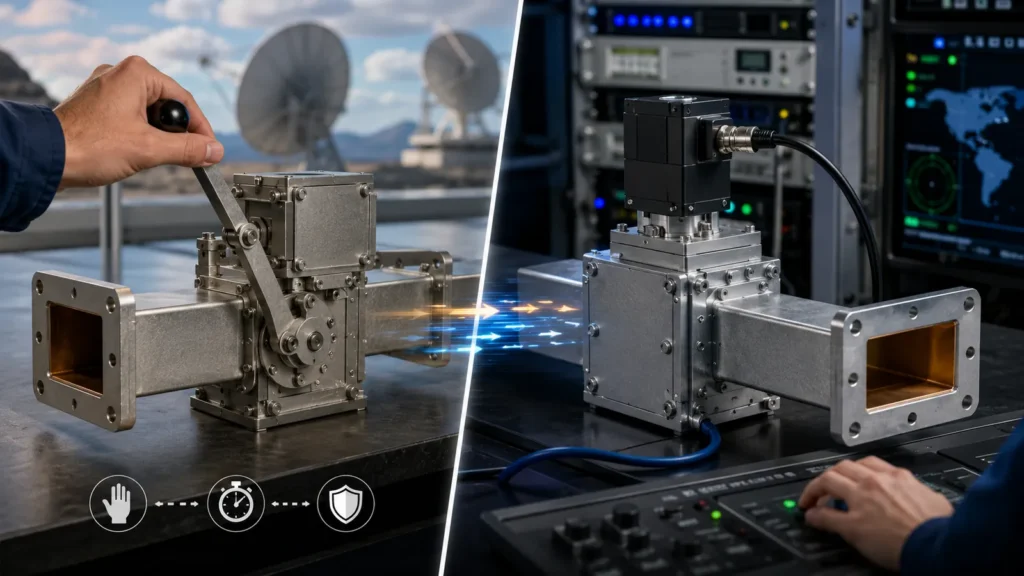
Choose a manual waveguide switch for occasional, accessible changes. Choose an electric switch when the RF path must change remotely, automatically or within a measured time limit. Neither actuation method guarantees lower loss or longer life. Compare the actual RF specifications, switching conditions, feedback and endurance test for the selected model. Requirement Selection consequence Infrequent
Manual vs Electric Waveguide Switches | Control, Speed, Reliability Read More »

Waveguide power handling is limited by both heating and electrical breakdown. Check the continuous or average power, pulse peak power, operating frequency, gas pressure and cooling conditions separately. A low duty cycle reduces average power; it does not prove that the waveguide can withstand the pulse peak. The calculations below are illustrative engineering examples, not
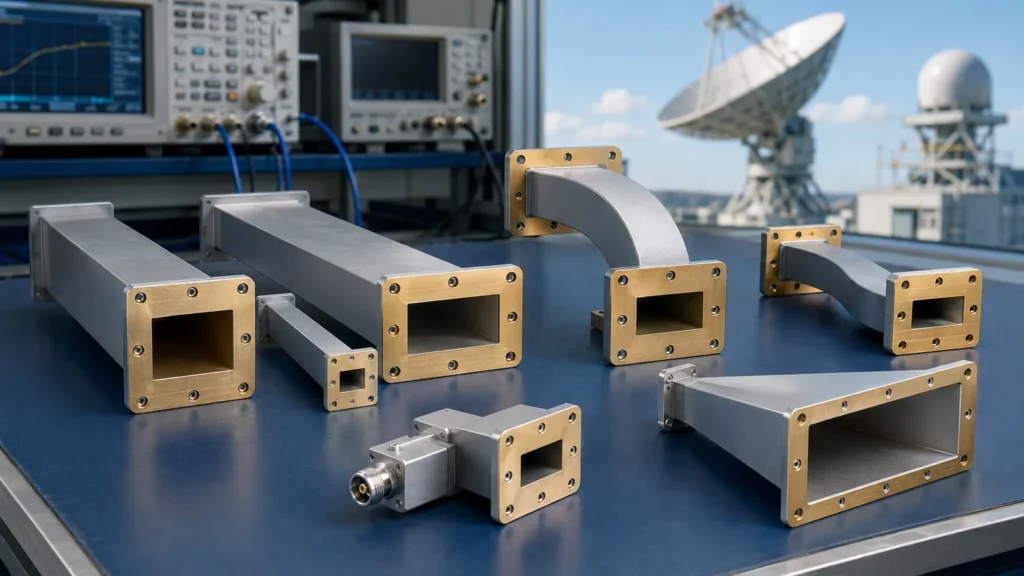
Use the chart below to shortlist a WR size whose specified operating band covers your full frequency range. Then check the actual component’s flange, insertion loss, return loss, peak and average power, and environmental limits. Being above cutoff does not establish acceptable performance. WR Sizes WR Designation Meaning WR identifies rectangular waveguide. Its number approximately
Waveguide Frequency Bands Chart | WR Sizes, Cutoff Frequency, Applications Read More »
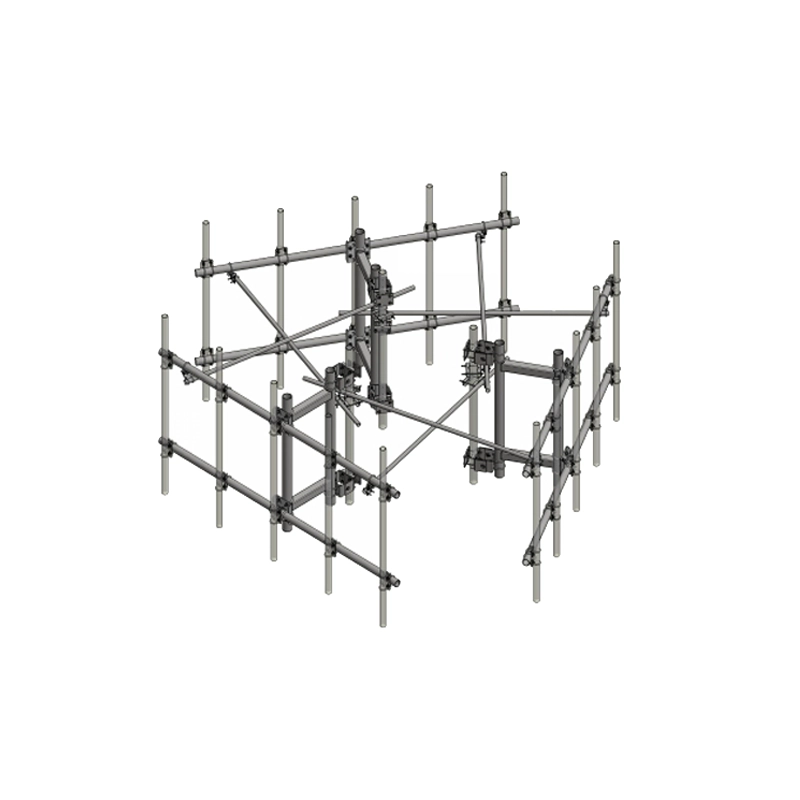
Maintenance of satellite parabolic antenna includes special inspection of WR-15 flange sealing surface (aluminum chips > 50μm will create VSWR > 2.1), substitution of the polytetrafluoroethylene support ring with a torque wrench of 35N·m (the dielectric constant must be maintained at 2.1±0.05), and helium leak detection according to MIL-STD-188-164A standard (threshold 5×10⁻⁸ atm·cc/sec). After level
Sectoral Antenna Maintenance | 7 Base Station Fixes Read More »
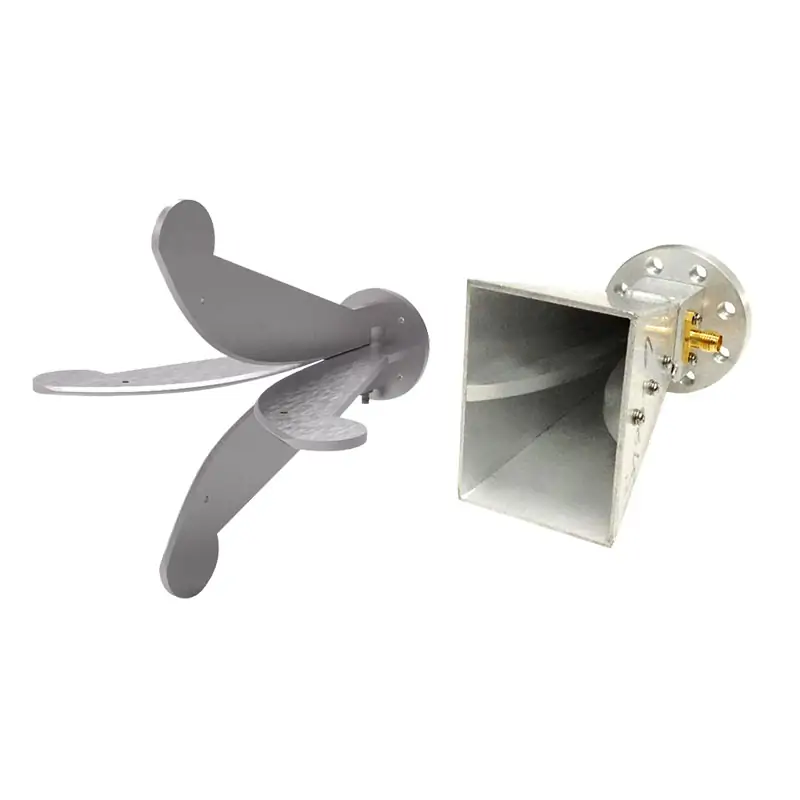
Horns give 22dBi gain at 12GHz with ±15cm installation tolerance, while parabolic dishes are capable of 38dBi gain but require surface accuracy <λ/16. Parabolics demand ≥2D²/λ far-field test distance, while horns have ±3λ axial deviation tolerances. Phase drift: 0.15°C (horn) compared to 0.03°C (parabolic with CFRP). Principle Comparison Last year when we were debugging AsiaSat
What is the difference between horn antenna and parabolic antenna Read More »
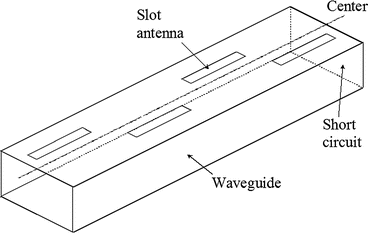
The waveguide slot array improves the radar beam pointing accuracy by 15 times through ±0.25° tilt tolerance control (military AN/SPY-6 standard) and gradient arrangement algorithm, combined with 0.1mm precision groove engraving by diamond turning tool and 200nm gold-nickel plating process, and achieves ±2° phase consistency in the 94GHz frequency band, power tolerance of 50kW pulse,
How Waveguide Slot Arrays Enhance Radar Systems Read More »
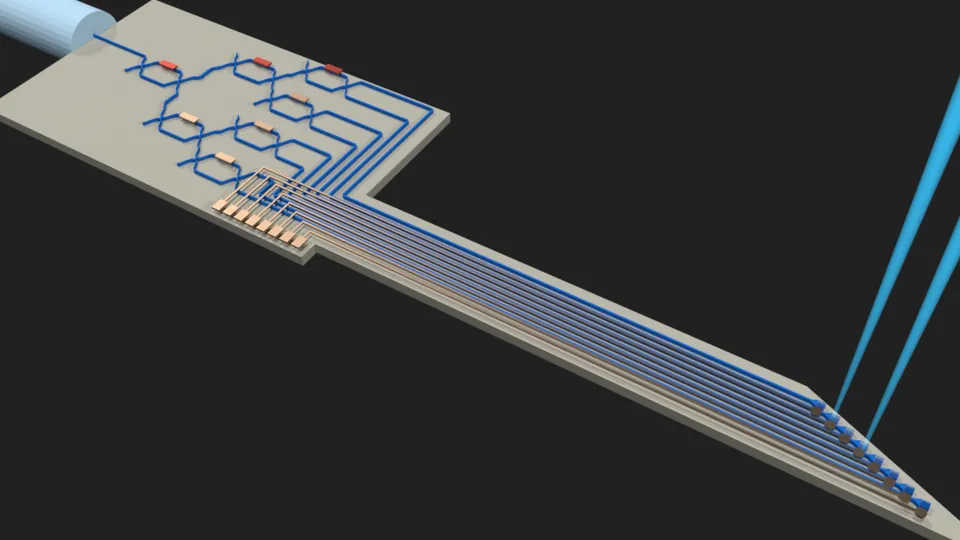
The phased array dynamically adjusts the transmission phase of each unit through a digitally controlled phase shifter. In the Ku band (12-18GHz), a 6-bit phase shifter is used to achieve a step accuracy of 5.6°. Combined with a real-time calibration algorithm, it can complete 0.1° precise beam steering within 200ns, meeting satellite communication requirements. Principle
How Phased Arrays Achieve Beam Steering Read More »