+86 29 8881 0979

default

6 Reasons TM01 and TM10 Modes Can’t Exist in Rectangular Waveguides

TM01/TM10 modes cannot exist in rectangular waveguides because their field equations require zero longitudinal electric field (Ez=0) at all boundaries, which is impossible given the waveguide’s width (a) and height (b) dimensions. The Helmholtz equation solutions demand m,n≥1 for TM modes, making TM00 mathematically invalid. Cutoff frequencies (fc= c/2√[(m/a)²+(n/b)²]) become undefined when m or n=0, […]

6 Reasons TM01 and TM10 Modes Can’t Exist in Rectangular Waveguides Read More »
6 meanings of Te and TM in rectangular waveguide

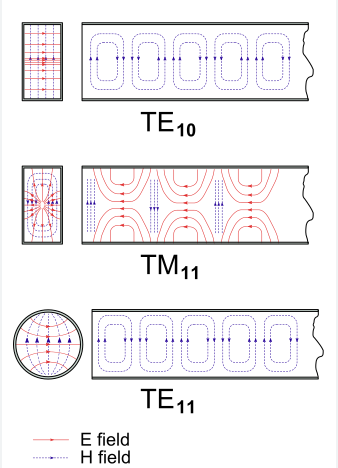
In rectangular waveguides, TE (Transverse Electric) modes have Ez=0 with non-zero Hz (e.g., TE10 dominant mode at cutoff frequency fc= c/2a), while TM (Transverse Magnetic) modes have Hz=0 with non-zero Ez (like TM11 requiring a=b for propagation). TE modes exhibit electric field purely transverse to propagation, with magnetic field having longitudinal components, whereas TM modes

6 meanings of Te and TM in rectangular waveguide Read More »

6 differences between MIMO and array antenna

MIMO antennas use multiple independent data streams (2×2 to 8×8 configurations) for spatial multiplexing, while array antennas combine signals coherently (4-64 elements) for beamforming. MIMO operates at 2-6GHz with 20-100MHz bandwidth, whereas arrays achieve 30° electronic steering at mmWave (28/39GHz). MIMO improves capacity (4x throughput), arrays boost gain (20-30dBi). MIMO needs rich scattering, arrays require

6 differences between MIMO and array antenna Read More »

5 reasons why corrugated horn antennas are more efficient than conventional horn antennas

Corrugated horn antennas achieve 20-30dB side lobe suppression and 98% aperture efficiency versus 50-60% in conventional horns. Their grooved inner walls (λ/4 depth) enable hybrid mode operation, reducing spillover loss by 3-5dB across 1.5:1 bandwidths. The corrugations create symmetrical E/H-plane patterns (±0.5dB variation) ideal for satellite feeds, outperforming smooth-wall horns’ 10-15dB cross-polarization levels at 10-30GHz

5 reasons why corrugated horn antennas are more efficient than conventional horn antennas Read More »

5 kinds of satellite communication antennas

Satellite communication antennas include parabolic dishes (1-10m diameter for 2-30GHz signals), phased arrays (electronically steerable with 100+ elements), helical antennas (3-30dB gain for L/S-band), patch antennas (compact 2-6GHz for LEO satellites), and horn antennas (15-25dBi gain for ground station feeds). Each type offers distinct frequency coverage (UHF to Ka-band), polarization (linear/circular), and tracking capabilities for

5 kinds of satellite communication antennas Read More »

4 difference between near-field and far field EMI

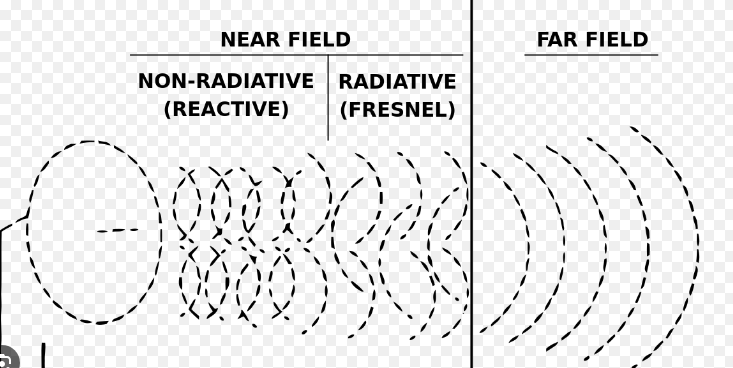
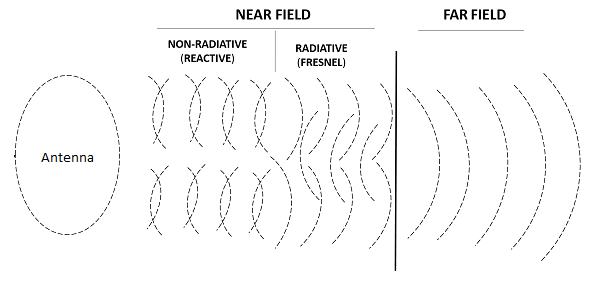
Near-field EMI occurs within λ/2π distance (~4.8cm at 1GHz), showing reactive coupling (magnetic/electric dominance), while far-field EMI propagates beyond this range with electromagnetic waves. Near-field strength drops by 1/r² (electric) or 1/r³ (magnetic), versus far-field’s 1/r. Measurement requires H-field probes (<30MHz) or E-field probes, whereas far-field uses antennas (30MHz-6GHz). Near-field identifies component-level leaks; far-field assesses

4 difference between near-field and far field EMI Read More »

Top 6 Coupler Loops Manufacturers Market Leaders and Innovators

The top 6 coupler loop manufacturers include Murata (30% global RF market share), TDK (Q-factor >1000 at 1GHz), MACOM (military-grade to 40GHz), Anaren (low-loss <0.2dB), Johanson Technology (0402 to 1206 sizes), and Coilcraft (automotive-grade -55°C to +125°C). These innovators dominate 5G/WiFi-6 infrastructure with patented thin-film and multilayer ceramic technologies achieving ±0.5dB coupling accuracy. Top 3

Top 6 Coupler Loops Manufacturers Market Leaders and Innovators Read More »

What is the frequency range of the near-field probe

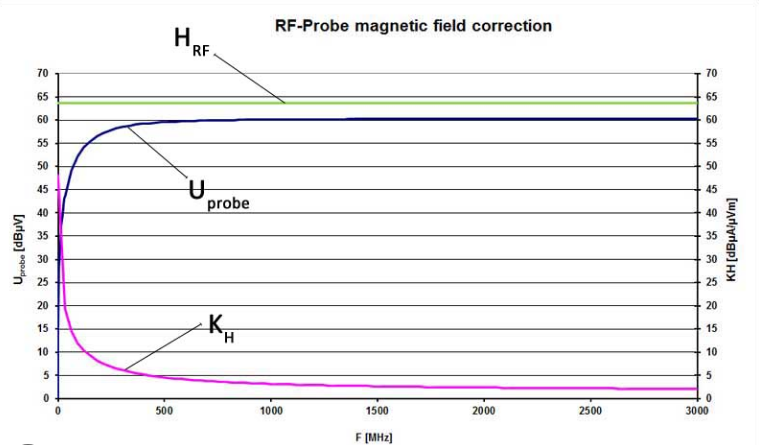
Near-field probes typically operate from 30MHz to 6GHz, with specialized models reaching 40GHz for millimeter-wave applications. Magnetic (H-field) probes use loop diameters (1-5cm) to optimize sensitivity below 1GHz, while electric (E-field) probes employ 1-10mm tips for high-frequency precision. Most maintain ±2dB accuracy when calibrated with a 10V/m reference field at 1GHz. What Near-Field Probes Do

What is the frequency range of the near-field probe Read More »

4 difference between near-field and far-field antenna measurements

Near-field measurements analyze antenna patterns within ​​1-2 wavelengths​​ (λ) using probes, capturing detailed phase/amplitude data for simulations, while far-field tests (beyond ​​2λ²/λ​​) assess radiation efficiency in open ranges or anechoic chambers. Near-field requires precise positioning (±1mm accuracy), whereas far-field needs ​​10+ meters​​ of clearance. Convert near-field data via Fourier transforms for far-field predictions. ​​Distance and

4 difference between near-field and far-field antenna measurements Read More »

Scroll to Top
Blank Form (#3)