+86 29 8881 0979

October 27, 2025

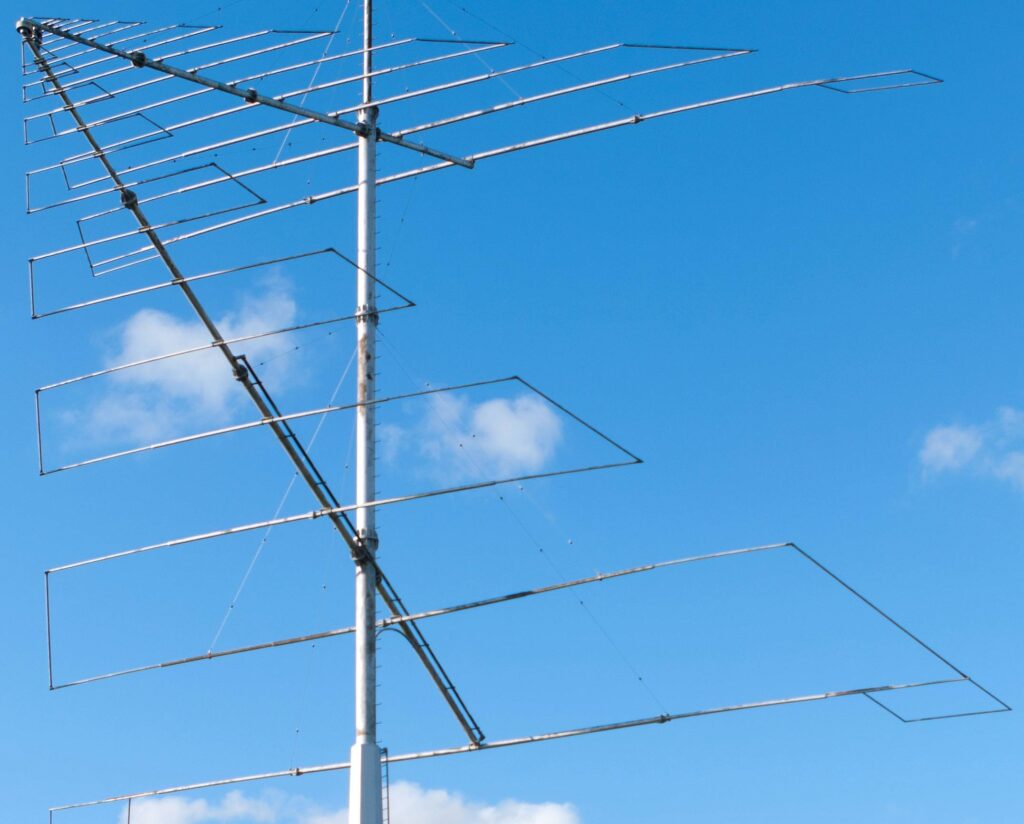
Why Are Log Periodic Waveguide Antennas Popular

Log periodic waveguide antennas thrive due to ultra-wide bandwidth (e.g., 100MHz–40GHz), stable gain (10–15dBi), and low VSWR (<1.8); ideal for 5G/multi-band systems, they maintain directionality across frequencies, reducing deployment complexity vs. narrowband alternatives. Ultra-Wideband Operating Capability Imagine you are an engineer at a base station site facing an upcoming new 5G frequency band (like the […]

Why Are Log Periodic Waveguide Antennas Popular Read More »
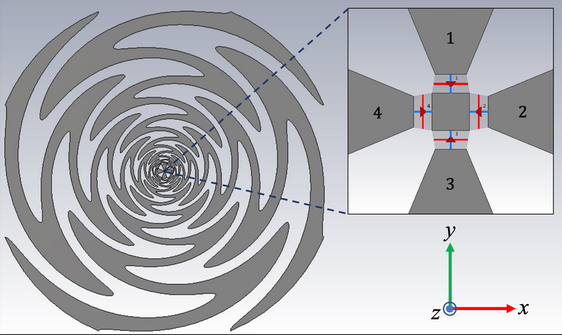
How to Select Sinuous Waveguide Antennas for 5G

Select 5G sinuous waveguide antennas targeting n41/n78 bands (3.3-5GHz), aiming for 15-20dBi gain; ensure ≥800MHz bandwidth and VSWR<1.5 (via HFSS simulation). Choose linear/circular polarization per coverage needs, optimizing impedance for 5G NR efficiency. Understanding the Characteristics of Sinusoidal Waveguide Antennas When selecting antennas for 5G networks, especially in millimeter-wave bands (like 28GHz), the sinusoidal waveguide

How to Select Sinuous Waveguide Antennas for 5G Read More »

Why Use Waveguide Components in Millimeter Wave Systems

Waveguides dominate mm-wave (26-100GHz) systems: their low loss (<0.1dB/m at 60GHz for rectangular types) beats microstrip, while high power handling (10s of W) suits radar/5G; tight field confinement ensures stable, high-fidelity signal transmission critical for long-reach links. Extremely Low Transmission Loss When the frequency jumps from the familiar 5GHz Wi-Fi to millimeter-wave bands like 28GHz,

Why Use Waveguide Components in Millimeter Wave Systems Read More »

How to Choose Waveguide Antennas for Microwave Ovens

Select waveguide antennas matching 2.45GHz operation, using 304 stainless steel for 1200W power tolerance; ensure VSWR<1.2 to cut reflections, test ≥95% coupling efficiency for even heating, and validate corrosion resistance via 85% humidity/500hr exposure. The Role of the Waveguide Antenna in a Microwave Oven The waveguide antenna is a rectangular hollow metal tube with a

How to Choose Waveguide Antennas for Microwave Ovens Read More »

How to Connect a Waveguide Feed to a Dish Antenna

When connecting the waveguide (e.g., WR-90, 1.27×0.64cm), align it with the antenna’s polarization direction. Adjust the feed’s phase center to the paraboloid’s focal point (error < λ/10, <0.3cm at 10GHz). After the flange is snug, tighten the screws evenly to prevent deformation. Principle Anyone in satellite communications knows that a 1.2-meter Ku-band parabolic antenna (f/D=0.6,

How to Connect a Waveguide Feed to a Dish Antenna Read More »

What is a Waveguide Amplifier and How Does it Work

A waveguide amplifier boosts signals via stimulated emission: pump lasers (e.g., 980nm for optical) excite gain media (GaAs/InP) in the waveguide, yielding 20–40dB gain for microwaves/radio, critical in radar/satcom systems for signal strength. What is a Waveguide Amplifier? A waveguide amplifier is a  device for achieving optical signal amplification on integrated photonic chips. It is

What is a Waveguide Amplifier and How Does it Work Read More »

What is the Typical Frequency Range of a Wideband Horn Antenna

Wideband horn antennas typically span 2–18 GHz, some reaching 40 GHz; flared geometry keeps VSWR <1.2 across range, ideal for radar/comms needing multi-octave spectral coverage with stable gain. The Standard Horn A rectangular waveguide operating in the dominant TE10 mode. This waveguide has a fundamental cutoff frequency, f_c, below which signals cannot propagate. For a

What is the Typical Frequency Range of a Wideband Horn Antenna Read More »

What are the Key Specifications for Radio Waveguide

Waveguide key specs: cutoff frequency (e.g., WR-90 hits 6.5GHz for X-band), <0.3dB/m insertion loss (NIST std), and TE10 mode dominance to curb dispersion, ensuring stable high-power signal transmission.​ Fundamental Electrical Specifications The electrical specs are dictated by the waveguide’s physical dimensions and the properties of the materials used. For a standard air-filled rectangular waveguide, like

What are the Key Specifications for Radio Waveguide Read More »

What is a waveguide assembly

A waveguide assembly is a hollow metallic or dielectric structure that transmits microwave signals with minimal loss, typically handling frequencies from 1 to 110 GHz and power levels up to several kilowatts. It functions by precisely confining and guiding electromagnetic waves between components like antennas and transceivers. Why Use Waveguides Instead of Cables? At 10

What is a waveguide assembly Read More »

Scroll to Top
Blank Form (#3)