+86 29 8881 0979

September 2025

How to integrate waveguide components into existing RF systems

To integrate waveguide components into existing RF systems, first align frequencies: verify the system’s operating band (e.g., X-band 8–12GHz) overlaps with the component’s specified bandwidth (e.g., WR-90 covers 8.2–12.4GHz, ≥90% overlap). Use precision-machined flanges (e.g., standard WR-90, ±0.05mm tolerance) and torque to 15N·m with a calibrated wrench to minimize VSWR. Validate via vector network analyzer, […]

How to integrate waveguide components into existing RF systems Read More »
How does electromagnetic waveguide theory apply to antenna design

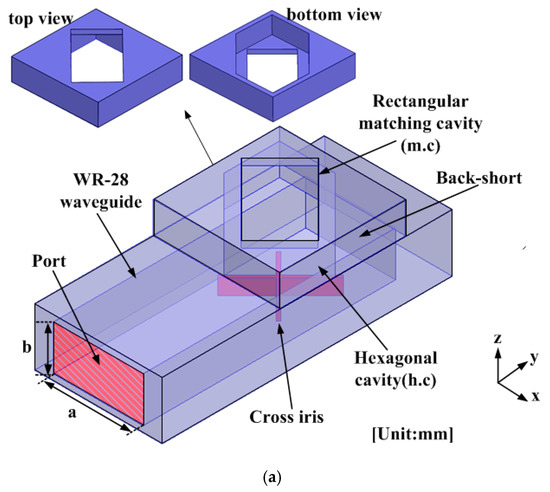
Electromagnetic waveguide theory underpins antenna design by shaping radiation patterns and optimizing feed structures. For example, rectangular waveguides—common in horn antennas—operate at 10 GHz using a 22.86mm height (WR-90 standard), supporting TE10 mode with a cutoff frequency of ~6.56 GHz. Impedance matching via waveguide-to-microstrip transitions reduces VSWR to <1.5, enhancing power transfer efficiency by 20-30%

How does electromagnetic waveguide theory apply to antenna design Read More »

What are the 5 key factors in waveguide component durability

Waveguide component durability hinges on material (316L stainless steel with ≥1000hr ASTM B117 salt spray resistance), surface treatment (2-5μm nickel plating), TIG welding (HAZ ≤0.1mm), operating temp (-65°C to +200°C), and vibration resistance (IEC 61373 Cat1 compliance). Material Selection and Properties For instance, while aluminum (6061-T6) is a popular, cost-effective choice for many commercial applications,

What are the 5 key factors in waveguide component durability Read More »

How to calibrate waveguide feed systems for optimal performance

Calibrate waveguide feeds using a network analyzer: measure VSWR (target ≤1.2) and insertion loss (<0.5dB) across 8–12GHz, adjust phase/amplitude with SOLT standards for impedance matching. Check Connections and Cables These faults rarely cause complete failure but instead introduce intermittent signal loss, phase noise, and return loss degradation, often manifesting as a ​​3 dB to 6

How to calibrate waveguide feed systems for optimal performance Read More »

How to measure waveguide antenna radiation patterns

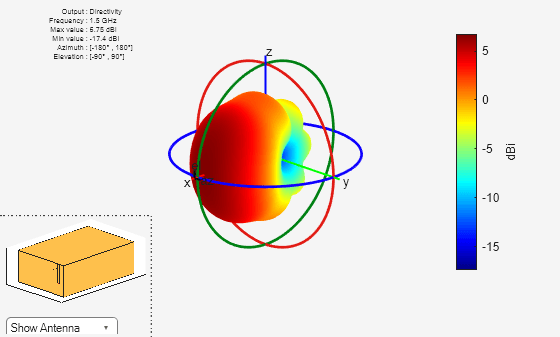
To measure waveguide antenna radiation patterns, use a vector network analyzer in an anechoic chamber: mount the antenna on a precision turntable, scan azimuth/elevation angles at 5° steps (2–40 GHz), capture S-parameters, and apply Fourier transforms to generate 3D pattern data, verifying gain and sidelobe levels. Set Up Test Equipment For a standard X-band waveguide

How to measure waveguide antenna radiation patterns Read More »

How to upgrade traditional antennas with waveguide technology

Upgrade traditional antennas by integrating a waveguide feed to replace the conventional dipole. This modification can boost gain by 3-6 dB and efficiently handle higher frequencies (2-40 GHz) with minimal loss. Precisely couple the waveguide port to the antenna’s feed point and ensure a weatherproof seal to prevent moisture degradation. Waveguide Basics Explained For a

How to upgrade traditional antennas with waveguide technology Read More »

What are the 5 steps to install a waveguide antenna system

To install a waveguide antenna system, first align its frequency (e.g., 12–18GHz for Ku-band) with the feed source to minimize insertion loss (<0.5dB). Secure the antenna to a stable mount using 5–8Nm torque, adjust elevation/azimuth via laser alignment, then calibrate VSWR (<1.5) with a network analyzer, and test signal strength (≥-80dBm) to confirm connectivity. Plan

What are the 5 steps to install a waveguide antenna system Read More »

How to select waveguide components for satellite communication

To select waveguide components for satellite communication, match their frequency (e.g., 12–18GHz for Ku-band) to the system’s operating range to minimize insertion loss (<0.5dB/cm). Use corrosion-resistant stainless steel or aluminum with joint gaps <0.1mm, and verify compliance with ITU-R S.465 standards for optimal signal integrity. Define Your Frequency Band​​ In satellite communications, this typically means

How to select waveguide components for satellite communication Read More »

What are the 5 latest trends in waveguide antenna technology

Recent waveguide antenna trends include: 26-40GHz millimeter-wave integration for 5G/satcom, boosting gain by 15% via 64-element phased arrays; carbon fiber composites reducing weight by 30% while maintaining <0.5dB insertion loss; RIS-enhanced designs improving beam efficiency by 5-8dB; and microchannel cooling enabling ±2℃ thermal stability at 100W/cm² power density. Integrated Antenna Design Over the past three

What are the 5 latest trends in waveguide antenna technology Read More »

How to troubleshoot waveguide antenna performance issues

To troubleshoot waveguide antenna performance, first measure VSWR with a tester (target <1.5; >1.5 indicates connector oxidation or misalignment). Use a 28GHz signal generator: if gain drops >2dB from spec, check waveguide flange joints for gaps. Rotate antenna to verify polarization—stable -30dBm±2dB signals confirm correct alignment. Ensure operation within 25±5℃, <60%RH to avoid thermal expansion

How to troubleshoot waveguide antenna performance issues Read More »

Scroll to Top
Blank Form (#3)