+86 29 8881 0979

August 21, 2025

What are the 7 essential tools for waveguide assembly maintenance

Essential tools for waveguide assembly maintenance include VNA (0.05dB accuracy), torque wrenches (5-50 in-lb), flange alignment pins (0.001″ tolerance), waveguide pressure testers (up to 50 psi), dielectric grease (10^12 Ω·cm), RF leak detectors (1mW sensitivity), and precision gap gauges (0.001-0.010″). ​​Basic Cleaning Brushes​ Waveguide assemblies operate in environments where even ​​0.1mm of debris​​ can cause […]

What are the 7 essential tools for waveguide assembly maintenance Read More »

Top 7 applications of waveguide assemblies in radar technology

Waveguide assemblies are critical in radar systems for high-power signal transmission, enabling precise targeting in military radars (up to 95% efficiency), weather monitoring (GHz-range frequencies), aviation navigation (low-loss <0.1dB/m), satellite communications (Ka-band 26.5-40GHz), maritime surveillance (resistant to corrosion), automotive collision avoidance (77GHz mmWave), and phased array radars (phase-stable beamforming). Their precision machining ensures minimal signal

Top 7 applications of waveguide assemblies in radar technology Read More »

Custom Open Ended Waveguide Probes | Frequency Range 18-110GHz​

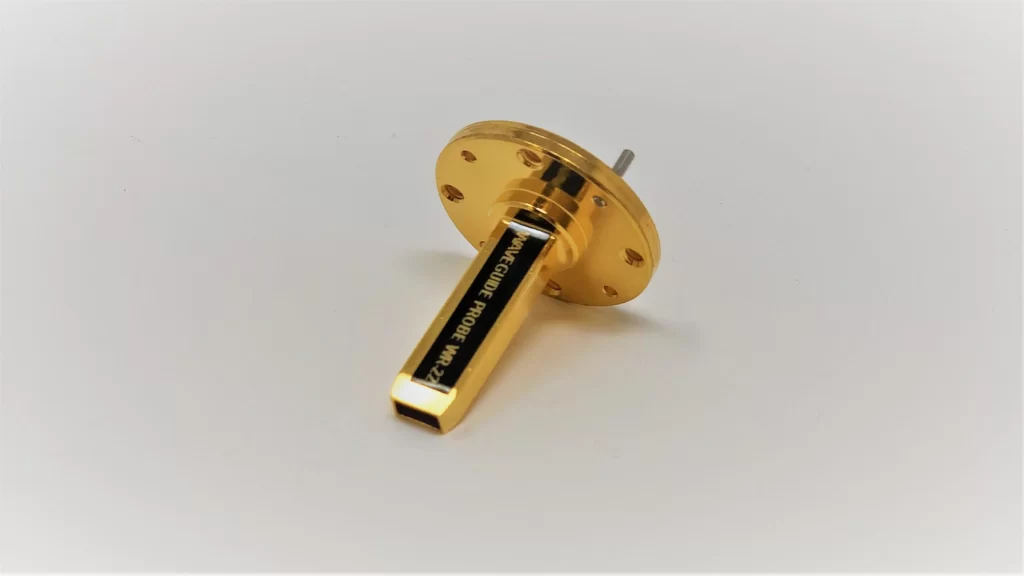
Custom open-ended waveguide probes operate from ​​18-110 GHz​​, offering ​​<1.5:1 VSWR​​ and ​​<0.3 dB insertion loss​​ for precise millimeter-wave measurements. These probes feature ​​WR-10 to WR-8 flanges​​ and require ​​λ/4 waveguide alignment​​ for optimal performance. Ideal for ​​near-field testing and antenna characterization​​, they support ​​TE10 mode propagation​​ with ​​±0.1 mm positional accuracy​​ for high-frequency applications.

Custom Open Ended Waveguide Probes | Frequency Range 18-110GHz​ Read More »

Waveguide-SMA vs. Coaxial Adapters | 3 Critical Differences​

Waveguide-SMA and coaxial adapters differ in frequency range, power handling, and insertion loss. Waveguide adapters typically handle 18-110 GHz with <0.2 dB loss, while SMA coaxial versions cover DC-18 GHz but sustain higher losses (0.5 dB). For millimeter-wave applications above 40 GHz, waveguide adapters provide better performance with VSWR <1.2:1, whereas SMA connectors degrade to

Waveguide-SMA vs. Coaxial Adapters | 3 Critical Differences​ Read More »

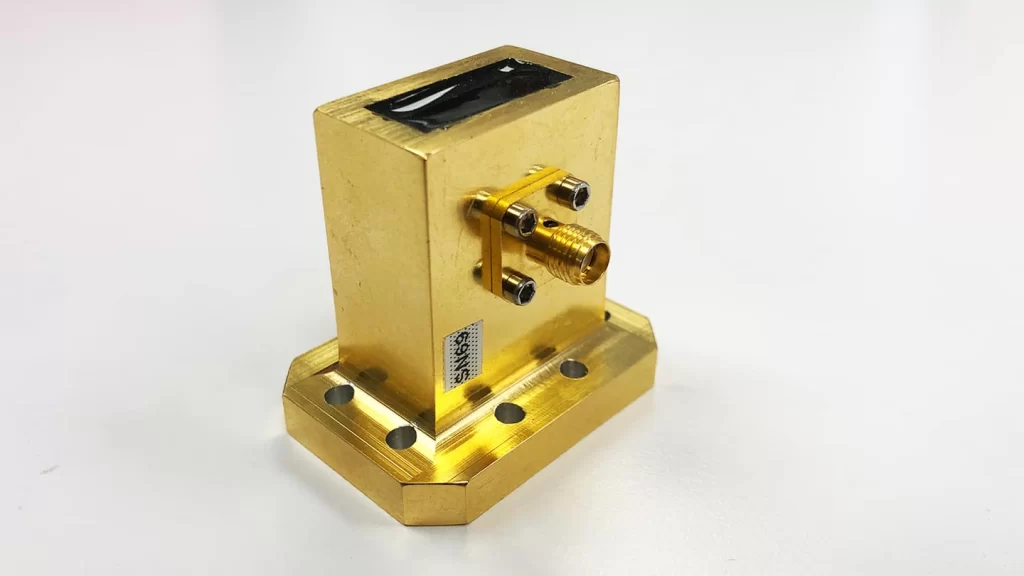
SMA to Waveguide Adapters | 5 Key Specifications You Need to Know​

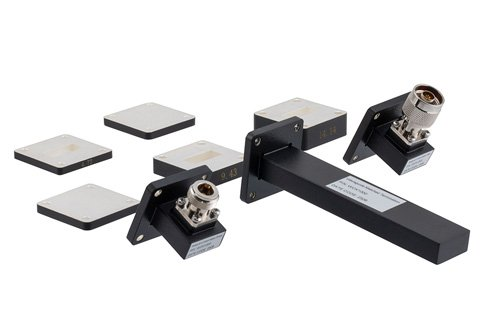
When selecting SMA-to-waveguide adapters, prioritize ​​frequency range​​ (e.g., 18–26.5GHz for WR-42), ​​VSWR (<1.25:1)​​, and ​​insertion loss (<0.3dB)​​. Choose ​​gold-plated brass connectors​​ for corrosion resistance and ensure ​​0.9Nm torque​​ on SMA threads to prevent signal leakage. Verify ​​TE10 mode purity​​ with >30dB suppression of higher-order modes, and opt for ​​PTFE-loaded waveguide sections​​ to minimize ​​thermal drift

SMA to Waveguide Adapters | 5 Key Specifications You Need to Know​ Read More »

Waveguide Calibration | 5 Key Steps for Accurate RF Measurements​

For precise waveguide calibration, first ​​clean all flanges​​ with 99% isopropanol to remove particles affecting ​​0.01dB repeatability​​. Use ​​torque wrenches​​ (e.g., 12 in-lb for WR-90) on flange bolts to prevent ​​0.05dB insertion loss shifts​​. Perform ​​SOLT calibration​​ with ​​3.5mm standards​​ up to 26.5GHz, then verify with ​​±0.5dB​​ thru-line measurements at ​​23°C±1°C​​ to ensure ​​VSWR <1.15​​.

Waveguide Calibration | 5 Key Steps for Accurate RF Measurements​ Read More »

​​N-Type to Waveguide vs SMA to Waveguide | 5 Performance Differences

N-Type to waveguide adapters handle up to 18GHz with 0.3dB insertion loss, while SMA versions max at 12GHz with 0.5dB loss; N-Type’s threaded coupling provides superior vibration resistance, whereas SMA’s compact size suits space-constrained millimeter-wave applications below 6GHz. Frequency Range Limits N-type connectors typically support frequencies up to ​​18 GHz​​, while SMA connectors can handle

​​N-Type to Waveguide vs SMA to Waveguide | 5 Performance Differences Read More »

How to test antenna range

​To test antenna range, use a signal generator and spectrum analyzer, measure RSSI at 1km intervals up to 10km in open terrain, maintaining 2.4GHz/5GHz test frequencies with 5dBi gain antennas at 1m elevation, recording dBm drop-off beyond line-of-sight obstacles.  ​Choose Test Location​​ Picking the right spot for antenna testing is ​​the most critical step​​—get it

How to test antenna range Read More »

Is a full wave antenna better

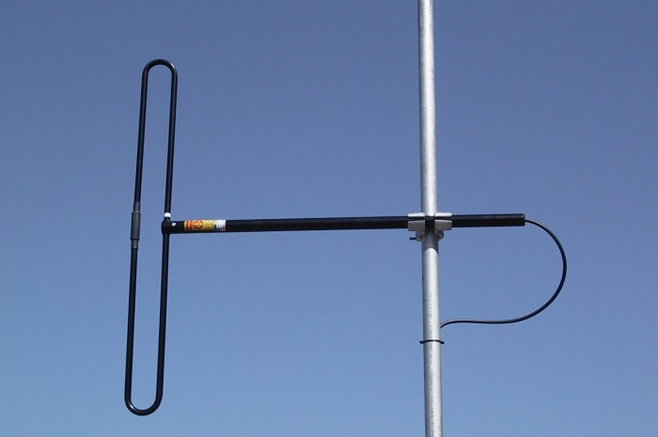
​A full-wave antenna (λ-length) offers higher gain (~3 dB over half-wave) and directivity but requires precise tuning (e.g., 468/f MHz for wire dipoles) and more space, making it ideal for long-range HF/VHF applications with sufficient installation area.​ What is a Full Wave Antenna?​​ A ​​full wave antenna​​ is a type of radio antenna where the

Is a full wave antenna better Read More »

5 Key Factors When Choosing a Coax to Waveguide Adapter​

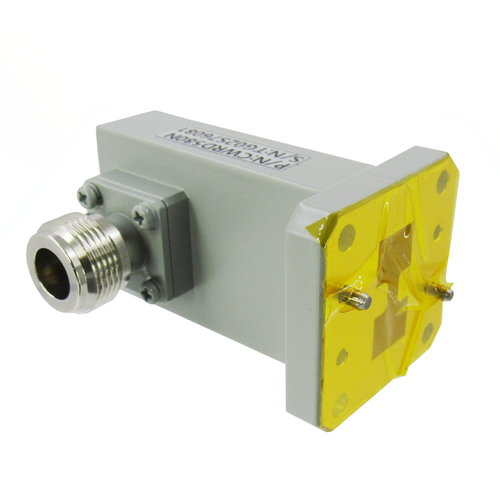
When selecting a coax-to-waveguide adapter, prioritize frequency range (e.g., 18-26.5 GHz for K-band), VSWR (<1.25:1), insertion loss (<0.3 dB), connector type (SMA/N), and proper flange alignment (UG-387/U for WR-42) to ensure optimal signal integrity. ​​Frequency Range Check​ When picking a coax-to-waveguide adapter, the ​​frequency range​​ is the most critical factor—get it wrong, and your system

5 Key Factors When Choosing a Coax to Waveguide Adapter​ Read More »

Scroll to Top
Blank Form (#3)