+86 29 8881 0979

July 2025

Conical waveguide applications | 5 common use cases

Conical waveguides are widely used in microwave and RF systems for impedance matching, achieving 90%+ energy transmission efficiency between mismatched components. They enable ultra-wideband radar (2-18 GHz) by minimizing signal reflection. In satellite communications, they reduce loss in Ka-band (26-40 GHz) feeds. Medical devices leverage them for precise RF ablation (6-10 MHz), while industrial systems […]

Conical waveguide applications | 5 common use cases Read More »
Preventing copper waveguide corrosion | 5 proven methods

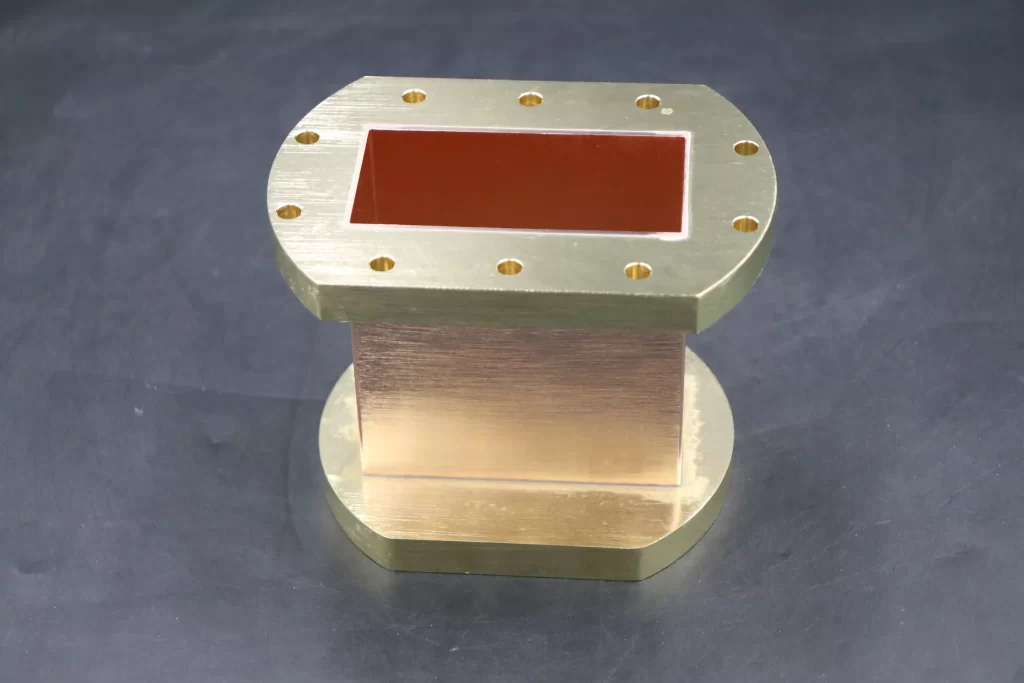
To prevent copper waveguide corrosion, apply a 5-10 µm gold plating layer, which reduces oxidation while maintaining conductivity (resistivity <2.44 µΩ·cm). Nitrogen purging at 1-2 psi prevents moisture ingress, and desiccant packs (silica gel with <40% RH) are effective for sealed systems. Regular IPA (99% isopropyl alcohol) cleaning removes contaminants, while conductive silver epoxy (0.001

Preventing copper waveguide corrosion | 5 proven methods Read More »

Millimeter wave propagation challenges | 5 common issues

Millimeter wave (mmWave) propagation faces significant challenges due to high atmospheric absorption and sensitivity to obstacles. Oxygen absorption peaks at 60 GHz (15 dB/km), while rain attenuation can exceed 20 dB/km in heavy downpours. Building penetration losses range from 40-80 dB, requiring dense small-cell deployments (200-300m spacing). Beamforming alignment must maintain <1° precision for 28

Millimeter wave propagation challenges | 5 common issues Read More »

Rigid waveguide material selection | 4 criteria to use

When selecting rigid waveguide materials, consider conductivity, thermal stability, mechanical strength, and cost. Copper (5.8×10⁷ S/m conductivity) is ideal for low-loss applications but oxidizes above 150°C. Aluminum (3.5×10⁷ S/m) offers lightweight alternatives with 60% lower weight than brass. For high-power systems (e.g., radar), silver-plated brass reduces surface roughness to <0.1µm, cutting attenuation by 15%. Stainless

Rigid waveguide material selection | 4 criteria to use Read More »

Aluminum vs copper waveguide | 7 performance differences compared

Aluminum waveguides offer 30-40% weight reduction and 5-15% cost savings versus copper, but with 20-30% higher signal loss above 18 GHz. Copper provides superior conductivity (100% IACS vs aluminum’s 61%), reducing attenuation by 0.5-2 dB/meter in high-frequency applications. Aluminum’s oxidation resistance lowers maintenance, while copper’s solderability simplifies assembly. For mmWave systems (24-100 GHz), copper’s performance

Aluminum vs copper waveguide | 7 performance differences compared Read More »

Flexible waveguide price factors | 5 cost drivers explained

Flexible waveguide pricing depends on material (PTFE vs. metallic alloys, ±15-30% cost variance), frequency range (higher frequencies increase cost by 20-40%), customization (bespoke designs add 25-50%), production volume (bulk orders reduce unit cost by 10-25%), and coating requirements (e.g., gold plating adds $50-200 per unit). Lead times under 4 weeks may incur rush fees. ​​Material

Flexible waveguide price factors | 5 cost drivers explained Read More »

Conical waveguide benefits | 4 technical advantages

Conical waveguides offer broadband performance (e.g., 2:1 frequency ratio), low VSWR (<1.2:1), smooth mode transitions (reducing reflections by 20–30 dB), and flexible polarization handling (supporting TE/TM modes). Their tapered design minimizes impedance mismatch, making them ideal for feeds in parabolic antennas and radar systems. ​​Wider Frequency Coverage​ Conical waveguides outperform traditional rectangular or circular waveguides

Conical waveguide benefits | 4 technical advantages Read More »

How to choose rectangular waveguide sizes | 5 key factors

When selecting a rectangular waveguide size, consider the operating frequency (e.g., WR-90 for 8.2–12.4 GHz), cutoff frequency (ensure it’s 25–30% below the operating frequency), power handling (e.g., WR-112 handles 1.5 MW at 2.45 GHz), attenuation (lower for longer runs, like 0.1 dB/m in WR-62), and mechanical constraints (e.g., WR-430’s 4.3×2.15″ size for high power). Match

How to choose rectangular waveguide sizes | 5 key factors Read More »

Antenna Couplers vs Splitters | 3 differences explained

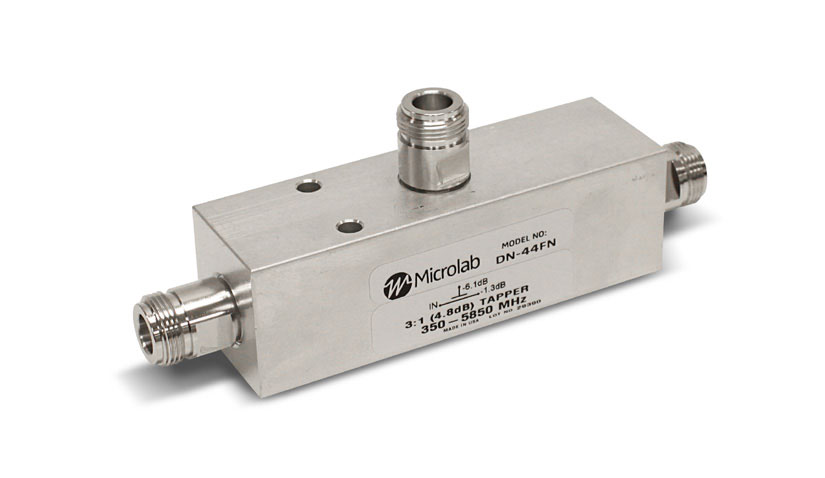
​Antenna couplers ​​preserve signal strength​​ with ​​<1dB insertion loss​​, while splitters ​​divide power evenly​​, causing ​​3–6dB loss per output port​​. Couplers ​​isolate ports (30–40dB isolation)​​ to prevent interference, whereas splitters have ​​minimal isolation (10–20dB)​​, risking ​​cross-talk in multi-device setups​​. Frequency range differs—couplers handle ​​0.5–40GHz with ±0.5dB flatness​​, but splitters typically support ​​0.1–6GHz with ±2dB variance​​.

Antenna Couplers vs Splitters | 3 differences explained Read More »

Scroll to Top
Blank Form (#3)