+86 29 8881 0979

July 2025

How to test microwave oven waveguide safety | 4 steps

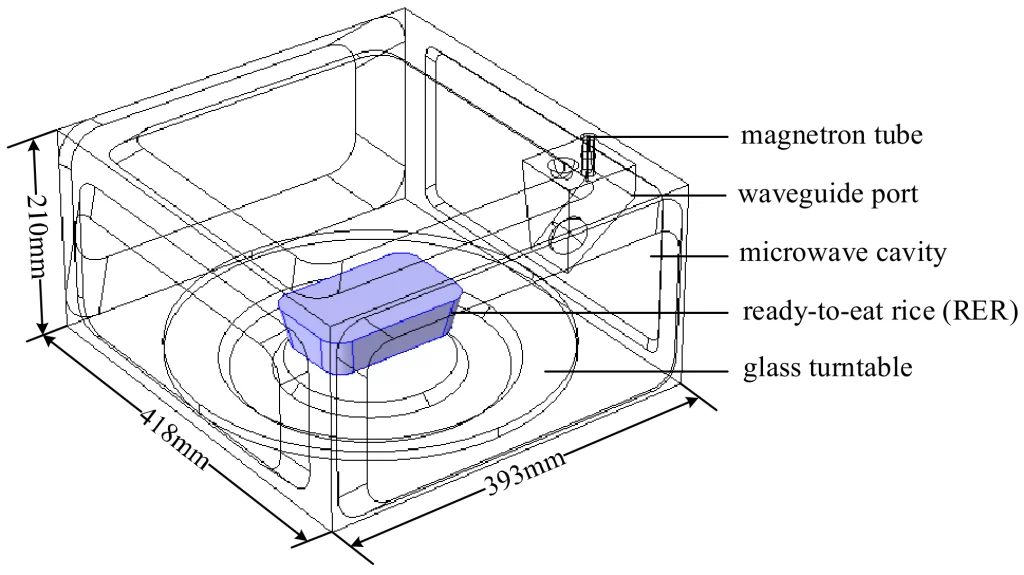
To test microwave oven waveguide safety, first inspect for physical damage (dents/corrosion) using a flashlight. Next, check continuity with a multimeter (resistance <1Ω). Then, perform a microwave leakage test (≤5 mW/cm² at 5 cm) using a calibrated detector. Finally, verify arcing by running the oven empty for 30 sec—abnormal sparks indicate failure. Check for visible […]

How to test microwave oven waveguide safety | 4 steps Read More »
MMW antenna design challenges | what are 7 fixes

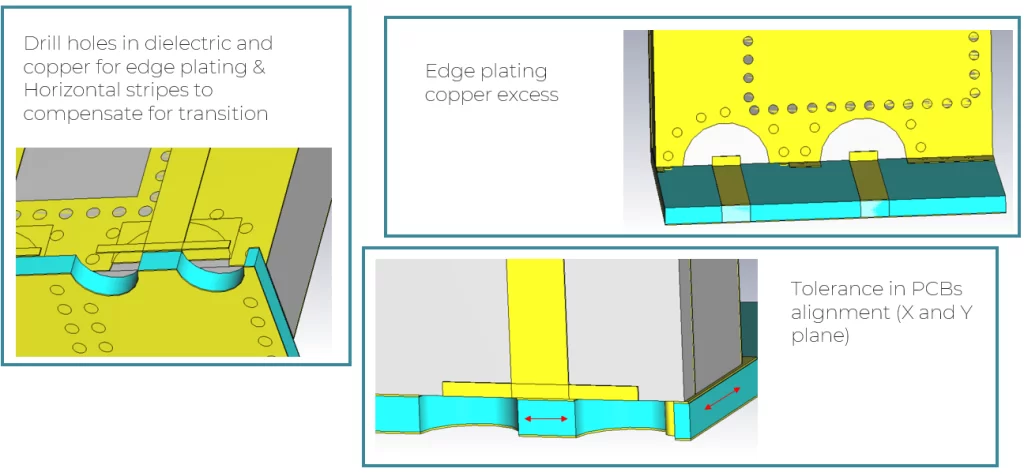
Millimeter-wave (mmWave) antenna design faces challenges like high path loss (60–100 dB/km at 28/60 GHz), which is mitigated using high-gain arrays (20–30 dBi). Surface wave interference is reduced via substrate-integrated waveguides (SIW), while PCB tolerances (±5µm) require laser etching. Beam squint is corrected with true-time-delay (TTD) networks, and thermal drift is managed via low-CTE materials

MMW antenna design challenges | what are 7 fixes Read More »

How to choose radar horn antenna | 7 key factors

​When selecting a radar horn antenna, prioritize frequency range (e.g., 8–40 GHz for precision), gain (15–25 dBi for long-range), and beamwidth (10°–60° for coverage). Consider material (aluminum for lightweight, copper for conductivity), polarization (linear/circular), VSWR (<1.5:1 for efficiency), and environmental rating (IP67 for harsh conditions). Validate with 3D EM simulations before deployment. ​ Size and Frequency

How to choose radar horn antenna | 7 key factors Read More »

What are the waveguides frequency bands | 10 antenna frequency bands

Waveguides cover bands like ​​WR-90 (8.2-12.4 GHz, X-band)​​ and ​​WR-15 (50-75 GHz, V-band)​​, extending to ​​325 GHz (WR-3)​​. Key antenna bands include ​​HF (3-30 MHz)​​, ​​VHF/UHF (30 MHz-3 GHz)​​, ​​L-band (1-2 GHz)​​, ​​C/X/Ku-band (4-18 GHz)​​, ​​Ka/V-band (26.5-75 GHz)​​, and ​​E-band (60-90 GHz)​​. Waveguide dimensions follow fc = c/2a (cutoff frequency), while antennas use ​​50Ω impedance​​

What are the waveguides frequency bands | 10 antenna frequency bands Read More »

What materials and structures are generally preferred for waveguides

Waveguides typically use ​​high-conductivity metals​​ like oxygen-free copper (≥99.95% purity) or aluminum (6061-T6 alloy) for ​​low-loss transmission​​ (<0.01 dB/m at 10 GHz). ​​Rectangular structures​​ dominate 80% of applications due to ​​TE10 mode stability​​, while ​​dielectric-filled circular waveguides​​ (e.g., PTFE-lined) offer ​​30% wider bandwidth​​. ​​ Gold-plated joints​​ (3-5μm thickness) ensure <0.1Ω contact resistance, and ​​corrugated designs​​

What materials and structures are generally preferred for waveguides Read More »

Rigid waveguide installation | 7 practical step-by-step tips

​For rigid waveguide installation, begin by aligning flanges within 0.05mm tolerance using precision shims. Secure joints with beryllium-copper screws torqued to 0.9-1.2 N·m in crisscross patterns. Maintain ≥2x inner width spacing from obstructions to prevent mode distortion. Apply silver-loaded conductive grease (μΩ-level resistance) on contact surfaces before helium leak testing (<1×10⁻⁶ Pa·m³/s). Support every 1.5-2.5m

Rigid waveguide installation | 7 practical step-by-step tips Read More »

Cleaning metallic waveguide | 6 essential maintenance steps

Proper metallic waveguide maintenance requires anhydrous isopropyl alcohol (99.9% purity) and lint-free swabs for removing oxide buildup. Always pre-inspect with borescopes (0.5-10mm diameter) checking for ≥0.25mm pitting. Use nitrogen purging (15-20 psi) after cleaning to prevent moisture. For corrosion prevention, apply thin silicone-free dielectric film (5-10µm thickness). Test insertion loss (≤0.1dB variance) and VSWR (<1.25:1)

Cleaning metallic waveguide | 6 essential maintenance steps Read More »

Square vs Circular Waveguide Differences | 5 Comparisons

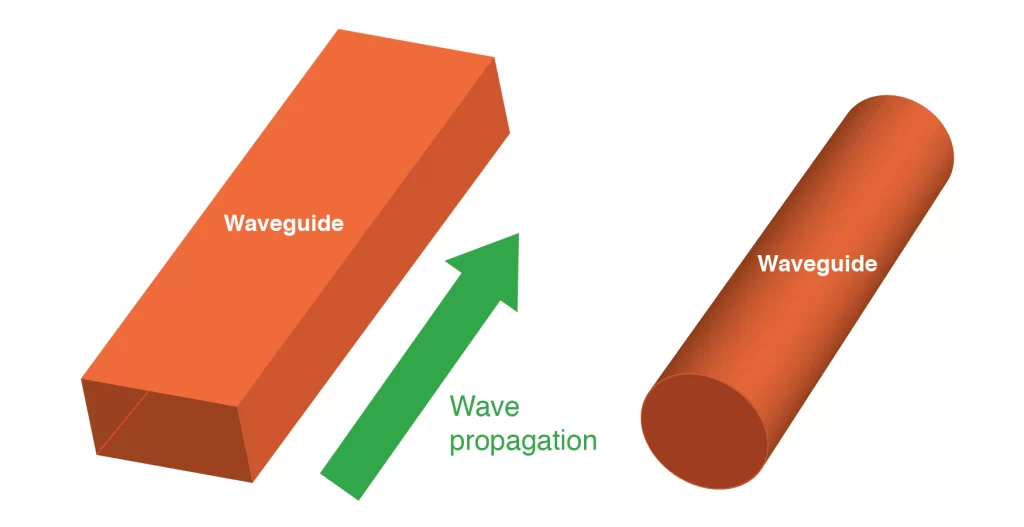
Square and circular waveguides differ in several key aspects. Square waveguides, with dimensions like 23 mm × 10 mm, support dual-polarization modes (TE10/TE01) but suffer 15% higher attenuation than circular ones (typically 0.1 dB/m at 10 GHz). Circular waveguides (e.g., 50 mm diameter) excel in low-loss long-distance transmission (0.08 dB/m) and handle higher power (30%

Square vs Circular Waveguide Differences | 5 Comparisons Read More »

Why use millimeter waveguide technology | 5 key benefits

Millimeter waveguide technology offers five key benefits: it enables ultra-high bandwidth (100+ Gbps) with low loss (0.03 dB/m at 60 GHz), supports compact waveguide sizes (e.g., 3mm for 90 GHz operation), provides 30% better signal integrity than coaxial cables above 40 GHz, allows efficient power handling (kW-level in E-band), and simplifies dense deployments due to

Why use millimeter waveguide technology | 5 key benefits Read More »

How to reduce waveguide loss | 5 effective techniques

To reduce waveguide loss, use ultra-smooth inner surfaces (Ra <0.1µm) to minimize conductor loss, which can account for 30% of total attenuation. Optimize TE10 mode operation at 90% cutoff frequency for lowest dispersion. Apply gold plating (3-5µm thickness) in millimeter-wave bands to reduce surface resistance by 60%. Implement precise flange alignment (≤25µm offset) to prevent

How to reduce waveguide loss | 5 effective techniques Read More »

Scroll to Top
Blank Form (#3)