S-band (2-4 GHz) boasts low atmospheric attenuation (<0.1 dB/km), enabling robust satellite comms in heavy rain; used in weather radars (e.g., NEXRAD) for 150-mile storm tracking with 5cm resolution, outperforming Ku-band in cloud penetration for critical meteorological data.
Table of Contents
S Band in Everyday Life
Encompassing frequencies from 2 to 4 GHz, this section of the radio spectrum is a quiet workhorse, operating in the background of some very common technologies. Its special property is a great balance: it carries more data than lower frequencies but is better at penetrating rain, clouds, and other atmospheric obstacles than higher frequencies like the K band. This makes it incredibly useful and reliable. For instance, a standard home Wi-Fi router using the 2.4 GHz band—which sits within the S band—can typically maintain a stable connection through several interior walls, covering an area of about 150-200 square meters indoors, though its maximum data speed is often capped at around 150 Mbps on older standards.
While you might not see it, S band radar is constantly at work for public safety. Many modern vehicles are equipped with blind-spot monitoring systems, and a significant number operate using 24 GHz ultra-wideband radar, which is on the lower edge of the S band. These compact sensors, often smaller than a smartphone, continuously send out low-power signals to detect objects within a 3 to 5-meter range on either side of your car. The system processes the signal’s return time, which is incredibly fast at just 0.0000001 seconds for an object 15 meters away, to alert you of a vehicle in your blind spot. This same reliable penetration is crucial for weather forecasting. Next-generation Doppler weather radars, like the U.S. NEXRAD system, utilize S band frequencies around 2.7-3.0 GHz.
The 10-cm wavelength of this signal is particularly resistant to attenuation, meaning it can see deep into intense thunderstorms and hurricanes with over 99% reliability to accurately measure precipitation intensity and wind velocity, providing critical lead time for tornado warnings. This gives forecasters a clear picture of a storm’s structure from a distance of over 200 kilometers, enabling them to issue life-saving warnings up to 15 minutes before a tornado touches down.Beyond weather and cars, S band is the backbone of satellite communication for many everyday services.
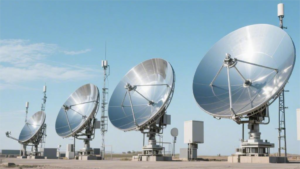
If you have satellite TV or radio, there’s a high probability the signal is transmitted to the large, ~60-90 cm dish antenna on your roof using S band uplinks around 3 GHz. These frequencies experience minimal interference from atmospheric moisture compared to higher Ku or Ka bands, which translates to a >99.9% signal availability for your television service, even during heavy rain. This reliability is also why NASA and other space agencies almost exclusively use S band—specifically between 2.0-2.3 GHz—for communicating with the International Space Station and many scientific satellites. The signal loss over the vast 400-kilometer distance to the ISS is manageable, and the 20-watt transmitters on the spacecraft can maintain a solid data stream back to Earth, sending everything from astronaut vital signs to scientific experiment results.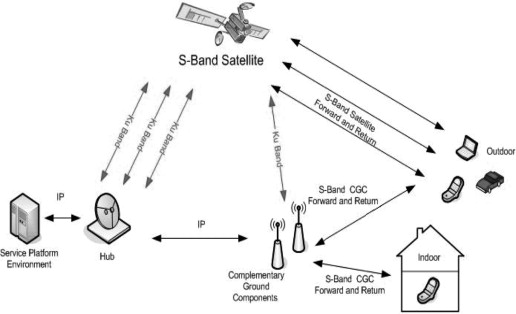
Key Uses: Weather and Planes
The ~10 cm wavelength of a typical 2.7-3.0 GHz S-band signal experiences minimal attenuation, meaning it can punch through heavy rain with over 95% efficiency, whereas a K-band signal might be attenuated by more than 50%. This fundamental physical property is why it serves as the backbone for systems that protect lives and property.In weather forecasting, the S band is the gold standard for ground-based Doppler radar networks. The United States’ NEXRAD (Next-Generation Radar) system, comprising 159 installations across the country, operates at a frequency of 2.7-3.0 GHz.
Each radar unit rotates 360 degrees every 4.5 to 10 minutes, scanning the atmosphere at multiple elevation angles. The primary advantage here is the wavelength’s resilience. When monitoring a severe thunderstorm located 150 kilometers away, the S-band signal maintains its integrity, suffering less than 0.01 dB/km of loss even in intense rainfall of 50 mm per hour. This allows meteorologists to see insidethe storm cell to identify key features like a debris ball—indicating a tornado—with a spatial resolution of about 250 meters. This capability provides an average lead time of 13-15 minutes for tornado warnings, a critical window for seeking shelter. In contrast, a higher-frequency C-band radar might suffer over 5 dB of additional loss under the same conditions, effectively blinding the radar to the most dangerous part of the storm.The aviation industry relies on S band for a different but equally critical function: air traffic control surveillance.
While primary radar simply detects objects, the Secondary Surveillance Radar (SSR) system, which operates in the S band at 1030 MHz for interrogations and 1090 MHz for replies, is a two-way communication link. The ground-based antenna, often with a peak power output of 2-5 kW, sends out a coded interrogation signal. An aircraft’s transponder receives this signal and responds with a digital data packet that includes a unique 4-digit code assigned by air traffic control, as well as critical data like its altitude, which is encoded from the aircraft’s altimeter with an accuracy of within 100 feet. This system allows a single radar site to track over 300 aircraft simultaneously within a range of approximately 250 nautical miles (over 460 kilometers).
Balancing Range and Data Speed
Occupying the 2 to 4 GHz range, it sits between the lower-frequency VHF/UHF bands and the higher-frequency C and K bands. This mid-range placement means it doesn’t offer the extreme long-range propagation of a 300 MHz signal, nor the multi-gigabit data speeds of a 60 GHz signal.
| Frequency Band | Typical Data Rate | Effective Range (Line-of-Sight) | Signal Penetration (e.g., through walls) | Primary Use Cases |
| S Band (e.g., 2.4 GHz) | ~150 Mbps – 1 Gbps (Wi-Fi standards) | ~50-100 meters (indoors) | Good | Wi-Fi, Bluetooth, Weather Radar |
| UHF (800 MHz) | Lower (< 100 Mbps) | > 1 kilometer (urban) | Excellent | Mobile Phones (4G/LTE), TV Broadcasting |
| K Band (24 GHz) | High (multi-Gbps) | < 10 meters | Very Poor | Automotive Radar, Satellite Links |
| Ka Band (28 GHz) | Very High (10+ Gbps) | Very Short, highly susceptible to rain fade | None | High-throughput Satellites (e.g., Starlink) |
This balance is perfectly illustrated by the 2.4 GHz Wi-Fi band, a segment of the S band found in billions of homes. A standard 2.4 GHz Wi-Fi router with a typical transmit power of 100 mW can cover an area of approximately 150-200 square meters indoors, effectively penetrating through several drywall walls with a signal attenuation of about -3 to -10 dB per wall. This results in a ~70% penetration efficiency for a standard interior wall. However, this extended range comes at a cost: data speed.
The 2.4 GHz band has a narrower channel width, typically 20 MHz, which limits its maximum theoretical data rate under ideal conditions to about 150 Mbps for older 802.11n standards, and up to 600 Mbps on 802.11ax (Wi-Fi 6), though real-world speeds are often 30-50% lower due to interference from other devices like microwaves and baby monitors. In contrast, the 5 GHz band (C-band) offers wider 80 MHz or 160 MHz channels, enabling speeds up to 3.5 Gbps, but its higher frequency means it is attenuated more easily, suffering a ~20% higher signal loss per wall and reducing its effective indoor range to about 50-70% of the 2.4 GHz band’s coverage.This trade-off directly influences system design and cost.
For satellite communications, an S band link operating at 2.2 GHz requires a smaller, less expensive ground antenna, typically 60 cm to 1.2 meters in diameter, compared to the 30-45 cm antennas used for higher-frequency Ka-band services. The signal experiences less atmospheric loss, about 1-2 dB under clear skies, ensuring a 99.9% link availability with minimal weather-related outages.
S Band for Satellite Communication
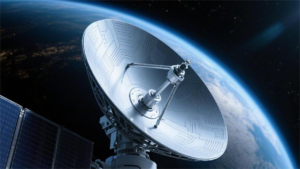
When a satellite millions of kilometers away in deep space needs to phone home, it most often uses the S band. This frequency range, specifically between 2.0 to 2.3 GHz for space operations, is the bedrock of reliable satellite communication. It serves as a vital link for everything from telemetry and command (TT&C)—the spacecraft’s “heartbeat” and steering commands—to transmitting crucial scientific data. The reason for this is reliability over raw speed. While other bands offer higher data rates, the S band provides a robust connection that is less disrupted by Earth’s atmosphere, a critical factor for missions where a >99.9% link availability is non-negotiable. The following table shows how S band compares to other common satellite bands in key operational parameters.
| Parameter | S Band (e.g., 2.2 GHz) | Ku Band (e.g., 12 GHz) | Ka Band (e.g., 30 GHz) |
| Primary Use | Telemetry, Command, GPS, Satellite Radio | Direct-to-Home TV, Broadband | High-Throughput Internet (e.g., Starlink) |
| Data Rate | Low to Moderate (~100 kbps to 10 Mbps) | High (~100 Mbps) | Very High (>100 Mbps to 1 Gbps+) |
| Rain Fade (Signal Loss) | Minimal (< 1-2 dB) | Significant (~5-10 dB) | Severe (~15-20 dB) |
| Ground Antenna Size | 60 cm to 5 meters (smaller for less critical missions) | 60 cm to 1.8 meters (for DTH TV) | 30 cm to 1 meter (for user terminals) |
| Link Availability | >99.9% | ~99.7% | ~99.0% (requires advanced fade mitigation) |
The most fundamental application of S band is for Telemetry, Tracking, and Command (TT&C). This is the spacecraft’s continuous “health and status” broadcast. For a satellite in Low Earth Orbit (LEO), moving at approximately 7.5 km/s, the S band TT&C link transmits a constant stream of data at a relatively modest rate, typically between 1 kbps to 64 kbps. This data packet, updated hundreds of times per second, includes internal temperatures (with an accuracy of ±1°C), power levels from its solar arrays (monitored to within ±0.5 volts), and the status of all onboard systems.
The ground station, using an antenna with a diameter of 5 to 10 meters and a receiver sensitivity of about -150 dBm, can lock onto this signal with an error probability of less than 10^-6. The two-way nature of the link is crucial; ground controllers send command signals at 2.1 GHz with a power of 2-5 kW to instruct the satellite to fire a thruster for a 0.5-second burn to adjust its orbit, or to reconfigure a malfunctioning instrument. The wider beamwidth of the S band signal, often around 2-5 degrees, is a key advantage here. It reduces the precision required for pointing the satellite’s antenna, saving significant weight in propulsion fuel and complexity, which can extend a mission’s operational life by 10-15%.Beyond TT&C, S band is the workhorse for several key data services.
The Global Positioning System (GPS) is a prime example. Each GPS satellite broadcasts its navigation signals on the L1 frequency (1575.42 MHz) but also uses an S band signal at 2491.005 MHz for the Telemetry, Tracking, and Control of the satellite constellation itself. This ensures the network’s timing remains synchronized to within a few nanoseconds, which translates to a positional accuracy of less than 5 meters for civilian users. Similarly, satellite radio services like SiriusXM operate in the 2.3 GHz S band range. Their geostationary satellites, orbiting at 35,786 km, broadcast a high-power signal that delivers over 150 channels of digital audio to receivers in cars and homes across an entire continent.
Comparing S Band to Others
Choosing a radio frequency is always a trade-off, and the S band’s value is best understood when placed on a spectrum of options. Its position between approximately 2 GHz and 4 GHz makes it a practical middle ground. To see this clearly, let’s quickly outline how it stacks up against neighboring bands:
- L Band (1-2 GHz): Excels in long-range propagation and penetration, but has lower data capacity. Ideal for GPS and satellite phones.
- C Band (4-8 GHz): Offers higher data rates than S band, but signals are more susceptible to attenuation from rain, making it less reliable in bad weather.
- X Band (8-12 GHz): Used for high-resolution radar and satellite imaging, providing greater bandwidth but requiring more power and larger antennas for the same range as S band.
The core of the comparison lies in physics. The S band’s wavelength of approximately 7.5 to 15 cm is the key differentiator. A longer wavelength, like the 30 cm wave in the L band, diffracts better around obstacles and suffers less from free-space path loss. For example, an L-band signal at 1.5 GHz experiences about 6 dB less loss over a 100 km distance compared to an S-band signal at 3 GHz. This is why L band is perfect for global coverage applications like GPS, ensuring your navigation works even in urban canyons. However, this advantage comes with a severe limitation: available bandwidth. The maximum channel bandwidth in L band is often restricted, capping practical data rates at around 1-2 Mbps for satellite links. The S band, by occupying a higher frequency range, has access to wider contiguous bandwidths, enabling data rates that are 5 to 10 times faster for the same transmitter power.
The S band’s most significant advantage is its resilience to atmospheric interference, especially rain fade. A typical 3 GHz S-band signal experiences only about 0.01 dB/km of attenuation in moderate rain (25 mm/hr). In the same conditions, a 12 GHz Ku-band signal can suffer over 0.3 dB/km of loss, and a 30 GHz Ka-band signal may experience a debilitating 2-3 dB/km.
This dramatic difference in signal degradation directly impacts system design and cost. For critical weather radar, this reliability is non-negotiable. A National Weather Service NEXRAD radar, operating at 2.7-3.0 GHz, can maintain over 95% of its signal strength when scanning a severe storm 150 km away, accurately measuring rainfall rates and wind velocities. An X-band radar would be severely attenuated under the same conditions, losing a significant portion of its signal and potentially misreading the storm’s intensity. This physical robustness translates to economic efficiency. For satellite ground stations, achieving a reliable link with a Ka-band signal at 30 GHz requires a highly precise antenna pointing system to compensate for the extremely narrow beamwidth, often less than 1 degree. An S-band ground station operating at 2.2 GHz, with a beamwidth of about 5-10 degrees for a similarly sized antenna, has much more forgiving pointing requirements. This can reduce the cost and complexity of the antenna tracking system by 20-30%, a substantial saving for a network of ground stations. While a Ka-band satellite can deliver a blistering 100 Mbps to a small 60 cm dish, that link’s availability might drop to 99.0% annually due to rain. An S-band link, providing a stable 2 Mbps for telemetry, will maintain 99.9% availability with the same size dish.
Future Uses of S Band
The S band, a trusted workhorse of the radio spectrum, is far from obsolete. Its inherent properties—notably its excellent balance of reasonable data capacity, strong resistance to rain fade, and manageable hardware costs—make it a critical asset for solving next-generation connectivity challenges. While higher-frequency bands like Ka and V-band grab headlines for raw speed, the S band’s reliability is being leveraged for massive-scale Internet of Things (IoT), enhanced 5G coverage, and next-generation aviation safety. Its future lies not in replacing extreme-speed technologies, but in providing the foundational, ubiquitous layer that other networks rely upon. Key emerging applications include:
- 5G Coverage Layer: Using the 3.5 GHz CBRS band for private 5G networks.
- Satellite IoT (IoT): Enabling low-power, wide-area connectivity for millions of sensors.
- Advanced Aviation: Hosting next-generation aircraft tracking and communication systems.
- Lunar & Deep Space Communication: Serving as a primary link for burgeoning lunar economic activity.
The following table contrasts these emerging S-band applications with their technological drivers and the key S-band advantage they exploit.
| Emerging Application | Frequency Band | Key Driver | S-band Advantage |
| 5G Neutral Host Networks | 3.55-3.70 GHz (CBRS) | Demand for secure, localized high-capacity wireless in factories, ports, and campuses. | Favorable propagation (compared to mmWave) for covering areas of ~1-5 km radius with a single tower, penetrating light walls. |
| Satellite IoT & Direct-to-Device | 2.0-2.4 GHz (e.g., 3GPP Band n256) | Need for global, low-power sensor coverage beyond cellular reach. | Receiver sensitivity as low as -140 dBm, enabling a >10-year battery life for sensors transmitting a few kilobytes per day. |
| Advanced ADS-B for Drones | 1090 MHz (Extended S Band) | Integration of thousands of unmanned aerial vehicles (UAVs) into controlled airspace. | Proven, reliable protocol with an update rate of ≤1 second, providing a low-latency identity/altitude beacon for collision avoidance. |
A major near-term growth area is in 5G deployment, specifically in the 3.5 GHz Citizens Broadband Radio Service (CBRS) band. This band allows enterprises to build private cellular networks that offer a superior combination of coverage and capacity compared to Wi-Fi. A single CBRS small cell, transmitting at 1-2 watts, can reliably cover a 200,000 square meter industrial warehouse, providing seamless handoff for autonomous guided vehicles and connectivity for over 1,000 sensors with a latency of <20 milliseconds. The 3.5 GHz frequency provides a 35% greater coverage radius per tower compared to a 4.9 GHz signal, reducing infrastructure costs by an estimated 15-20% for wide-area industrial sites. This makes S band a key enabler for the Industry 4.0 revolution.
The demand for global satellite IoT is projected to connect over 20 million devices by 2030, and S band is ideally suited for this low-data-rate, high-reliability market. A satellite-based NB-IoT (Narrowband-IoT) link in the 2.1 GHz band can support devices that transmit tiny 200-byte data packets just a few times per day, operating for over 12 years on a single 5-watt-hour battery.
While current ADS-B (Automatic Dependent Surveillance-Broadcast) uses the 1090 MHz frequency to broadcast an aircraft’s position, future systems will leverage S-band satellites to relay this data globally, including over oceans and polar regions where ground reception is impossible. This will improve the data update rate to ≤1 second, reducing the minimum aircraft separation standards from the current 50-100 nautical miles over ocean to potentially 20-30 nautical miles, increasing route capacity by 20% on busy transoceanic tracks. Finally, as lunar activity accelerates with NASA’s Artemis program and commercial landers, the 2.2 GHz band remains the international standard for lunar communication. The ~1.28-second light-speed delay to the Moon is a fixed physical constraint, but S band provides a stable channel for high-fidelity telemetry and video transmission from the lunar surface, supporting the planned >100 Mbps data links needed for sustained human presence.