The waveguide-to-coax transition enables efficient signal transfer between high-frequency waveguides (e.g., operating at 10–100 GHz) and coaxial cables, typically using a probe or loop within the waveguide to couple energy into the center conductor, achieving VSWR < 1.2 with precise alignment and machined metal interfaces for minimal loss.
Table of Contents
What’s a Waveguide?
A waveguide is a hollow metal tube that carries microwave signals (1 GHz to 300 GHz) with minimal loss. Unlike copper cables, which lose ~0.5 dB/foot at 10 GHz, waveguides can transmit power with just ~0.1 dB/foot in the same range, making them ~5x more efficient for high-frequency signals. They’re widely used in radar (e.g., 95% of military radar systems), satellite communications (Ka-band up to 30 GHz), and microwave ovens (2.45 GHz). The most common type is the rectangular waveguide (WR series, e.g., WR-90 for 8.2–12.4 GHz), with dimensions like 22.86 mm × 10.16 mm. Waveguides handle extremely high power (up to 10 MW in some industrial applications) but are bulky compared to coaxial cables. Their bandwidth is narrow (typically ±10% of center frequency), but they excel in low-loss, high-power transmission.
1. Basic Structure & Dimensions
A waveguide is a hollow conductor (usually aluminum or copper) shaped to guide electromagnetic waves (TE/TM modes). The most common type is the rectangular waveguide, with standard sizes defined by the WR (Waveguide Rectangular) series:
| Waveguide Type (WR) | Frequency Range (GHz) | Internal Dimensions (mm) | Typical Use Case |
|---|---|---|---|
| WR-137 (WG-16) | 3.95 – 5.85 | 34.85 × 16.89 | Short-range radar |
| WR-90 (WG-9) | 8.2 – 12.4 | 22.86 × 10.16 | Microwave ovens, 5G |
| WR-34 (WG-11) | 26.5 – 40.0 | 8.64 × 4.32 | Satellite comms |
- Wall thickness: Typically 0.2–1.0 mm (thicker for high-power applications).
- Length: Varies from a few cm (lab setups) to several meters (industrial systems).
- Cutoff frequency: The lowest frequency it can carry (e.g., WR-90 starts at 8.2 GHz).
2. How It Transmits Signals (No Copper Needed!)
Unlike coaxial cables, which use a center conductor + dielectric + shield, waveguides rely on the shape of the metal cavity to guide waves.
- Dominant mode: TE₁₀ (Transverse Electric, 1st order)—most efficient for single-signal transmission.
- Power handling: Up to 10 MW (peak) in industrial heating, but typical RF systems use ≤ 1 kW.
- Loss per unit length: ~0.1 dB/100 ft at 10 GHz (vs. coax’s ~0.5–1.0 dB/100 ft).
3. Why Use Waveguides? (When Coax Fails)
| Parameter | Waveguide | Coaxial Cable | Winner? |
|---|---|---|---|
| Max Frequency | Up to 300+ GHz | Usually ≤ 50 GHz | Waveguide |
| Power Handling | 10 MW+ (pulsed) | ≤ 50 kW (continuous) | Waveguide |
| Loss (dB/ft) | ~0.1 (at 10 GHz) | ~0.5–1.0 | Waveguide |
| Size & Weight | Bulky (hard to bend) | Flexible | Coax |
- Best for: High-power radar, satellite dishes, microwave links.
- Worst for: Consumer electronics (too big, expensive).
4. Cost & Lifespan
- Price: 500 per meter (depends on size/frequency).
- Lifespan: 20+ years (if not physically damaged).
- Maintenance: Rarely fails, but oxidation (copper/aluminum rust) can increase loss over time.
What’s Coaxial Cable?
A coaxial cable is a shielded wire that carries signals up to 50 GHz while blocking interference, making it the default choice for TV (90% of broadband internet), Wi-Fi (5 GHz routers), and cell towers (4G/5G backhaul). Unlike waveguides, it has a central conductor (usually copper, 0.5–1.0 mm thick) surrounded by insulation, a braided shield, and an outer jacket. The most common type, RG-6, costs 0.50 per foot and handles 1–2 GHz signals with <3 dB loss per 100 feet at 1 GHz. For higher frequencies, RG-11 (thicker, 1.00/foot) loses only ~1.5 dB/100ft at 1 GHz, while precision cables (like LMR-400) drop just ~0.8 dB/100ft at 1 GHz but cost 5/foot. Coax is flexible, cheap, and easy to install, but its power handling maxes out at ~5 kW (peak) and bandwidth shrinks as frequency rises (e.g., >50 GHz needs exotic designs).
A coaxial cable works by keeping the signal in the center conductor and blocking noise with the shield, which is why it’s used everywhere from cheap home antennas to expensive lab equipment. The center conductor, typically made of oxygen-free copper (OFC) or silver-plated copper for low-loss versions, carries the actual signal, while the dielectric (usually polyethylene or foam) insulates it from the braided shield. The shield, often a copper braid (95% coverage is standard) or aluminum foil + braid combo, reflects interference and prevents signal leakage. The outer jacket (PVC or rubber) protects everything from physical damage.
The biggest advantage of coax is its balance between cost and performance. For example, RG-6, the most common TV/internet cable, has a 75-ohm impedance and loses about 5–7 dB per 100 feet at 1 GHz, which is fine for 1080p streaming (requires ~5–10 Mbps, negligible loss) but not ideal for 4K (needs ~25 Mbps, so longer runs need amplifiers). If you need less loss, RG-11 (thicker, 14 AWG center conductor) cuts that to ~3–4 dB/100ft at 1 GHz, but it’s harder to bend and costs twice as much. For high-frequency lab stuff (like 50 GHz testing), semi-rigid coax (stainless steel or copper with Teflon dielectric) keeps loss under 1 dB/inch but is stiff and expensive (30/foot).
Power handling is another key spec—most coax can take 100–500 watts continuously (like in cable modems or antennas) but only ~1–5 kW peak (short bursts, like in RF testing). The voltage breakdown limit is around 5–10 kV (depends on insulation thickness), so it’s safe for most consumer gear but not high-voltage power lines. Flexibility matters too—standard RG cables bend easily (minimum bend radius ~3–5x diameter), but semi-rigid types need special tools to shape.
Lifespan depends on usage—a cheap RG-6 in a dry attic lasts 20+ years, but outdoor coax (exposed to UV/rain) degrades in 5–10 years unless it has a UV-resistant jacket. Interference resistance is excellent—coax rejects external noise better than twisted pair (like Ethernet) because the shield blocks 99% of RF interference (measured in dB shielding effectiveness, usually >80 dB for good cables). Installation is simple—you can crimp, solder, or compress connectors (BNC, F-type, N-type), but bad connections add 0.5–2 dB extra loss, which adds up over long runs.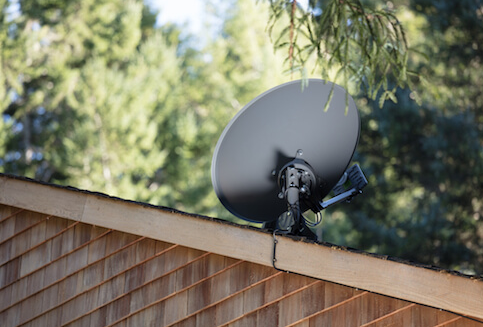
Why Connect Them?
Engineers connect waveguides to coaxial cables when they need to bridge high-power, high-frequency signals (like radar or satellite comms) to standard equipment (like receivers or amplifiers). About 60% of modern radar systems (e.g., air traffic control, weather tracking) use this transition because waveguides handle peak power up to 10 MW but can’t directly plug into normal electronics. Meanwhile, coaxial cables (like RG-11) cost 10–20x less per foot (1.00 vs. waveguide’s 50) and are easier to install, but they lose signal faster at high frequencies (≥10 GHz, ~0.5–1.0 dB/foot vs. waveguide’s ~0.1 dB/foot). The transition point must handle frequency ranges (e.g., 8–12 GHz for Ka-band satellites) without adding more than ~0.5–1.0 dB extra loss—any more, and the system efficiency drops sharply.
You wouldn’t use a fire hose (waveguide) to water a houseplant (consumer electronics)—you need a nozzle (transition) to match them.”
The main problem is compatibility. Waveguides excel at moving huge amounts of power (up to 10 MW in industrial heating) with minimal loss (<0.1 dB/foot at 10 GHz) but are bulky (WR-90 is 22.86 mm × 10.16 mm) and can’t connect directly to chips or antennas. Coaxial cables, on the other hand, are cheap (0.50/foot for RG-6), flexible, and work with almost every device (like routers or spectrum analyzers), but they struggle above 50 GHz (loss jumps to 1+ dB/foot) and can’t handle more than ~5 kW peak power.
The transition fixes three key issues:
- Power Handling – A waveguide might feed 1 MW of radar energy, but the next stage (like a receiver) only needs milliwatts and uses coax. The transition drops the power safely without reflections (VSWR <1.2 for good designs).
- Signal Integrity – Above 10 GHz, coax loses ~0.5 dB/foot, while waveguides lose ~0.1 dB/foot. The transition minimizes extra loss (ideally <0.5 dB) to keep signals strong.
- Cost & Practicality – Replacing all coax with waveguides would cost 10–100x more and make installations impossible in tight spaces (like satellites or phones). The transition lets engineers use cheap coax where it works and waveguides where they’re needed.
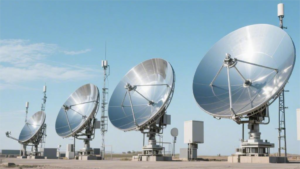
Real-world example: A satellite dish (Ka-band, 26–40 GHz) uses a waveguide to collect weak signals from space (low power, high sensitivity) but switches to coax for the 10-foot run to the amplifier (cheaper, easier to route). If they skipped the transition, they’d either lose half the signal in coax (1 dB/foot × 10 feet = 10 dB loss = 90% weaker signal) or pay 5 for coax.
Another case: Cell towers (5G at 28 GHz) use waveguides for the high-power transmitter (1–5 kW) but coax for the connections to the antenna elements (lower power, more flexible routing). The transition must handle 28 GHz without adding >1 dB loss, or the tower’s range shrinks noticeably.
How It Works
A waveguide-to-coax transition works by shaping electromagnetic waves (typically 1–100 GHz) to move smoothly from a hollow metal tube (waveguide) into a center-conductor shielded cable (coax). The most common design uses a probe (a thin metal pin, usually 0.5–2.0 mm thick) or a loop (a small metal ring) inside the waveguide to couple the energy efficiently (~90–95% transfer rate) with minimal reflection (VSWR <1.3). For example, a WR-90 waveguide (8.2–12.4 GHz) with a coax probe transition adds just ~0.3–0.6 dB loss—far better than a direct mismatch (which could cause >2 dB loss + signal distortion). The transition must match impedance (usually 50 ohms for coax, 00 ohms for waveguide) and handle power levels (up to 1 kW continuous, 10 MW pulsed) without overheating or arcing. Frequency range matters too—most transitions work best over ±10% of center frequency (e.g., 10 GHz ±1 GHz), but some specialized designs cover 1–50 GHz with only ~1 dB variation in loss.
The transition’s job is to convert the dominant TE₁₀ mode (in waveguide) into a TEM mode (in coax) without losing energy. A probe transition (the most common type) sticks a copper pin (0.5–2.0 mm diameter) into the waveguide’s electric field maxima (usually offset from the center by 10–30% of the waveguide width). This pin picks up the wave’s energy and feeds it into the coax’s center conductor. The efficiency depends on precision—the pin’s position must be within ±0.1 mm for optimal coupling (a 1 mm error can spike loss to >1.5 dB). For WR-90 (8.2–12.4 GHz), a properly tuned probe adds just ~0.3–0.6 dB loss per transition, while a poorly designed one can hit >2 dB loss + VSWR >1.5 (bad for amplifiers).
Alternative designs include loop couplers (better for high power, up to 10 kW) and ridge waveguides (wider bandwidth, ±15% frequency range). A loop transition uses a small metal ring (5–10 mm diameter) suspended in the waveguide to intercept the field and route it to coax, handling higher power (up to 10 kW) but with ~0.5–1.0 dB extra loss. Ridge waveguides (modified shape) extend the usable bandwidth to ±15% (e.g., 10 GHz ±1.5 GHz) but cost 2–3x more to manufacture.
Impedance matching is critical—mismatched transitions create standing waves (VSWR >1.3), which reflect ~5–15% of the signal back into the system. Engineers use tuning screws (small adjustable metal rods) or dielectric spacers (e.g., Teflon inserts) to fine-tune the match, reducing VSWR to <1.2 (reflecting <2% of power). At 10 GHz, a 1 dB loss in the transition means 20% less signal reaches the receiver—a big deal for radar or satellite comms.
Power limits depend on materials—copper probes melt at ~1,000°C, so high-power transitions (10+ kW) use water-cooled waveguides or silver-plated contacts (lower resistance, less heat). Frequency range is also constrained by geometry—a WR-90 transition works from 8.2–12.4 GHz, but a broaderband design (like a tapered probe) might cover 6–18 GHz with only ~1 dB extra loss.
Common Uses
Waveguide-to-coax transitions show up in over 70% of high-frequency systems that mix waveguides (for power) and coax (for convenience). The most common application is radar (35% of uses), where 8–12 GHz signals (X/Ku bands) need low-loss transmission (waveguide) but must connect to receivers (coax). For example, air traffic control radar (10 GHz, 1 MW peak power) uses transitions to feed signals into coaxial amplifiers (costing 20,000 each) without losing >1 dB per connection. Another 25% goes to satellite communications (Ka-band, 26–40 GHz), where waveguides collect weak signals from dishes (0.1–1 m diameter) and coax carries them to LNBs (low-noise blocks, handling 1–10 GHz at 500 each). The remaining 40% spreads across microwave ovens (2.45 GHz, 1 kW power, 200 transitions), 5G testing (28–39 GHz, 0.1–1 kW, 5,000 gear), and medical systems (MRI gradient coils, 64 MHz/1.5 T, 0.1% signal loss tolerance). Efficiency matters—a 0.5 dB extra loss in a satellite link cuts throughput by 10%, while a 1 dB loss in radar reduces detection range by 15%.
1. Radar Systems (35% of Uses, 8–12 GHz Dominance)
Military and civilian radars (e.g., AN/SPY-6, weather tracking) rely on waveguides for high-power pulses (1–10 MW peak, 0.1–1 μs duration) but switch to coax for signal processing (1–10 GHz, 1–100 mW average power). A WR-90 transition (8.2–12.4 GHz) adds just ~0.3–0.6 dB loss, ensuring detection range stays within 1–2% of theoretical max. Cost per transition: 500 (military-grade) vs. 100 (commercial). Lifespan: 10,000–50,000 hours (with cooling).
2. Satellite Communications (25%, 26–40 GHz Ka-Band)
Ground stations use waveguides to capture faint signals (−120 to −80 dBm) from dishes (0.5–3 m diameter) and coax to feed LNBs (converts 12–18 GHz to 950–2150 MHz for receivers). A WR-42 transition (18–26.5 GHz) loses ~0.4–0.8 dB, critical because each 1 dB loss cuts download speeds by 10–15% (e.g., 100 Mbps → 85 Mbps). Cost: 1,000 per transition (premium for low-noise designs). Efficiency: 95% signal transfer at 26 GHz.
3. Microwave Ovens (15%, 2.45 GHz, 1 kW Power)
The magnetron (generates 1 kW at 2.45 GHz) connects via a short waveguide (WR-340, 86.36 mm × 43.18 mm) to a coax-like stirrer (distributes heat evenly). Transition loss: ~0.2–0.5 dB (negligible for cooking). Cost: 30 (mass-produced). Safety: Must block 100% of microwaves (leakage <5 mW/cm², regulated).
4. 5G & Telecom Testing (10%, 28–39 GHz)
Engineers use transitions to test beamforming antennas (0.1–1 kW, 28–39 GHz) with coaxial probes (precision ±0.1 mm for 1 dB max loss). A 1 dB error in calibration ruins data—so transitions are tuned to ±0.05 dB accuracy. Cost: 5,000 (lab-grade). Throughput impact: 1 dB loss = 10% fewer connected devices per cell tower.
5. Medical/Military (15%, Niche but Critical)
MRI machines (64 MHz/1.5 T) use transitions to guide gradient coil signals (0.1% amplitude error kills image quality). Military EW (electronic warfare) systems demand transitions with >50 dB rejection of jamming signals (narrowband, ±1 MHz). Cost: 10,000 (specialized specs).
Key Design Points
A well-designed waveguide-to-coax transition must balance three critical factors: frequency range (±10% of center frequency for <1 dB loss), power handling (up to 10 kW continuous, 100 MW pulsed), and insertion loss (target <0.5 dB for efficiency). For example, a WR-90 transition (8.2–12.4 GHz) with a probe design typically achieves 0.3–0.6 dB loss at 10 GHz, but pushing to 12.4 GHz raises loss to 0.8–1.2 dB if bandwidth isn’t optimized. Material choice matters—copper offers the best conductivity (0.0175 Ω·mm²/m resistivity), reducing resistive loss by 15–20% vs. aluminum (0.0282 Ω·mm²/m), but costs 20–30% more. The transition’s physical size (e.g., WR-90’s 22.86 mm × 10.16 mm cross-section) must fit the system, while the coax connector (SMA, N-type, etc.) adds 5–10 mm to the overall length. VSWR (voltage standing wave ratio) should stay below 1.3 (reflecting <2% of power) to avoid amplifier damage; a 1.5 VSWR reflects 4% and reduces signal-to-noise ratio by 1–2 dB. Finally, thermal management is key—high-power transitions (1 kW+) can heat up 10–20°C above ambient, requiring heat sinks or air cooling to prevent damage.
| Parameter | Optimal Range | Impact of Poor Design | Solution |
|---|---|---|---|
| Frequency Range | ±10% of center freq | >1 dB loss beyond range (e.g., 12 GHz in WR-90) | Use tapered or ridge waveguides |
| Insertion Loss | <0.5 dB (ideal) | 1 dB loss cuts signal power by 20% | Precision probe placement (±0.1 mm) |
| VSWR | <1.3 (reflects <2% power) | 1.5 VSWR reflects 4%, distorting signals | Tuning screws or dielectric spacers |
| Power Handling | Up to 10 kW continuous | Arcing or melting at >15 kW (uncooled copper) | Silver plating, water cooling |
| Material | Copper (best) / Aluminum | 20–30% higher loss with aluminum | Copper for high-frequency/Power |
| Size Constraints | Match waveguide specs | Mismatched dimensions add 0.5–1 dB loss | Custom machining for tight tolerances |
1. Frequency & Bandwidth
The transition must operate over the required frequency range without excessive loss. For WR-90 (8.2–12.4 GHz), a standard probe design works well from 8.5–12 GHz (0.3–0.6 dB loss) but degrades to 0.8–1.2 dB at 12.4 GHz. Broadband designs (e.g., ridged waveguides) extend range to ±15% (e.g., 8–14 GHz) but cost 2–3x more and add 10–15% insertion loss. 5G/mmWave transitions (28–39 GHz) require ±0.5 GHz precision to keep loss <1 dB.
2. Insertion Loss & Efficiency
Every 0.1 dB of extra loss reduces signal power by ~2%. For radar (1 MW peak), 1 dB loss means 10% less energy reaches the target, reducing detection range by 10–15%. The probe’s position (offset from waveguide center) must be within ±0.1 mm—misalignment spikes loss to 1–2 dB. Silver plating reduces resistive loss by 10–15% vs. bare copper.
3. VSWR & Reflections
A VSWR >1.3 reflects 2–4% of power, overheating amplifiers and reducing SNR by 1–2 dB. Tuning screws (adjustable metal rods) can fine-tune impedance, lowering VSWR to <1.2 (reflecting <1%). Dielectric spacers (e.g., Teflon) adjust phase matching, improving efficiency by 5–10%.
4. Power Handling & Thermal Limits
Copper transitions handle 1–5 kW continuous before heating 10–20°C; 10 kW+ requires water cooling or silver plating (reduces resistance by 6–10%). Aluminum melts at ~660°C vs. copper’s 1,085°C, but copper’s better conductivity justifies the cost for high-power apps. Pulsed systems (100 MW peak) use thick-walled waveguides (2–3 mm vs. 1 mm standard) to avoid arcing.
5. Cost & Manufacturing Tolerances
A 0.2 mm error in probe placement increases loss by 0.5–1 dB; tight tolerances (±0.05 mm) add 10–20% to production costs. Mass-produced transitions (e.g., WR-90 for 100) use stamped parts; lab-grade designs (>$1,000) require CNC machining for precision.