Maintaining a low SWR (ideally below 1.5:1) is critical because high reflected power, from a mismatch, can overheat and damage transmitter components. A 3:1 SWR reflects 25% of your power, drastically reducing radiated signal strength and efficiency. Use an antenna analyzer to check SWR before transmission.
Table of Contents
What is SWR?
A low SWR, say 1.5:1 or lower, means everything is perfectly matched; water flows smoothly from the spigot, through the hose, and out the sprinkler with no kinks or blockages. A high SWR, such as 3:1 or higher, is like a kink in the hose.
When your radio transmits, it sends RF power (e.g., 100 watts) down the coaxial cable toward the antenna. If the antenna’s impedance (typically 50 ohms) perfectly matches the impedance of the cable and radio, virtually all that power is accepted by the antenna and radiated away. This ideal scenario gives you a perfect SWR of 1:1. However, if there’s a mismatch—often caused by an antenna that is the wrong length, a damaged cable, or a poor connection—the antenna won’t accept all the power you send it.
Instead, a portion of it is reflected back down the cable towards your radio. If your antenna system has a high SWR of 3:1, it means that for every 100 watts you transmit forward, a significant portion (roughly 25%) is being reflected back, meaning only 75 watts is effectively being radiated. This isn’t just about losing 25% of your power; the real issue is what that reflected power does inside your system. This constant back-and-forth of energy creates standing waves of voltage and current along the length of the coaxial cable. These waves have peaks (high voltage) and nulls (low voltage), and the SWR number is simply a ratio of the highest voltage on the line to the lowest voltage (Vmax/Vmin). A higher ratio indicates more extreme peaks, which stresses the cable’s dielectric and can lead to premature failure, especially at higher power levels exceeding 500 watts.
A low SWR indicates an efficient transfer of energy, while a high SWR signifies reflected power, which reduces performance and can stress equipment.
The goal is never absolute perfection but to get your SWR as low as practically possible, ideally below 2:1 and optimally under 1.5:1, across the frequencies you intend to use. This is because antennas are often designed to be resonant at a specific frequency, say 27.185 MHz for CB Channel 19. Their impedance, and therefore the SWR, changes as you move away from that center frequency. You might see an SWR of 1.2:1 on channel 19 but 1.8:1 on channel 1.
Protects Your Radio
Modern amateur and commercial radios are significant investments, often costing between 5,000. They are engineered with sophisticated final amplifier stages using expensive transistors, like MOSFETs or LDMOS devices, designed to operate into a perfect 50-ohm load. However, these components are incredibly sensitive to impedance mismatches. A high SWR doesn’t just mean lost signal strength; it means that a portion of your transmitted power is relentlessly reflected back into the radio’s final output stage. This reflected power is converted into waste heat, pushing components beyond their designed thermal limits. Consistently operating with an SWR above 2.5:1 can dramatically reduce the lifespan of your radio’s amplifier from a typical 10+ years to just a few months or even weeks of regular use, leading to premature failure and costly repairs that can exceed $800.
| SWR Ratio | Approx. Reflected Power | Risk Level to Radio |
|---|---|---|
| 1.0:1 | 0% | None |
| 1.5:1 | 4% | Very Low |
| 2.0:1 | 11% | Moderate |
| 3.0:1 | 25% | High |
| 4.0:1 | 36% | Severe |
| 5.0:1 | 44% | Critical |
The primary mechanism of damage is heat buildup. Each transistor in the final amplifier has a maximum rated junction temperature, often around 150°C to 200°C. Under matched conditions, the heat sink and cooling fan effectively dissipate the 60-70% efficiency loss inherent in RF amplification. When you transmit 100 watts into a high SWR load of 3:1, roughly 25 watts is reflected back into the amplifier. This forces the transistors to dissipate not only their normal heat load but also this additional reflected energy. This can cause the operating temperature to spike from a safe 85°C to a dangerous 125°C or higher. For every 10°C increase in operating temperature above its rating, the lifespan of a semiconductor component is roughly halved. This thermal stress is the leading cause of failure.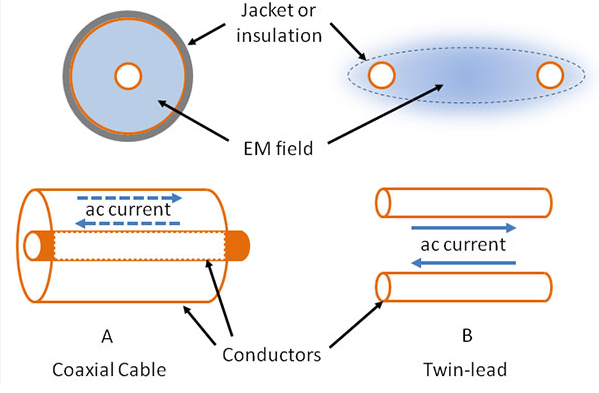
Better Signal Strength
Every radio operator’s primary goal is to get their signal through, whether making a contact 50 miles away on 2-meter FM or reaching a DX station 10,000 miles away on HF. While many focus on buying a more powerful amplifier, they often overlook a fundamental truth: a low SWR is like unlocking free extra power. It ensures that every watt generated by your radio is effectively converted into radiated electromagnetic waves, rather than being trapped as heat within your coaxial cable. For example, an operator running 100 watts from a base station with a poor antenna setup suffering from an SWR of 3.0:1 is effectively radiating only 75 watts, throwing away 25% of their purchased equipment’s capability. This loss directly translates to a weaker signal at the receiving end, fewer completed contacts, and more frustrated calls that go unanswered. Optimizing your SWR is the highest return-on-investment upgrade you can make, costing only time rather than hundreds of dollars on unnecessary hardware.
| SWR Ratio | Effective Radiated Power (from 100W) | Approx. Signal Strength Loss |
|---|---|---|
| 1.0:1 | 100 W | 0 dB |
| 1.5:1 | 96 W | -0.18 dB |
| 2.0:1 | 89 W | -0.51 dB |
| 3.0:1 | 75 W | -1.25 dB |
| 4.0:1 | 64 W | -1.94 dB |
| 5.0:1 | 55.6 W | -2.55 dB |
The relationship between SWR and signal strength is not linear; it’s exponential in its impact on your communication range. The key metric is decibels (dB), a logarithmic unit that describes a ratio of power. A loss of 3 dB means your signal strength has been halved. As the table shows, an SWR of 3.0:1 creates a 1.25 dB loss. While that may seem small, it has a substantial effect on your signal’s reach. On VHF/UHF frequencies where communication is typically line-of-sight, this 1.25 dB loss could reduce your reliable communication range by 5-10%.
For a station that normally reaches 40 miles, this represents a loss of 2 to 4 miles. On HF bands, where signals bounce between the ionosphere and the Earth, this loss is compounded over each hop, significantly reducing the probability of being heard across an ocean. The more power you run, the more absolute power you waste. A 1,500-watt amplifier running into a 3.0:1 SWR is wasting 375 watts—enough to power an entire additional HF radio—merely heating the coax. This inefficiency becomes critical during weak signal propagation or during a contest when stations are packed closely together. A signal that is 1.25 dB stronger has a 25-30% higher probability of being copied correctly through interference and static.
Prevents Cable Overheating
For instance, a station running 500 watts of PEP on HF with an SWR of 3:1 might see 25% of that power reflected. This means 125 watts is not being radiated but is instead bouncing back and forth within the cable. This energy isn’t stored; it’s dissipated as thermal energy, heating the cable’s dielectric and center conductor. Over a 10-minute SSB transmission at an average duty cycle of 50%, this can pump the equivalent of over 37,500 joules of thermal energy into your feed line, pushing its internal temperature from a ambient 25°C to a dangerous 65°C or higher, especially if the cable is bundled or run through a hot attic.
- Dielectric Breakdown: The white foam dielectric material inside coaxial cable (e.g., RG-8X or LMR-400) has a specific thermal rating, typically around 80°C. Prolonged exposure to temperatures exceeding 70°C accelerates aging, causing the dielectric to dry out, crack, and shrink. This changes the cable’s impedance from 50 ohms to an unpredictable value, often around 60-75 ohms, which further exacerbates the SWR problem and increases loss. The attenuation, which might be 3.5 dB per 100 feet at 30 MHz when new, can increase by 25% or more as the dielectric degrades.
- Center Conductor Oxidation: Heat accelerates the oxidation of the copper center conductor. Even in sealed cable, microscopic moisture vapor can be present. As the conductor heats to 60-70°C, this process speeds up, creating a layer of copper oxide, which is a semiconductor. This non-linear layer generates intermodulation distortion (IMD), creating unwanted spurious signals that can interfere with your own reception and transmissions of other users. The effective lifespan of a $150 roll of premium coaxial cable can be reduced from a typical 10-15 years to just 3-5 years under constant thermal stress.
- Connector Failure: The heat generated within the cable conducts directly into the connector joints, which are often the weakest points. The solder used in some PL-259 connectors has a melting point around 180-190°C. While the cable won’t reach this temperature, repeated heating and cooling cycles cause expansion and contraction. This creates fatigue in the solder joints and the connector’s mechanical grip on the cable, leading to intermittent connections and ultimately complete failure. A connector that fails mid-contest doesn’t just cost you points; it can create a dead short, reflecting 100% of your power back to the radio, risking instant amplifier failure.
The financial and operational impact is clear. Allowing high SWR to overheat your feed line turns a 200 investment in quality cable into a consumable item needing replacement every few years, adding a recurring 70 per year cost to your hobby. It also increases your system’s noise floor by 1-2 dB due to thermal noise and IMD, making weak signals harder to copy. Maintaining an SWR below 1.5:1 ensures that 99% of the power is radiated, keeping your coaxial cable running cool, efficient, and reliable for its entire 15-year service life, protecting both your equipment and your wallet.
Ensures Clear Communication
Consider a 100-watt SSB transmission with an SWR of 3:1. While you’re losing ~25% of your power to reflection, the remaining 75 watts being radiated are compromised. The reflected waves interacting with forward waves create phase cancellation and distortion within the feed line. This results in a “muffled” or “distorted” audio quality at the receiving end, forcing the other operator to ask for repeats. In a crowded field day contest or during an emergency net with 50 participants, a station with poor SWR might have their critical message missed 40% of the time, even though their signal meter shows a strong reading, simply because their audio is unclear and fatiguing to listen to for extended periods.
The impact of SWR on signal integrity manifests in several key ways:
- Increased Intermodulation Distortion (IMD): A mismatched antenna system behaves non-linearly, especially under high power. This generates IMD, creating unwanted phantom signals at mathematical multiples of your transmit frequency. For example, transmitting on 14.200 MHz with 150 watts and a 3.5:1 SWR could generate spurious signals at 28.400 MHz and 42.600 MHz. These signals can interfere with your own reception on other bands and violate FCC regulations, which typically require spurious emissions to be -43 dB or lower than the fundamental signal. A clean signal with a 1.2:1 SWR might have IMD products at -48 dB, while a distorted signal from a poor system could push them to -35 dB, risking interference and regulatory non-compliance.
- Poor Signal-to-Noise Ratio (SNR): The distortion and added noise from a overheating cable (caused by high SWR) directly raise the noise floor of your own transmitted signal. A station with a low SWR might have a crystal-clear signal with an SNR of +15 dB at the receiver, making every word easily intelligible. A station with the same power but a 4:1 SWR might see their SNR degraded to +9 dB. This 6 dB loss is significant; it means the received signal has four times the relative noise, forcing the listener to struggle and increasing the probability of a missed call sign or number by over 30%.
- Receiver Desensitization: The reflected power circulating in the feed line doesn’t just affect transmission. A portion of this energy can find its way back into your radio’s receiver front-end. During transmit periods, this can slightly overload the receiver circuitry. When you unkey the microphone, it takes a finite amount of time—perhaps 100 to 300 milliseconds—for the receiver to recover full sensitivity. This means you could miss the first crucial word of a rapid response, especially in fast-paced DX exchanges.
| SWR Level | Typical Audio Report | Estimated Intelligibility Score* | Required Request-for-Repeat Rate |
|---|---|---|---|
| 1.0 – 1.5:1 | “Crystal Clear, 5 by 9” | 99% | < 5% |
| 2.0:1 | “Slightly Distorted, 5 by 7” | 90% | 10% |
| 3.0:1 | “Distorted, Raspy, 5 by 5” | 75% | 25% |
| 4.0:1 | “Unreadable, Heavily Distorted” | < 50% | > 50% |
The bottom line is that a low SWR (under 2:1) is a prerequisite for clear communications. It ensures that the $2,000 you invested in your transceiver and microphone is heard as you intended. It reduces errors in transmitting critical information like GPS coordinates, emergency supply lists, or contest exchange numbers by at least 20%, making you a more effective and reliable operator on the air.
How to Check SWR
For a investment of between 250, a dedicated SWR meter (or antenna analyzer) provides invaluable data that can save you thousands in equipment replacement and drastically improve your on-air performance. Modern meters are highly accurate, with most quality models boasting an error margin of less than ±5% across the HF through UHF spectrum. The process doesn’t require a full 100-watt transmission; many analyzers use a very low signal, around 1 watt or less, to safely and accurately provide a reading without broadcasting your test signal for miles. Performing this check should be a routine step after any antenna installation or change, taking less than 10 minutes to complete but offering profound insights into your station’s efficiency.
A basic analog meter can be purchased for as little as 50, while a digital antenna analyzer providing a sweeping frequency analysis will cost between 150 and $300. The first critical step is to ensure your radio is powered off. Connect the meter in-line between your radio’s output port and the coaxial cable feed line that runs to your antenna. This is a crucial placement; the meter must be at the transmitter end of the system to measure the reflected energy accurately. Use the shortest possible high-quality jumper cables to connect the meter, as poor connectors here can introduce errors of up to 0.2:1 in your readings.
Once everything is connected, set your radio to its lowest power setting, typically 5 to 10 watts, and select a clear frequency within the band you wish to test. It’s best to test at least three points: the bottom, middle, and top of the band. For example, on the 20-meter amateur band (14.000 – 14.350 MHz), you would check at 14.050 MHz, 14.175 MHz, and 14.300 MHz.
With the meter connected and the radio set to low power, press the microphone’s push-to-talk (PTT) button for 2-3 seconds. Observe the meter’s reading. A quality meter will have two needles or a digital display showing both forward and reflected power. The SWR value is a ratio calculated from these two values. Your goal is to see a low SWR across the entire band you operate on, ideally below 1.5:1.
If your SWR is high (above 3:1) across all frequencies, this indicates a major problem, such as a severely mismatched antenna, a damaged coaxial cable, or a faulty connector. If the SWR is acceptable at one end of the band but rises significantly at the other, your antenna is simply not resonant where you want it to be. For instance, you might find a 1.3:1 SWR at 14.100 MHz but a 2.8:1 SWR at 14.300 MHz. This tells you that the antenna is too long or too short and needs physical adjustment, typically by lengthening or shortening the radiating element by 1-2 inches at a time and re-testing. Consistently monitoring and adjusting your SWR ensures your system is always performing at its 95% efficiency peak, guaranteeing every watt of your 100-watt investment is working for you.