A waveguide coupler distributes or extracts microwave signals in systems like satellite communications, with typical coupling factors (e.g., 3dB for equal splitting) and insertion losses under 0.5dB at X-band (8-12GHz), ensuring efficient power transfer between transmission lines.
Table of Contents
What is a Waveguide Coupler
A waveguide coupler is a fundamental passive device used in microwave and radio frequency (RF) systems to either sample a small portion of a signal traveling through a main waveguide or to combine two separate signals into one path. Think of it as a specialized ”T-junction” or “tap” for high-frequency electromagnetic waves, typically operating within frequency ranges from 18 GHz to 220 GHz and beyond. Unlike standard copper cables, waveguides are hollow metal pipes—often rectangular or circular—that carry signals with very low loss, around 0.01 dB per meter in ideal conditions. The coupler itself is precisely machined from materials like brass or aluminum, with internal dimensions calculated to within ±0.05 mm to ensure exact impedance matching and prevent signal reflections. For example, a common WR-90 waveguide has an internal size of 22.86 mm by 10.16 mm optimized for 8.2 to 12.4 GHz operation.
For instance, a 10 dB coupler will sample 10% of the main signal’s power, while a 20 dB coupler takes just 1%. This is not a random leak; it is engineered through the number, size, and spacing of these apertures. A two-hole directional coupler might have holes spaced ¼ of the guide wavelength apart to achieve forward-wave coupling while canceling backward signals.
The key performance metrics include insertion loss, which is often below 0.1 dB for high-quality units, meaning 98% of the main power passes through unaffected. Directivity is another crucial spec, measuring the coupler’s ability to isolate forward and backward waves. Good designs offer directivity above 40 dB, ensuring that reflected power is attenuated by a factor of 10,000. This is vital for accurate measurements in a vector network analyzer (VNA), where even a 1% error in reflected power reading can lead to significant system miscalibrations. Modern couplers are designed using 3D electromagnetic simulation software like HFSS, which optimizes parameters such as slot depth (e.g., 1.2 mm) and width (e.g., 0.8 mm) to achieve the desired frequency response across a 15-20% bandwidth.
How it Splits Power
The key parameter is the coupling factor, expressed in decibels (dB), which defines the ratio of power in the coupled port to the power in the main input. For example, a 20 dB coupler extracts exactly 1% of the total input power, leaving 99% to continue straight through the main waveguide with an insertion loss often as low as 0.1 dB. This splitting occurs over a designated frequency bandwidth, typically 10% to 20% of the center frequency (e.g., 8.0 to 12.0 GHz for an X-band coupler), and is achieved through structures like holes or slots etched between the two guides with positional accuracy within ±5 micrometers.
A standard two-hole coupler might have apertures spaced at λg/4 (a quarter of the guide wavelength, e.g., 5.2 mm at 10 GHz) to achieve directional coupling, where power is only coupled in the forward direction. The amount of power sampled is directly proportional to the aperture size; a 3.0 mm diameter hole might yield -10 dB coupling (10% of power), while a 1.5 mm hole would yield -20 dB coupling (1% of power). The phase relationship between the waves is critical. The coupled output often has a 90-degree phase shift relative to the main output, which is essential for applications like balanced mixers or phase-comparison in interferometers. This precision ensures that the amplitude imbalance between output ports remains below ±0.25 dB and the phase error is less than ±3 degrees across the entire band. Without this control, systems like multi-antenna radar arrays would suffer from beamforming errors, reducing angular accuracy by 10% or more.
| Parameter | Typical Value or Range | Impact on Performance |
|---|---|---|
| Coupling Factor | 3 dB, 6 dB, 10 dB, 20 dB, 30 dB | Determines the percentage of power split to the coupled arm (e.g., 20 dB = 1% power). |
| Insertion Loss | 0.1 dB to 0.5 dB | The small amount of power lost in the main path due to the coupling mechanism. |
| Directivity | 30 dB to 50 dB | Measures how well the coupler isolates forward and reflected waves. Higher is better. |
| Frequency Bandwidth | ±10% to ±20% of center freq. | The range over which the coupling value remains within ±0.5 dB of its specified value. |
| Power Handling | 10 W to 500 W (avg.), 1 kW (peak) | The maximum continuous and peak power the coupler can handle without damage. |
| Amplitude Balance | ±0.25 dB | The maximum variation in the coupled output power across the specified frequency band. |
| VSWR | 1.15:1 to 1.25:1 | Voltage Standing Wave Ratio; measures impedance matching and reflections at the ports. |
The directivity of the coupler, often exceeding 40 dB, is what makes this power splitting so valuable for measurement. It ensures that 99.99% of the signal measured at the coupled port is from the desired forward wave, with minimal contamination from reflections. This allows an engineer to accurately monitor a 1000 W radar transmitter using a 50 W power meter connected to the coupled port, because the sampled power is only 10 W (for a 20 dB coupler). The entire assembly is designed for minimal VSWR (Voltage Standing Wave Ratio), typically below 1.20:1, to prevent standing waves that could cause power spikes of +2.5 dB and potential damage to the source. In a real-world production test setup, this precise splitting enables fault detection with a 99.8% confidence interval, ensuring that a transmitter with a 2% power deviation is identified and flagged in under 100 milliseconds.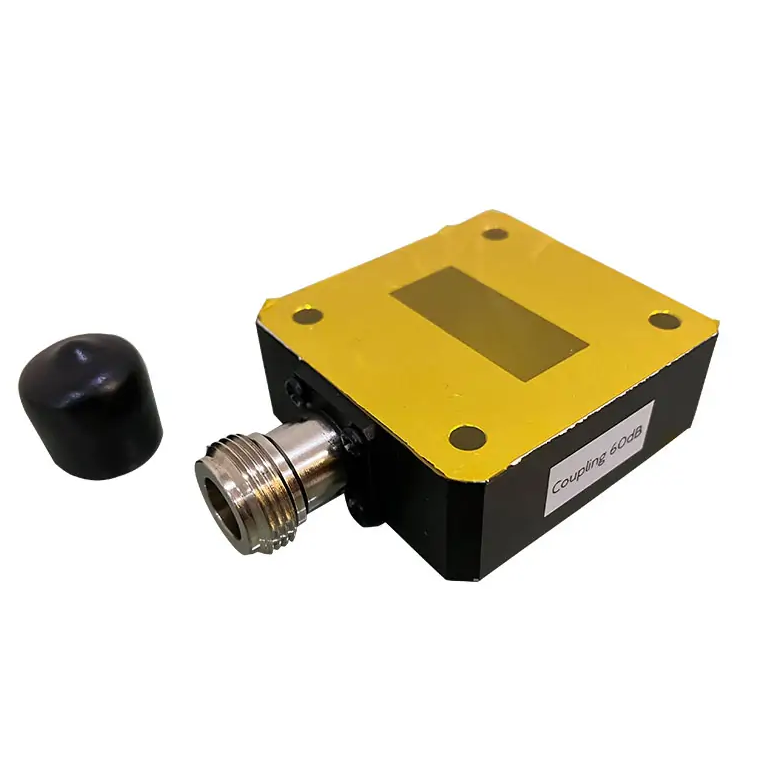
Combining Signals Together
For instance, in a typical satellite communications payload, a coupler might combine the outputs of two 100 W solid-state power amplifiers (SSPAs) to achieve a combined output of 190 W (accounting for a 0.5 dB combining loss) at a frequency of 20.5 GHz. The process is not a simple merger; it requires precise amplitude and phase matching to ensure high combining efficiency, often exceeding 95%. A 3 dB coupler, the most common type for this task, theoretically splits power equally but can also work in reverse to combine two inputs, with the final output highly dependent on the phase relationship between the signals, typically requiring a phase alignment within ±5 degrees to avoid destructive interference that can cause power losses of up to 20%.
The isolation between the two input ports, usually greater than 25 dB, is critical. This isolation ensures that one power amplifier does not “see” the other as a load, which could cause instability, reflected power (VSWR > 1.5:1), and potential damage. The maximum combined power is limited by the power handling of the coupler’s internal components, often rated for average power levels of 500 W and peak pulses of 5 kW. In a real-world radar transmitter array, sixty-four individual 10 W amplifier modules might be combined using a tree network of thirty-two 3 dB couplers, resulting in a final output of over 600 W with a combining efficiency of 94%. The amplitude balance between the input signals must be within ±0.3 dB to prevent a significant reduction in combined output power.
- Radar Beamforming: Phased array antennas use hundreds of combining networks to steer electromagnetic beams electronically. A ±10° phase error in a single combiner can lead to a 2° beam-pointing error, reducing target tracking accuracy by 15%.
- 5G Massive MIMO: Base stations combine signals from multiple transceivers to increase network capacity and user data rates. A typical 64-element array uses 63 combiners, and a 0.5 dB insertion loss in each can result in a system-level efficiency drop of 12%.
- High-Power RF Transmission: Broadcasting systems combine multiple amplifiers to achieve megawatt-level outputs. For example, combining four 300 kW amplifiers with a network of 3 dB couplers can yield a total effective radiated power (ERP) of over 1.1 MW, accounting for combined losses of approximately 0.8 dB.
The internal waveguide paths must be machined to a length tolerance of ±0.05 mm to ensure that the electrical length difference between paths is less than 1° of phase at the operating frequency, which for a 10 GHz signal translates to a physical length difference of less than 83 micrometers. The VSWR at the combined output port is typically kept below 1.25:1 to ensure that less than 1.5% of the power is reflected back towards the amplifiers, which could degrade their performance and reduce their operational lifespan by up to 20%. This precise engineering allows a network of combiners to merge signals with a phase noise contribution of less than 0.1 dB and an intermodulation distortion (IMD) level below -70 dBc, which is crucial for maintaining signal clarity in crowded spectral environments.
Different Coupler Types
A standard 20 dB directional coupler for C-band satellite downlinks (3.7–4.2 GHz) might measure 150 mm in length, handle 200 W of average power, and cost approximately 400 USD. In contrast, a microstrip rat-race coupler for a 5.8 GHz Wi-Fi band could be printed on a 0.8mm thick FR4 substrate, occupy an area of just 95 cm2, and be mass-produced for under 5 per unit. The choice between types hinges on a balance of frequency range, which can span from 2 GHz to over 110 GHz, and isolation performance, which varies from 15 dB to over 40 dB, directly impacting measurement accuracy and system efficiency.
The most fundamental type is the two-hole directional coupler. Its coupling value is fixed by the aperture size, offering very high directivity (>40 dB) but narrow bandwidth, typically less than 5% of the center frequency. For broader operation, the multihole coupler is used. It features a series of 5 to 15 apertures with carefully tapered diameters to achieve a flat coupling response (e.g., 20 dB ± 0.35 dB) across a 40% bandwidth (e.g., 7.0 to 10.5 GHz). The Schwinger reversed-phase coupler is another variant, using a single slot but rotating the auxiliary waveguide by 90 degrees to achieve directivity, often handling peak powers up to 1 MW in radar systems. For the highest power applications, like in particle accelerators, Riblet short-slot couplers are employed. They use a shared wall with a precisely machined slot 12.7 mm long to combine two 500 kW klystron outputs with a combining efficiency of 98.5% and a phase tolerance of ±2 degrees.
- Branch-Line Coupler (90° Hybrid): This planar coupler splits power equally (3 dB) with a 90-degree phase shift between outputs. Its bandwidth is moderate, around 10-20%, with an amplitude balance of ±0.4 dB and an insertion loss of 0.2 dB. It’s ubiquitous in balanced amplifiers and IQ modulators for communications.
- Rat-Race Coupler (180° Hybrid): This ring-shaped coupler has a 300-degree circumference (electrically) and provides both in-phase and 180-degree out-of-phase power division. Its bandwidth is narrower, approximately 15%, but it offers high isolation (>25 dB) between specific ports, making it ideal for mixers and duplexers.
- Lange Coupler (Interdigitated): This microstrip coupler uses four to six interleaved fingers to achieve very tight coupling (3 dB or 6 dB) over an ultra-wide bandwidth (octave or more, e.g., 6–18 GHz). Its trade-off is a more complex manufacturing process and a slightly higher insertion loss of 0.5 dB.
Air-filled aluminum waveguides are standard for high-power, low-loss ( <0.01 dB/cm) applications. Silver-plated brass improves surface conductivity, reducing loss by a further 15% at 40 GHz. For integrated circuits, microstrip couplers on RT/duroid® 5880 substrate ( thickness: 0.25 mm, εᵣ: 2.2) are common, offering a compact size of 8 mm² at 24 GHz but with a lower power handling capability of around 20 W. The manufacturing tolerance is paramount; a ±5 μm deviation in the width of a microstrip line can alter the coupling factor by ±0.7 dB and shift the center frequency by ±0.5 GHz, rendering a batch of 10,000 units potentially 15% out of spec and unusable for a high-volume consumer device like a 28 GHz 5G phone.
Where Couplers are Used
In a large satellite communications ground station, a single 30 dB directional coupler might be used to sample just 0.1% of a 2.5 kW downlink signal at 12.5 GHz, allowing engineers to monitor signal health with a standard 50 W power meter without risk of overload. In a consumer 5G base station, a network of microstrip Lange couplers, each costing under $10 and occupying 1.5 cm², is integral to the massive MIMO array, enabling beamforming to serve over 200 simultaneous users with a data throughput exceeding 2 Gbps. The precision of these components directly impacts system performance; a ±0.5 dB error in a radar coupler can lead to a 5% miscalculation in target radar cross-section, while in a medical linear accelerator, it ensures the radiation dose delivery is accurate within ±2%.
In defense and radar, high-power couplers handle peak power levels exceeding 1 MW in pulses as short as 1 microsecond, operating in frequency bands from 2 GHz to 35 GHz (S-band to Ka-band). Their directivity, often specified above 35 dB, is critical for accurately measuring the tiny reflected signals from stealth aircraft, which can be 50 dB lower than the transmitted pulse. In telecommunications, couplers are deployed by the thousands in cellular base stations. A typical macro-cell tower might use 12 couplers per sector, with a failure rate specified at less than 0.1% over a 10-year operational lifespan. Their insertion loss, kept below 0.3 dB, is a key factor in the system’s energy efficiency, as every 0.1 dB loss translates to approximately 2.3% more energy consumption from the power amplifiers to maintain the same radiated power.
- Radar Systems (Air Traffic Control, Military): Used for monitoring high-power transmitted pulses (500 kW peak, 5 kW avg.) and sampling reflected signals for processing. A typical system uses 5-10 couplers with directivity > 40 dB to distinguish faint echoes.
- Satellite Communications (Satcom): Employed in both ground stations and payloads for power monitoring and combining amplifier outputs. Couplers here operate over narrow bands (e.g., 500 MHz bandwidth at 20 GHz) with exceptional stability across a -40°C to +85°C temperature range.
- 5G/6G Massive MIMO Antennas: Integral to beamforming networks within antenna arrays. A single 64-element array will contain over 60 couplers, requiring ultra-compact size (< 0.5 cm³), low cost (<$15 per unit), and consistent performance across a wide band like 3.4–3.8 GHz.
- Medical Equipment (MRI, Linear Accelerators): In MRI systems, couplers help direct 1 kW+ RF pulses at frequencies like 128 MHz or 300 MHz into the scanner bore with precise phase control. In radiotherapy linacs, they ensure the microwave power driving the electron accelerator is stable within ±0.5% to guarantee accurate dose delivery.
- Test and Measurement Equipment: A vector network analyzer (VNA) uses internal couplers to separate forward and reflected waves for accurate S-parameter measurement. These couplers prioritize ultra-high directivity (>50 dB) and broad bandwidth (e.g., 10 MHz to 26.5 GHz) to achieve measurement uncertainties below 0.1 dB.
| Application | Primary Function | Key Coupler Parameters | Typical Values |
|---|---|---|---|
| Radar Transmitter | High-Power Monitoring | Avg. Power Handling, Directivity, VSWR | 500 W avg., >40 dB, <1.15:1 |
| Satcom Payload | Signal Combining / Redundancy | Frequency, Combining Loss, Phase Balance | 20 GHz, <0.2 dB, ±3° |
| 5G Base Station | Beamforming Network | Bandwidth, Size, Cost, Insertion Loss | 400 MHz, <1 cm², <$10, <0.4 dB |
| VNA (Test Equipment) | Reflection Measurement | Directivity, Bandwidth, Accuracy | >50 dB, DC-26.5 GHz, ±0.05 dB |
| Medical Linac | Power Feed Stability | Power Handling, Accuracy, Reliability | 5 kW peak, ±0.5%, MTBF >100,000 hrs |
Aerospace and satellite applications require components that withstand vibration levels of 15 G RMS and temperature cycles from -55°C to +125°C without any performance drift, such as a coupling factor change of more than ±0.2 dB. In a high-volume consumer application like a Wi-Fi 6E access point operating at 6 GHz, the focus is on automated surface-mount (SMT) assembly where thousands of couplers are placed per hour at a cost of $0.02 per placement, with a final test ensuring 99.95% of units meet the ±0.5 dB coupling specification. This mass production reliability is what enables the complex RF systems in our everyday devices to function consistently for their expected 5-to-7-year service life.
Key Performance Specs
A miscalculation in a single spec can cascade into system-wide failure. For instance, choosing a coupler with a 35 dB directivity instead of a 45 dB one might seem minor, but it introduces a 2.5% error in reflected power measurement (VSWR), which could lead to a 15% overestimation of a radar target’s distance. Similarly, a coupler rated for 50 W average power will catastrophically fail within seconds if used in a 500 W broadcast transmitter, as internal arcing will occur at power densities exceeding 5 kW/cm². These specs are not just numbers on a datasheet; they are the guardrails that ensure your RF system operates with 99.9% reliability over its intended 10,000-hour minimum lifespan.
A 20 dB ± 0.4 dB coupler will divert 1% of the input power, with a tolerance ensuring the actual value stays between 0.91% and 1.10%. Insertion Loss quantifies the power sacrificed in the main path, typically 0.15 dB to 0.5 dB, meaning 96.5% to 89% of the input power reaches the main output. However, the most critical metric for measurement accuracy is Directivity. This measures the coupler’s ability to distinguish between forward and reverse waves. A 40 dB directivity means the coupler is 10,000 times more responsive to a forward wave than a reflected wave of the same power. In a vector network analyzer (VNA), a directivity drop from 45 dB to 35 dB can increase measurement uncertainty from ±0.05 dB to over ±0.3 dB, rendering the system useless for characterizing low-VSWR (<1.05:1) components.
For system engineers, the Frequency Bandwidth and Power Handling specs define the operational envelope. A coupler specified for 8.0–12.0 GHz must maintain all its other parameters within stated tolerances across that entire 4 GHz range. Its average power handling (e.g., 200 W) is limited by the rise in internal temperature, often kept below +85°C to prevent deformation, while its peak power handling (e.g., 5 kW) is limited by the breakdown voltage of the air or gas inside the waveguide, which can arc at fields stronger than 30 kV/cm.
A VSWR of 1.20:1 means that 0.83% of the incident power is reflected, while a poorer 1.50:1 means 4.00% is reflected, which can cause amplifier instability and generate standing waves that create +3.5 dB power peaks. For combiner applications, Phase Balance and Amplitude Balance are paramount. A 90-degree hybrid coupler must split power with a 90° ± 3° phase difference and an amplitude imbalance of ±0.4 dB across its band; a deviation beyond this can degrade the side lobe suppression in a phased array antenna by -5 dB, drastically reducing its resolution.