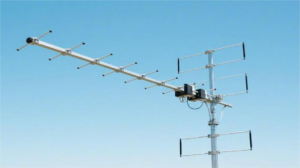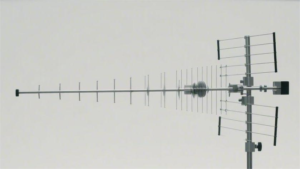
The feeding structure of an antenna delivers RF energy from the transmitter to the radiating elements. Common types include coaxial feeds (50-75Ω impedance), microstrip lines (for patch antennas), and waveguide feeds (for high-power applications). Key parameters are impedance matching (VSWR <2:1), bandwidth (e.g., 2:1 for log-periodic antennas), and insertion loss (<0.5dB).
Proper design ensures efficient power transfer (90%+) and minimizes reflections. For phased arrays, corporate or series feeds distribute signals with phase control (±5° accuracy). Use baluns for balanced-to-unbalanced transitions in dipole feeds.
Table of Contents
Basic Antenna Feed Types
Antenna feeding is how energy moves from the transmitter (or receiver) to the antenna. The right feed method affects efficiency (60-95%), bandwidth (5-40% of center frequency), and impedance matching (typically 50Ω or 75Ω). Poor feeding can waste up to 30% of power due to reflections. Common feed types include coaxial, waveguide, microstrip, and loop coupling, each with trade-offs in cost (500 per unit), frequency range (MHz to THz), and power handling (1W to 100kW).
| Feed Type | Frequency Range | Power Handling | Efficiency | Cost (USD) | Common Use Cases |
|---|---|---|---|---|---|
| Coaxial | 1 MHz – 6 GHz | 1W – 10kW | 70-90% | 200 | TV, Wi-Fi, cellular |
| Waveguide | 1 GHz – 100 GHz | 100W – 100kW | 85-95% | 500 | Radar, satellite |
| Microstrip | 100 MHz – 30 GHz | <50W | 60-80% | 100 | PCBs, IoT devices |
| Loop Coupling | 10 kHz – 300 MHz | <5W | 50-70% | 50 | RFID, NFC |
Coaxial feeding is the most common, using a 50Ω or 75Ω cable with low loss (0.1-3 dB/m). It’s cheap (5/m) but struggles above 6 GHz due to skin effect losses. Waveguides handle high power (1kW+) and millimeter waves (30-300 GHz) but are bulky (5-50 cm wide) and expensive ($200+ per meter). Microstrip feeds are compact (1-10 mm wide) and used in PCBs, but efficiency drops sharply above 10 GHz due to dielectric losses. Loop coupling is simple but limited to low frequencies (<300 MHz) and weak signals (NFC at 13.56 MHz).
For best efficiency, match the feed to the antenna’s impedance (usually 50Ω). A 2:1 VSWR mismatch can waste 11% of power, while 3:1 wastes 25%. Testing with a vector network analyzer (VNA) helps optimize return loss (<-10 dB ideal). If budget allows, waveguides are best for high-power, high-frequency systems, while coaxial is best for low-cost, sub-6GHz applications. Microstrip works well in compact electronics, but avoid it for high-power RF.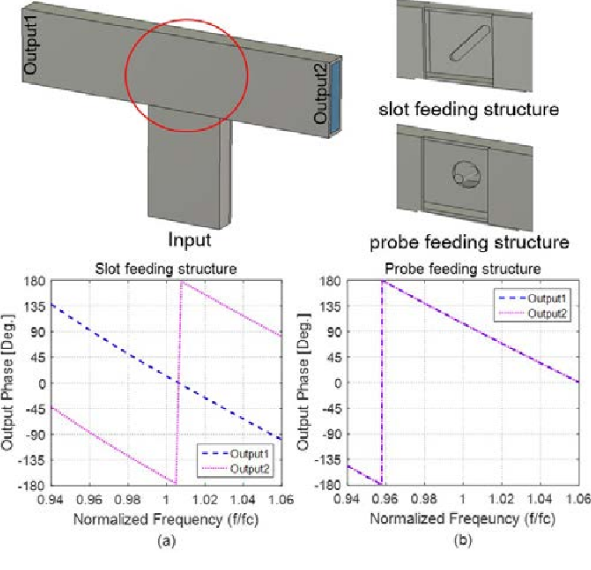
How Modes Propagate
Wave propagation in waveguides and transmission lines depends on electromagnetic modes—specific patterns of electric and magnetic fields. The dominant mode in most systems is TEM (Transverse Electromagnetic), but at frequencies above 1 GHz, higher-order modes like TE (Transverse Electric) and TM (Transverse Magnetic) start appearing, causing signal distortion (up to 15% power loss) if not managed.
Key fact: A rectangular waveguide (WR-90) supports TE₁₀ mode at 8-12 GHz, with a cutoff frequency of 6.56 GHz. Below this, waves don’t propagate efficiently, losing >90% power in just 1 meter.
In coaxial cables, TEM mode dominates below 6 GHz, with low attenuation (0.1-3 dB/m). But above 10 GHz, TE₁₁ mode can emerge, increasing loss by 20-50% if the cable bends too sharply (radius < 5x diameter). Fiber optics avoid this by using single-mode fibers (core diameter: 8-10 µm), restricting propagation to LP₀₁ mode for low dispersion (<0.1 ps/nm·km).
Multimode fibers (50-62.5 µm core) allow multiple modes but suffer from modal dispersion, limiting range to <1 km at 10 Gbps. Graded-index fibers reduce this by 50% compared to step-index, but single-mode remains king for long-haul (100+ km).
Waveguide modes get complex fast. A circular waveguide (1-10 cm diameter) supports TE₁₁ at 2-5 GHz, but TM₀₁ mode can also propagate, causing polarization drift (up to 30° error). To suppress unwanted modes, engineers use mode filters (insertion loss: 0.5-2 dB) or carefully design bends (radius > 3x wavelength).
Microstrip lines on PCBs mostly use quasi-TEM mode, but at >20 GHz, surface-wave modes steal 5-15% power. Adding ground vias (spaced at <λ/10) reduces leakage by 40%.
Waveguide Feeding Methods
Waveguides are the go-to for high-power (100W-100kW) and high-frequency (1-300 GHz) signals, offering low loss (0.01-0.1 dB/m) and high efficiency (85-95%) compared to coaxial cables. They’re essential in radar, satellite, and millimeter-wave systems, where even 5% power loss can degrade performance. But feeding energy into a waveguide isn’t as simple as plugging in a cable—mismatches can cause 20-30% reflections, wasting precious RF power.
Key fact: A WR-90 waveguide (22.86 x 10.16 mm) has a cutoff frequency of 6.56 GHz. Below this, signals attenuate rapidly (>90% loss in 1m), making proper feeding critical.
| Feed Method | Frequency Range | Insertion Loss | Power Handling | Cost (USD) | Best For |
|---|---|---|---|---|---|
| Probe Coupling | 2-40 GHz | 0.2-1.5 dB | 1-10 kW | 300 | Narrowband, high power |
| Loop Coupling | 1-18 GHz | 0.5-2 dB | 100W-5 kW | 200 | Low-cost, simple feeds |
| Slot/Aperture | 10-100 GHz | 0.1-0.8 dB | 500W-50 kW | 500 | High-frequency arrays |
| Horn Transition | 5-140 GHz | 0.05-0.3 dB | 10-100 kW | 1000 | Low-loss, wideband |
Probe coupling is the most common, using a ¼-wavelength monopole (2-15 mm long) inserted into the waveguide. It’s great for narrowband (5-10% bandwidth) but suffers from higher VSWR (1.5:1 to 2:1) if not tuned precisely. A 3mm misalignment can increase reflection by 15%.
Loop coupling is cheaper and works well for 1-18 GHz, but efficiency drops fast above 10 GHz (up to 2 dB loss). The loop’s diameter (5-20 mm) must be optimized—too small, and coupling is weak (< 50% efficiency); too large, and it distorts the TE₁₀ mode.
Slot/aperture feeds are used in waveguide slot antennas and phased arrays. A 1mm x 5mm slot can couple 90%+ energy at 30 GHz, but machining tolerances must be tight (±0.05mm), raising cost.
Horn transitions are the gold standard for low-loss (0.05-0.3 dB) and wideband (up to 40% bandwidth) feeds. A smooth taper (10-30 cm long) minimizes mode conversion, but the bulk (5-50 cm long) makes them impractical for compact systems.
Microstrip Line Feeding
Microstrip lines are the backbone of modern RF PCBs, offering compact size (0.1-5mm wide), low cost (2 per trace), and decent performance up to 30 GHz. They dominate Wi-Fi (2.4/5 GHz), 5G (3-6 GHz), and IoT devices because they’re easy to fabricate on standard FR4 (εᵣ=4.3) or Rogers (εᵣ=3-10) substrates. But don’t be fooled by their simplicity—a poorly designed microstrip feed can lose 20-40% power due to mismatches, radiation, or dielectric losses.
Critical detail: A 50Ω microstrip on FR4 with 1.6mm substrate thickness needs a 3mm trace width. Get this wrong by just ±0.2mm, and impedance shifts ±5Ω, causing 10% more reflections.
The quasi-TEM mode in microstrips works well below 15 GHz, but above that, dispersion increases (up to 15% phase error) and surface waves steal 5-10% power. If you’re pushing 24 GHz (5G mmWave), even 0.05mm etching errors matter—a 10% width variation at this frequency can shift impedance by 8Ω. That’s why high-frequency designs often switch to grounded coplanar waveguide (GCPW), which cuts radiation loss by 30-50% but costs 2-3x more due to tighter tolerances.
Feeding patch antennas? The inset feed (a notch cut into the patch) gives better matching (<-20 dB return loss) than edge feeds but reduces gain by 0.5-1 dB. For wideband apps, a quarter-wave transformer (5-15mm long) can improve bandwidth from 5% to 20%, but adds 1-2 dB loss. And if you’re stacking layers, via fences (spaced at λ/10) reduce coupling between traces by 40%.
Material choice is huge. Cheap FR4 (tanδ=0.02) loses 0.3-0.5 dB/inch at 10 GHz, while Rogers 4350B (tanδ=0.0037) cuts that to 0.1 dB/inch—but at 10x the price (5/sheet). For high-power apps (>10W), avoid thin traces (<1mm)—current density above 5 A/mm² can overheat copper in minutes.
Baluns in Antenna Feeds
Baluns (balanced-to-unbalanced transformers) are critical for connecting 50Ω coaxial cables (unbalanced) to dipoles or loops (balanced) without distorting radiation patterns or wasting power. A bad balun can increase feedline radiation by 20-30%, skew patterns by ±15°, and lose 1-3 dB of signal strength. They’re essential in HF dipoles (1-30 MHz), Yagi-Udas (50-1500 MHz), and log-periodics (200-2000 MHz), where impedance balance affects gain (up to 2 dB loss) and front-to-back ratio (3-10 dB degradation).
| Balun Type | Frequency Range | Insertion Loss | Power Handling | Cost (USD) | Best For |
|---|---|---|---|---|---|
| Choke Balun | 1-1000 MHz | 0.2-1.5 dB | 10W-1 kW | 50 | Dipoles, verticals |
| Transformer Balun | 100 kHz-500 MHz | 0.5-2 dB | 1W-100W | 100 | Low-frequency loops |
| Guanella (1:1) | 1-300 MHz | 0.1-0.8 dB | 100W-5 kW | 200 | High-power HF |
| Ruthroff (4:1) | 10-100 MHz | 0.3-1.2 dB | 10W-500W | 150 | Matching folded dipoles |
Choke baluns are the simplest—just 5-20 turns of coax around a ferrite core (µ=20-100). They block common-mode currents (reducing noise by 6-10 dB) but struggle above 500 MHz where ferrite losses spike (tanδ > 0.1). A FT240-43 core ($8) handles 100W at 7 MHz with 0.5 dB loss, but at 144 MHz, loss jumps to 1.2 dB.
Transformer baluns use ferrite or powdered-iron cores (µ=4-40) for impedance conversion. A 4:1 Ruthroff balun matches 300Ω folded dipoles to 75Ω coax, but bandwidth is narrow (<20% of center frequency). If core saturation occurs (above 50-100W), harmonic distortion rises 3-6%.
Guanella baluns (transmission-line transformers) excel in HF (1-30 MHz) with <0.5 dB loss even at 1 kW. They’re built with twisted bifilar wires (18-22 AWG) or coax segments (3-10 cm long), but size becomes impractical above 200 MHz.
Critical specs:
- Frequency range: A balun rated for 3-30 MHz will fail miserably at 450 MHz (loss >3 dB).
- Power handling: Ferrite cores saturate at 200-500 mT—exceed this, and loss spikes 2-5x.
- Impedance error: A 5% mismatch in turns ratio (e.g., 1.05:1 instead of 1:1) adds 0.2 dB loss.
Pro tip: For VHF/UHF Yagis, use choke baluns with RG-402 coax (3mm OD)—it keeps common-mode currents <-30 dB up to 1 GHz. And always measure with a VNA—baluns can show 1:1 SWR but still radiate 10% of power if poorly built.
Impedance Matching Tips
Getting impedance matching right is the difference between wasting 25% of your RF power and achieving 95%+ efficiency. A 2:1 VSWR means 11% power loss, while 3:1 jumps to 25%—enough to turn a 100W transmitter into 75W before it even reaches the antenna. The problem gets worse with frequency: at 5.8 GHz, a 0.5mm trace length error on a PCB can shift impedance by ±8Ω, causing 15% reflection loss.
Start with the basics—know your system impedance. Most RF gear uses 50Ω, but TV/video runs 75Ω, and some vintage gear needs 300Ω. Mismatch here means instant 10-20% loss. For PCB traces, a 1.6mm FR4 substrate needs 3mm trace width for 50Ω, but Rogers 4350B (εᵣ=3.48) only needs 2.2mm. Get this wrong, and you’ll fight 5-10% mismatches from the start.
Matching networks are your best friend. A simple LC circuit (1-10nH inductor + 0.5-5pF capacitor) can fix ±20Ω mismatches up to 500 MHz with <0.5 dB loss. For UHF (300-3000 MHz), stub matching (λ/4 or λ/8 traces) works better—a 5mm open stub on a 2.4 GHz microstrip can null -15 dB reflections. But beware: stub tuning is narrowband—±5% frequency shift kills the match.
Ferrite beads help suppress common-mode noise (6-10 dB reduction), but they’re not impedance matchers. A fair #43 mix bead might show 50Ω at 10 MHz, but at 100 MHz, it’s just 5-10Ω—useless for matching. Instead, use quarter-wave transformers (λ/4 lines) for fixed-frequency fixes. A 50Ω to 75Ω match needs a 61.2Ω line, which you can make with 2.8mm trace on FR4.
Antenna tuners are bandaids, not cures. A $200 automatic tuner can force 1:1 VSWR, but if the antenna is far off resonance, you’re still losing 10-30% power in coax losses. For HF dipoles, a 1:1 balun + 5% length tweak often works better than a tuner.