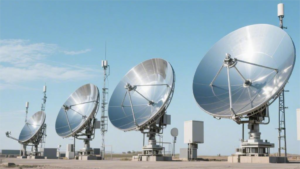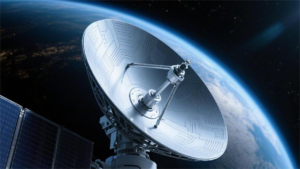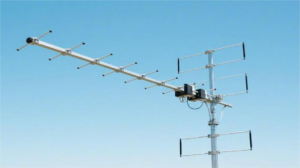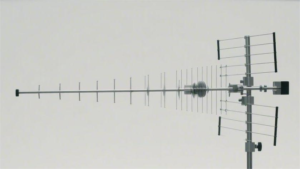
Horn antennas offer wide bandwidth (typically 10:1 ratio) with 10-20 dBi gain, ideal for short-range applications like radar feeds. Parabolic dishes achieve higher gain (30-50 dBi) through reflector focusing, but narrower bandwidth (5-10% of center frequency).
Dishes provide 3° beamwidth at 10GHz vs. horns’ 25°, making dishes better for long-distance satellite links (60cm dishes reach 95% efficiency). Horns are simpler, needing no alignment, while dishes require precise focal adjustment (±0.1λ accuracy). Both operate from 1-100GHz.
Table of Contents
Shape and Basic Design
Antennas come in all shapes, but horn and parabolic dish designs stand out because of their distinct structures and performance trade-offs. A horn antenna is essentially a flared metal waveguide, typically made of aluminum or copper, with lengths ranging from 0.5λ to 10λ (wavelengths) depending on the frequency. For example, a standard X-band (8-12 GHz) horn might be 10-30 cm long with an aperture width of 5-15 cm. The flare angle—usually between 10° to 60°—controls beamwidth, with wider angles (e.g., 40°-60°) giving broader coverage but lower gain (around 10-20 dBi).
In contrast, a parabolic dish antenna uses a curved reflector (often 0.5m to 5m in diameter) to focus signals onto a small feed horn at its focal point. The depth of the dish, known as the f/D ratio (typically 0.25 to 0.5), affects efficiency. A 1.2m dish at 12 GHz can achieve 30-40 dBi gain, far higher than most horns. However, the dish’s rigid structure makes it bulkier—a 2.4m C-band dish weighs 15-30 kg, while a comparable horn might be 1-3 kg.
Key differences in construction:
- Horns are simpler, often one-piece with no moving parts, costing 50-500 for commercial models. They handle moderate power (100W-1kW) but suffer 1-2 dB loss from internal reflections if poorly designed.
- Dishes require precise surface accuracy (≤0.1λ RMS error)—a 0.5mm warp at 10 GHz can drop efficiency by 10%. Their assembly includes feed supports (blocking 5-10% of aperture) and sometimes motorized mounts (adding 200-2000 to cost).
Material choices matter:
- Horns often use aluminum (density: 2.7 g/cm³) for lightweight needs or copper (8.96 g/cm³) for better conductivity, impacting weight by 20-50%.
- Dishes favor galvanized steel (7.8 g/cm³) for durability or fiberglass (1.8 g/cm³) for portability, with thermal expansion rates of 12-24 µm/m°C affecting long-term alignment.
Performance trade-offs:
- A 24 GHz horn might have a beamwidth of 25°, useful for short-range radar, while a 1m dish at 24 GHz narrows it to 3°, ideal for satellite links.
- Horns excel in wideband operation (e.g., 2:1 frequency ratio), whereas dishes struggle outside their designed band (e.g., a Ku-band dish loses 3 dB gain if used at C-band).
How They Focus Signals
Horn and parabolic dish antennas focus signals in fundamentally different ways, leading to major differences in gain, beamwidth, and efficiency. A horn antenna works by gradually expanding a waveguide to match free-space impedance, reducing reflections and directing energy forward. For example, a standard pyramidal horn with a flare length of 20 cm and an aperture of 10 cm x 7 cm at 10 GHz produces a beamwidth of about 25° and a gain of 15 dBi. The flare angle (typically 15°-30°) determines how tightly the signal is focused—too wide, and gain drops; too narrow, and sidelobes increase.
A parabolic dish, on the other hand, uses a curved reflector to concentrate signals onto a small feed horn at its focal point. The focal length (usually 0.3 to 0.5 times the dish diameter) and surface accuracy (must be within 0.02λ RMS error for optimal performance) are critical. A 1.8m dish at 12 GHz with a well-aligned feed can achieve 38 dBi gain and a beamwidth as narrow as 2°, making it ideal for long-distance satellite communication. However, even a 1mm surface deformation at this frequency can reduce efficiency by 5-10%.
| Feature | Horn Antenna | Parabolic Dish Antenna |
|---|---|---|
| Gain | 10-25 dBi (depends on size & frequency) | 25-50 dBi (scales with diameter) |
| Beamwidth | 15°-60° (wider coverage) | 1°-10° (highly directional) |
| Efficiency | 50-80% (losses from flare mismatch) | 55-75% (feed blockage & surface errors) |
| Frequency Sensitivity | Broadband (2:1 ratio common) | Narrowband (optimized for single band) |
| Alignment Tolerance | ±10° (for minimal gain loss) | ±0.5° (critical for high gain) |
Horns rely on controlled waveguide expansion to minimize reflections, but they suffer from phase errors if the flare is too short. A 20 cm horn at 5 GHz might have 1-2 dB loss due to imperfect wavefront alignment. Dishes, meanwhile, depend on precise geometry—if the feed is 5mm off-focus, gain can drop by 3 dB.
Frequency Range Uses
Horn and parabolic dish antennas perform very differently across frequency bands, making each better suited for specific applications. Horn antennas typically operate across 2:1 to 4:1 frequency ratios, meaning a single horn designed for 8-12 GHz (X-band) can still work reasonably well at 6-18 GHz with only 1-3 dB gain variation. This makes them ideal for wideband radar, EMC testing, and lab measurements, where frequency agility matters more than peak efficiency. A standard WR-90 waveguide horn (8.2-12.4 GHz) delivers 12-18 dBi gain across its band, with VSWR below 1.5:1—good enough for most short-range links.
Parabolic dishes, however, are narrowband by design, optimized for single-band or dual-band use with 10-20% bandwidth limits. A C-band (4-8 GHz) satellite dish might cover 3.7-4.2 GHz downlink and 5.9-6.4 GHz uplink, but pushing beyond that risks 3+ dB efficiency loss due to feed mismatch. High-frequency dishes (e.g., Ka-band, 26.5-40 GHz) require surface accuracy below 0.3mm RMS—any warp or dent larger than 0.1mm can scatter signals, reducing gain by 10-20%.
| Parameter | Horn Antenna | Parabolic Dish Antenna |
|---|---|---|
| Typical Bandwidth | 2:1 to 4:1 (e.g., 6-18 GHz) | 10-20% of center frequency (e.g., 4.5-5 GHz) |
| Gain Stability | ±1-3 dB across band | ±0.5-2 dB (narrowband-optimized) |
| Peak Efficiency | 50-80% (varies with flare design) | 60-75% (depends on surface precision) |
| Common Uses | Wideband radar, EMI testing, feed horns | Satellite comms, point-to-point microwave |
| Cost per GHz | $50-300 (broadband models) | $200-2000 (high-precision dishes) |
Real-World Frequency Tradeoffs
- Below 3 GHz, horns become impractically large—a 1 GHz horn needs an aperture of ~30 cm, while a 1m dish at the same frequency provides 20+ dBi gain in a much smaller footprint.
- At 60 GHz (mmWave), small 10-20 cm horns work well for 5G backhaul, but dishes struggle with atmospheric absorption losses (15 dB/km) unless sized >60 cm.
- For dual-band use (e.g., 10/18 GHz), a corrugated horn maintains <2 dB ripple, whereas a dish needs two separate feeds, adding $500+ in complexity.
Material & Frequency Limits
- Aluminum horns handle 1-40 GHz well, but copper-plated versions reduce loss by 0.1-0.3 dB at 30+ GHz.
- Fiberglass dishes warp 0.05-0.1mm per 10°C temp change, making them poor for Ka-band unless actively temperature-controlled (+$1,000+ cost).
Size and Portability
When it comes to antennas, size directly impacts performance and practicality—and horns and dishes take very different approaches. A standard X-band horn antenna (8-12 GHz) typically measures 15-30 cm in length with a 5-15 cm aperture, weighing 0.5-2 kg, making it easy to mount on tripods or handheld test gear. For lower frequencies, though, horns get impractically large—a 1 GHz horn needs an aperture of ~30 cm, pushing its length to 60-80 cm and weight to 3-5 kg, which starts to defeat its portability advantage.
Parabolic dishes, meanwhile, scale differently. A 60 cm Ku-band dish (12-18 GHz) weighs 5-8 kg, while a 1.2 m C-band dish jumps to 15-25 kg, requiring heavy-duty mounts or permanent installations. The depth-to-diameter ratio (f/D) also affects bulk—a shallow dish (f/D=0.25) is 20-30% lighter than a deep dish (f/D=0.5) of the same diameter, but the deeper version offers 1-2 dB better gain due to improved focus.
Transport and setup time also differ drastically. A horn antenna can be unpacked and operational in <5 minutes, often just needing a simple clamp or tripod. A 2.4 m satellite dish, however, takes 2-4 hours to assemble, align, and calibrate, with wind load becoming a major concern—gusts above 50 km/h can misalign it by 0.5°, killing signal strength. Even a foldable 1m dish takes 20-30 minutes to deploy, and its hinges and locking mechanisms add 10-15% weight versus a solid version.
Material choices further impact portability. Aluminum horns are 30-50% lighter than copper versions but suffer 0.1-0.2 dB higher loss at 20+ GHz. Dishes made of fiberglass (1-3 kg/m²) are easier to carry than steel (7-10 kg/m²), but they warp 0.1mm per 10°C temperature shift, requiring frequent realignment in outdoor environments.
Common Applications
Horn and parabolic dish antennas dominate different real-world applications because of their distinct performance characteristics. Horn antennas are the go-to choice for test labs and short-range systems, where wide frequency coverage (2:1 to 4:1 bandwidth) and moderate gain (10-25 dBi) matter more than extreme directivity. For example, in EMC testing (3-18 GHz), a standard double-ridged horn covers 80% of commercial compliance tests while costing $300-800—far cheaper than swapping multiple narrowband antennas. Radar systems also rely on horns, especially in automotive 77 GHz radar, where compact 5×3 cm horns provide 15-20° beamwidth for detecting objects 1-200 meters away with ±0.1m accuracy.
Parabolic dishes, on the other hand, excel in long-distance, high-gain scenarios where 30-50 dBi is non-negotiable. A 1.8m Ku-band dish (12-18 GHz) can maintain a satellite link at 36,000 km with 99.9% uptime, but only if the surface error stays below 0.5mm RMS. Point-to-point microwave links (6-38 GHz) use 60 cm to 3m dishes to achieve 1-10 Gbps data rates over 5-50 km, with alignment tolerance under ±0.2°—any misalignment beyond that causes 3+ dB loss, killing throughput.
| Use Case | Horn Antenna | Parabolic Dish Antenna |
|---|---|---|
| EMC/RF Testing | 90% of labs use horns (3-40 GHz) | Rare (only for specific narrowband tests) |
| Automotive Radar | 77 GHz horns (5×3 cm, 15-20° beam) | Not used (too directional) |
| Satellite Communication | Feed horns only (part of dish system) | 1.2-3m dishes (99.9% link reliability) |
| Point-to-Point Microwave | Short-range (<1 km) links | 60 cm-3m dishes (1-10 Gbps at 5-50 km) |
| Military EW/Radar | Wideband DRH horns (2-18 GHz) | Tactical 1m dishes (Q-band, 40 GHz+) |
Cost and deployment speed also dictate choices. A 5G mmWave base station (28 GHz) might use 8×8 horn arrays (200-500 per horn) for 120° sector coverage, while a rural satellite internet terminal requires a 75 cm dish (800-$2000) that takes 2+ hours to install. Scientific applications like radio astronomy demand ultra-low-noise horns (20-40K noise temp) for hydrogen line detection (1.42 GHz), whereas deep-space comms (e.g., DSN 34m dishes) need sub-millimeter surface accuracy to catch 0.000000000001 W signals from Mars.
Cost and Maintenance
When choosing between horn and parabolic dish antennas, upfront cost and long-term upkeep play a huge role—and the numbers often surprise buyers. A standard X-band horn (8-12 GHz) costs 50-500, with laboratory-grade double-ridged horns hitting 800-2000 for 2-18 GHz coverage. These are one-time purchases with near-zero maintenance—no moving parts, no alignment checks, just occasional dust cleaning (5 minutes/year). Compare that to a 1.2m satellite dish, where the dish itself runs 300-1200, but adding mounts, feeds, and cabling pushes the total to 2000-5000. And that’s before yearly realignment (100-300 per service) or storm damage repairs (15% risk in 5 years for outdoor dishes).
”A 500 horn lasts 10+ years with no maintenance, while a 2000 dish needs $500/year in upkeep to stay at peak performance.”
Material durability also impacts lifetime costs. Aluminum horns survive indoor use for 15-20 years, but outdoor copper horns corrode after 5-8 years unless coated (+100 for weatherproofing). Dishes fare worse—galvanized steel reflectors rust at 0.1mm/year in coastal areas, requiring repainting every 3-5 years (200-$500 per job). Fiberglass dishes avoid rust but warp 0.2mm per 10°C swing, forcing realignment every 6-12 months in variable climates.
Power handling adds hidden costs. A 100W horn dissipates heat easily, needing no cooling, but a 500W dish feed requires active thermal management (+200 for fans or heat sinks) or suffers 3-5% shorter lifespan. High-power radar horns (1-2 kW) use forced air cooling (500-1000 upgrade), while industrial dishes over 300W often need liquid cooling (+1500) to prevent feed burnout.
Deployment speed = money saved. A horn antenna installs in <1 hour, costing 0-50 in labor, while a 3m C-band dish takes 8-16 hours with 2-3 technicians (800-2400 in labor). And if alignment drifts 0.5° (from wind or settling), the dish loses 30% signal strength, requiring another $200 service call. Horns? They either work or don’t—no tweaking needed.