An RF termination absorbs RF energy to prevent signal reflections, typically rated at 50Ω/75Ω impedance, handling 10-100W power, used in test setups or systems to maintain signal integrity within DC-6GHz frequency ranges.
Table of Contents
Definition and Basic Function
An RF termination is a simple but critical component used at the end of a transmission line to absorb radio frequency (RF) energy and prevent it from reflecting back into the system. Think of it like a shock absorber for electrical signals. In an ideal world, all the power sent from a source—like a transmitter or a test generator—should be cleanly transferred to its load, such as an antenna. But in reality, impedance mismatches occur, causing signal reflections that distort measurements, reduce system efficiency, and can even damage sensitive equipment.
A high-quality 50-ohm RF termination can typically reduce these reflections to an extremely low level, with a voltage standing wave ratio (VSWR) as low as 1.05:1 and a return loss better than -40 dB across frequencies from 0 to 18 GHz. This means over 99.99% of the incident power is absorbed and dissipated as heat, rather than bouncing back.
Most are designed for a characteristic impedance of 50 ohms, as this is the standard in most commercial and test equipment, though 75-ohm versions are common in video and cable TV systems. The internal structure usually consists of a resistive element, often a thin film or carbon composite material, engineered to handle specific power levels. Standard off-the-shelf terminations can handle average powers from 1 to 500 watts, with some high-power models rated for several kilowatts when used with forced air or liquid cooling. The physical size is directly tied to its power-dissipation capabilities; a small 5-watt SMA termination might be just 20 mm long, while a 500-watt N-type load can be over 150 mm long and require a large heatsink.
The key specification to look for is the frequency range, which dictates its useful application. Basic models cover DC to 3 GHz, while precision metrology-grade units can operate smoothly up to 67 GHz, used in advanced radar and 5G testing. Their power rating is usually given for continuous wave (CW) signals at an ambient temperature of 25°C, and it de-rates linearly—for example, a 50-watt load might only handle 25 watts at 70°C.
Why Preventing Signal Reflection Matters
In a typical 5G massive MIMO antenna test setup, even a small impedance mismatch causing a VSWR of 1.5:1 can reflect back 4% of the transmitted power (approximately 200 watts from a 5 kW output). This reflected power doesn’t just vanish—it travels back towards the sensitive power amplifier (PA), elevating its transistor junction temperature by 15-20°C. This thermal stress reduces PA lifespan by over 30% and can cause immediate failure during 10-minute continuous full-power tests. In vector network analyzer (VNA) measurements, a -25 dB return loss (about 0.56% power reflected) introduces a ±1.2 dB amplitude error and ±5° phase uncertainty at 28 GHz, rendering millimeter-wave calibration useless for commercial deployments.
For a cellular base station operator, a 2% system efficiency drop due to impedance mismatch from poorly terminated lines can lead to $15,000 annually in excess electricity costs per macro site. In a 64-element phased array radar, phase errors from reflections as low as -30 dB can distort beamforming angles by ±3°, reducing target detection range by 12%. This is why during factory calibration, engineers use precision 50-ohm terminations with VSWR <1.05 up to 40 GHz to keep measurement uncertainties below 0.1 dB.
| Application | Typical Reflection Level | Primary Consequence | Quantitative Impact |
|---|---|---|---|
| VNA Calibration | -35 dB (0.02% power) | S-parameter measurement inaccuracy | ±0.05 dB ripple error; ±0.8° phase drift at 18 GHz |
| 5G PA Protection | -20 dB (1% power) | Amplifier thermal overload | +18°C junction temperature rise; 40% reduction in mean time between failures |
| Satellite Comms | -15 dB (3.2% power) | Inter-symbol interference in QPSK modulation | 2.7 dB EVM degradation; packet error rate increases from 1% to 8% |
| CAT-6 Cable Testing | -10 dB (10% power) | Return loss certification failure | 3.2 dB insertion loss deviation; test accuracy falls outside TIA-568 specs |
Beyond hardware damage, reflections create standing waves that cause nulls and peaks every λ/4 along a cable. At 3.5 GHz (5G mid-band), this means a voltage variation every ~21 mm, which can desensitize receiver LNAs by 4 dB and increase bit error rate (BER) by 10⁻⁵. In high-power broadcast systems running 5 kW at 600 MHz, a VSWR of 2.0 reflects 11% of power (~550 watts), forcing combiners to dissipate 900 Joules of heat per minute—requiring active cooling. For signal integrity engineers, preventing this isn’t optional; it’s essential for maintaining budgeted system noise figures below 2.5 dB and ensuring modulation error ratios (MER) stay above 28 dB for 256-QAM signals.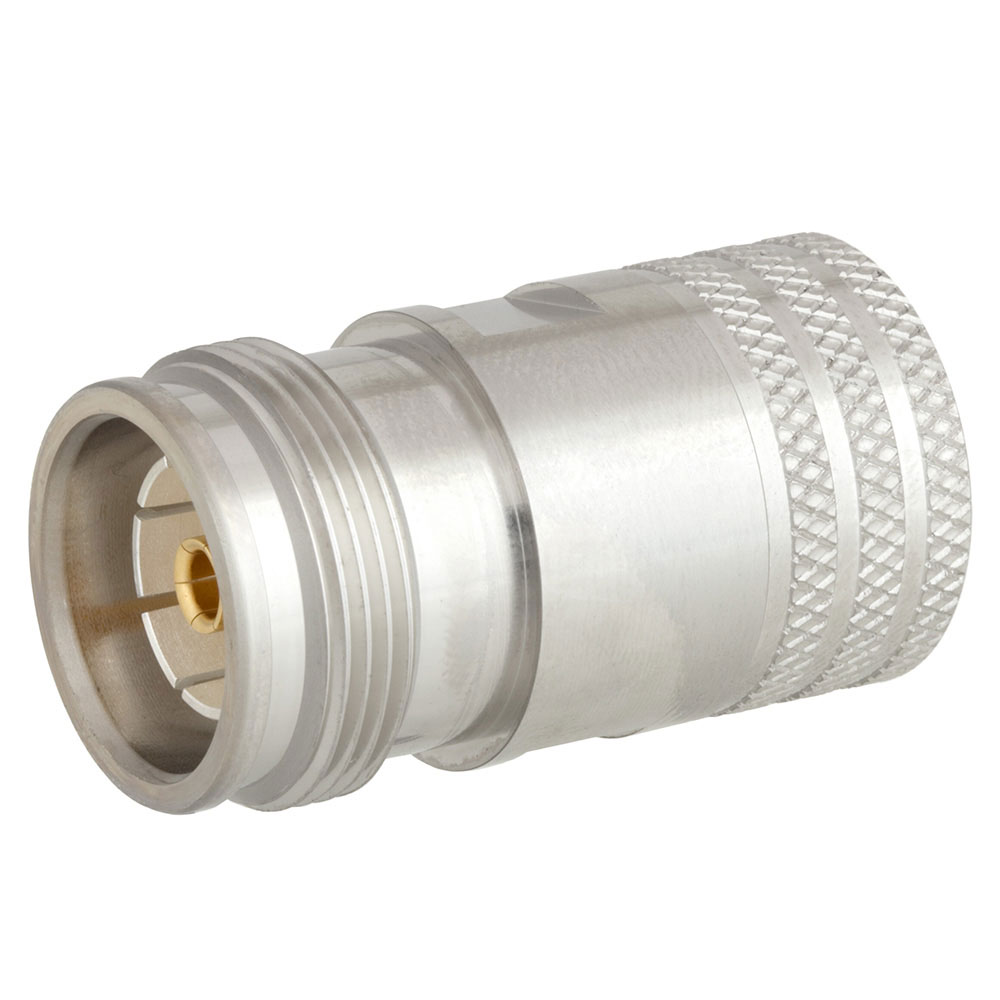
Common Usage Scenarios
In a typical cellular base station supporting 4T4R Massive MIMO, each of the 32 antenna ports requires a 50-ohm load capable of handling 5 to 10 watts during testing to prevent damage to the $12,000 remote radio unit. For satellite ground stations operating at 14 GHz, a high-precision termination with VSWR <1.10 is mounted on unused waveguide ports to maintain system noise temperature below 100 K, preventing a 15% degradation in downlink signal-to-noise ratio. Even in consumer electronics, during the 3-minute RF calibration of a Wi-Fi 6E router, a temporary termination ensures the final output power adjustment is within ±0.3 dB of the 2.5 W target across the 6 GHz band.
On a production line testing 5,000 Bluetooth modules daily, a simple SMA termination priced at $35 is connected to each 2.4 GHz transmitter output for 4 seconds to verify its +10 dBm power output stays within ±1.5 dB tolerance. This prevents a $0.50 factory recalibration for every module that would fail. In a university lab, a DC-18 GHz precision load costing $800 is used to calibrate a $25,000 vector network analyzer every 90 days, reducing measurement uncertainty to <0.05 dB for research on 28 GHz 5G waveforms. For field technicians, a 100-watt N-type termination is a standard tool for safely verifying 1.8 GHz macro基站 transmitter power without radiating signals illegally, avoiding potential $20,000 FCC fines.
| Application Scenario | Key Parameters & Requirements | Typical Termination Used | Quantitative Benefit / Risk Avoidance |
|---|---|---|---|
| VNA / Test Equipment Calibration | Frequency: DC to 67 GHz; VSWR: <1.05; Power: 1-2 W | Precision 2.4 mm or 1.85 mm connector | Ensures ±0.02 dB measurement accuracy; avoids $500/hour rework costs |
| Power Amplifier Protection | Power: 50 W to 5 kW; VSWR: <1.15; Cooling: Active heat sink | High-power N-type or 7/16 DIN | Prevents $8,000 amplifier failure; maintains <2:1 VSWR load |
| Phased Array Antenna Testing | Frequency: 24-40 GHz; VSWR: <1.10; Phase stability: ±2° | Waveguide-to-coax load with EMI gasket | Enables ±1° beamforming accuracy; reduces test time by 30% |
| RF Switch Matrix Unused Ports | Power: 1-5 W; Frequency: DC-6 GHz; Connector: SMA female | Standard SMA termination (50) | Prevents -15 dB reflection; eliminates 4% system efficiency loss |
In broadcast engineering, a 50 kW UHF transmitter station uses a dummy load with liquid cooling to dissipate 1.2 million joules of heat during 30-day continuous operation, allowing maintenance without going off-air. For automotive radar validation at 77 GHz, a -45 dB return loss termination is critical for calibrating 300-meter range test scenarios, ensuring ±4 cm distance measurement accuracy required for adaptive cruise control. Even in medical systems, an MRI machine’s 300 MHz preamp output is terminated with a non-magnetic load to maintain a <1.5 noise figure, directly impacting image resolution by 0.5 mm. The cost of not using one is high: a single reflected power spike can damage a $20,000 T/R module in a military radar in under 50 milliseconds.
Types and Connector Styles
A standard SMA termination for benchtop testing might handle 5 watts up to 18 GHz and cost $25, while a waveguide load for 80 GHz radar testing requires custom machining and costs $1,200. The internal resistance technology dictates performance: thin-film terminations provide VSWR <1.10 up to 40 GHz with 2W power, whereas bulk ceramic-loaded models handle 300 watts but are limited to DC-3 GHz. Connector choice is equally critical—a 7/16 DIN connector offers 25% higher power handling than an N-type at 600 MHz due to its larger contact surface and better heat dissipation, while a 2.92 mm connector maintains 1.15:1 VSWR at 40 GHz where standard SMA fails above 18 GHz.
Key termination types include:
- Standard DC-6 GHz loads: Use carbon composite resistors, cost 50, handle 5-25 watts, with VSWR ~1.25 at 6 GHz. Ideal for Wi-Fi/Bluetooth production testing.
- High-power coaxial loads: Feature aluminum housing and cooling fins, rated for 50W-5kW, frequencies up to 2.5 GHz. Prices range from 4,000 for 5kW 7/16 DIN.
- Precision thin-film terminations: Utilize deposited nichrome on alumina, achieving VSWR <1.05 from DC to 67 GHz. Power limited to 1-2 watts, priced 900. Essential for VNA calibration.
- Waveguide loads: Designed for specific frequency bands (e.g., 26.5-40 GHz), offer VSWR <1.01 via tapered resistive card. Power handling 10-100 watts, costing 1,500.
- Surface-mount (SMT) terminations: For PCB integration, size 0603-1210, handle 0.5-2W, operate up to 20 GHz (VSWR <1.30 at 10 GHz). Priced 5 in volume.
SMA connectors are common for DC-18 GHz applications but have limited power—typically <10 watts average power above 6 GHz due to center conductor heating. N-type connectors scale to 100 watts at 3 GHz and 15 watts at 18 GHz, with prices 30% higher than SMA. For frequencies beyond 26 GHz, 2.92 mm (K) connectors are standard, supporting 40 GHz operation with 1.5x the cost of SMA. Below 1 GHz, BNC terminations suffice for <5 watt applications like oscilloscope inputs, but their VSWR degrades to 1.8:1 at 2 GHz.
In high-vibration environments, 7/16 DIN dominates with its threaded coupling lasting 5,000 cycles (vs. 500 cycles for N-type), critical for cellular base stations transmitting 600 watts at 700 MHz. Each connector type has a power-frequency tradeoff: an N-type handle 50 watts at 1 GHz but only 7 watts at 18 GHz due to skin effect losses, while a 3.5 mm connector maintains 1.10 VSWR at 30 GHz with 15 watt capability. For field technicians, quick-connect QMA terminations allow 100+ mating cycles with 0.3 dB additional loss at 6 GHz, speeding up antenna site testing by 20%. The material also matters—stainless steel connectors survive -55°C to +165°C operating ranges for military use, adding 40% cost over brass commercial versions.
Key Specifications to Consider
A mismatch can be costly: using a 350 precision termination on a 40 GHz VNA introduces ±0.5 dB measurement error, potentially scrapping a $10,000 antenna array during validation. The average power rating is the most common oversight—a 10-watt termination derates to just 4 watts at 85°C ambient temperature, and pulsed RF signals with 10% duty cycle allow peak power handling 8x higher than the CW rating. For phase-sensitive arrays, temperature coefficient matters; a cheap termination shifts 0.02 dB/°C, causing 1.5 dB variation over Arizona’s -5°C to +45°C diurnal cycle, enough to disrupt beamforming at 28 GHz.
Critical specifications include:
- Average Power Handling: Ranges from 0.5W (SMT) to 10kW (cooled). Derates linearly above 25°C—a 100W load handles 60W at 70°C.
- Frequency Range: Standard models cover DC-6 GHz (VSWR<1.30), precision units reach 67 GHz (VSWR<1.05). ±0.5 dB flatness required for testing.
- VSWR/Return Loss: Bench grade: 1.15:1 (≈-21 dB) at 18 GHz. Metrology grade: 1.02:1 (≈-40 dB) at 50 GHz.
- Connector Type & Durability: SMA (<500 cycles, 18 GHz max), N-type (<500 cycles, 18 GHz), 3.5mm (>1,000 cycles, 34 GHz).
- Temperature Coefficient: <0.005 dB/°C for aerospace vs. <0.03 dB/°C for commercial use.
- Thermal Resistance: Typically 15-30°C/watt. A 50W load rises 750°C above ambient at full power without heatsink.
- Impedance Tolerance: Standard 50Ω ±1Ω, precision 50Ω ±0.2Ω. Mismatch causes 2% reflection per ±1Ω deviation at 10 GHz.
A 50-ohm termination dissipating 40 watts generates 2000 joules of heat per minute, requiring an aluminum heatsink with ≥500 cm² surface area to keep case temperature below 120°C. For pulsed radar applications, peak power dictates dielectric strength—a 100W average load might handle 5 kW peaks for 10 μs pulses at 1% duty cycle.
Frequency performance is equally critical; a termination specified for DC-6 GHz might exhibit VSWR degradation to 1.8:1 at 8 GHz, rendering it useless for Wi-Fi 6E testing at 6.2 GHz. Connector choice affects longevity: stainless steel SMA survives 500 mating cycles with <0.1 dB insertion loss change, while brass versions wear out after 200 cycles. For outdoor deployments, IP67 sealing prevents moisture ingress that could shift impedance by ±3Ω after 300 days in 85% humidity. Always cross-verify specifications—a termination claiming “DC-18 GHz” might only achieve VSWR<1.20 below 12 GHz, worsening to 1.45:1 at 18 GHz. Budget 800 for precision units validating 5G FR2 equipment, where ±0.8° phase error from poor termination adds 12% EVM to 256-QAM signals.
Typical Applications and Examples
In a 5G base station factory, each of the 128 antenna elements in a Massive MIMO array undergoes a 45-second power test using a 50-ohm load capable of handling 8 watts at 3.6 GHz, ensuring compliance with ±0.8 dB output power tolerance. For satellite ground stations, a waveguide termination with VSWR <1.05 at 32 GHz maintains system noise temperature below 85 K, preventing a 12% loss in data throughput during downlink operations. Even in automotive radar production, a 77 GHz termination costing $1,200 validates ±0.5 dB sensitivity for 150-meter range detection, directly impacting adaptive cruise control safety.
In aerospace testing, military-grade terminations with -55°C to +165°C operating range and 0.002 dB/°C stability validate radar systems operating at 18 kW peak power (1% duty cycle). For medical MRI systems, non-magnetic terminations with <0.1 ppm magnetic susceptibility maintain 1.2:1 VSWR at 300 MHz, ensuring 0.4 mm image resolution by stabilizing preamplifier noise figures at <0.8 dB. During high-volume WiFi 6E router production, SMT terminations costing $0.90/unit are integrated onto test fixtures to verify 6 GHz output power within ±1.1 dB across 2,500 units/day, reducing test time by 40% compared to radiative methods.
Research laboratories rely on precision 2.92 mm terminations priced at 900 to calibrate 67 GHz VNAs with ±0.03 dB uncertainty, enabling accurate characterization of 5G FR2 phased arrays. In broadcast engineering, 50 kW dummy loads with water cooling dissipate 3.2 million joules/hour during transmitter maintenance, allowing continuous operation while avoiding $45,000/hour downtime costs. For cable network operators, 75-ohm terminations with -40 dB return loss at 1.2 GHz prevent ingress noise from degrading 256-QAM signal modulation error ratio below 32 dB, maintaining 1.8 Gbps downstream speeds.