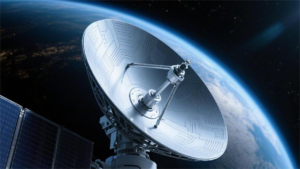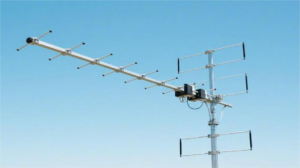
A waveguide amplifier boosts signals via stimulated emission: pump lasers (e.g., 980nm for optical) excite gain media (GaAs/InP) in the waveguide, yielding 20–40dB gain for microwaves/radio, critical in radar/satcom systems for signal strength.
Table of Contents
What is a Waveguide Amplifier?
A waveguide amplifier is a device for achieving optical signal amplification on integrated photonic chips. It is a miniature waveguide structure fabricated on a substrate (such as silicon, silicon nitride, or silicon dioxide), doped with a high concentration of rare-earth ions (e.g., erbium ions, with a typical concentration range of 10²⁵ to 10²⁶ ions/m³) as the gain medium. By injecting pump light of a specific wavelength (commonly 980nm or 1480nm lasers, with power ranging from tens to hundreds of milliwatts), a population inversion is created in the gain medium. When the transmitted signal light (e.g., in the 1550nm communication band) passes through, optical amplification is achieved via stimulated emission. This device can amplify weak optical signals (as low as -30 dBm) by more than 20 dB over a propagation distance of millimeters to centimeters, while the noise figure can be controlled between 4 and 6 dB. Compared to traditional discrete fiber amplifiers, its size can be reduced by several orders of magnitude (down to the chip scale), power consumption can be lowered to below 1 watt, and it can be monolithically integrated with components such as modulators and detectors. It is a core component for building high-speed optical communication systems (400G/800G), photonic computing, and lidar.
Working Principle
Light naturally attenuates as it travels through a waveguide. For example, on a silicon photonic chip, an optical signal may lose over 50% of its power (about 3 dB) after traveling 1 centimeter. Waveguide amplifiers compensate for this by directly adding energy to the optical signal through the physical process of stimulated emission. Essentially, the energy provided by the pump light is precisely transferred to the signal light through the energy level transitions of the rare-earth ions. The entire process involves three energy levels and two different types of radiation, with its efficiency determined by factors such as the ion’s energy level lifetime, pump power, and the waveguide structure.
How is Population Inversion Established?
The prerequisite for optical amplification is to make the active ions (e.g., erbium ions) in the gain medium (e.g., the Er-doped waveguide) exist in a non-equilibrium state—population inversion.
- Energy Level Structure: The energy level structure of Erbium ions (Er³⁺) is very suitable for optical amplification in the 1550nm band. It has a metastable energy level (⁴I₁₃/₂) with an exceptionally long lifetime, approximately 10 milliseconds. This relatively long lifetime (compared to some energy level lifetimes in the nanosecond range) creates the condition for ions to “reside” in the high energy level, giving them sufficient time to await the arrival of signal photons, thus enabling stimulated emission.
- Pumping Process is Energy Injection: When a high-energy pump light (e.g., a 980nm wavelength laser) irradiates the Er-doped waveguide, Erbium ions in the ground state absorb the photon energy and transition to a higher excited state (⁴I₁₁/₂). This transition process is very rapid.
- Non-Radiative Transition Completes the Setup: Ions in the high excited state are very unstable and relax non-radiatively to the metastable level through lattice vibrations (heating) on a picosecond (10⁻¹² seconds) timescale. The efficiency of this process is not 100%; typically, some energy is converted into heat.
- Inversion Threshold: When the pump power exceeds a specific value (threshold power), the number of ions in the metastable level will exceed the number in the ground level, thus achieving population inversion. This threshold power depends on the waveguide’s doping concentration, structure, and mode overlap factor.
Difference Between 980nm and 1480nm Pumping
980nm pumping is an indirect process where ions need to undergo a non-radiative transition to the metastable level. Its advantages are high quantum efficiency (theoretically, one pump photon can generate one signal photon) and a lower noise figure. 1480nm pumping is a direct process where the pump light directly excites ions to the top of the metastable level. Its advantages are that the pump wavelength is closer to the signal wavelength, potentially reducing laser cost, but the noise figure is typically 0.5-1 dB higher than with 980nm pumping.
How Does Signal Amplification Occur Step by Step?
Once population inversion is established, the waveguide transforms from an attenuator into an amplifier.
- Stimulated Emission Trigger: When a photon with energy exactly equal to the difference between the metastable and ground levels (i.e., a 1550nm wavelength signal photon) passes through the waveguide, it “stimulates” an ion in the metastable state.
- Coherent Photon Generation: The stimulated ion transitions back to the ground state and emits a photon that is completely identical to the incident signal photon. These two photons have the same energy (wavelength), phase, polarization state, and propagation direction. This is the fundamental difference between stimulated emission and spontaneous emission.
- Avalanche Amplification: The two newly generated photons can continue to stimulate two other ions in the metastable state, producing four identical photons. This process proceeds in an avalanche-like, exponential manner within the waveguide. Within a few centimeters of waveguide, a single weak input signal photon can be replicated into millions of identical photons, resulting in a significant enhancement of the signal light.
Gain Saturation Effect: The amplification capability is not infinite. When the signal power is very strong, it rapidly depletes the ions in the metastable state. If the depletion rate exceeds the rate at which the pump light replenishes the ions, the degree of population inversion decreases, leading to a reduction in gain. This is gain saturation. The “saturated output power” specified in amplifier datasheets (e.g., +13 dBm) typically refers to the output power point where the gain has decreased by 3 dB compared to the small-signal gain.
Where Does Noise Come From?
The amplification process always introduces additional noise, primarily from Amplified Spontaneous Emission (ASE).
- Spontaneous Emission: Even in the absence of signal light, ions in the metastable state randomly and spontaneously transition back to the ground state, emitting a photon. This process is random, and the emitted photons are incoherent in phase, polarization, and direction.
- Amplified Spontaneous Emission (ASE): These spontaneously emitted photons, as long as their wavelength falls within the gain bandwidth, are themselves amplified as they propagate through the waveguide. This amplified, incoherent light constitutes ASE noise.
- Noise Figure: It measures the degree to which the amplifier degrades the signal-to-noise ratio. An ideal amplifier has a noise figure of 3 dB. The noise figure of practical waveguide amplifiers typically ranges between 4.5 and 6 dB, depending on factors such as pump wavelength, degree of population inversion, and the component’s intrinsic loss. For example, the choice of pump wavelength affects the ground state population, thereby influencing the probability of ions absorbing signal photons (a noise-generating process). A higher degree of population inversion usually implies a lower noise figure.
Waveguide Basic Structure
The waveguide is the physical carrier of the waveguide amplifier. Its function is to confine the light wave within a tiny cross-sectional area (typically smaller than 10 μm × 10 μm) for low-loss transmission. This confinement is achieved by surrounding a core layer with a higher refractive index (e.g., Er-doped silica, n≈1.45 to 1.55) with a cladding layer having a lower refractive index (e.g., pure silica, n≈1.444). The refractive index contrast (Δn) between them is typically controlled within the range of 0.5% to 5%. The required structural precision is extremely high; a fabrication deviation in the core dimensions exceeding ±50 nanometers can significantly alter the optical field distribution, subsequently affecting the coupling efficiency with optical fibers (typically introducing an additional loss of over 0.5 dB) and the gain uniformity of the amplifier.
How Does Waveguide Cross-Sectional Size Affect Optical Field Confinement?
The geometric dimensions (height and width) of the waveguide core directly determine the size and shape of the optical mode, thereby influencing a series of performance metrics of the amplifier.
- Single-Mode Transmission Condition: To achieve stable amplification and avoid multi-mode interference, waveguides are typically designed to support only the fundamental mode. For strip waveguides, the single-mode condition requires the core thickness and width to be roughly in the range of several hundred nanometers to one micrometer. For example, a typical silicon-based Er-doped waveguide might have cross-sectional dimensions of 500 nm (height) × 800 nm (width). Excessively small dimensions cause significant spreading of the optical field into the cladding, increasing scattering loss; excessively large dimensions introduce higher-order modes, causing modal dispersion and unstable gain.
- Mode Field Diameter and Coupling Loss: The effective size of the optical field in the waveguide (mode field diameter) must match the mode field diameter of standard single-mode fiber (SMF, approximately 10.4 μm @1550nm). Since the mode field diameter of chip waveguides is typically only 1-2 μm, much smaller than that of fiber, direct coupling results in huge insertion loss (can exceed 10 dB). To solve this problem, spot-size converters need to be fabricated at the input and output ends of the waveguide. These are structures typically based on the principle of adiabatic tapering, which gradually expand the spot size to match that of the fiber, optimizing coupling loss to below 1 dB.
- Power Density and Nonlinear Effects: The extremely small mode field size implies very high power density. When the signal power reaches several hundred milliwatts, unwanted nonlinear effects such as Stimulated Brillouin Scattering (SBS) or Stimulated Raman Scattering (SRS) may be excited, consuming signal energy and introducing noise. Therefore, in high-power amplifier designs, larger waveguide cross-sections (e.g., 2μm×2μm) are sometimes intentionally used to reduce power density, albeit usually at the cost of integration density.
What Materials are Waveguides Made From?
The choice of material determines the waveguide’s loss, gain potential, and compatibility with existing semiconductor processes.
- Substrate and Core Material Systems:
- Silicon-based Silica: Silica layers are grown on a silicon substrate via flame hydrolysis or chemical vapor deposition to form the lower cladding and core. This technology is mature, offering extremely low waveguide loss (can be below 0.05 dB/cm) and good compatibility with optical fibers, but the gain per unit length is relatively low.
- Silicon-based Silicon Nitride: A silicon nitride core (n≈2.0) with a silica cladding (n≈1.44) provides a higher refractive index contrast (Δn can reach ~25%), enabling stronger optical field confinement and smaller bend radii (can be less than 100μm). This allows for a significant reduction in device size. However, waveguide loss is typically higher than that of pure silica waveguides, around 0.1 to 1 dB/cm.
- Indium Phosphide: As a direct bandgap semiconductor material, it can inherently provide gain and enable electrical pumping. Its waveguides can be prepared via epitaxial growth techniques, facilitating monolithic integration with lasers, modulators, and detectors, but the cost is higher.
- Doping Process and Concentration Control:
- Gain ions (e.g., Er³⁺) are typically incorporated using techniques like ion implantation or co-sputtering. Doping concentration is a trade-off: too low a concentration (e.g., <1×10²⁰ ions/cm³) results in insufficient gain; too high a concentration (e.g., >5×10²⁰ ions/cm³) leads to the concentration quenching effect, where energy transfer occurs between adjacent Erbium ions, consuming energy via non-radiative transitions and actually reducing the luminescence efficiency. Therefore, there exists an optimal doping concentration window, typically in the range of 2-4×10²⁰ ions/cm³.
How is Light Confined in the Waveguide?
The physical principle confining light waves within the core is total internal reflection.
- Refractive Index Contrast is the Prerequisite: Total internal reflection occurs only when light travels from an optically denser medium (core, n_core) towards an optically less dense medium (cladding, n_clad), and the angle of incidence is greater than the critical angle. This critical angle is given by θ_c = arcsin(n_clad / n_core). A larger refractive index difference (Δn) results in a smaller critical angle, making it easier to confine light within the waveguide.
- Concept of Effective Refractive Index: When light propagates in a waveguide, the refractive index it effectively experiences is a weighted average of the core and cladding refractive indices, called the effective refractive index (N_eff). The value of N_eff lies between n_clad and n_core and determines the propagation speed of the light wave along the waveguide axis. Different modes (e.g., fundamental mode and first-order mode) have different N_eff.
- Bending Loss Mechanism: When a waveguide is bent, light on the outer side of the bend needs to travel faster to maintain the wavefront. When the bend radius is reduced below a certain point, where the required speed cannot be achieved, energy leaks out via radiation, forming bending loss. The minimum allowable bend radius R_min is inversely proportional to Δn^(3/2). A high-Δn silicon nitride waveguide (Δn=0.5) can reduce R_min to around 5 micrometers, whereas a low-Δn silica waveguide (Δn=0.5%) might require an R_min of several millimeters.
What are the Sources of Waveguide Loss?
The attenuation of optical signal power during transmission in a waveguide is caused by various factors, with total loss typically measured in dB/cm.
- Material Absorption Loss: Caused by the absorption of photons by the waveguide material itself (including the doping ions). Hydroxyl (OH-) impurities have a strong absorption peak around 1380 nm, and their residual concentration needs to be controlled at the parts-per-billion (ppb) level. Unpumped Erbium ions themselves have intrinsic absorption in the 1530 nm band; this loss exists even when the amplifier is not operating.
- Scattering Loss:
- Rayleigh Scattering: Caused by microscopic density fluctuations in the material, inversely proportional to the fourth power of the wavelength. It represents the intrinsic loss lower limit for silica waveguides in the 1550 nm band (approximately 0.1 dB/cm/km, but negligible on centimeter-scale chips).
- Sidewall Roughness Scattering: This is one of the primary sources of loss in integrated waveguides. Due to imperfect etching processes, nanometer-scale roughness exists on the waveguide sidewalls (typically required to be below 20 nm), causing light to scatter. Sidewall scattering loss is proportional to the square of the confinement strength (Δn), so high-Δn waveguides are more sensitive to sidewall roughness.
- Radiation Loss: Mainly caused by waveguide bending and structural defects (e.g., poorly designed taper transition regions).
How Does a Waveguide Amplifier Work?
Waveguide amplifiers achieve optical signal amplification through the principle of stimulated emission. Their core involves doping the waveguide structure (e.g., silica or phosphate glass) with rare-earth ions (e.g., erbium ions, typically at a concentration of 1000–5000 ppm). When pump light at 980 nm or 1480 nm (with power typically 50–500 mW) is injected into the waveguide, the ions are excited to a metastable state, creating population inversion. Subsequently, signal light in the 1550 nm band triggers stimulated emission, generating new photons that are in phase and have the same wavelength as the original signal, thus achieving gain. The typical gain coefficient is 1–5 dB/cm. A 5 cm long amplifier can achieve a gain of 20–30 dB, with a noise figure as low as 4.1 dB and a saturated output power reaching up to +20 dBm.
The Core of Energy Conversion
In a practical Erbium-doped waveguide, to achieve effective amplification, a sufficient number of Erbium ions (Er³⁺) must be excited from the ground state (⁴I₁₅/₂) to the metastable state (⁴I₁₃/₂). This process is not simply “light on, gain on,” but rather a physical process involving precise power control, competition between energy level transitions, and quantum efficiency. For example, for a phosphate glass waveguide with a doping concentration of 2000 ppm and a length of 6 cm, to achieve a net gain of over 25 dB, the pump power threshold is typically 15-20 mW, while the optimal pump power often lies in the range of 80-150 mW, where the slope efficiency of energy conversion can exceed 60%.
The Pump Light’s Role is More Than Just “Providing Energy”
Many people think the pump laser is just a simple power supply, but in reality, the stability of its wavelength and power determines the baseline performance of the amplifier.
- Physical Basis for Wavelength Selection:
- 980 nm Path: The pump photon energy恰好 excites Er³⁺ ions from the ground state ⁴I₁₅/₂ to the ⁴I₁₁/₂ energy level. The lifetime of this upper level is extremely short, about 1 microsecond. Ions rapidly relax non-radiatively (converting energy into lattice vibrations) to the metastable state ⁴I₁₃/₂. This relaxation process hardly produces photons but effectively “transports” ions to the metastable state, thereby establishing a high degree of population inversion.
- 1480 nm Path: Photons at this wavelength directly pump ions to the top of the metastable state ⁴I₁₃/₂. Although the path is direct, some ions in the metastable state can reabsorb pump light, being excited to even higher energy levels (excited state absorption, ESA). This competing process reduces the overall pump efficiency and worsens the noise figure by about 0.5-1 dB.
- Stringent Requirement for Power Stability: The output power fluctuation of the pump laser must be controlled within ±0.01 dB. This is because minute changes in pump power directly cause changes in the degree of population inversion. For instance, a 1% fluctuation in pump power might cause a gain change exceeding 0.2 dB, which is unacceptable in dense wavelength division multiplexing (DWDM) systems requiring channel power equalization better than ±0.5 dB.
Population Inversion is a Dynamic Balance
“Population inversion” might sound like an on/off state, either achieved or not. But in engineering, it is a dynamic equilibrium point that must be precisely maintained.
- Quantitative Definition of Inversion Degree: The degree of population inversion (η) is often expressed as η = (N₂ – N₁) / (N₂ + N₁), where N₂ and N₁ are the ion densities in the metastable and ground states, respectively. Only when η > 0, i.e., N₂ > N₁, does the probability of stimulated emission exceed that of stimulated absorption, making optical amplification possible. For low-noise applications, η needs to be optimized between 0.5 and 0.7.
- Nonlinear Relationship Between Pump Power and Inversion Degree: Initially, the inversion degree increases approximately linearly with pump power. However, after the power exceeds a certain point (e.g., corresponding to 50% inversion), the growth becomes very slow. The additional pump power required to increase the inversion degree from 60% to 65% might be more than that needed to go from 10% to 50%. This indicates an optimal power investment point exists, beyond which energy utilization efficiency drops sharply.
Temperature is the Invisible Hand
The absorption cross-section of Erbium ions (their ability to absorb photons) changes with temperature. For every 10°C increase in temperature, the absorption cross-section in the 980 nm band might decrease by about 2%. This means that to achieve the same degree of population inversion at an operating temperature of 45°C as at room temperature (25°C), the pump power might need to be increased by more than 5%. Therefore, high-performance amplifiers need integrated thermoelectric coolers to stabilize the temperature of the waveguide and pump laser within a range of ±0.1°C.
Optimization Strategies in Practical Engineering
In practical design, engineers need to find the optimal solution through modeling and experimentation.
- Define the Goal: First, clarify the requirement—whether to pursue extremely low noise (choose 980 nm pumping and operate at a high inversion degree) or high output power (possibly using 1480 nm pumping or a bidirectional pumping structure).
- Co-Design: The waveguide’s doping concentration, length, and pump power must be co-designed. A highly doped (4000 ppm), short-length (2 cm) waveguide might never achieve a high inversion degree due to concentration quenching; whereas a low-doped (800 ppm), long-length (15 cm) design might achieve high gain but introduce excessive background loss and nonlinear effects.
- Monitoring and Feedback: The system uses a low-power monitoring light (probe light) to track the gain status in real-time and dynamically fine-tunes the pump laser current via a feedback circuit, suppressing gain fluctuations to within ±0.05 dB.
Performance Indicators and System Impact
Small-signal gain, noise figure, and saturated output power form the fundamental triangle for evaluating amplifier performance. For example, a C-band Erbium-doped waveguide amplifier used in long-haul trunk networks typically needs to provide over 30 dB of gain for small-signal inputs (e.g., -30 dBm), while keeping the noise figure below 4.5 dB and having a saturated output power no less than +17 dBm, to ensure uniform amplification for each wavelength channel when accommodating 80 channels. These indicators directly determine the system’s unrepeatered transmission distance, maximum channel capacity, and overall signal-to-noise ratio.
Gain is More Than Just Amplification Factor
Gain describes the amplifier’s ability to increase signal power, but its value varies with input power and wavelength.
- Limitation of Small-Signal Gain: The peak gain (e.g., 30 dB) listed in datasheets is typically measured under very low input signal power conditions (<-40 dBm). In practical systems, when the input power rises to -15 dBm, the actual gain might drop to 25 dB due to gain saturation. System design must be based on the actual gain at the operating point, not the small-signal gain value.
- Gain Ripple and System Penalty: Non-uniform gain across the operating band causes problems. If an amplifier’s gain at 1560 nm is 3 dB higher than at 1530 nm, after 10 cascaded amplifier stages, the power difference between the two wavelengths would accumulate to 30 dB, causing the weaker channel to be淹没 by noise. To compensate for this ripple, tunable optical attenuators need to be inserted into the link to dynamically attenuate the power of stronger channels, which introduces additional insertion loss (typically 1-2 dB) and system complexity. The gain flatness of commercial amplifiers is typically controlled within ±0.8 dB.
Noise Figure Determines Signal Transmission Distance
The noise figure is the decisive factor limiting long-distance transmission.
- Cumulative Effect of Noise: The noise figure (NF) of an optical amplifier determines the degree of degradation of its output signal-to-noise ratio (OSNR). After N identical amplifier stages, the total OSNR degradation of the link is proportional to N * NF. For a 400 km system with a target OSNR of 15 dB (based on pre-FEC BER requirements), using amplifiers with a noise figure of 5 dB allows cascading only about 8 stages. Reducing the amplifier noise figure to 4 dB increases the number of cascadable stages to 10, extending the transmission distance to 500 km, or allowing the use of lower-cost receivers over the same distance.
- Difference Between Measurement and Reality: The measured noise figure value depends on the state of the input signal. When the polarization state of the input signal changes, the measured noise figure can fluctuate by ±0.2 dB. Therefore, high-precision testing requires averaging over multiple polarization states. In system simulations, a margin of 0.3-0.5 dB is usually added to the NF value listed in the datasheet to account for uncertainties in the actual operating environment.
Saturated Output Power and Channel Capacity
The saturated output power defines the maximum output capability of the amplifier.
- Power Allocation in Multi-Channel Operation: The saturated output power (Psat) determines how many channels the amplifier can supply with sufficient power. Assume an amplifier has a Psat of +20 dBm (100 mW). When amplifying a single channel, it can easily push that channel’s output power to +10 dBm. But when amplifying 80 channels simultaneously, to ensure linearity, each channel’s output power is typically limited to around -1 dBm (80 * 0.08 mW ≈ 6.4 mW, or +8 dBm), which is well below Psat, leaving a safety margin for nonlinear effects.
- Power Back-Off and Efficiency: The further the operating point is from saturation, the better the amplifier’s linearity, but the lower its power conversion efficiency. Designers must trade off between efficiency and nonlinear distortion. Typically, the total output power of a multi-channel system is set to operate 3-5 dB below Psat.
Dynamic Gain Tilt and Transient Effects
In real networks, channels are added and dropped dynamically, posing challenges for amplifiers.
- Gain Tilt: The amplifier’s gain usually has a slight wavelength dependence, i.e., a gain slope. When the total input power changes, this slope can also change slightly, known as dynamic gain tilt. For example, if 10 channels are suddenly dropped, the remaining 70 channels might experience a tilt in the gain spectrum, where the gain change at the band edges could be 0.2 dB greater than at the center band. This requires real-time correction using dynamic gain flattening filters.
- Transient Response Time: When one or more channels suddenly fail, their power is instantly redistributed to the remaining channels, causing a power surge in those channels that could damage receivers or cause bit errors. The amplifier’s gain control loop must respond on a microsecond timescale to stabilize the power. Modern amplifier suppression circuits can limit the power transient amplitude to within 0.5 dB, with a response time faster than 10 microseconds.
Reliability Indicators
In scenarios where maintenance is difficult, such as submarine repeaters or remote ground stations, amplifier reliability is paramount.
- Pump Laser Lifetime: Degradation of the pump laser is a primary cause of amplifier failure. Its lifetime is typically measured by Mean Time To Failure (MTTF). Pump lasers operating at a junction temperature of 55°C can have an MTTF exceeding 1 million hours. However, for every 10°C increase in junction temperature, the lifetime may be halved. Therefore, thermal management design directly impacts the entire system’s maintenance costs.
- Performance Degradation Warning: The amplifier’s built-in monitoring circuitry continuously tracks the pump laser’s drive current and backward optical power. When the drive current needs to increase by more than 5% to maintain the same output power, the system issues an early warning, indicating possible laser degradation, allowing maintenance personnel to plan service windows.
Main Applications of Waveguide Amplifiers
Since the commercialization of Erbium-Doped Fiber Amplifiers (EDFAs) in the 1990s, optical amplifiers have become the cornerstone of optical communication systems. By amplifying signals directly in the optical domain, they eliminate inefficient optical-electrical-optical conversion, extending the repeater span in long-haul trunks from about 80 km to over 1000 km, and increasing single-fiber capacity from Gb/s to Tb/s levels. In the C-band, a single amplifier can simultaneously amplify over 200 wavelength channels, providing gains of 20-30 dB with a noise figure below 5 dB. The market size reaches tens of billions of US dollars, with players including Lumentum, II-VI Incorporated, and Cisco.
Optical Communication Systems
In the 1550 nanometer window, the gain bandwidth of EDFAs covers the C-band (approx. 4 THz) and the L-band (approx. 4.5 THz), enabling a single fiber to carry 160 or even more wavelength channels simultaneously. This pushed the repeater distance for long-haul trunks from the limit of 80 km to over 1000 km, making transoceanic communication systems possible. According to an Omdia market report, the global market for optical amplifier modules exceeded $2.5 billion in 2023, with compact amplifier modules for data centers growing at over 15% annually. Their value lies in direct optical amplification, replacing about 40% of the power consumption and cost compared to traditional solutions.
The Leap in Signal Transmission Distance
In the era before optical amplifiers, optical signals had to be converted to electrical signals for regeneration after traveling 80 to 100 kilometers, a process that was expensive and inefficient. The introduction of EDFAs fundamentally changed this.
- Enabling Ultra-Long-Haul Transmission: Now, signals can travel over 1000 kilometers in fiber without electrical regeneration. This is crucial for systems spanning continents, like those crossing the US, or submarine cables connecting Europe and North America. For example, the transatlantic MAREA cable uses numerous EDFAs with repeater spans of about 60-70 kilometers.
- Technical Detail: A parameter for achieving this is the amplifier’s noise figure. Commercial EDFAs can have noise figures below 5 decibels. A lower noise figure means the signal maintains sufficient OSNR after passing through multiple amplifiers for the receiver to decode correctly.
How to Make One Fiber Carry Hundreds of Different Channels
Wavelength Division Multiplexing (WDM) is the core technology for increasing fiber capacity, and EDFAs are the economic foundation that makes it feasible.
- Parallel Amplification Mechanism: A single EDFA can simultaneously amplify all wavelength signals within its gain bandwidth. For example, in the C-band, one amplifier can handle 96 channels spaced at 50 GHz intervals.
- Gain Flatness: To ensure each channel receives roughly the same gain, amplifiers need gain flattening. Modern EDFAs use built-in dynamic gain equalizers to control the gain variation between different channels within ±1 decibel. This means the power difference between the weakest and strongest channels fluctuates by no more than 25%.
How Do Amplifiers Work in Submarine Cables?
Submarine cable systems have extremely demanding requirements for reliability and performance. The operating conditions for amplifiers here differ from terrestrial systems.
| Characteristic | Terrestrial Long-Haul Systems | Submarine Cable Systems |
|---|---|---|
| Spacing | Typically 80-120 km, adjusted based on terrain and regenerator site locations. | Precisely calculated, usually fixed at 45-70 km to optimize OSNR. |
| Redundancy & Reliability | Employ 1+1 protection (one active, one hot standby). | Extremely high requirements, designed for a lifetime exceeding 25 years, reliability targets up to 99.999%. |
| Monitoring & Management | Remote monitoring via network management systems. | Feature complex remote Optical Time Domain Reflectometry (OTDR) and optical spectrum analysis functions for precise fault location diagnosis. |
Amplifiers in submarine cables are sealed within repeaters placed on the seabed, enduring high pressure and temperature variations. Their design must consider 25 years of maintenance-free operation.
High-Speed Connectivity Needs Between Data Centers
With the proliferation of cloud computing, data synchronization between data centers requires extremely high speeds and very low latency. Metropolitan amplifiers play a role here.
- Low Latency and Miniaturization: Amplifiers used for Data Center Interconnects (DCI), such as Erbium-Doped Waveguide Amplifiers (EDWAs), can be shrunk to sizes like 30 x 5 x 2 millimeters, with power consumption below 1.5 watts. This allows them to be installed densely inside switches.
- Cost-Effectiveness: For an 80 km long DCI link, using optical amplifiers for direct amplification can save about 30% in construction and energy costs compared to setting up full O-E-O conversion equipment at intermediate points, and reduces end-to-end latency by several microseconds, which is critical for applications like high-frequency trading.
Combining Different Technologies to Enhance Performance
To further increase system capacity and transmission distance, hybrid amplification schemes have become standard practice.
- EDFA + Raman Amplifier: This is a common combination. Raman amplifiers use the nonlinear effects in the fiber itself for distributed amplification, particularly effective in improving the OSNR in the middle part of the link.
- Operation Method: Raman amplifiers typically use backward pumping, injecting a high-power pump light (e.g., 1450 nm) into the fiber along with the signal light.
- Performance Improvement: This hybrid approach can improve the overall system OSNR by an additional 3 to 5 decibels. This is equivalent to extending the unrepeatered transmission distance by another 30% at the same capacity, or supporting higher-order modulation formats over the same distance.
High-Power Fiber Lasers
Compared to traditional CO₂ lasers and lamp-pumped solid-state lasers, fiber lasers have increased electrical-to-optical conversion efficiency from less than 10% to over 35%, while leveraging the natural advantages of the waveguide structure to achieve excellent beam quality close to the diffraction limit, with M² < 1.1. The output power range covers from several hundred watts to tens of thousands of watts. For instance, in the macro-processing market, 6 kW and 12 kW models are workhorses for cutting and welding applications, while lasers of 30 kW and even higher power are used for thick-plate welding and military directed-energy research. According to market research firm Laser Markets Research, the global market for industrial high-power fiber lasers was approximately $2.8 billion in 2023, with Chinese manufacturers like IPG Photonics continuing to hold significant market share.
How are Tens of Kilowatts of Laser Power Generated?
The core technologies for achieving high-power output are double-clad fiber technology and multi-module spectral beam combining.
- Double-Clad Pumping Structure: The core diameter of standard communication fiber is only about 9 micrometers, making it difficult to couple high-power pump light efficiently. Double-clad fiber has a core (diameter 15-25 μm) doped with rare-earth ions (e.g., Ytterbium ions Yb³⁺) as the gain medium; its inner cladding is much larger (typically 400 μm x 400 μm square or hexagonal). High-power multi-mode pump laser diodes (wavelengths 915 nm or 975 nm) are injected into the inner cladding. As the pump light reflects repeatedly within the cladding, it passes through the core each time, exciting the doped ions to produce laser light. This design increases the pump area by over 100 times, allowing total pump power to reach tens of kilowatts.
- Master Oscillator Power Amplifier (MOPA) Structure: The system starts with a low-power, high-beam-quality oscillator that generates the seed light. This seed light is then injected into multiple stages of Ytterbium-Doped Fiber Amplifiers (YDFAs) for progressive amplification. The final stage often uses a 10-30 meter long double-clad large-mode-area fiber to withstand the extremely high optical power and suppress nonlinear effects.
- Spectral Beam Combining: To achieve powers above 30 kW, the output from a single fiber encounters limits due to nonlinear effects and damage. The solution is spectral beam combining, which combines the output beams from 6-12 independent fiber laser modules (e.g., each 3 kW) into a single beam using elements like diffraction gratings. Each module’s laser wavelength has a slight offset of 1-2 nanometers, resulting in a total spectral width of about 10-20 nanometers after combining.
Why Are They Superior to Traditional Lasers in Cutting and Welding?
The advantages of high-power fiber lasers in industrial processing lie in efficiency, precision, and total cost of ownership.
| Processing Scenario | Fiber Laser Typical Parameters | Advantages Over CO₂ Lasers |
|---|---|---|
| Carbon Steel Cutting | Cutting 1 mm thick steel plate at speeds up to 40 meters/minute. | Speed increased by 2-3 times, no carrier gas needed, oxygen consumption reduced by 100%. |
| Aluminum Alloy Welding | Welding 4 mm thick aluminum plate at 8 meters/minute, aspect ratio > 2:1. | Electro-optical efficiency 3 times higher, cooling system energy consumption reduced by 50%. |
| 3D Five-Axis Machining | Transmission via flexible fiber with 50-300 μm core diameter over distances up to 100 meters. | Stable beam quality, unaffected by robot arm movement, improving processing consistency. |
The fundamental reason for these advantages is that the 1 micron wavelength (e.g., 1080 nm) laser light is absorbed better by most metals (absorption can reach 60-80%, compared to about 30% for the 10.6 μm wavelength of CO₂ lasers), and fiber delivery makes it easier to integrate into robotic systems.
How Are They Specifically Used in the Medical Field?
Medical fiber lasers emphasize precise energy control and specific wavelength selection.
- Thulium Lasers (~2 µm): Water has an extremely high absorption peak for this wavelength (approx. 100 cm⁻¹). This makes Thulium fiber lasers with output powers of 50W to 200W ideal tools for soft tissue surgery (e.g., prostatectomy, maxillofacial surgery), as they enable precise cutting and effective coagulation, with thermal damage to surrounding tissue limited to a depth of less than 200 micrometers.
- Holmium Lasers (2.1 µm): Commonly used for urological lithotripsy (kidney stone treatment). The laser is delivered via a thin fiber through an endoscope. The high peak power pulses (0.5-2 Joules/pulse) generate cavitation effects in water, pulverizing stones without damaging soft tissue.
- Aesthetic Lasers (1.5-2 µm): Used for hair removal, pigmentation removal, and skin rejuvenation. Laser energy is selectively absorbed by water in hair follicles or skin, generating thermal effects that destroy the target structure. Pulse duration is precisely controlled from milliseconds to seconds to protect surrounding tissue.
How is Light “Pumped” into the Laser?
The pump source is the energy source for the entire system, and its performance and cost are critical.
- Pump Sources: High-power multi-mode laser diode arrays or combined single-emitter laser diodes are used as pump sources. The electrical-to-optical efficiency of these diodes is typically 50-60%, with wavelengths centered around 915 nm (broader bandwidth, less temperature-sensitive) and 975 nm (higher absorption peak). A 10 kW fiber laser might require 40-50 laser diode modules, each with a power of 200-250W, for pumping.
- Pump Coupling Technology: Efficiently injecting pump light into the fiber’s inner cladding is a technology. End-pumping schemes are typically used, employing a special fiber device called a signal/pump combiner to merge the pump light and signal seed light into the main amplifier fiber. Commercial combiner coupling efficiency can exceed 95%.
Won’t the High-Power Laser Itself Get Burned?
Managing tens of kilowatts of heat is the biggest challenge in designing high-power fiber lasers.
- Thermal Management: Despite electro-optical efficiency exceeding 35%, a significant amount of energy (approx. 60-70%) is converted into heat. This means a 10 kW laser needs to dissipate about 20 kW of heat. The solution is using forced water cooling systems, with coolant temperature typically controlled at 20-25°C, requiring precision within ±0.1°C to ensure laser wavelength stability.
- Transverse Mode Instability (TMI) Effect: When power escalates to the kilowatt level and beyond, the absorbed pump light in the fiber creates thermal gradients, forming thermal lensing effects and long-period gratings, causing coupling between higher-order modes and the fundamental mode, leading to sudden degradation of beam quality. This is a major physical bottleneck for further power scaling. Mitigation strategies include developing TMI-resistant fibers (e.g., by reducing the V-number, using special doping profiles) and optimizing the pumping scheme.
- Nonlinear Effect Suppression: Under conditions of very long fiber lengths and high power density, nonlinear effects like Stimulated Raman Scattering (SRS) and Stimulated Brillouin Scattering (SBS) can deplete the signal power. These are suppressed by increasing the core diameter (using 30 μm range Large Mode Area fiber) and shortening the fiber length (optimizing the design to reduce length from tens of meters to under 10 meters).