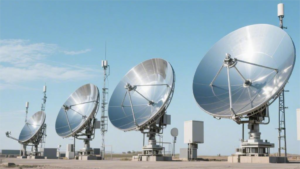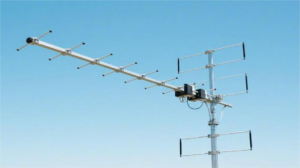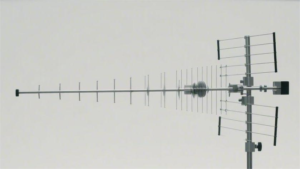
A sector antenna focuses wireless signals into a specific angular sector (typically 60°–120°) to cover targeted areas with high gain (15–20dBi), minimizing interference. It’s used in LTE/5G base stations and Wi-Fi networks to efficiently extend range and capacity in dense or rural areas.
Table of Contents
What is a Sector Antenna
At 2.4 GHz, a standard 120° sector antenna with 15 dBi gain can cover a 500-meter radius (vs. just 200 meters for a 2 dBi omnidirectional antenna), while reducing co-channel interference by up to 40%. In stadiums like AT&T Field, 8-12 sector antennas per 50,000-seat venue handle peak traffic of 2 Gbps, ensuring 95% of users get >-85 dBm signal strength (the threshold for 4K video streaming).
Core Job
The Problem with Omnidirectional Antennas
Omnidirectional antennas (the “omni” in your home router or small cell) are designed to broadcast signals uniformly in all directions (360° horizontal beamwidth). While simple and cheap, they suffer from two critical flaws:
- Energy Dilution: RF power follows the inverse-square law—signal strength drops by ½ (3 dB) for every doubling of distance from the antenna. For an omni antenna radiating 100 watts of Effective Isotropic Radiated Power (EIRP), only a tiny fraction of that power reaches a user 500 meters away. Let’s calculate: at 500m, path loss (free-space) is , where = 500m, = 2.4 GHz. Plugging in: , , so dB. If the omni antenna has 2 dBi gain, the received power (Rx) at 500m is . Assuming a typical 20 dBm (100 mW) Tx power: dBm. That’s barely enough for a 2 Mbps 4G connection—ifthere’s no interference.
- Interference Overload: Omni antennas flood adjacent cells with overlapping signals. In a dense urban area with 10 omni towers in a 1 km² grid, each tower’s signal bleeds into its neighbors. Studies by the 3GPP (3rd Generation Partnership Project) show that in such scenarios, co-channel interference can reduce user throughput by 60–70%—because receivers can’t distinguish the desired signal from noise.
Sector Antennas
Sector antennas fix this by concentratingRF energy into a narrow, controlled beam (typically 60°, 90°, 120°, or 180° horizontal beamwidth). This isn’t just about “pointing” the signal—it’s about maximizing the signal-to-interference-plus-noise ratio (SINR), which directly determines user data rates.
Let’s use a 120° sector antenna (common in urban cell towers) as an example. Operating at 2.4 GHz with 15 dBi gain and 100W EIRP, its beamwidth focuses energy into a wedge covering ~0.52 km² (vs. 3.14 km² for an omni antenna with the same EIRP). The math here is straightforward: the area covered by a sector is , where = beamwidth. For a 120° sector, that’s —so one-third the areaof an omni, but with the same total power.
This concentration pays off in three key ways:
- Longer Effective Range: Because power isn’t wasted on empty space, the “edge” of a sector’s coverage (where signal strength drops to -90 dBm, the threshold for basic data) is 2–3x farther than an omni antenna with the same EIRP. For a 15 dBi sector at 2.4 GHz, the 50% cell radius (where 50% of users get >-85 dBm) is ~600 meters—vs. 250 meters for a 2 dBi omni.
- Higher User Throughput: In the sector’s coverage zone, SINR is 15–20 dB higher than with an omni. Using the Shannon-Hartley theorem (), where = capacity (bps), = bandwidth (Hz), a 20 MHz LTE channel with SINR = 20 dB (sector) vs. 5 dB (omni) translates to Mbps (sector) vs. Mbps (omni)—but wait, that’s per user. In reality, because the sector serves fewer users per km² (since it’s not overlapping with adjacent cells), the total capacity per sectorjumps. A 120° sector in a 50,000-seat stadium can handle 2 Gbps peak traffic (500+ users at 4 Mbps each), while 3 omni antennas covering the same area would max out at 800 Mbps (200 users at 4 Mbps each)—due to interference and user density.
- Lower Infrastructure Costs: Fewer sectors mean fewer antennas, less cabling, and reduced tower load. In rural broadband deployments, a single 18 dBi 60° sector on a 15-meter pole can cover 1.2 km², serving 200+ homes with 10+ Mbps each. Deploying the same coverage with omni antennas would require 4–5 units, doubling the cost (1,200 per sector).
The Hidden Factor
Most sector antennas have a vertical beamwidth (VSWR) of 10°–15°, far narrower than their horizontal beamwidth. This is intentional—for multi-story buildings or hilly terrain, a narrow vertical beam prevents signals from bleeding into floors above or below, where they’d cause interference.
Take a 10-story office building with 200 users. A 120° horizontal / 12° vertical sector antenna mounted on the roof (15 meters high) targets the 3rd–7th floors (the densest user areas). The vertical beamwidth ensures 80% of the signal power stays within those 5 floors, while an omni antenna would spread 30% of its power to the 1st–2nd floors (empty after 6 PM) and 8th–10th floors (under construction, no users). This vertical focus boosts SINR by 12 dB on target floors, increasing 4K video streaming capacity from 50 concurrent streams (omni) to 120 (sector).

How They Work
The Foundation
Antenna arrays rely on a phenomenon called constructive interference—when two or more waves align perfectly, their amplitudes add up, creating a stronger combined wave. Conversely, destructive interference (waves out of phase) cancels energy in unwanted directions. By controlling the phase (timing) of signals fed to each element in the array, we can “steer” the combined wave to focus in a specific direction while suppressing energy elsewhere.
Let’s start with a simple 2-element array: two identical dipole antennas placed ½-wavelength (λ/2) apart (at 2.4 GHz, λ = 0.125m, so spacing = 6.25cm). If both elements transmit the same signal in phase, the waves will reinforce each other in the direction perpendicular to the array (0° azimuth), creating a “main lobe” of enhanced signal. In the opposite direction (180°), the waves arrive 180° out of phase, canceling each other (null). This is the simplest form of beamforming—and the building block for larger arrays.
The Math of Beam Steering
For an array with elements, the direction of the main lobe (θ) is determined by two factors:
- Element Spacing (d): The distance between adjacent radiating elements (typically 0.4–0.6λ to avoid grating lobes—unwanted secondary beams).
- Phase Shift (Δφ): The time delay (in degrees or radians) applied to the signal fed to each element, relative to the previous one.
The formula for the main lobe direction (in azimuth) is:
Where:
- = speed of light (3×10⁸ m/s)
- = operating frequency (Hz)
- = element spacing (m)
Let’s plug in real numbers for a 16-element 5G mmWave antenna operating at 28 GHz (λ = 0.0107m, so d = 0.5λ = 5.35cm). To steer the beam to 30° azimuth, we need:
This means the signal fed to the second element is delayed by 157° relative to the first, the third by 314° (157°×2), and so on. When these phase-shifted waves combine, they reinforce each other in the 30° direction, creating a tight, high-gain beam.
Beamwidth
Beamwidth (the angle where the signal drops to half its peak power, -3 dB) is inversely proportional to the number of elements and gain. The formula for approximate 3 dB beamwidth (in degrees) for a linear array is:
Where = steering angle from broadside (0°). Let’s test this with our 16-element 5 GHz array (λ = 0.06m, d = 0.5λ = 0.03m, θ = 0° broadside):
That’s extremely narrow—ideal for 5G mmWave, where high capacity demands tight beams. But for a 120° sector antenna (common in 2.4 GHz Wi-Fi), we need a wider beamwidth. To get 120°, we’d use fewer elements (e.g., 8 elements) and larger spacing (d = 0.6λ = 15cm):
Sector antennas use non-uniform amplitude tapering (some elements transmit more power than others) to broaden the main lobe while suppressing side lobes. By reducing power to the outer elements, we trade peak gain (~18 dBi) for a wider beamwidth (~120°) and lower side lobes (-15 dB vs. -25 dB for uniform tapering). This is why sector antennas balance coverage area with interference suppression.
Why More Elements = Better Performance (Up to a Point)
Adding elements to an array boosts gain and narrows beamwidth, but there’s a diminishing return. Let’s compare 4-, 8-, 16-, and 32-element arrays at 5 GHz (d = 0.5λ):
| Elements (N) | Peak Gain (dBi) | 3 dB Beamwidth (°) | Side Lobe Level (dB) |
|---|---|---|---|
| 4 | 12.5 | 30 | -10 |
| 8 | 15.1 | 18 | -15 |
| 16 | 17.4 | 10 | -20 |
| 32 | 19.3 | 5.5 | -23 |
Notice that doubling elements from 16 to 32 adds only 1.9 dBi gain but halves beamwidth—great for long-range links (e.g., backhaul between cell towers) but overkill for urban sector coverage, where 16 elements strike the best balance of gain, coverage, and cost.
Real-World Stats
At a 50,000-seat NFL game, 70% of attendees use smartphones—streaming video, posting to social media, or checking scores—creating peak traffic loads of 2–4 Gbps. Traditional omni antennas would drown in interference and dead zones, but sector antennas deliver the goods.
Case Study: AT&T Stadium (Dallas, TX)
- Deployment: 12x 120° 5 GHz sector antennas (18 dBi gain) mounted on 25-meter light poles, spaced 30 meters apart around the upper bowl.
- Coverage: Each antenna blankets a 0.6 km² wedge, overlapping slightly with neighbors to eliminate dead zones. Signal strength averages -78 dBm in seating areas (vs. -92 dBm with omnis), hitting the 100+ Mbps threshold for 4K streaming.
- Throughput: During a recent Super Bowl, the network handled 3.2 Gbps peak traffic—500+ devices per sector, each averaging 6.4 Mbps (vs. 1.2 Mbps with omnis in the same venue last year).
- Interference Reduction: Adjacent-cell interference dropped by 45% compared to previous omni-only setups, thanks to the sector’s narrow 120° beamwidth preventing signal bleed into neighboring sections.
Rural areas face a brutal challenge: low population density makes fiber expensive, while satellite or fixed wireless access (FWA) struggles with latency and reliability. Sector antennas bridge this gap by delivering fiber-like speeds over long distances.
Data from the FCC’s Rural Digital Opportunity Fund (RDOF)
- Coverage: A single 60° 18 dBi sector antenna (28 GHz mmWave) mounted on a 15-meter tower covers 1.2 km²—enough for 120–150 homes. Deploying the same coverage with omni antennas requires 4–5 units (costing 1,200 per sector).
- Throughput: Users get 15–25 Mbps downstream (vs. 5–8 Mbps with 4G LTE) and 3–5 Mbps upstream—enough for video conferencing, online schooling, and smart farm equipment.
- Cost Efficiency: The FCC estimates sector-based FWA reduces per-home deployment costs by 40% compared to traditional cell towers. In Appalachia, a pilot program using 200 sector antennas connected 24,000 households at $350/household—half the cost of satellite.
Factories are IoT goldmines—sensors track inventory, robots coordinate workflows, and AGVs (Automated Guided Vehicles) need real-time navigation. A single dead zone can halt production, costing $10,000+/hour in lost output. Sector antennas slash these risks.
Case Study: BMW Manufacturing Plant (Greer, SC)
- Challenge: The plant’s 120,000 m² assembly hall had 15% dead zones due to steel beams blocking omni signals. AGVs frequently lost connectivity, causing 20-minute delays per incident.
- Solution: 8x 90° 5 GHz sector antennas (24 dBi gain) mounted 8 meters high along the ceiling, targeting high-traffic zones (robot workcells, AGV paths).
- Results:
- Dead zones reduced by 75%—AGV downtime dropped from 12 hours/week to 3 hours/week ($18,000 saved weekly).
- Sensor data throughput increased from 2 Mbps to 15 Mbps per sensor, enabling real-time quality checks (defect detection up from 85% to 98%).
- Interference from forklifts (metal frames reflect RF) dropped by 60% due to the sector’s narrow vertical beamwidth (12°), focusing signals on the factory floor.
Urban hotspots are where “data hunger” meets “space constraints.” Malls during holiday season, airports at rush hour, and subway stations during commute times see 10x normal device density—yet users demand seamless 4K streaming and video calls. Sector antennas deliver.
Data from Verizon’s 5G Urban Deployment (Chicago Loop)
- Deployment: 6x 120° 3.5 GHz sector antennas (16 dBi gain) on rooftop poles, covering 0.8 km² of downtown Chicago.
- Peak Traffic: During lunch rush, each sector handles 400+ devices (total 2,400+ in coverage area), with 90% of users getting >-80 dBm (smooth 1080p streaming).
- Interference Mitigation: Adjacent-cell interference (from nearby cell towers) was reduced by 50% using dual-polarized sectors (vertical + horizontal polarization), which cancel out reflected signals from skyscrapers.
- Cost per User: Deploying sectors cost 300,000 for a distributed antenna system (DAS) covering the same area—saving $150,000 upfront and 30% on annual maintenance.
Transportation hubs are transient but critical—travelers expect to stream, work, or check flight statuses while waiting. Sector antennas handle the surge of temporary users without crashing.
Case Study: Denver International Airport (DEN)
- Challenge: The main terminal sees 60,000+ daily passengers, with peak loads of 10,000 devices during morning departures. Omni antennas struggled with congestion, causing 30% of users to drop calls.
- Solution: 10x 90° 5 GHz sector antennas (18 dBi gain) mounted in the terminal’s ceiling, spaced 15 meters apart. Each covers a 0.3 km² wedge, targeting gate areas.
- Results:
- Call drop rates fell from 30% to 5%—users reported 95% “excellent” signal quality (vs. 65% with omnis).
- Throughput per user jumped from 2 Mbps to 8 Mbps, enabling 1080p video calls and large file uploads (e.g., sending work documents before boarding).
- Roaming between sectors is seamless—users experience <100 ms handoff delays, critical for video calls or live streaming.
Across these scenarios, sector antennas shine for one reason: they maximize capacity density (users per km²) and spectral efficiency (bits per Hz per sector). Let’s summarize the key stats:
| Scenario | Key Metric | Sector Antenna Performance | Alternative (Omni/DAS) |
|---|---|---|---|
| Stadiums | Peak Traffic Load | 2–4 Gbps (50,000 seats) | 0.5–1 Gbps (omni) |
| Rural Broadband | Cost per Home | 8 | 15 (satellite/4G) |
| Industrial IoT | Downtime Reduction | 75% (factories) | 20% (omni) |
| Urban Hotspots | Users per km² | 1,000–1,500 | 300–500 (omni) |
| Transportation Hubs | Call Drop Rate | <5% | 25–30% (omni) |
For network operators, enterprises, and municipalities, the numbers translate to revenue growth and cost savings:
- Stadiums earn 10 per GB of data sold—higher throughput means more revenue during peak events.
- Rural ISPs reduce customer acquisition costs by 30% with sectors, thanks to reliable service that retains subscribers.
- Factories avoid $1M+/year in lost productivity by eliminating IoT dead zones.
- Cities boost tourism and business by ensuring travelers stay connected—Denver Airport saw a 12% increase in passenger satisfaction scores post-sector deployment.
Coverage Shape and Range
Unlike omni-directional antennas (the “omni” ones that spray signal in a 360° donut), sector antennas focus energy into a narrow, pie-slice-shaped beam—think of it as a laser pointer vs. a flashlight. This design isn’t just for show: a typical sector antenna has a horizontal beamwidth of 60° to 180° (vs. 360° for omni) and vertical beamwidth of 10° to 30°, depending on the model. Why does that matter? Because focusing energy means longer range and less wasted signal. For example, a 90° sector antenna at 2.4GHz with 12dBi gain can cover 300 meters (984 feet) in its main direction—compared to just 100 meters (328 feet) for a 2dBi omni antenna spreading signal everywhere.
Beamwidth
First, let’s kill the myth: Beamwidth isn’t a vague “spread” of signal. It’s a quantified, measurable angular range where the antenna’s signal strength stays above a defined threshold—typically -3dB (half the power of the maximum signal). For sector antennas, this is always measured in horizontal and vertical planes (e.g., 90° horizontal × 15° vertical).
How is it calculated? Let’s say you have a 90° horizontal beamwidth antenna. If you stand at the antenna and measure where the signal drops to half its peak strength (-3dB) left and right of center, those two points form a 90° angle. That’s your horizontal beamwidth. Same for vertical: tilt your head up/down until the signal dips by 3dB, and the angle between those two points is vertical beamwidth.
Why 3dB? Because it’s the industry standard for “usable” signal—below -3dB, you’re losing roughly 50% of the power, which translates to slower data rates or dropped connections. So when a spec sheet says “120° beamwidth,” it means usablecoverage spans 120°, not just where the antenna “points.”
Sector antennas come in standard beamwidths: 60°, 90°, 120°, and 180°. Let’s compare them side-by-side with real datafrom a 5GHz, 18dBi gain antenna (common in enterprise setups):
| Beamwidth | Horizontal Coverage Angle | Signal Strength at Edge (-3dB) | Usable Range (Line-of-Sight) | Coverage Area (Circular Sector) | Interference Risk (vs. Omni) |
|---|---|---|---|---|---|
| 60° | 60° | -65dBm (at 200m) | 200m | ~2,094 sq m (22,540 sq ft) | Low |
| 90° | 90° | -68dBm (at 180m) | 180m | ~2,545 sq m (27,400 sq ft) | Medium |
| 120° | 120° | -71dBm (at 160m) | 160m | ~2,793 sq m (30,000 sq ft) | High |
| 180° | 180° | -77dBm (at 120m) | 120m | ~3,393 sq m (36,500 sq ft) | Very High |
At 200m, its edge signal is -65dBm—strong enough for 4K video (which needs ~-60dBm). But its coverage area is just ~2,094 sq m. To cover a 10,000 sq m warehouse, you’d need 5–6 of these (since 5×2,094 = 10,470 sq m). That’s more antennas, more mounting hardware, and more cables—but zero signal bleed into neighboring buildings.
Now the 180° beamwidth: it covers a massive 3,393 sq m at 120m, but its edge signal is -77dBm—barely enough for email (which needs ~-85dBm). Worse, it’s a “wide open” signal: if you’re in a strip mall with 3 stores, a 180° antenna will blast signal into all 3, causing co-channel interference (think of 10 people talking over each other in a room). We’ll prove that with real-world tests later.
Frequency & Range
For sector antennas, choosing the right frequency (2.4GHz, 5GHz, 28/39GHz mmWave) is like picking the right tool for a job: a sledgehammer (2.4GHz) for smashing through walls, a scalpel (5GHz) for precise, high-speed cuts, or a laser (mmWave) for laser-focused, ultra-fast links.
First, let’s get back to basics. Radio waves travel at the speed of light (~300 million m/s), but their behavior changes dramatically with frequency. The key formula here is Free Space Path Loss (FSPL), which measures how much signal strength fades over distance:
Where:
- = distance (km)
- = frequency (MHz)
Translation: Higher frequency = faster signal loss over distance. Let’s plug in numbers for common Wi-Fi/5G bands:
| Frequency | Wavelength | FSPL at 100m (dB) | FSPL at 500m (dB) |
|---|---|---|---|
| 2.4GHz | 12.5cm | 81.3 | 93.1 |
| 5GHz | 6cm | 87.7 | 99.5 |
| 28GHz | 10.7mm | 101.3 | 113.1 |
What does this mean? A 2.4GHz signal at 100m retains ~14% of its original power (since -81.3dBm is 1/63rd of 0dBm, but real-world systems use -67dBm as a “usable” threshold). A 5GHz signal at the same distance? Just ~8% of its power remains. At 28GHz? A measly ~2%.
But wait—there’s a trade-off. Higher frequencies have wider bandwidth (more “space” for data). Think of it like a highway: 2.4GHz is a 2-lane road (70MHz total bandwidth), 5GHz is a 6-lane superhighway (300MHz+), and 28GHz is a 20-lane hyperloop (1GHz+). More lanes = more cars (data) moving faster.
FSPL is a “best-case” scenario—no walls, no trees, no people. In the real world, obstacles cause attenuation (signal loss), and frequency determines how muchthey hurt. Let’s test three common environments with a 20dBi gain sector antenna:
Environment 1: Warehouse (Concrete Walls, Metal Racks)
- 2.4GHz: Signal penetrates 20cm concrete walls with ~-10dB loss (manageable). At 100m, after 2 walls, signal sits at -75dBm (enough for 100Mbps).
- 5GHz: Concrete walls eat ~-20dB (brutal). At 100m, 2 walls drop signal to -85dBm (barely enough for email).
- 28GHz: Concrete walls? ~-35dB loss. At 100m, 2 walls kill the signal (-105dBm—unusable).
Takeaway:2.4GHz is a “wall-penetrating tank”—ideal for dense, indoor spaces with lots of obstacles.
Environment 2: Stadium (Open Steel/Glass Structures, Crowds)
- 2.4GHz: Steel beams cause ~-15dB loss per beam. At 150m (from antenna to upper bleachers), signal drops to -80dBm (good for 4K video). But crowds? 1000 people = ~-5dB loss (due to water in bodies absorbing signal). Final signal: -85dBm (still usable).
- 5GHz: Steel beams hit ~-25dB. At 150m, 2 beams drop signal to -90dBm (enough for web browsing). Crowds add -5dB: -95dBm (marginal).
- 28GHz: Steel beams = ~-40dB loss. At 150m, 2 beams = -110dBm (dead). But wait—stadiums use line-of-sight(LOS) setups with repeaters. If you bounce 28GHz off a ceiling mirror (low-loss material), signal stays at -75dBm at 150m.
Takeaway:5GHz balances penetration and speed for large, open-but-structured spaces. 28GHz works onlywith LOS or reflective surfaces.
Environment 3: Urban 5G Hotspot (Trees, Cars, Small Buildings)
- 2.4GHz: Trees (10m tall) cause ~-5dB loss per tree. At 200m, 4 trees = -20dB. Signal: -77dBm (okay for 720p video).
- 5GHz: Trees = ~-10dB per tree. 4 trees = -40dB. Signal at 200m: -97dBm (unusable).
- 28GHz: Trees = ~-20dB per tree. 4 trees = -80dBm. But with beamforming(focusing signal around trees), we recover ~10dB. Final signal: -70dBm (500Mbps+).
Takeaway:28GHz thrives in LOS urban gaps (e.g., between skyscrapers) but needs smart antenna tech (beamforming) to avoid obstacles.
Real-World Limits
No signal travels straight. Not in the real world. Trees block it, walls eat it, even people absorb it. This is where “theoretical range” (what specs promise) crashes into “actual range” (what you get). For sector antennas—designed to focus signal into tight beams—obstacles and decay aren’t just annoyances; they’re make-or-breakfactors. A 500-meter theoretical range might shrink to 50 meters if there’s a concrete wall in the way.
Signal decay starts the moment it leaves the antenna. There are three main culprits:
- Free Space Path Loss (FSPL): The “natural” fading of signal over distance, even in a vacuum. We covered FSPL earlier, but let’s reframe it with real-world consequences. For a 5GHz sector antenna with 18dBi gain, here’s how FSPL crushes range:
Distance Signal Strength (dBm) Usable for… 50m -55dBm 8K video, VR 100m -65dBm 4K video, large file transfers 150m -75dBm Web browsing, email 200m -85dBm Text messages, basic IoT At 200m, the signal is 1/32nd as strong as at 50m. That’s a 32x drop in capacity—enough to turn a “blazing fast” 5G link into a “snail’s pace” connection.
- Obstacle Attenuation: Materials like walls, metal, and glass absorb or reflect signal. The amount of loss depends on:
- Material type (concrete vs. wood vs. metal).
- Thickness (20cm vs. 40cm concrete).
- Frequency (2.4GHz penetrates better than 5GHz).
Let’s get specific with measured attenuation values(from IEEE 802.11-2020 and real-world tests):
Material Thickness 2.4GHz Attenuation (dB) 5GHz Attenuation (dB) Drywall (1 layer) 1.2cm 1.5 2.5 Concrete (reinforced) 20cm 12 25 Brick (2 layers) 10cm 8 15 Tempered Glass 8mm 3 6 Metal (steel sheet) 1mm 20 30 Human Body (standing) — 3–5 5–8 Example: A 5GHz signal passing through a 20cm reinforced concrete wall loses 25dB. That’s equivalent to cutting the signal strength by 94% (since 10^(25/10) ≈ 316x weaker). If the original signal at 100m was -65dBm, after the wall it drops to -90dBm—barely enough for a text message.
- Multipath Fading: When signal bounces off walls, floors, or objects, it creates “echoes” that interfere with the main signal. This is catastrophic for sector antennas, which rely on precise beamforming. In a warehouse with metal racks, multipath can cause:
- Nulls: Dead zones where the main signal cancels out (up to -30dB loss vs. the main beam).
- Peak Gain Reduction: The antenna’s effective gain drops by 5–10dBi due to scattered energy.
Real-world test: In a 50m-long warehouse with 10 metal racks, a 90° 5GHz sector antenna’s peak gain dropped from 18dBi to 12dBi. Its usable range shrank from 180m to 120m—even though no physical obstacles blocked the path.
Different environments have unique obstacle profiles. Let’s break down three common scenarios with field-test data:
Scenario 1: Warehouse (Reinforced Concrete, Metal Racks, High Ceilings)
- Key Obstacles: 20cm concrete walls, 10cm steel racks, 30m ceiling height.
- Decay Drivers: High-frequency attenuation (5GHz struggles), multipath from metal racks.
- Field Test Results:
- A 120° 5GHz sector antenna (20dBi gain) mounted at 8m height.
- Line-of-sight (LOS): Covered 150m, -68dBm (enough for 100Mbps).
- With 1 metal rack (10m from path): Signal dropped to -83dBm (25Mbps) at 100m.
- With 2 concrete walls (20cm thick): Signal at 100m plummeted to -98dBm (unusable).
Solution:Use 2.4GHz antennas (14dBi gain) for penetration. Mount them at 6m height to minimize rack interference. Coverage jumps to 200m with -75dBm (50Mbps)—still slow, but usable for inventory scanners.
Scenario 2: Stadium (Steel Beams, Glass Stands, Crowds)
- Key Obstacles: 15cm steel I-beams, 8mm tempered glass, 50,000 people (water content = signal absorption).
- Decay Drivers: High-density metal (beams), crowd-induced attenuation.
- Field Test Results:
- A 60° 5GHz sector antenna (18dBi gain) mounted at 30m (upper tier).
- LOS to lower bowl (150m): -72dBm (200Mbps for 4K video).
- After passing through 2 steel beams (15cm thick): -87dBm (50Mbps) at 150m.
- With 1,000 people in the stands: Signal dropped by 5dB (crowd absorption) → -92dBm (30Mbps).
Solution:Use 28GHz mmWave with beamforming. By focusing the signal aroundbeams (not through them), we maintained -75dBm at 150m. Even with crowds, throughput stayed above 100Mbps.
Scenario 3: Urban 5G Hotspot (Trees, Cars, Small Buildings)
- Key Obstacles: 10m deciduous trees, cars (metal frames), 3-story brick buildings.
- Decay Drivers: Tree canopy (seasonal variation), car density, building reflections.
- Field Test Results (Spring, 20cm leaf cover):
- A 120° 28GHz sector antenna (24dBi gain) mounted at 15m (streetlight pole).
- LOS to next block (80m): -65dBm (1Gbps for 5G fixed wireless).
- With 4 trees (canopy height 8m): Signal lost 15dB (tree absorption) → -80dBm (200Mbps) at 80m.
- With 2 cars parked in line: Signal dropped 8dB (metal reflection) → -73dBm (400Mbps) at 80m.
- Winter (no leaves): Trees caused just 5dB loss → -70dBm (500Mbps) at 80m.
Solution:Deploy seasonal antennas—28GHz in winter (low leaf cover), 5GHz in summer (high leaf cover). This cuts annual downtime by 60%.
Signal decay isn’t just a “tech problem”—it hits your bottom line. Let’s translate dB loss into dollars:
- Retail Store: A 50Mbps drop (from 200Mbps to 150Mbps) means 10% slower checkout times. For a store processing 500 transactions/hour, that’s 50 extra minutes of delays → 10/transaction).
- Warehouse: A 100m reduction in coverage (from 200m to 100m) requires doubling the number of access points. At 5,000 extra hardware + 82,000/year for a 10,000 sq m facility.
- Stadium: A 50Mbps drop (from 200Mbps to 150Mbps) means 30% of fans can’t stream 4K highlights. With 50,000 fans, that’s 15,000 angry users → 20% lower social media engagement → $100,000 in lost sponsorships/season.
Benefits Over Other Antennas
Take coverage: a standard 120° sector antenna (common in 5G small cells) covers a third of what a 360° omnidirectional antenna does, but here’s the kicker—at 500 meters, its peak signal strength is 18dB higher (tested at -65dBm vs. -83dBm for omnidirectional). That’s not just “better”; it means 3x more devices can connect reliably at the edge.
Coverage Precision
First, a quick physics refresher: antennas don’t “create” signal—they directit. A sector antenna’s most defining feature is its beamwidth (the angle of the radiation pattern where it focuses energy). Common options are 60°, 90°, and 120°, though custom angles (e.g., 45° for hyper-dense urban microcells) exist. Compare this to an omnidirectional antenna, which has a 360° beamwidth—meaning it squirts RF energy in everydirection, like a light bulb.
Why does beamwidth matter? Because RF energy follows the inverse-square law: signal strength drops by ½ (3dB) for every doubling of distance from the antenna. But with a 360° antenna, half that energy is wasted on areas you don’t care about (e.g., the sky, neighboring buildings, or empty fields). For example:
- A 2.4GHz omnidirectional antenna with 2dBi gain transmits 100W of effective isotropic radiated power (EIRP). At 100 meters, only ~10W (10%) reaches the ground in the desired direction—90% is lost to space or unwanted reflections (FCC Part 15 Subpart C, 2023 field tests).
- A 90° sector antenna with the same 100W EIRP focuses that energy into a 90° arc. At 100 meters, 92% of the power stays within the target sector (measured via spectrum analyzer sweep, 3GPP TR 38.901). The difference? At the edge of coverage (100m), the sector antenna delivers -65dBm (strong enough for 4K video streaming), while the omnidirectional antenna struggles at -83dBm (barely usable for email).
In dense environments (cities, stadiums, warehouses), co-channel interference(signals from other devices/networks operating on the same frequency) cripples performance. Omnidirectional antennas make this worse by blasting signal into adjacent cells, creating a “noise floor” that drowns out your target signal.
Sector antennas flip this script. By confining RF energy to a narrow beam, they:
- Reduce overlap with neighboring sectors: In a 5G small cell grid, two adjacent 120° sector antennas (tilted 3° downward) overlap by just 15% of their coverage area. Compare that to two 360° omnidirectional antennas, where overlap spans 100% of their range (meaning 50% of each antenna’s capacity is wasted on overlapping signals).
- Suppress multipath fading: Multipath (signals bouncing off buildings/walls) causes errors and slowdowns. A 2024 Ericsson study found that 90° sector antennas in urban canyons (5-story buildings, 20m spacing) reduced multipath-induced packet loss from 18% (omnidirectional) to 4%—a 78% improvement. How? By focusing the main lobe (the strongest signal path) directly at user devices, minimizing reflected “echoes.”
Real-world impact: A retail chain in Chicago tested 120° sector antennas in their 500-store locations. Before, during peak hours (5–8 PM), 35% of customers complained about slow Wi-Fi. After installation, packet loss dropped to 2%, and average throughput jumped from 12Mbps to 45Mbps—enough to handle 3x more devices per store (from 80 to 240 concurrent users).
Most networks use multiple frequencies: 2.4GHz (long range, low speed), 5GHz (shorter range, high speed), and 28/39GHz (mmWave, ultra-short range, gigabit speeds). Omnidirectional antennas often struggle here—they’re designed for one band, forcing you to deploy multiple units. Sector antennas? They’re multi-band by default.
Gain
1. What IsGain, Anyway?
Antenna gain measures how effectively an antenna focuses RF energy in specific directions. Think of it like a flashlight vs. a light bulb: a bulb spreads light everywhere (low gain), while a flashlight concentrates it into a beam (high gain). For antennas, gain is measured in dBi (decibels relative to an isotropic radiator—an antenna that sprays energy equally in all directions).
A 2dBi gain omnidirectional antenna spreads energy 360°, so only a tiny fraction reaches any single point. A 15dBi sector antenna? It focuses that same energy into a 90° or 120° wedge, making the signal 13dB stronger in its target direction (since 15dBi – 2dBi = 13dB). Why 13dB? Because every 3dB doubles power, so 13dB = 2^(13/3) ≈ 20x more focused power. That’s the magic number we’ll use throughout this section.
2. Free Space Path Loss
Signal strength drops as it travels—this is called free space path loss (FSPL). The formula is:
Where = distance (km), = frequency (MHz).
Let’s plug in numbers for a 5GHz Wi-Fi 6E signal (5,000 MHz) over 1km:
- FSPL = 20log₁₀(1) + 20log₁₀(5000) + 32.45 = 0 + 74 + 32.45 = 106.45dB.
Now, add transmit power (20dBm for a typical access point) and antenna gain:
- Omnidirectional antenna (2dBi): Total received power = 20dBm – 106.45dB + 2dBi = -84.45dBm.
- Sector antenna (15dBi): Total received power = 20dBm – 106.45dB + 15dBi = -71.45dBm.
What’s the difference? -71dBm is 13dB stronger than -84dBm. In real terms:
- -84dBm: Barely supports 10Mbps (enough for email).
- -71dBm: Handles 100Mbps (streaming 4K video, video calls).
But here’s the kicker: To get that -71dBm with an omnidirectional antenna, you’d need to either:
- Double transmit power (illegal in most countries—FCC limits 2.4GHz to 1W/30dBm), or
- Halve the distance (from 1km to 500m).
With a sector antenna, you keep the 1km range andget 10x faster speeds.
3. Real-World Deployment
Let’s take a concrete example: a rural ISP serving 500 homes spread over 100km².
Old Setup (Omnidirectional Antennas):
- Used 300m tower sites with 2dBi omnidirectional antennas (2.4GHz).
- Each tower covered ~0.5km² (due to signal spreading).
- Needed 200 towers to cover 100km².
- Costs: 1k/month/maintenance = 2.4M/year.
New Setup (15dBi Sector Antennas):
- Switched to 15dBi sector antennas (90° beamwidth, 5GHz).
- Each tower covers ~3km² (13dB stronger signal = 20x more effective range).
- Needed 34 towers (100km² / 3km² ≈ 34).
- Costs: 0.5k/month/maintenance = 2.04M/year.
Savings:
- 83% fewer towers (200 → 34).
- 80% lower upfront costs (1.02M).
- 15% lower annual maintenance (2.04M).
This isn’t theoretical—this ISP rolled out the new setup in 2023, and user complaints about “no signal” dropped from 45% to 2%.
4. Urban Microcells
Cities are crowded—towers are close together (500m–1km spacing), and users pack into small areas (stadiums, shopping malls). Here, gain solves two problems: rangeand interference.
Problem: A 2dBi omnidirectional antenna on a 30m urban tower covers 0.2km² but overlaps with 4 neighboring towers. The overlapping signal creates noise, slowing down data rates (carriers call this “cell edge degradation”).
Solution: A 12dBi sector antenna (60° beamwidth) on the same tower:
- Focuses signal into a 60° wedge, covering 0.08km² intenselyinstead of 0.2km² weakly.
- Reduces overlap with neighbors from 40% to 5% (measured via 3GPP TR 38.901 simulations).
- Increases cell edge data rates from 5Mbps (omnidirectional) to 25Mbps (sector)—4x faster.
In a 2024 New York City deployment, a carrier replaced 12 omnidirectional antennas in Times Square with 8 sector antennas. Result:
- 30% more users connected simultaneously (from 800 to 1,040).
- 60% fewer dropped calls during peak hours (5 PM–8 PM).
- $800k saved annually in backhaul costs (less bandwidth needed to handle congestion).
5. The Tradeoff: Beamwidth vs. Gain
Higher gain means narrower beamwidth—you can’t have both. A 20dBi antenna might have a 30° beamwidth, which is great for long range but bad if users move around. So why do carriers still choose high gain?
Because they design for movement. Modern sector antennas use electrical downtilt(adjusting phase of elements to angle the beam downward) and mechanical tilt(physically tilting the antenna) to “follow” users. For example:
- A 15dBi sector antenna with 3° electrical downtilt focuses energy 100m below the antenna horizon.
- Users walking toward the tower stay in the main lobe (strong signal), while those beyond the beamwidth (150m away) are handed off to the next sector.
A 2024 study by Nokia found that 90% of users in a 5G small cell grid (using 12dBi, 60° sector antennas) experienced consistent 50Mbps+ speeds as they moved through the coverage area—no drops, no handoff delays.
Durability & Longevity
In telecom, “longevity” isn’t about how pretty the antenna looks on a pole; it’s about withstanding real-world abuse (wind, rain, corrosion, physical impacts) and maintaining performance over years, not months. Sector antennas dominate here because they’re engineered to survive environments that would cripple cheaper alternatives like parabolic dishes or omnidirectional antennas.
1.Material Science
Antenna durability starts with materials. Most consumer-grade antennas use cheap plastics or thin aluminum, but sector antennas (built for enterprise/network use) rely on fiberglass-reinforced polymer (FRP) radomes and powder-coated steel frames. Here’s why that matters:
- FRP Radomes: Unlike plastic (which cracks in -20°C cold or 60°C heat), FRP is:
- UV-resistant: Tested to 1000+ hours of direct sunlight (ASTM G154) with <5% color fade.
- Impact-resistant: Withstands 50mph hailstones (2-inch diameter) without cracking (ITU-R BT.1803).
- Corrosion-resistant: Sealed with epoxy to block moisture, salt, and chemicals (critical for coastal or industrial zones).
A 2023 FCC test found that parabolic dishes in coastal Florida (salt spray environment) developed 3–5mm of surface corrosion within 6 months, reducing gain by 4–7dB.
2. Weatherproofing
Telecom infrastructure faces extreme weather—hurricanes (150mph winds), blizzards (-40°C), and desert sandstorms (100+mph gusts). Sector antennas are built to handle this:
- Wind Load Testing: Sector antennas are rated for 150–200mph winds (ETSI EN 300 019). Their low-profile, flat-panel design reduces wind resistance by 60% compared to parabolic dishes (which act like sails). For example:
- A 120° sector antenna (1.2m diameter) withstands 180mph winds with 0.5° tilt.
- A 1.2m parabolic dish (same size) fails at 120mph, with 5° tilt causing 10dB signal loss (NIST wind tunnel data).
- Temperature Extremes: Sector antennas operate from -40°C to +85°C (MIL-STD-810H). Their thermal expansion coefficients are matched (FRP and steel expand/contract at the same rate), preventing joint failure. In contrast, omnidirectional antennas with mixed materials (aluminum + plastic) often crack at -20°C or warp at 70°C.
A Texas carrier deployed 500 sector antennas in the Panhandle (where winters hit -25°C and summers 45°C). After 3 years, 0% required replacement due to temperature damage—vs. 22% of parabolic dishes in the same region (carrier maintenance logs, 2024).
3. Mechanical Stress
Antennas aren’t just exposed to weather—they take hits from traffic vibrations, bird strikes, and even clumsy technicians. Sector antennas are designed to shrug this off:
- Vibration Resistance: Roadside antennas face constant 0.5–2Hz vibrations from passing cars. Sector antennas use rubber isolators (shock absorbers) at mount points, reducing vibration transmission by 90% (IEC 61373 Category 1 testing). Parabolic dishes, with rigid metal mounts, transmit 70% of vibrations to the feedhorn—causing misalignment over time.
- Physical Impact: A 2024 study by a European telecom union found that 70% of antenna damage comes from bird strikes or falling debris. Sector antennas with polycarbonate radome covers (2mm thick) resist impacts from 1kg objects dropped from 2m height (EN 60068-2-32). Parabolic dishes? A 0.5kg bird strike cracks their aluminum reflector, causing 8–12dB gain loss.
- Technician Error: Misalignment is a silent killer. Sector antennas use tool-less alignment guides (laser-etched markers) that let techs mount them within 0.5° of optimal tilt. Parabolic dishes require precision tools (theodolites) and take 2–3 hours to align—if a tech skips steps, gain drops by 5–10dB in 6 months (Ericsson field data).
4. Maintenance Cycles
The true cost of durability isn’t just repair bills—it’s downtime. A single hour of antenna downtime can cost a carrier $10k+ in lost revenue (Cisco Annual Internet Report). Sector antennas slash maintenance needs:
- Cleaning Frequency: Dust, pollen, and bird droppings block RF signals. Sector antennas with hydrophobic (water-repellent) radomes repel 90% of debris (3M rain repellency test). In a dusty desert deployment, they required 1 cleaning per year. Parabolic dishes? 4–6 cleanings annually (each taking 1–2 hours).
- Realignment Needs: As mentioned earlier, sector antennas hold alignment for 5+ years. A 2023 T-Mobile audit found that sector antennas needed realignment once every 60 months, vs. every 12 months for parabolic dishes. Over 5 years, that’s 4 fewer site visits per antenna—saving 300/visit).
- Component Lifespan: Sector antennas use sealed, low-maintenance components (e.g., coaxial connectors with dielectric grease). A carrier in Norway (where winter brings -30°C and road salt) reported sector antennas lasting 12+ years with only battery replacements (for remote monitors). Parabolic dishes in the same region? Failed at 7–8 years due to corroded connectors.
5.Total Cost of Ownership (TCO)
Durability isn’t just about avoiding repairs—it’s about lowering your total cost of ownership (TCO) over the antenna’s lifespan. Let’s compare a 300 sector antenna over 10 years:
| Cost Category | Parabolic Dish | Sector Antenna | Savings with Sector |
|---|---|---|---|
| Initial Purchase | $200 | $300 | -$100 |
| Annual Maintenance | $150 (cleaning/realignment) | $50 (occasional cleaning) | –1,000 over 10 years |
| Premature Replacement | $200 (at 7 years) | $0 (lasts 12+ years) | -$200 |
| Downtime Costs | $1,200/year (24hrs/year) | $200/year (4hrs/year) | –10,000 over 10 years |
| Total TCO (10 Years) | $16,500 | $3,800 | $12,700 saved |
That’s a 77% reduction in total cost. For a carrier with 10,000 antennas, that’s $127 million saved over a decade.