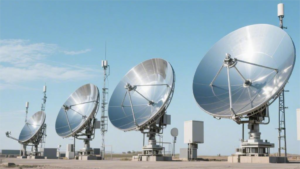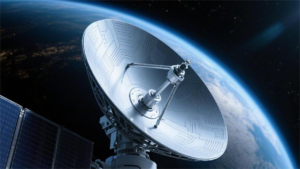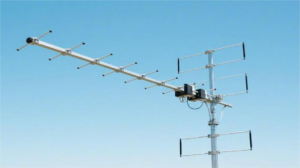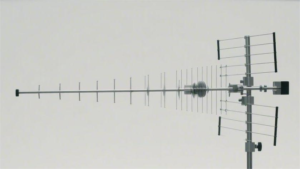
The 7 radio waves span ELF (3-30Hz, submarine comms), SLF (30-300Hz, underground), ULF (300-3kHz, geophysics), VLF (3-30kHz, nav beacons), LF (30-300kHz, AM), MF (300-3MHz, AM), HF (3-30MHz, shortwave), each with distinct propagation for specialized uses.
Table of Contents
Radio Waves in Broadcasting
Today, over 44,000 licensed radio stations operate globally, with the AM band (530–1700 kHz) and the FM band (88–108 MHz) serving as the backbone. The key difference is in how they handle interference. AM (Amplitude Modulation) varies the signal’s strength, making it susceptible to static from lightning or electrical appliances, but it can travel incredibly far, especially at night—often over 100 miles. FM (Frequency Modulation) varies the signal’s frequency, making it largely immune to amplitude-based noise, resulting in higher fidelity stereo audio perfect for music, though its typical range is limited to about 50-60 miles.
In the US, the FCC auctions these licenses; a single FM license in a major metro can cost millions of dollars. Stations operate at vastly different power levels. A small local AM station might broadcast at 250 watts, covering a town, while a clear-channel AM station, like WOR 710 kHz in New York, can use 50,000 watts, reaching multiple states after dark. This is because AM signals propagate via ground waves during the day and reflect off the ionosphere at night, extending their reach. FM signals, being higher frequency, travel primarily by line-of-sight. This is why FM antennas are mounted on towers often over 1,000 feet tall to maximize their visual horizon.
HD Radio, common in the Americas, allows stations to multicast up to 3 additional sub-channels on their existing frequency—a primary station at 98.5 MHz could also offer a classic rock channel at 98.5 HD2 and a news channel at 98.5 HD3, all with near-CD quality audio at a bitrate of 96–128 kbps. However, this requires significant investment: a new HD Radio transmitter can cost a station between 150,000, plus ongoing costs for additional licensing fees.
| Feature | AM Broadcasting | FM Broadcasting |
|---|---|---|
| Frequency Range | 530 – 1700 kHz | 88 – 108 MHz |
| Primary Modulation | Amplitude | Frequency |
| Typical Bandwidth | 10 kHz | 200 kHz |
| Audio Fidelity | Low (Mono, < 5 kHz) | High (Stereo, < 15 kHz) |
| Key Vulnerability | Electrical interference | Physical obstructions |
| Avg. Daytime Range | 0–100 miles | 0–60 miles |
Despite the rise of streaming, terrestrial radio still reaches over 90% of the U.S. population weekly. Its resilience lies in its simplicity and cost-effectiveness; listeners need only a $10 receiver, and broadcasters, after initial setup, can transmit to an unlimited number of people simultaneously for virtually no incremental cost, a scalability that data networks still struggle to match. The technology may be over a century old, but its efficiency and widespread accessibility ensure it remains a critical part of the media landscape.
Wi-Fi and Bluetooth Signals
Wi-Fi and Bluetooth are the twin engines of modern short-range wireless communication, but they are designed for completely different jobs. Wi-Fi is a long-range, high-speed workhorse for data-heavy tasks, while Bluetooth excels at short-range, low-power connections between personal devices. Both, however, share a common real estate: the 2.4 GHz ISM (Industrial, Scientific, and Medical) band. This unlicensed spectrum is a global free-for-all, which is why your Wi-Fi router and Bluetooth headphones can interfere with your microwave oven, which also operates at around 2.45 GHz. To manage this congestion, Wi-Fi has evolved through generations, with the latest Wi-Fi 6E standard adding the pristine 6 GHz band, offering 1,200 MHz of additional spectrum to avoid the 2.4 GHz traffic jam. Bluetooth, in contrast, uses a technique called frequency-hopping spread spectrum (FHSS), where it rapidly switches between 79 individual 1-MHz-wide channels within the 2.4 GHz band to avoid persistent interference.
A modern Wi-Fi 6 router can theoretically push data rates up to 9.6 Gbps across a typical indoor range of 30-45 meters, connecting dozens of devices simultaneously to the internet. This requires significant power; a router might draw 6 to 12 watts during operation. Bluetooth LE (Low Energy), the standard for most accessories, operates on a completely different scale. It’s designed for intermittent data transmission—sending a heartbeat reading or a keystroke—consuming less than 0.01 watts to 0.05 watts during active transmission. This is why a tiny Bluetooth 5.0 chip can run for months or even a year on a single 220mAh coin-cell battery, while a Wi-Fi security camera would drain the same battery in under an hour.
The core distinction lies in their purpose: Wi-Fi is for high-speed internet access, a replacement for an Ethernet cable, while Bluetooth is a low-power cable replacement for peripherals, prioritizing years of battery life over massive bandwidth.
Setting up a new Wi-Fi 6 network for a 2,500 sq. ft. home might require a 70. Its job is to deliver a stable 4K video stream that consumes over 7 GB of data per hour. Conversely, pairing a $80 set of Bluetooth earbuds to a phone has no ongoing cost. The earbuds’ sole job is to receive a compressed audio stream at a bitrate of 256 kbps, just enough for high-quality music, while their charging case holds a total battery capacity of 500mAh for 20+ hours of playback. You would never use Bluetooth to stream a 4K movie to your TV, just as you would never use Wi-Fi to connect your computer mouse; the power and protocol overhead would be absurdly inefficient for the tiny 1 kB of data a mouse sends per second.
How Microwaves Heat Food
This process centers on a 2.45 GHz radio wave, a frequency deliberately chosen because it is readily absorbed by water molecules. The magnetron, the heart of the oven, converts 1,200 to 1,500 watts of household electricity into these microwaves. These waves penetrate food, typically to a depth of about 2 to 4 centimeters, and cause water, fat, and sugar molecules to rotate 2.45 billion times per second. This rapid rotation creates molecular friction, which instantly produces thermal energy. This is why a 250-gram bowl of soup can go from 4°C (refrigerator temperature) to 85°C (steaming hot) in roughly 90 seconds on high power, a task that would take over 10 minutes on a conventional stovetop.
The effectiveness of microwave heating depends on several critical, quantifiable factors:
- Water Content: Foods with high water concentration, like vegetables (90-95% water), heat much faster and more evenly than drier foods like bread (35-40% water), which can become tough and chewy if overheated.
- Mass and Density: A 500-gram block of frozen spinach will require 6-8 minutes to thaw and heat, while the same mass of loose-leaf spinach might take only 3-4 minutes because the waves can penetrate the air gaps between the leaves.
- Starting Temperature: A meal taken from the refrigerator at 4°C requires significantly more energy to heat than the same meal starting at room temperature (21°C). The energy required to raise the temperature of 1 gram of water by 1 degree Celsius is 1 calorie, and this demand scales linearly with mass and temperature difference.
The 2.45 GHz wavelength is approximately 12.2 centimeters, which can create standing waves inside the cavity. This leads to the common problem of hot and cold spots. To mitigate this, manufacturers install a rotating turntable that moves at 4-6 revolutions per minute or use a rotating metal stirrer to distribute the energy more evenly.
Furthermore, the magnetron itself is only about 65-70% efficient at converting electrical energy into microwave energy; the rest is lost as waste heat, which is why the oven’s exterior gets warm and internal fans consume 15-25 watts to cool the magnetron during operation. This is still vastly more efficient than a traditional radiant-element oven, which may only convert 15-20% of its energy into actually heating the food, with the rest heating the surrounding air and appliance materials. The speed and direct energy transfer make the microwave an unparalleled tool for rapid heating and defrosting, though its inability to produce the browning reactions (Maillard reaction and caramelization) that occur at surface temperatures above 150°C limits its use for true cooking.
GPS for Location Tracking
The system operates through a constellation of at least 24 active satellites orbiting at an altitude of 20,180 kilometers, distributed across six orbital planes to ensure at least four to six satellites are visible from any point at any given time. Each satellite continuously broadcasts a radio signal that contains its precise location and the exact time from an onboard atomic clock accurate to within 2-3 nanoseconds. Your GPS receiver, found in your phone or car, listens for these signals. By calculating the time delay between when the signal was sent and when it was received (a process that requires signals from a minimum of four satellites), it can triangulate your position on the ground with remarkable accuracy. The entire system, funded and maintained by the U.S. government, is available for free civilian use and represents a multi-billion-dollar infrastructure with each new-generation satellite costing over $500 million to build and launch.
The science behind the calculation is based on the constant speed of light (299,792,458 meters per second). A signal delay of just 1 millisecond (0.001 seconds) translates to a distance of nearly 300 kilometers. To achieve meter-level accuracy, the receiver must measure time differences with incredible precision, down to tens of nanoseconds. The civilian L1 signal, broadcast at 1575.42 MHz, typically provides 5 to 10 meter accuracy under clear open-sky conditions. However, several critical factors introduce error and reduce this precision:
- Atmospheric Interference: The ionosphere and troposphere slow the radio signals down, adding ~5 meters of error. Dual-frequency receivers that get the L2 signal (1227.60 MHz) can correct for most of this.
- Satellite Geometry: The physical arrangement of the satellites being used (called Dilution of Precision or DOP) can magnify other errors. A low DOP value (below 3) is ideal, while a high DOP (above 6) can degrade accuracy to over 15 meters.
- Signal Multipath: Reflections off buildings or mountains can increase the apparent travel time of a signal, adding ~1 meter of error in urban environments.
- Receiver Quality: A $100 dedicated handheld GPS unit might have a higher quality antenna and chipset than a smartphone, allowing it to lock onto signals faster and maintain a more accurate fix, often within 2-3 meters.
Assisted-GPS (A-GPS) uses a cellular network connection (at a cost of a few kB of data) to quickly download satellite orbital data (ephemeris), reducing the initial lock-on time (Time to First Fix) from 45 seconds to under 5 seconds. More advanced systems like Real-Time Kinematic (RTK) GPS use a fixed base station to provide corrections to a mobile rover, achieving sub-centimeter (10-20 mm) accuracy in real-time, which is essential for applications like autonomous farming and surveying. This high-precision service, however, comes at a premium, with professional RTK setups costing 20,000 per unit. The modern civilian now routinely experiences 1-3 meter accuracy thanks to multi-band receivers in new smartphones that access multiple satellite constellations (GPS, GLONASS, Galileo, BeiDou), effectively doubling the number of available satellites to over 50 and drastically improving reliability and precision in challenging environments.
Radio Telescopes in Astronomy
The signal strength arriving from deep space is astonishingly low, often measuring below 1 attowatt per square meter (10⁻¹⁸ watts), which is over a billion times weaker than a signal from a GPS satellite. To detect such faint emissions, radio telescopes must be physically enormous. The Five-hundred-meter Aperture Spherical Telescope (FAST) in China, currently the world’s largest single-dish radio telescope, has a receiving area equivalent to 30 standard football fields. This colossal size allows it to collect enough radio energy for analysis, exploring frequencies from 70 MHz to 3.0 GHz.
The dish surface is precision-engineered with panels having a surface accuracy of less than 1 millimeter RMS deviation to perfectly focus the long-wavelength radiation. The focused waves are then detected by a feedhorn and a highly sensitive receiver, which is often cooled to cryogenic temperatures as low as 15 Kelvin (-258°C) to reduce thermal electronic noise that would otherwise drown out the faint cosmic signals. The received data is then processed by a backend spectrometer, which might analyze bandwidths of several hundred MHz, breaking it into millions of individual frequency channels. Key performance metrics for any radio telescope include:
- Angular Resolution: The ability to distinguish fine detail. For a single dish, this is determined by the formula: Resolution (arcseconds) ≈ 70 × Wavelength (cm) / Diameter (m). This means a 100-meter dish observing at a 21 cm wavelength (emitted by hydrogen gas) has a resolution of about ~150 arcseconds, which is relatively poor.
- Collecting Area: This directly determines the telescope’s sensitivity to faint signals. FAST’s 500-meter diameter gives it a collective area of ~196,000 square meters.
- System Temperature: A measure of the total noise in the system, from the sky, the atmosphere, and the electronics themselves. State-of-the-art systems aim for temperatures as low as 20 Kelvin.
The Very Large Array (VLA) in New Mexico uses 27 movable antennas, each 25 meters in diameter, spread across a Y-shaped track spanning ~36 kilometers. By combining their signals, the VLA can synthesize a resolution equivalent to a single dish 36 kilometers wide, achieving detail down to <0.05 arcseconds. The upcoming Square Kilometre Array (SKA), to be built in South Africa and Australia, will be the most powerful radio observatory ever conceived. Its initial phase will include 197 dishes and 130,000 low-frequency antennas, creating a total collecting area of ~330,000 square meters at a project cost exceeding €2 billion.
| Parameter | Large Single Dish (FAST) | Major Interferometer (VLA) | Next-Generation (SKA Phase 1) |
|---|---|---|---|
| Effective Aperture | 500 m | 36 km | >100 km |
| Collecting Area | ~196,000 m² | ~13,000 m² | ~330,000 m² |
| Angular Resolution | ~2.9′ (at 1.4 GHz) | <0.05″ (at 43 GHz) | <0.1″ (at 1.4 GHz) |
| Key Science | Pulsar timing, HI surveys | High-detail imaging of radio galaxies | Cosmic dawn, galaxy evolution |
A typical modern observatory like the Atacama Large Millimeter Array (ALMA) can generate ~2 terabytes of raw data daily. Processing this into usable scientific images requires some of the world’s most powerful correlator supercomputers, performing ~17 quadrillion operations per second.
Medical Uses: MRI Scans
A typical clinical scanner operates at a magnetic field strength of 1.5 Tesla (T), approximately 30,000 times stronger than Earth’s magnetic field, though high-end research systems can reach 7.0 T or higher. When placed in this field, the nuclei of hydrogen atoms align with it. The scanner then transmits a precise radio frequency (RF) pulse at the resonant frequency of these protons—63.87 MHz for a 1.5 T system—which temporarily tips them out of alignment. As they return to their original state (a process called relaxation), they emit faint RF signals that are detected by specialized coils. A superconducting magnet, cooled by liquid helium to -269.1°C (4 Kelvin), is required to generate the stable, strong field with zero electrical resistance, consuming over 50 kW of power during operation and requiring a $15,000 annual refill of cryogens.
The received signals are spatially encoded by rapidly switching magnetic gradient coils, which add slight variations in the main magnetic field across different parts of the body at strengths of 20-100 mT/m. These gradients, powered by amplifiers drawing hundreds of amperes of current, allow the system to pinpoint the origin of each signal within a 3D volume. The raw data, known as k-space, is then processed by algorithms like the Fast Fourier Transform (FFT) to reconstruct cross-sectional images with a resolution down to 0.5 x 0.5 x 2.0 mm. A standard diagnostic scan protocol consists of multiple sequences (e.g., T1-weighted, T2-weighted), each taking 3 to 8 minutes to complete, resulting in a total exam time of 30 to 45 minutes for a detailed study. The two primary relaxation times, T1 (spin-lattice) and T2 (spin-spin), are measured in milliseconds and vary between tissues—cerebrospinal fluid has a T2 of ~1500 ms, while muscle tissue is around 50 ms—creating the inherent contrast in the final image.
The financial investment is substantial: a new 1.5 T MRI scanner costs between 1 million and 1.5 million, while a 3.0 T system can exceed 2.3 million, with installation and site preparation (including 4-ton magnetic shielding) adding another 500,000. Operational costs run 200 to 500 per hour, factoring in magnet cooling, power, and technician time. Despite the expense, its unparalleled soft-tissue contrast resolution and absence of ionizing radiation make it the gold standard for diagnosing conditions like multiple sclerosis, torn ligaments, and brain tumors, with over 100 million scans performed globally each year.
Remote Control Communication
The classic IR remote, like the one for your TV, uses a 940 nanometer wavelength LED that pulses on and off to send data. Each button press transmits a unique code, typically a 12-32 bit digital sequence, at a modulation frequency of 36-38 kHz. This high-frequency blinking is used to distinguish the signal from ambient light, but it requires a direct line of sight and has a typical range of only 6-8 meters. The LED itself is very low power, emitting around 15-20 milliwatts in short bursts, which is why these remotes can run for over a year on two AAA batteries with a combined capacity of ~2000 mAh.
They operate in unlicensed ISM bands like 315 MHz (common in North America) or 433.92 MHz (common in Europe). These signals can easily pass through walls, providing a reliable range of 20-50 meters in a residential setting. The data rate is slow, often ~2 kbps, as the command message is very short, usually under 100 bits. To prevent interference and unauthorized access, modern RF systems like garage door openers use rolling code encryption. This security protocol changes the transmitted code after every use, with a synchronized 24-bit counter between the remote and receiver, making it virtually impossible to replay a signal. The power output is regulated to be very low; an FCC-compliant transmitter in the 315 MHz band has an effective radiated power (ERP) limit of 1-5 milliwatts, ensuring minimal interference with other devices.
Technologies like Zigbee (2.4 GHz) and Z-Wave (908.42 MHz) enable low-power mesh networking, allowing a wall switch to not only send an “off” command to a bulb but also receive a confirmation. A Z-Wave module might consume less than 1 mA in sleep mode and ~25 mA during transmission, enabling 2-3 years of operation on a single battery.
| Parameter | Infrared (IR) Remote | Basic RF Remote (433 MHz) | Smart RF Remote (Zigbee/Z-Wave) |
|---|---|---|---|
| Carrier Frequency | 333 THz (940 nm light) | 315 MHz / 433.92 MHz | 908.42 MHz / 2.4 GHz |
| Typical Data Rate | ~1.2 kbps | ~2-5 kbps | 40-250 kbps |
| Max Range (Line-of-Sight) | 6-8 meters | 20-50 meters | 30-100 meters (mesh extended) |
| Power Consumption (Tx) | 15-20 mW (peak) | 5-10 mW (ERP) | ~50 mW (peak) |
| Primary Use Case | Consumer AV equipment | Garage doors, car keys | Smart home automation |
| Unit Cost (High-Volume) | 1.80 | 7.00 | 18.00 |
A Zigbee mesh network can support over 65,000 nodes with a latency of ~15-30 milliseconds for a command. The radio chipsets for these protocols, from vendors like Silicon Labs or Texas Instruments, cost 5 per unit in volume and integrate a 32-bit ARM Cortex-M processor running at 40 MHz to handle the network stack and application logic. Despite the rise of smartphone control, the dedicated physical remote remains a highly optimized, reliable, and energy-efficient interface for its specific purpose, with over 2 billion units shipped annually for various applications.