Microstrip patch antennas commonly use four feeding methods: edge feeding (50Ω impedance matching with λ/4 transformer), probe feeding (1-2mm diameter pin at optimal 30-40% patch length), aperture coupling (1-3mm slot with 1-2dB lower cross-polarization), and proximity coupling (2-5mm overlap for wider bandwidth up to 15%). Each method balances bandwidth (2-5% vs 10-15%), complexity, and spurious radiation, with probe feeding being most common for its simplicity and 4-6dB gain in standard 2.4GHz designs.
Table of Contents
Frequency Range Needs
Choosing the right antenna starts with understanding your frequency range requirements. Whether you’re designing a Wi-Fi router, a 5G base station, or an IoT sensor, the operating frequency directly impacts performance. For example, a 2.4 GHz Wi-Fi antenna covers channels 1-14 with a 20 MHz or 40 MHz bandwidth, while a 5 GHz model supports up to 160 MHz channels for faster data rates. In cellular networks, sub-6 GHz (3.5-6 GHz) offers better coverage, while mmWave (24-40 GHz) enables ultra-low latency but struggles with obstacles. If your application needs long-range communication (e.g., LoRa at 868 MHz or 915 MHz), lower frequencies penetrate buildings better but sacrifice speed. Mismatched frequency selection can cut signal strength by 50% or more, so getting this right is non-negotiable.
The first step is checking regulatory limits. In the U.S., the FCC allows 902-928 MHz for industrial use, while Europe permits 863-870 MHz. If you ignore these rules, your device could face $10,000+ fines or fail certification. Next, assess interference risks. A 2.4 GHz antenna might suffer from microwave ovens and Bluetooth devices, reducing throughput by 30-60% in crowded areas. If reliability matters, 5 GHz or 6 GHz (Wi-Fi 6E) avoids congestion but requires more power.
For long-distance links, lower frequencies win. A 433 MHz antenna can reach 5-10 km in open areas, while 2.4 GHz struggles beyond 1 km. However, higher frequencies (e.g., 28 GHz for 5G) support multi-gigabit speeds but drop signals after 200-300 meters. If your budget is tight, dual-band antennas (2.4/5 GHz) cost 100-300 but future-proof investments.
”A 10% frequency mismatch can waste 20-40% of your transmit power. Always match the antenna to your exact band—no guesswork.”
Antenna Size Limits
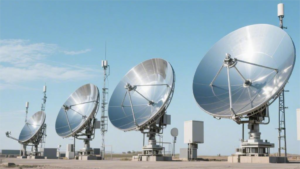
Antenna size isn’t just about fitting into a device—it directly impacts performance, efficiency, and cost. A quarter-wave antenna at 900 MHz needs at least 8.3 cm (3.3 inches), while a 5 GHz version shrinks to 1.5 cm (0.6 inches). If space is tight (e.g., in a smartwatch or IoT sensor), you might compromise with a PCB trace antenna as small as 10×2 mm, but expect 30-50% lower gain compared to a full-sized dipole. For satellite terminals, a 60 cm dish delivers 20 dB gain, but a 30 cm version cuts that to 14 dB, reducing data rates by 40% or more. Size constraints also affect durability: a 20 cm whip antenna on a truck-mounted radio lasts 5+ years, while a 5 cm internal antenna in a smartphone degrades 10-15% in signal strength after 2 years due to thermal stress.
| Antenna Type | Typical Size | Frequency Range | Gain (dBi) | Cost Range | Use Case |
|---|---|---|---|---|---|
| Whip Antenna | 15-100 cm | 100 MHz – 6 GHz | 2-10 dBi | 50 | Vehicles, base stations |
| PCB Trace Antenna | 5-30 mm | 800 MHz – 5 GHz | -3 to 3 dBi | 2 | Smartphones, wearables |
| Patch Antenna | 20×20 mm – 50×50 mm | 1.5 – 6 GHz | 5-8 dBi | 20 | Drones, Wi-Fi routers |
| Helical Antenna | 10-30 cm (height) | 400 MHz – 2.4 GHz | 8-15 dBi | 100 | Satellite comms, RFID readers |
| Dish Antenna | 30 cm – 3 m diameter | 1 – 40 GHz | 20-50 dBi | 5000 | Long-range radar, astronomy |
Smaller antennas save space but often sacrifice bandwidth and efficiency. A 5×5 mm chip antenna for Bluetooth (2.4 GHz) might cost $0.50 and fit inside earbuds, but its effective range drops to 10 meters vs. 30 meters for a 15 cm external antenna. In industrial IoT, a 10 cm external dipole at 868 MHz achieves 3-5 km range, while an internal 3 cm antenna struggles beyond 500 meters. For high-frequency mmWave (28 GHz), even a 1 cm error in alignment can cut signal strength by 20% due to narrow beamwidths.
Material choices also matter. A copper monopole performs 15% better than a stainless steel equivalent but costs 2-3x more. In mass-produced devices, manufacturers often opt for cheaper stamped metal antennas (0.20/unit) despite 5−8dB lower gain versus precision-machined versions (1.50/unit). Environmental factors add complexity: a marine antenna rated for -40°C to 80°C costs 80+, while a consumer-grade indoor antenna (10) fails in high-humidity or subzero conditions.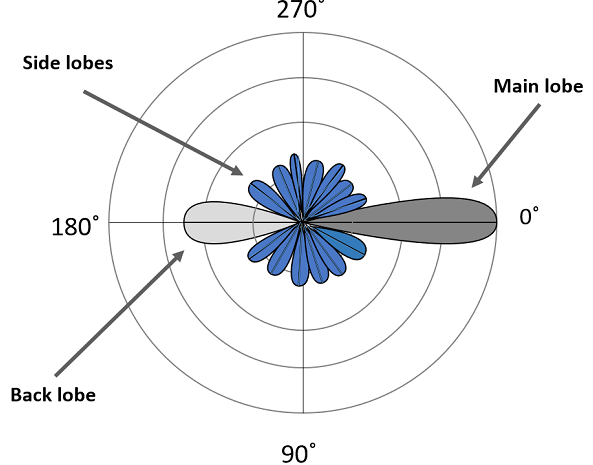
Installation Environment
Where you install an antenna matters just as much as the antenna itself. A perfectly designed 5G antenna mounted indoors can lose 50-70% of its signal strength just by being placed behind a concrete wall. In contrast, the same antenna mounted on a 10-meter rooftop pole might achieve 3-5 km coverage in urban areas. Temperature swings also play a role—a cellular antenna rated for -30°C to 70°C will see its impedance drift by 10-15% in extreme cold, reducing efficiency. Humidity is another silent killer: in coastal regions with 90%+ humidity, cheap antennas corrode 3x faster, cutting their 5-year lifespan down to just 18-24 months. Even wind matters—a 30 cm dish antenna in a 50 km/h wind zone needs reinforced mounting, or its alignment shifts by 2-3 degrees, dropping signal quality by 20% or more.
Obstruction losses are the biggest headache. A single brick wall (20 cm thick) attenuates 2.4 GHz Wi-Fi signals by 6-10 dB, which is enough to turn a strong 150 Mbps connection into a spotty 20 Mbps link. Trees are worse—foliage at 5.8 GHz can sap 12-15 dB per 10 meters, killing drone video feeds beyond 200-300 meters. If you’re deploying in a steel-framed warehouse, expect multipath interference to cause 30-50% higher packet loss unless you use directional antennas with 30° beamwidths instead of omnidirectional ones.
Elevation and tilt angles are often overlooked. A 4G LTE antenna mounted at 3 meters with a 15° downward tilt improves indoor coverage by 40% compared to a flat-mounted antenna. But tilt it too far (>25°), and you create coverage gaps beyond 500 meters. For suburban installations, the sweet spot is usually 5-8 meters high with 10-20° tilt, balancing range and signal penetration.
Weatherproofing costs scale nonlinearly. A basic IP65-rated outdoor antenna costs 50−100, but upgrading to IP67 (submersion-proof) doubles the price. In hurricane-prone areas, you’ll need stainless steel mounts (200+), or salt spray corrodes standard galvanized steel in under 2 years. Lightning protection adds another 150−300 per site, but skipping it risks 5,000+ in equipment damage per strike.
RF interference varies wildly by location. Near airports or military bases, radar systems can blast 100W+ pulses in the 2.7-3.5 GHz band, drowning out nearby Wi-Fi 6E (6 GHz) networks. In industrial zones, arc welders and motor drives spew wideband noise from 500 MHz to 2 GHz, forcing you to shift to 5 GHz or shielded cables. A 300 spectrum analyzer rental for 1−2 days pays for itself by avoiding 10,000+ in redesign costs later.
Ground plane requirements bite many installers. A VHF antenna (150 MHz) needs at least a 1-meter diameter metal ground plane—without it, range drops 60%. Even small GPS antennas suffer: placing one on a fiberglass car roof instead of metal cuts accuracy from 1.5 meters to 5+ meters.
Cost vs Performance
Antenna selection always comes down to a cost-performance tradeoff, and the cheapest option often ends up being the most expensive in the long run. A 5 rubber duck antenna might seem like a bargain, but its 2dB lower gain and narrow 100MHz bandwidth could force you to use a 30 dipole with 5 dBi gain, increasing your electricity costs by 100+/year for high-duty-cycle systems. On the other hand, overspending on a 500+ ultra-wideband military antenna for a simple LoRa sensor network wastes capital when a 20 PCB antenna delivers 90% of the performance at 1/25th the price. Real-world testing shows that antenna costs typically scale logarithmically with performance—jumping from 85% to 95% efficiency often triples the price, while squeezing out that last 5% might cost 10x more.
Key Trade-offs and Price Benchmarks
| Antenna Type | Price Range | Typical Gain | Efficiency | Lifespan | Best Use Case |
|---|---|---|---|---|---|
| Rubber Duck | 20 | 2-4 dBi | 60-75% | 2-3 years | Short-range handheld radios |
| Dipole | 50 | 5-8 dBi | 80-90% | 5-7 years | Base stations, IoT gateways |
| Patch Antenna | 100 | 6-9 dBi | 85-92% | 4-5 years | Drones, Wi-Fi access points |
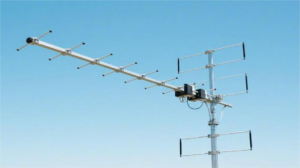
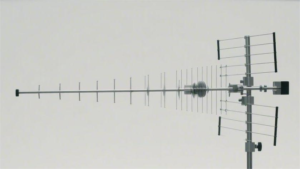
| Yagi-Uda | 200 | 10-14 dBi | 90-95% | 7-10 years | Long-range point-to-point links |
| Phased Array | 2000+ | 15-25 dBi | 92-98% | 10+ years | 5G base stations, radar systems |
Performance per Dollar Analysis
For low-power IoT devices, spending 10−20 extra on a quality omnidirectional antenna (vs. a 2 chip antenna) improves range by 200-300%, effectively reducing the number of gateways needed by 50%. In a 100-node sensor network, this cuts infrastructure costs by 5,000+. However, the law of diminishing returns hits hard—upgrading from a 100 Yagi (12 dBi) to a 400 parabolic grid (18 dBi) only adds 1.5-2 km to your link distance, which may not justify the 4x cost increase for most applications.
Hidden Costs That Kill Budgets
- Installation labor often exceeds antenna costs: mounting a 150 sector antenna on a 30-foot tower requires 500+ in cherry picker rentals and certified climbers
- Cable losses eat performance: a 20/m LMR-400 cable loses 0.22 dB/m at 2.4 GHz, while a 5/m RG-58 wastes 0.64 dB/m—that’s 30% signal loss over just 15 meters
- Regulatory testing adds 3,000−10,000 per design; using pre-certified antennas saves 6-12 months of compliance headaches
Material Choices Impact ROI
- Aluminum antennas (150) last 8-12 years in mild climates vs. stainless steel (600) needed for coastal/marine environments
- Plastic radomes degrade UV resistance after 3-5 years, while fiberglass versions maintain 95%+ transparency for 10+ years but cost 2.5x more
When to Splurge vs. Save
- Worth the money:
- Dual-polarized antennas (+$40) for MIMO systems—deliver 40-60% throughput gains
- N-type connectors (+$15) over SMA—survive 500+ mating cycles vs. SMA’s 100-200
- Not worth it:
- Gold-plated connectors (+$50) unless operating in high-corrosion environments
- Ultra-wideband 0.5-6 GHz antennas (+$300) if you only need 2.4 GHz
Pro Tip: For fixed installations, spend 70% of your budget on the antenna and proper mounting, then 30% on quality cabling—reversing this ratio is the #1 cause of premature system failures.