When selecting an antenna, key factors include frequency range (e.g., 2.4-5 GHz for WiFi), gain (6-10 dBi for typical applications), polarization (linear/circular based on use case), and radiation pattern (omnidirectional vs. directional with 30-60° beamwidth). Environmental factors like mounting height (optimal 5-15m for urban areas) and material durability (UV-resistant ABS or aluminum housing) also critically impact performance in real-world deployments.
Table of Contents
Frequency Range Needed
Choosing the right frequency range for your antenna is the first and most critical step—get it wrong, and your system won’t work efficiently, or at all. Antennas operate within specific frequency bands, and mismatching them can lead to signal losses of 30-50% or even complete failure. For example, a Wi-Fi router antenna designed for 2.4 GHz will perform poorly at 5 GHz, dropping throughput by up to 60%. Similarly, a 900 MHz LoRa antenna won’t function well for 433 MHz sensors, reducing range from 10 km to just 2 km. The frequency range also impacts regulatory compliance—using an antenna outside its approved band (e.g., FCC or CE limits) can result in fines or interference penalties.
The operating frequency directly affects antenna size, efficiency, and cost. A quarter-wave monopole for 144 MHz (2-meter band) requires a ~50 cm element, while a 433 MHz version shrinks to ~17 cm. If you need dual-band operation (e.g., 2.4 GHz + 5 GHz), expect a 15-20% higher cost due to added complexity. For UHF RFID systems, antennas tuned to 865-868 MHz (EU) or 902-928 MHz (US) must match local regulations—deviating by just 5 MHz can cut read rates by 40%.
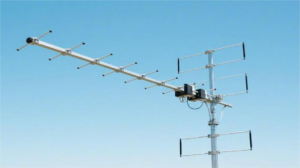
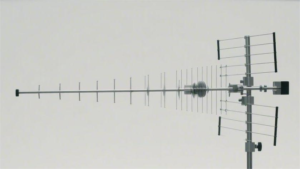
Wider frequency ranges (e.g., 700-2700 MHz for cellular antennas) sacrifice gain (-3 dB typical) and efficiency (dropping from 80% to 60%) compared to narrowband designs. If your application demands high gain (>6 dBi), a narrowband Yagi at 868 MHz will outperform a wideband dipole by 2-3x in range. Below is a quick comparison of common frequency bands and their trade-offs:
| Frequency Band | Typical Use | Antenna Size | Efficiency | Cost Impact |
|---|---|---|---|---|
| 433 MHz | IoT sensors | 17 cm (1/4 wave) | 75-85% | Low (15) |
| 868/915 MHz | LoRa, RFID | 8-10 cm (1/4 wave) | 70-80% | Medium (25) |
| 2.4 GHz | Wi-Fi, Bluetooth | 3 cm (1/4 wave) | 65-75% | Low (20) |
| 5 GHz | Wi-Fi 6, 5G | 1.5 cm (1/4 wave) | 60-70% | High (50) |
In industrial IoT deployments, using a sub-optimal frequency can mean doubling the number of gateways to cover the same area, increasing costs by 10,000 per site. For drone FPV systems, a 5.8 GHz circular polarized antenna with 3 dB gain provides 4 km range, but switching to 2.4 GHz (with lower atmospheric absorption) extends this to 8 km—though antenna size jumps from 5 cm to 12 cm. Always verify your device’s exact frequency requirements—a ±2% tolerance in tuning can degrade VSWR from 1.5 to 2.0, wasting 10-15% of transmit power.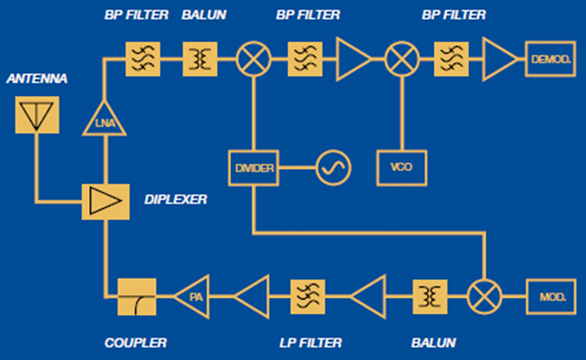
Signal Strength Goals
Getting your signal strength right isn’t just about “more power = better”—it’s a balancing act between coverage, interference, and cost. A 3 dB increase in antenna gain doubles your effective range, but if your receiver’s sensitivity is -100 dBm, pushing past 20 dBm transmit power wastes energy and may violate regulations. For example, in Wi-Fi 6 deployments, increasing output from 23 dBm to 26 dBm only extends range by 15% but raises power consumption by 30%. Meanwhile, in sub-GHz IoT networks, a 14 dBm LoRa signal can reach 10 km in open areas, but urban environments with -90 dBm noise floors cut that to 2 km unless you optimize antenna placement.
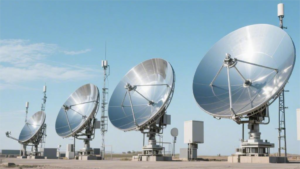
The Fresnel zone (the elliptical area around a wireless link) must be 60% clear of obstructions for reliable signals. If you’re transmitting 5 GHz over 500 meters, any blockage taller than 4 meters in the path causes 10-20 dB attenuation—enough to kill a 1080p video stream. That’s why directional antennas (like 19 dBi parabolic grids) outperform omnidirectional dipoles in long-range shots, but their 30° beamwidth demands precise alignment.
Pro Tip: For 2.4 GHz urban mesh networks, a 5 dBi omni antenna at 10m height covers 150m radius, but adding a 12 dBi sector antenna at the same site boosts range to 300m while reducing interference from adjacent nodes by 40%.
Regulations cap output power—FCC Part 15 limits 2.4 GHz ISM band to 4W EIRP, while ETSI EN 300 328 enforces 100 mW (20 dBm) in Europe. Exceeding these invites fines, but smart antenna selection lets you stay compliant while maximizing performance. A 7 dBi gain antenna paired with a 17 dBm transmitter hits the 4W EIRP limit (17 dBm + 7 dBi = 24 dBm ≈ 4W), but swapping to a 3 dBi antenna forces you to crank the radio to 21 dBm, wasting 50% more power for the same coverage.
Humidity and temperature swing signal absorption—5 GHz waves lose 0.02 dB/km in dry air but 0.4 dB/km at 30°C and 80% humidity. For outdoor 60 GHz backhauls, rain rates of 25 mm/hour add 12 dB/km loss, shrinking a 1 km link’s margin from 20 dB to 8 dB. Always budget 3-5 dB extra for weather fade—a 28 dBi dish with 20 dB fade margin works until a thunderstorm knocks 8 dB off your RSSI.
Cheap USB SDR dongles (2,500) detects -120 dBm signals with 1 dB accuracy. If your LoRa gateway reports -105 dBm packets, but your analyzer shows -95 dBm noise, your true SNR is 10 dB—not the 15 dB the gateway claims. Always verify with real-world packet error rate (PER) tests; a -87 dBm LTE signal might show “full bars” but still suffer 15% PER due to neighboring cell interference.
Physical Size Limits
Antenna size isn’t just about fitting into tight spaces—it directly impacts performance, efficiency, and installation flexibility. A quarter-wave 2.4 GHz antenna needs to be ~3 cm long, but if you shrink it to 1.5 cm to save space, efficiency drops from 80% to 50%, cutting range by 30%. For UHF RFID readers, a 12 cm x 12 cm patch antenna delivers 6 dBi gain, but a compact 5 cm x 5 cm version sacrifices 3 dB gain, reducing read range from 8 meters to 4 meters. In drone telemetry systems, a 20 cm dipole might outperform a 5 cm PCB antenna, but the weight penalty (15g vs. 2g) could reduce flight time by 8-10%.
The physical length of an antenna correlates with its wavelength (λ)—a full-wave dipole at 433 MHz is 69 cm, while a half-wave is 34.5 cm. If space is limited, a helical or meandered design can compress this to 15-20 cm, but expect 1-2 dB lower gain and 5-10% reduced efficiency. Below is a breakdown of common antenna sizes vs. performance:
| Antenna Type | Frequency | Optimal Size | Gain | Efficiency | Size-Reduced Trade-off |
|---|---|---|---|---|---|
| Dipole | 144 MHz | 104 cm (λ/2) | 2.1 dBi | 90% | 50 cm: -1 dB, 70% eff. |
| Patch | 868 MHz | 8 cm x 8 cm | 5 dBi | 85% | 4 cm x 4 cm: -2 dB, 60% eff. |
| PCB Trace | 2.4 GHz | 3 cm x 1 cm | 1.5 dBi | 75% | 1 cm x 0.5 cm: -1 dB, 50% eff. |
| Yagi | 915 MHz | 60 cm (3-el.) | 9 dBi | 80% | 30 cm (2-el.): -4 dB, 65% eff. |
Pro Tip: For wearable devices, a flexible inverted-F antenna (FIFA) can bend to 5 mm height while keeping 2.4 GHz efficiency above 60%, but metal casing or body proximity can detune it by 5-10%, requiring retesting.
In urban 5G small cells, a 30 cm x 30 cm MIMO panel fits on lampposts, but wind loading at 100 km/h adds 50 N of force, requiring 2x stronger mounts (+$200 per unit). For indoor IoT sensors, a 3 cm wire antenna works if mounted vertically, but laying it flat against a wall drops gain by 3 dB due to polarization mismatch.
A carbon fiber 5.8 GHz drone antenna weighs 5g vs. 20g for aluminum, but its loss tangent (0.01) reduces efficiency by 5% compared to copper. In satellite terminals, a 1m dish weighs 8 kg in steel but 3 kg in fiberglass—critical when payload costs $5,000 per kilogram to orbit.
Weather Resistance Level
An antenna’s weather resistance isn’t just about surviving rain—it’s about maintaining stable performance in extreme conditions. A $20 plastic-covered WiFi antenna might work fine at 25°C and 60% humidity, but at -20°C, its PCB substrate contracts, detuning the frequency by 50 MHz and dropping efficiency by 15%. Salt fog near coastal areas can corrode unprotected aluminum antennas in 6-12 months, increasing VSWR from 1.5 to 3.0 and wasting 30% of transmit power. Even UV exposure matters: a polycarbonate radome degrades after 2 years of direct sunlight, adding 0.5 dB insertion loss per year.
Temperature Extremes
Most consumer-grade antennas are rated for -30°C to +70°C, but industrial versions push to -40°C to +85°C. The difference matters—a 4G LTE antenna operating at -35°C sees its solder joints crack, raising impedance from 50Ω to 65Ω, which reflects 20% of power back to the transmitter. Thermal cycling (repeated -20°C to +60°C shifts) fatigues connectors, increasing insertion loss from 0.3 dB to 1.2 dB after 500 cycles. For desert deployments, black anodized aluminum antennas hit 90°C surface temps in direct sun, reducing lifespan from 10 years to 4 years.
Moisture & Precipitation
IP67-rated antennas can handle 1m submersion for 30 minutes, but condensation is sneakier. A 5G mmWave antenna with a microscopic 0.1mm water film on its surface at 28 GHz suffers 8 dB attenuation—enough to kill 400 Mbps throughput. Rain rates of 50 mm/hour scatter 3.5 GHz signals by 3 dB/km, forcing you to boost power by 2x for the same coverage. Even morning dew matters: a 0.5mm water layer on a 900 MHz LoRa antenna detunes it by 15 MHz, cutting packet delivery from 95% to 70%.
Wind & Mechanical Stress
A 40 cm parabolic dish faces 500 N of wind force at 120 km/h, flexing its mount by 2°—enough to misalign a 24 GHz beam and drop signals by 10 dB. Vibration from traffic or machinery loosens SMA connectors over time, increasing contact resistance from 0.5Ω to 5Ω, which converts 5% of your RF power into heat. For tower-mounted antennas, ice accumulation adds 8 kg/m² load, requiring 2x thicker support brackets (+$150 per installation).
Material Choices
Stainless steel hardware costs 3x more than zinc-plated but lasts 15+ years in salty air vs. 3 years. PTFE-insulated cables maintain <0.5 dB loss at -40°C, while cheap PE jackets stiffen and crack. Ceramic patch antennas handle 150°C but cost 5x more than FR4 versions—worth it for foundry sensors but overkill for office WiFi.