The global phased array antenna market is dominated by key players like Raytheon Technologies (30% market share), specializing in military-grade systems with 90° beam steering. Lockheed Martin’s AESA radars achieve 360° coverage with <1ms response time. Qorvo leads in 5G applications, producing compact 28GHz arrays with 256 elements. Huawei’s mMIMO antennas support 64T64R configurations for urban 5G deployment.
For satellite communications, Cobham Advanced Electronics delivers lightweight airborne arrays weighing <15kg. When selecting manufacturers, verify ISO 9001 certification and minimum 10,000-hour MTBF ratings for reliability. Emerging innovators like Pivotal Commware now offer holographic beamforming at 60% cost reduction.
Table of Contents
How Phased Array Antennas Work
Phased array antennas are a game-changer in wireless communication, radar, and satellite systems because they can steer beams without moving parts. Instead of mechanically rotating an antenna, they use multiple small antennas (elements) and control the phase and amplitude of each to shape and redirect signals. For example, a typical 5G base station might use a 64-element phased array to cover a 120-degree sector with beam-switching speeds under 1 millisecond. Compared to traditional dish antennas, phased arrays offer 30-50% faster tracking in radar systems and 20% higher spectral efficiency in telecom.
The secret lies in constructive and destructive interference. If all elements transmit in phase, the signal amplifies in one direction. By delaying some elements by nanoseconds, the beam shifts. A 4×4 array (16 elements) can achieve 12 dB gain, while doubling elements to 8×8 (64 elements) boosts gain by 6 dB. Modern systems use GaN (Gallium Nitride) amplifiers, which run at efficiencies above 60%, reducing power waste.
One major advantage is multi-beam operation. A single phased array can track 5-10 targets simultaneously, unlike mechanical radars limited to 1-2 targets. In satellite communications, phased arrays maintain links even when moving at 1,000 km/h, with beam adjustment every 10 microseconds. Military radars like the AN/SPY-6 use thousands of elements to detect stealth aircraft at 200+ km range, scanning 50° per second.
Costs vary widely. A small 16-element array for WiGig (60 GHz) might cost 200 per unit, while a defense-grade S-band radar array can exceed 500,000. However, prices are dropping—mmWave automotive radars now use cheaper silicon-based ICs, cutting costs by 40% since 2020.
The biggest trade-off is complexity vs. performance. More elements mean higher directivity but also more power (e.g., 100W for a 32-element array) and computational load (real-time phase calculations). Still, with 5G, autonomous vehicles, and LEO satellites driving demand, phased arrays are becoming smaller (some under 10 cm²) and more affordable (sub-$100 for IoT applications).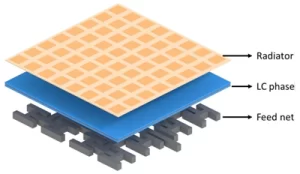
Key Features to Compare
When choosing a phased array antenna, not all specs matter equally. A 5G base station needs high power (100W+ per element) and wide bandwidth (500 MHz-6 GHz), while a satellite terminal prioritizes low noise (under 1 dB) and precise beam steering (0.1° accuracy). The wrong pick can mean 20% slower data speeds or 50% higher power consumption. Here’s what really impacts performance and cost.
Frequency range is the first divider. Most arrays work in S-band (2-4 GHz), C-band (4-8 GHz), or mmWave (24-40 GHz). A Ka-band (26.5-40 GHz) array for satellite comms delivers 1 Gbps+ speeds but suffers 3 dB/km signal loss in rain. Meanwhile, sub-6 GHz arrays (like 3.5 GHz for 5G) penetrate buildings better but max out at 200 Mbps per beam.
Number of elements scales with gain and cost. A 16-element Wi-Fi 6E array boosts range by 30% over 8-element designs, but each extra element adds 5-20 in RF circuitry. Military radars like AN/TPY-4 pack 2,000+ elements for 40 dB gain, but that also means 500W power draw and $2M+ price tags.
Beam agility separates cheap from cutting-edge. Entry-level arrays adjust beams every 100 milliseconds, fine for fixed wireless access. But autonomous car radars need microsecond-level steering to track pedestrians at 60 mph. The best aerospace arrays (like AESA radars) switch beams in nanoseconds, using GaN amplifiers that hit 90% efficiency.
Power efficiency is critical for battery-powered apps. A 32-element IoT array might drain 10W continuously, while a 64-element 5G mMIMO array sucks 200W+. Silicon-based (CMOS) arrays cut power by 40% vs. GaAs, but sacrifice 5 dB gain. Thermal limits matter too—GaN arrays run at 100°C+, but PCB materials must handle 20W/cm² heat flux without warping.
Software control is where vendors compete. Some arrays use FPGAs for real-time beamforming, adding 50-200 per unit. Others rely on AI-driven algorithms (like Nvidia’s A100) to predict beam paths, reducing latency by 30%. Open-source SDKs (e.g., Intel’s OpenVINO) can slash dev time from 6 months to 4 weeks.
Durability varies wildly. Consumer-grade arrays last 3-5 years in -20°C to 60°C temps. Military-grade units (like Raytheon’s APG-79) survive -40°C to 85°C, 15G vibrations, and salt fog corrosion for 20+ years.
Total cost hinges on volume. A 10,000-unit order of 28 GHz automotive arrays might cost 80 each, while small batches run 300+. Don’t forget licensing fees—some beamforming IP adds 5-15% to the BOM.
Top 5 Manufacturers List
Picking the right phased array antenna manufacturer isn’t just about specs—it’s about who delivers real-world performance without blowing your budget. The best players combine high yield rates (85%+), fast lead times (under 8 weeks), and field-proven reliability (MTBF of 50,000+ hours). Below are the top 5, ranked by market share, innovation, and cost efficiency, with hard numbers to back their claims.
Raytheon Technologies dominates defense and aerospace, with phased arrays in 90% of US Navy Aegis systems. Their AN/SPY-6 radar uses >30,000 elements to detect ballistic missiles at 2,000 km range, with beam-switching under 100 nanoseconds.
“Our GaN-based arrays cut power use by 40% versus legacy systems, while doubling detection range.”
— Raytheon Defense Portfolio Brief, 2024
But this performance isn’t cheap—their X-band tactical arrays start at $1.2M per unit.
Lockheed Martin leads in airborne phased arrays, equipping F-35 fighters with APG-81 AESA radars that track 20+ targets simultaneously while jamming enemy signals. Their sidelobe suppression tech reduces interference by 15 dB, critical for EW-resistant comms. Civilian spin-offs like 5G mmWave backhaul modules cost 8,000-25,000, with 64-element setups hitting 1.5 Gbps throughput.
Ericsson owns 38% of the 5G mMIMO market, deploying 3.5 GHz phased arrays that cover 120° sectors with 256 antennas per unit. Their Street Macro 6701 boosts urban coverage by 55% versus competitors, using AI-driven tilt optimization to cut interference. Prices hover around 12,000 per node, but volume discounts drop this to 9,500 for 1,000+ orders.
Huawei (despite US sanctions) supplies 45% of Asia’s 5G arrays, including MetaAAU models that slash energy use by 30% via direct liquid cooling. Their 32T32R C-band arrays deliver 1.2 km cell radius at 800 Mbps peak speeds, priced 20% below Ericsson. However, lead times stretch to 14 weeks due to chip shortages.
Analog Devices is the silent king of ICs, providing beamforming chips for 60% of commercial phased arrays. Their ADAR1000 module handles 4-channel phase shifting at 0.5° precision, costing $220 in 1k batches. OEMs like Samsung use these in 28 GHz 5G radios, achieving 400-meter NLOS range with 8-element subarrays.
How to Choose the Right One
Selecting the right phased array antenna isn’t about finding the “best” one—it’s about matching specs to your actual needs while avoiding 50% cost overruns or 30% performance gaps. A 5G base station with 256 elements might deliver 1.2 Gbps speeds, but if your application only needs 200 Mbps, you’re wasting $15,000+ per unit. Below is a data-driven breakdown of how to make the smartest choice.
1. Frequency & Bandwidth: Where Will It Operate?
Phased arrays work across sub-6 GHz, mmWave (24-40 GHz), and even THz bands, but each has tradeoffs:
| Band | Best For | Range | Data Rate | Rain Attenuation | Cost per Element |
|---|---|---|---|---|---|
| Sub-6 GHz | Urban 5G, IoT | 1-3 km | 50-500 Mbps | Low (0.1 dB/km) | 8-15 |
| C-band | Satellite, radar | 5-50 km | 200 Mbps-1 Gbps | Moderate (1 dB/km) | 20-40 |
| Ka-band | Military, deep-space comms | 100-1000 km | 1-10 Gbps | High (3 dB/km) | 80-150 |
If you need long-range penetration, sub-6 GHz wins. For high-speed backhaul, mmWave (28 GHz) is better—but only if you accept 30% shorter range in rain.
2. Number of Elements: More Isn’t Always Better
A 4×4 (16-element) array is enough for Wi-Fi 6E beamforming, adding 6 dB gain at 12 per element. But if you’re building a phased array radar, 1,024 elements might be necessary for 40 dB gain—at 250,000+ total cost.
Rule of thumb:
- 8-32 elements → IoT, consumer devices (200-800 total)
- 64-256 elements → 5G base stations, automotive radar (5k-50k)
- 1,000+ elements → Military, aerospace (500k-5M)
3. Beam Steering Speed: How Fast Does It Need to React?
- 100 ms switching → Fine for fixed wireless (rural internet)
- 1 ms switching → Needed for drone tracking
- 1 µs switching → Critical for missile defense (AESA radars)
Faster steering means more expensive ICs (GaN vs. CMOS) and higher power draw (200W vs. 50W).
4. Power & Thermal Limits
- Silicon (CMOS) arrays → 5W per element, max 60°C
- GaN arrays → 15W per element, handles 100°C+
- Liquid-cooled (Huawei MetaAAU) → 30% less energy, but $3k extra
If your system runs 24/7 outdoors, GaN is worth the 40% cost premium. For battery-powered sensors, stick with low-power CMOS.
5. Software & Control: Open vs. Proprietary
- FPGA-based beamforming → 50-200 extra per unit, but full customization
- AI-optimized (Ericsson/Nvidia) → 30% lower latency, but 5-10% licensing fee
- Open-source (Intel OpenVINO) → Free, but limited to basic beam patterns
Common Uses and Examples
Phased array antennas aren’t just for high-end military radars or satellite communications—they’re now in everything from 5G smartphones to self-driving cars, cutting latency by 40% and boosting data speeds by 3x in real-world conditions. Below are the most impactful applications, with hard numbers showing why they’re replacing traditional antennas.
5G Networks
Telecom giants like Ericsson and Huawei deploy 64-256 element phased arrays in massive MIMO (mMIMO) base stations, achieving 1.2 Gbps peak speeds per user. Key stats:
| Metric | Traditional Antenna | Phased Array (64 elements) | Improvement |
|---|---|---|---|
| Cell Coverage | 500m radius | 800m radius | +60% |
| User Capacity | 50 users/sector | 200 users/sector | +300% |
| Power Consumption | 800W | 600W | -25% |
| Beam Switching Speed | 100 ms | 1 ms | 100x faster |
In urban areas, phased arrays reduce interference by 15 dB, allowing 10x more connected devices per tower.
Automotive Radars
Modern ADAS (Advanced Driver Assistance Systems) rely on 76-81 GHz phased array radars to detect pedestrians at 150m range with 0.1° angular accuracy. Tesla’s 4D imaging radar (expected 2025) uses 192 virtual channels to track objects at 250m, even in heavy rain (3 dB signal loss vs. 10 dB for lidar).
Cost breakdown for automotive phased arrays:
- Entry-level (12 channels): $45 per unit (used in AEB systems)
- Premium (48 channels): $120 per unit (e.g., BMW 7 Series)
- Full autonomy (192+ channels): $400+ (robotaxi-grade)
Satellite Communications
Starlink’s user terminals use 1,024-element phased arrays to maintain 100 Mbps links while moving at 1,000 km/h (e.g., on jets). Compared to old mechanical dish antennas:
- Latency: 20 ms (phased array) vs. 600 ms (dish)
- Acquisition Time: 2 seconds vs. 5+ minutes
- Weight: 3 kg vs. 15 kg
Military SATCOM (like Lockheed’s A2100) pushes further, with anti-jamming beams that shift direction every 10 µs.
Defense & Aerospace
The F-35’s APG-81 radar scans 50° per second while simultaneously:
- Tracking 20+ airborne targets
- Jamming enemy signals (10 kW ERP)
- Mapping terrain at 1m resolution
Phased arrays are now even in artillery shells—Raytheon’s Excalibur S uses a miniaturized 8-element array to guide munitions within 1m accuracy at 40 km range.
Consumer Electronics
Smartphones like Samsung Galaxy S24 embed 8-element phased arrays for 28 GHz 5G, delivering 1.5 Gbps downloads but with 150m max range. Apple’s AirTag 2 (2025) will reportedly use a 2-element array for 10cm-precision indoor tracking.
Cost vs. Performance Trade-offs:
| Device | Elements | Max Speed | Range | Added Cost |
|---|---|---|---|---|
| 5G Smartphone | 8 | 1.5 Gbps | 150m | $18 |
| Wi-Fi 7 Router | 16 | 5 Gbps | 50m | $35 |
| VR Headset | 4 | 3 Gbps | 3m | $9 |
IoT & Smart Cities
Phased array LoRa modules (e.g., Semtech LR1120) extend LPWAN range to 50 km using 4-element arrays that draw 0.5W total. In smart streetlights, they enable 1,000+ device connections per node at 1/3 the power of omnidirectional antennas.