To choose MMW antenna frequency bands (24GHz-100GHz), consider application needs (e.g., 28GHz for 5G, 60GHz WiGig), propagation loss (60GHz suffers 16dB/km oxygen absorption), antenna size (higher frequencies allow smaller arrays), regulatory constraints (FCC limits 57-71GHz), and hardware availability (24/28GHz chips are more mature). Test with VNA for impedance matching (SWR<2) and verify beamwidth via pattern measurements.
Table of Contents
Key Frequency Bands Explained
MMW (millimeter wave) antennas operate in high-frequency ranges, typically between 24 GHz and 100 GHz, where wavelength shrinks to 1 mm to 10 mm. These bands are crucial for 5G networks, satellite communications, and radar systems, offering multi-gigabit speeds (up to 10 Gbps) but with shorter range (300–500 meters in urban areas). The most common commercial bands are 24–29.5 GHz (n258/n261), 37–40 GHz (n260), and 64–71 GHz (n257). Each has trade-offs: 28 GHz provides a balance of coverage (1–2 km) and speed (1.4 Gbps avg.), while 60 GHz delivers ultra-low latency (<5 ms) but suffers from oxygen absorption (16 dB/km loss).
For industrial use, 76–81 GHz (automotive radar) dominates, with 4 GHz bandwidth enabling <3 cm resolution for collision avoidance. In contrast, WiGig (802.11ad) uses 60 GHz for short-range wireless docking, hitting 7 Gbps within 10 meters. Regulatory limits vary: the FCC allows EIRP up to 75 dBm in 24 GHz, while the EU caps it at 55 dBm. Below is a breakdown of key parameters:
| Frequency Band | Typical Use Case | Max Speed | Range | Regulatory Power Limit |
|---|---|---|---|---|
| 24–29.5 GHz | 5G FR2 (n258) | 1.4 Gbps | 1–2 km | 75 dBm (FCC) |
| 37–40 GHz | 5G dense urban | 2.3 Gbps | 500 m | 43 dBm (ETSI) |
| 60 GHz | WiGig/backhaul | 7 Gbps | 10 m | 40 dBm (FCC) |
| 76–81 GHz | Automotive radar | N/A | 250 m | 55 dBm (global avg.) |
Atmospheric attenuation heavily impacts performance. While 24 GHz loses ~0.2 dB/km in clear air, 60 GHz spikes to 16 dB/km due to oxygen resonance. Rain exacerbates this—heavy rainfall (50 mm/h) adds 20 dB/km loss at 70 GHz. Antenna design must compensate: phased arrays with 32–64 elements boost gain by 10–15 dBi, but raise costs (200 per antenna module). For fixed wireless, E-band (71–86 GHz) links achieve 10 Gbps over 3 km, but require precise alignment (0.5° beamwidth).
Material penetration is another hurdle. Concrete walls attenuate 60 GHz signals by 40–60 dB, forcing indoor systems to use repeaters every 15 meters. In contrast, 39 GHz penetrates glass with only 6 dB loss, making it better for urban deployments. Thermal management is critical—high-power MMW antennas (≥30 dBm) require heatsinks to maintain <85°C junction temps, or efficiency drops 15–20%.
Match Your Use Case
Choosing the right MMW frequency band isn’t about the “best” option—it’s about matching technical constraints to real-world needs. A 5G base station in a dense city has wildly different requirements than a 60 GHz factory sensor network or a 77 GHz car radar. For example, deploying 28 GHz (n261) for urban 5G delivers 1.2–1.8 Gbps speeds but requires small cells every 200–300 meters due to foliage and building penetration losses (~30 dB). Meanwhile, a 60 GHz warehouse automation system might only need 10-meter links but demands sub-5ms latency for robotic control.
”Cost per covered square mile” is a brutal metric:
- 24 GHz at $15,000/sq mi (wider coverage, lower speed)
- 60 GHz at $45,000/sq mi (ultra-fast, but 5x more infrastructure)
- 39 GHz splits the difference at $28,000/sq mi
Indoor vs. outdoor use splits the decision tree. A 60 GHz office Wi-Fi replacement (802.11ay) can hit 40 Gbps in conference rooms, but signal strength drops 50% through drywall. For comparison, 37 GHz (n260) leaks better through windows, sustaining 800 Mbps at 100 meters outdoors. Industrial IoT applications often prioritize reliability over speed—76–81 GHz radar tolerates -40°C to 85°C in automotive environments, while 24 GHz sensors fail at >60°C without active cooling (adding $120/unit).
Latency sensitivity kills compromises. High-frequency trading (HFT) firms using 60 GHz backhaul pay $500/month per link for 0.25 ms hops between data centers—3x cheaper than fiber for the same speed. But if your use case is 4K video backhaul, 28 GHz at 400 Mbps per sector works fine at 1/4 the cost.
Check Local Regulations
MMW spectrum rules vary wildly by country, and getting it wrong can cost $50k+ in fines or force a full hardware swap. The FCC in the U.S. allows unlicensed 57–71 GHz (V-band) at 40 dBm EIRP, while the EU caps it at 13 dBm—a 500x power difference. In Japan, 60 GHz is restricted to indoor use only, and Brazil blocks 57–64 GHz entirely for unlicensed gear. Even within regions, exceptions exist: Germany’s 26 GHz band requires 5 MHz guard bands near weather radar sites, cutting usable bandwidth by 15%.
Licensed vs. unlicensed splits the cost model. Buying 28 GHz licenses at FCC auctions averages 0.30/MHz−pop, meaning a 100MHz block in a metro area (pop: 1M) costs 30M upfront. Meanwhile, unlicensed 60 GHz gear has zero spectrum fees but competes with WiGig, radar, and industrial sensors—real-world tests in Tokyo show 60% packet loss during peak hours due to congestion. Some countries hybridize the rules: Canada permits low-power 60 GHz outdoors (23 dBm), but only if you register each transmitter ($75/device/year).
Power limits aren’t just about EIRP. South Korea mandates -41.3 dBm/MHz spectral density in 28 GHz, which forces smaller channel widths (50 MHz vs. 100 MHz) to stay compliant. The U.K. adds dynamic frequency sharing in 26 GHz, requiring base stations to scan for military radar every 20 minutes or face £10k/day penalties. Even antenna tilt matters—Australia’s ACMA fines operators $212k if 60 GHz beams stray >1° into restricted airspace.
Equipment certification drags out deployments. Testing for FCC Part 30 (28/39 GHz) takes 14 weeks and 28k per device, while EU’s RED Directive adds 128.5k), and Russia bans foreign-made 60 GHz kit entirely.
Taxes and fees stack up silently. Brazil’s FUNTTEL levy adds 2.5% to all mmWave equipment costs, while Malaysia’s spectrum usage charge scales with bandwidth: 1.20/MHz/month for 24–28GHz, jumping to 4.80/MHz/month above 40 GHz.
Compare Antenna Types
Choosing the right MMW antenna isn’t just about gain—it’s a trade-off between beamwidth, efficiency, and cost. A 64-element phased array might deliver 25 dBi gain for 5G base stations, but it costs 90, but with a fixed 10° beamwidth that requires manual alignment. For IoT sensors, patch antennas are dirt cheap ($12 each) but suffer 3–5 dB lower efficiency than parabolic reflectors.
Here’s how common types stack up in real-world use:
| Antenna Type | Frequency Range | Typical Gain | Beamwidth | Cost | Power Draw | Use Case |
|---|---|---|---|---|---|---|
| Phased Array | 24–100 GHz | 18–30 dBi | 1–15° (steerable) | 800 | 12–25W | 5G base stations, satellite tracking |
| Horn Antenna | 18–110 GHz | 15–25 dBi | 5–20° (fixed) | 300 | N/A (passive) | Radar, lab testing, point-to-point links |
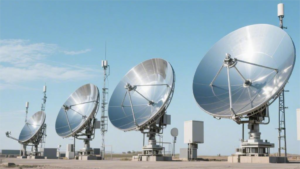
| Parabolic Dish | 6–86 GHz | 25–50 dBi | 3–10° (fixed) | 600 | N/A (passive) | Long-range backhaul (10+ km), E-band comms |
| Patch Antenna | 24–60 GHz | 5–12 dBi | 30–90° | 50 | <1W | IoT devices, smartphones, drones |
| Lens Antenna | 30–300 GHz | 20–35 dBi | 2–8° | 1k | N/A (passive) | Automotive radar (77 GHz), high-precision sensing |
Beam steering is where phased arrays dominate. A 32-element 28 GHz array can switch beams in <100 μs, crucial for 5G handoffs at 60 mph. But for fixed wireless access (FWA), a parabolic dish at 38 GHz delivers 42 dBi gain—enough for 10 Gbps at 3 km—at half the cost of an equivalent phased array.
Efficiency losses add up fast. Patch antennas in smartphones lose 30–40% of power due to hand blockage and housing interference, forcing 4x more transmit power to maintain link budgets. Horn antennas perform better (85–90% efficiency) but weigh 2–5 kg, making them useless for drones.
Test Before Final Choice
Picking an MMW antenna without real-world testing is like buying a car based only on the brochure—you’ll miss the 15–25% performance drop from environmental factors. Lab specs lie: a 28 GHz phased array rated for 25 dBi gain might deliver just 18 dBi when mounted on a wind-loaded pole due to 0.5° mechanical deflection. Rain? Add 3–8 dB loss at 60 GHz. Even temperature swings (-20°C to +50°C) can shift antenna impedance enough to cut efficiency by 12%.
Critical Tests You Can’t Skip:
- Real-world throughput test: Deploy a 60 GHz link in your actual environment—glass offices lose 6 dB, while concrete walls kill 40+ dB. Field tests in Berlin showed 28 GHz 5G speeds dropped 65% during leafy summer months versus winter.
- Interference scan: Use a spectrum analyzer (R&S FSW costs $120k but worth it) to check for radar pulses at 24 GHz or WiGig traffic at 60 GHz. One Tokyo data center found 37% packet loss from nearby 802.11ad security cams.
- Thermal stress test: Run 77 GHz automotive radar at 85°C for 100 hours—cheap PCB materials warp after 72 hours, increasing VSWR from 1.5 to 2.3.
- Motion tolerance test: A phased array tracking a drone at 30 m/s needs beam switching in <2 ms—most consumer-grade kits fail beyond 15 m/s.
- Long-term durability: Salt fog exposure corrodes aluminum reflectors in 8–14 months near coasts, halving dish antenna gain.
Budget at least 15% of project costs for testing—a 500k mmWave deployment needs 75k for proper validation. Cheaper “sanity check” alternatives exist: rent a Keysight FieldFox (3k/week) to measure EIRP patterns, or use open-source tools like GNU Radio to log 24/7 spectrum occupancy(0 hardware cost, 80% accuracy).