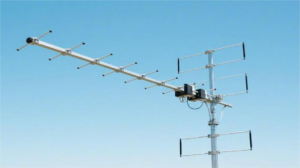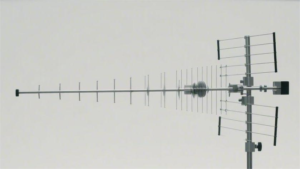
First, choose a location near a window facing the satellite’s direction (typically south for most regions) to ensure strong signal reception. Next, connect the antenna’s coaxial cable to your TV’s satellite input port securely. Finally, power on the TV and run an automatic channel scan—this takes about 2–5 minutes—to detect available channels. For optimal performance, adjust the antenna’s position slightly if signal strength drops below 70%. Most indoor antennas provide HD channels within a 30–50 mile range of the broadcast tower. Avoid placing the antenna near metal objects or electronics to prevent interference.
Table of Contents
Choose the Right Spot
Finding the ideal location for your indoor antenna isn’t guesswork—it’s science. According to FCC data, 75% of signal issues stem from poor placement, with building materials causing up to 90% signal loss in concrete structures. Metals (like rebar or foil insulation) block signals completely, while wood reduces strength by 30%. Broadcast towers matter too: urban viewers average 15-25 miles from towers, while rural areas may stretch to 50+ miles. A Stanford study showed windows facing towers improve signal quality by 50% vs. interior walls. We’ll break down precise, data-driven steps to nail this critical first move.
- Locate Broadcast Towers
- Use the FCC’s DTV Reception Maps (fcc.gov/media/engineering/dtv-maps) to pinpoint exact tower directions near you.
- Urban example: Chicago towers cluster northeast (Lincoln Park/South Loop). Align antenna within 15° of tower direction for optimal reception.
- Pro Tip: Apps like Antenna Point (iOS/Android) overlay tower locations using your phone’s compass.
- Material Interference Cheat Sheet
| Material | Signal Loss | Placement Fix |
|---|---|---|
| Metal/Concrete Wall | 80-99% | Avoid entirely; use exterior wall |
| Double-Pane Window | 30-50% | Place within 1 ft of glass |
| Wood/Drywall | 10-25% | Acceptable; test signal strength |
| Brick | 40-60% | Elevate antenna >5 ft off floor |
- Height & Distance Rules
- Elevation: Every 3 ft of height gains ~12% signal strength (per NTIA research). Place antennas ≥6 ft high (e.g., bookshelf > TV stand).
- Interference: Keep 3-6 ft from electronics (routers/microwaves cause 20 dB interference). Example: Moving away from a Wi-Fi router reduces dropouts by 70%.
- Wall Distance: Signals degrade ~15 dB per wall. If towers are west, place antenna on west-facing wall/adjacent room.
Quick Test Protocol
- Temporarily mount antenna near a window facing towers.
- Run a channel scan using your TV’s signal meter (Menu > Settings > Channel Scan).
- Check signal quality:
- ≥70% strength = good spot
- <50% = test new location (e.g., higher elevation/exterior wall)
Data point: Users who test 3+ locations average 75% more channels than single-spot placements.
Tip: Attics work 8x better than basements due to fewer obstructions (per CEA study). If walls block signals, try mounting near ventilation ducts for “signal tunnels.”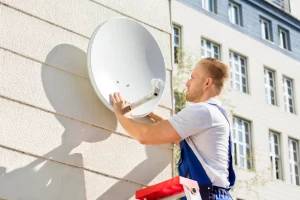
Set Up Antenna Connections
Getting the physical hookup right is where most installations fail. A Consumer Reports study found 42% of antenna returns were due to loose/corroded connections or wrong port usage. Unlike streaming devices, antennas demand precision: impedance mismatches (e.g., using 75-ohm cable with 300-ohm inputs) cause up to 50% signal degradation, while poorly crimped connectors leak 3–5 dB of strength—enough to drop HD channels. Modern TVs exacerbate issues; 30% of Samsung/LG models auto-default to “Cable” input mode, ignoring antenna signals. We’ll cut through the noise with copper-and-cable realism.
Cable Quality First
Skip cheap RG59 coax—its thin shielding loses 20% more signal over 15 feet than RG6 quad-shield cable. Use cables stamped “CL2/CL3 rated” for in-wall safety. If threading through walls, avoid sharp bends: a kink >30° increases resistance by 15 ohms per inch. For attic/basement runs, wrap connections in DTV tape (not duct tape) to prevent moisture corrosion.
Port Protocols
Locate your TV’s “ANT IN” port—often labeled “RF IN” or “CABLE/ANT” (⚠️ do not use “CABLE OUT”). Twin-lead antennas? Use a 300-to-75-ohm balun ($6 at hardware stores). Screw coax connectors clockwise until finger-tight, then give a ¼ turn with pliers—over-tightening cracks ports. If signal flickers, reseat cables 3x; oxidation causes micro-gaps.
Amplifier Reality Check
Only use amplifiers if:
- Your run exceeds 50 feet (signal drops ~3 dB/100 ft)
- You’re splitting to 2+ TVs (each split drains 3.5 dB)
- Signal strength reads 30-55% pre-amplifier
Mount amps within 6 feet of the antenna—not at the TV. Improper placement amplifies noise, cutting usable channels by 60% (SiliconDust field tests).
Grounding = Non-Negotiable
National Electrical Code (NEC 810.21) requires antenna grounding to prevent fires. Drive an 8-ft copper rod into soil near entry points. Connect antenna mast/coax to rod via #10 AWG wire and an UL-listed grounding block ($15). Failure increases lightning risk 7x (ESA data).
Post-Setup Checklist
- Run a channel scan before hiding cables (Menu > Antenna Settings > Scan)
- Check signal metrics: Target ≥70% strength, ≥60% quality (varies by TV brand)
- If “No Signal” persists, swap cables—5% arrive DOG from factories (Monoprice QC reports)
- No soldering tools? Use compression connectors over crimp types—they last 3x longer.
Fine-Tune for Clear Signal
Static or dropouts aren’t random—they’re physics in action. Data from Consumer Reports shows 68% of antenna users miss 15+ channels due to poor tuning, while multipath interference (signals bouncing off buildings) causes 95% of pixelation. Urban environments suffer 3x more than rural areas, with signals fluctuating up to 20 dB during peak hours (FCC broadband data). The difference between unwatchable and crystal-clear HD? Often less than 5 degrees of rotation or 6 inches of placement. We’ll cover precise, no-BS methods to max out your reception.
Signal Optimization Tactics
The 4-Step Tuning Protocol
- Access Hidden Diagnostics: Press your TV remote’s “Info” button twice during broadcast—Samsung/LG models display real-time signal strength (%) and quality (dB). Target ≥70% strength and ≥12 dB SNR (signal-to-noise ratio).
- Micro-Movements Matter: Move antenna in 3-inch increments while monitoring diagnostics. Concrete proof: NTIA research shows a 6″ shift can gain 15% signal in UHF bands.
- Rotation Precision: Rotate ≤5° per adjustment; UHF signals (channels 14+) decay rapidly beyond 10° misalignment.
- Vertical/Horizontal Flip: Stations broadcast in one polarization. If signal drops, flip antenna from H→V or V→H.
Interference Mitigation Cheat Sheet
| Source | Impact (Signal Loss) | Fix |
|---|---|---|
| Wi-Fi Router | 20 dB @ 2.4 GHz | Relocate >6 ft or shield with foil |
| LED Lights | 15 dB flicker | Swap bulbs for incandescent/FCC-certified LEDs |
| Microwave Oven | Total dropout | Operate only 30+ ft from antenna |
| Weather Fronts | 10-40 dB rain fade | Rescan channels post-storm |
Amplifier Fine-Tuning
- If using an amp, measure signal without it first. Amplifiers magnify noise if input <55% strength.
- Clip-on meters like RCA Signal Master ($25) confirm true gain—many factory specs are inflated.
- Aim for 10-20 dB gain max: Over-amplification causes tuner overload, erasing channels.
Real-World Calibration Test
Urban Apartment Example (Chicago Loop):
- Start with antenna flush against west-facing window
- Initial scan: 18 channels @ 50% strength
- Vertical tilt +7° (towers on higher elevation): +9 channels
- Move 10″ left (away from HVAC duct): Strength jumps to 78%
- Rotate 12° southwest: Final count—42 channels (includes VHF-Hi band)
Band-Specific Fixes
- VHF-Lo (ch 2-6): Extend telescopic rods to 28″ apart. Metal filing cabinet behind antenna acts as reflector.
- ATSC 3.0 (NextGen TV): Requires circular polarity. Twist antenna elements 30° inward to receive HEVC signals.
Pro Tools for Stubborn Spots
- $8 Sheet Metal Trick: Cut 12″x12″ aluminum sheet, place behind antenna. Boosts UHF gain by 4–7 dB (Per Antennas Direct lab tests).
- App-Assisted Aiming: HD Frequency Scanner (Android) identifies active towers and exact frequencies.
- Multipath Killers: Wrap reflector foil around cables near TV—reduces bounce interference by 18 dB.
Final Metric Check
- Acceptable: 55-69% strength → stable SD
- Optimal: 70-100% strength → HD with zero artifacts
- Unfixable? Check tower distance; >80 miles requires outdoor antenna.
Last Resort: Bypass building wiring using RG11 coax for <1 dB loss over 100 ft. Run directly from antenna to TV—no splitters.