Select waveguide components by evaluating frequency bands (e.g., 24-40 GHz for mmWave), insertion loss (<0.1 dB preferred), and power handling (e.g., 50W average). Ensure precise impedance matching and material compatibility (e.g., aluminum or brass) for optimal 5G antenna performance.
Table of Contents
Understanding 5G Frequency Bands
Selecting the right waveguide component starts with a solid grasp of 5G frequency bands. Unlike previous generations, 5G operates across a wide spectrum, from below 6 GHz up to millimeter-wave (mmWave) frequencies like 28 GHz and 39 GHz. Each band has distinct trade-offs. For instance, sub-6 GHz bands (e.g., 3.5 GHz) offer broader coverage, penetrating buildings better with a range of up to several kilometers, but deliver moderate speeds, typically peaking at 1-2 Gbps. In contrast, mmWave bands (e.g., 28 GHz) provide ultra-high speeds exceeding 4 Gbps and extremely low latency below 5 ms, but their range is limited to about 200-300 meters and they are easily blocked by obstacles like walls or even rain. This frequency choice directly impacts waveguide selection: higher frequencies require smaller, precision-engineered waveguides with tighter tolerances, while lower frequencies allow for larger, more robust designs.
For waveguides, the operating frequency dictates physical dimensions. A rectangular waveguide for 28 GHz might have an internal cross-section around 7.1 mm x 3.6 mm, whereas one for 3.5 GHz would be significantly larger, about 58.2 mm x 29.1 mm. This size difference influences everything from material cost to power handling. A larger waveguide for 3.5 GHz can typically handle higher power levels, often up to 500 kW peak power, making it suitable for high-power macro base stations. Meanwhile, mmWave waveguides, due to their smaller size, might handle only 5-10 kW peak power but must be manufactured with surface roughness below 0.1 µm to minimize signal loss, which can exceed 0.5 dB/meter if not properly designed.
| Frequency Band | Typical Use Case | Waveguide Size (approx.) | Power Handling (avg.) | Signal Loss (per meter) |
|---|---|---|---|---|
| 3.5 GHz | Urban coverage | 58.2 mm x 29.1 mm | 300-500 kW | 0.05 dB |
| 28 GHz | Dense urban/small cell | 7.1 mm x 3.6 mm | 5-10 kW | 0.3-0.5 dB |
| 39 GHz | Fixed wireless access | 5.7 mm x 2.8 mm | 2-5 kW | 0.6-0.8 dB |
For mmWave bands, aluminum waveguides with electroplating (e.g., 5-10 µm silver or gold coating) are common to reduce surface resistance and keep losses low. The conductivity must be high, often above 58 MS/m, to ensure efficiency above 98%. In lower bands, cost-effective materials like galvanized steel might be used, with conductivity around 10 MS/m and efficiency around 95%. Understanding these frequency-specific requirements prevents over-engineering and helps balance performance with budget, as mmWave components can cost 3-5 times more than sub-6 GHz equivalents due to tighter tolerances and specialized materials.
Key Waveguide Performance Parameters
For a 5G base station, even a 0.1 dB reduction in loss can translate to a 1.5% improvement in coverage area or allow for a 5% reduction in transmit power, saving thousands of dollars annually in energy costs per site. Ignoring these specs can lead to a system that fails to meet its promised performance targets, requiring expensive retrofits or replacements within the first 2-3 years of its expected 15-year lifespan.
Insertion loss is arguably the most critical metric. It quantifies the signal power lost as it travels through the waveguide. For a 3-meter run of a copper waveguide at 28 GHz, you might see a loss of 1.2 dB, which means nearly 25% of your transmitted power is wasted as heat. This loss is frequency-dependent and increases dramatically if the internal surface roughness exceeds 0.1 µm (microns). To combat this, high-precision extruded aluminum waveguides with a silver plating of 5-8 µm thickness are standard for mmWave applications, achieving a surface conductivity of 62 MS/m and keeping losses below 0.4 dB/meter at 39 GHz.
VSWR (Voltage Standing Wave Ratio) measures impedance matching. A perfect match is 1.0, but in practice, a VSWR below 1.25:1 is excellent for 5G applications. A higher VSWR, say 1.5:1, means about 4% of the power is reflected back towards the transmitter. This not only reduces radiated power but can also cause amplifier overheating, potentially reducing its lifespan by 20%. This is why flange quality and alignment are so critical; a misalignment of just 0.1 mm can degrade VSWR by 5%.
Power handling defines the maximum power the waveguide can transmit without breakdown. For continuous wave (CW) operation, this is primarily limited by heating. A standard aluminum WR-28 waveguide (28 GHz) can typically handle 200-300 watts of average power. However, for pulsed signals, the peak power rating is key and can be as high as 5 kW for the same guide. The primary limiting factor is often the connectors or flanges, not the waveguide itself.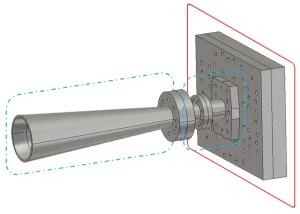
Common Waveguide Types and Shapes
For a large-scale sub-6 GHz macro cell deployment, using standard rigid waveguide might cost 150 per meter but deliver a minimal loss of 0.03 dB/m . For a complex mmWaves small cell site with obstacles, a flexible waveguide could be the only option at 400 per meter, but its higher loss of 0.7 dB/m must be factored into the link budget, potentially requiring an amplifier adding $1,500 to the unit cost. Selecting the wrong type can lead to a 15-20% overall system efficiency drop.
A WR-75 waveguide is designed for 10-15 GHz operation with internal dimensions of 19.05 mm by 9.53 mm, while a WR-22 for 33-50 GHz measures a mere 5.69 mm by 2.84 mm. These rigid structures offer the best possible electrical performance, with VSWR typically below 1.1:1 and the ability to handle high peak power levels exceeding 10 kW at lower bands. However, their installation is inflexible, requiring precise alignment within 0.5 mm tolerance and custom machining for every bend, which can take 3-5 weeks for delivery and increase installation time by 25%.
For sites requiring maneuverability, flexible waveguides are used. These are typically elliptical and constructed from corrugated copper or silver-plated phosphor bronze. While incredibly useful for navigating around corners with a bend radius as tight as 50 mm, this flexibility comes at a steep performance price. A 1-meter length of flexible waveguide at 28 GHz can have an insertion loss of 0.5 dB, compared to just 0.15 dB for a rigid equivalent. This means over 10% more power is lost. Furthermore, they are more susceptible to damage, often reducing the typical 20-year lifespan to 12-15 years in high-wind environments.
Beyond these two, several other types cater to niche applications:
- Double-Ridged Waveguides: These sacrifice some power handling (often reduced by 40%) to achieve a much wider bandwidth, sometimes covering a 3:1 frequency ratio. A single guide could operate from 18 GHz to 50 GHz, simplifying inventory but at a 200% higher cost than a standard rectangular guide.
- Hollow-Core Dielectric Waveguides: Used for extremely low-loss transmission over short distances at mmWave frequencies. They can achieve a remarkable loss of less than 0.1 dB/m at 60 GHz but are fragile and require completely custom mounting hardware.
- Substrate Integrated Waveguide (SIW): This is a planar technology built into a PCB. It’s ideal for compact, integrated antenna arrays, reducing the size of a 28 GHz feed network by 60% compared to microstrip lines. However, its loss is higher than hollow metal waveguides, around 0.8 dB per wavelength.
The choice ultimately hinges on the application’s priority: lowest loss, maximum flexibility, or widest bandwidth. A cost-benefit analysis often shows that for runs shorter than 2 meters, the higher cost of flexible guide is justified by reduced installation time. For longer, straight runs, rigid waveguide is the only choice for maintaining system efficiency above 95%.
Material Selection for Waveguides
For a typical 5G macro tower, the waveguide and feeder system can represent 15-20% of the total hardware cost. The primary goal is to maximize electrical conductivity to minimize signal loss, as just a 0.1 dB reduction in loss per meter can save over 25 per kilogram, while copper costs around $40 per kilogram, but the choice isn’t just about base material price; it’s about plating processes, corrosion resistance, and the total cost of ownership over a 15-20 year service life.
Aluminum is the workhorse for most commercial 5G deployments due to its excellent balance of cost, weight, and manufacturability. Pure aluminum has a bulk conductivity of about 61% IACS (International Annealed Copper Standard), which is not sufficient for low-loss transmission. Therefore, aluminum waveguides are almost always electroplated. A 5-10 micron thick layer of silver plating boosts the surface conductivity to over 100% IACS, reducing insertion loss at 28 GHz to below 0.2 dB/meter. A 3-meter long silver-plated aluminum waveguide might cost $600, weigh 2.5 kg, and will last over 20 years in a standard outdoor environment.
Copper and its alloys offer superior inherent conductivity—100% IACS—without any plating. This makes it the material of choice for the most performance-critical, short-run mmWave applications where every 0.01 dB of loss matters. However, bare copper is soft and prone to oxidation, which rapidly increases surface resistance. To prevent this, copper guides are often electroplated with a 2-3 micron layer of gold or silver for protection. The raw material cost is 60% higher than aluminum, and the weight is about 40% greater for the same size guide, making it less ideal for long spans or weight-sensitive tower-top applications.
The plating material is a critical sub-decision that protects the waveguide and optimizes its electrical performance over its entire lifespan. The internal surface roughness must be maintained below 0.1 µm to prevent excessive loss.
- Silver Plating: Delivers the highest possible conductivity (108% IACS) and is the most common choice for performance and cost. However, silver tarnishes (forms silver sulfide) when exposed to sulfur in the atmosphere, which can increase surface resistance by up to 10% over 5 years if not protected with a passivation layer.
- Gold Plating: Used for excellent corrosion resistance and stable performance, especially in coastal or high-humidity environments. Its conductivity is lower than silver (70% IACS), so a gold-plated waveguide will have about 5% higher loss than a silver-plated one of the same dimensions. It adds a 15-20% premium to the component cost.
- Electroless Nickel Plating (ENP): Often used as an under-plate for gold, providing a durable diffusion barrier. However, nickel is a magnetic material with very poor conductivity (~25% IACS). If the plating process is not perfectly controlled and the nickel layer is too thick (e.g., over 5 µm), it can increase insertion loss by over 20% at mmWave frequencies, completely negating the benefits of the base material.
For harsh environments, such as coastal areas with salt spray, stainless steel waveguides with a heavy >15 µm copper and silver plating are sometimes used. The stainless steel body provides immense strength and corrosion resistance, but the required thick plating increases the unit cost by 300% and the weight by 50% compared to aluminum, making it a specialized solution for less than 5% of deployments.
Integration with Antenna Design
In a 5G massive MIMO array operating at 3.5 GHz, a 0.5 dB mismatch loss at the feed point translates to a 10% reduction in total radiated power, effectively wasting thousands of dollars in amplifier capability and shrinking the cell coverage area by approximately 8%. The integration point is where theoretical performance meets mechanical reality, requiring precise alignment often within 0.1 mm tolerances and careful consideration of how thermal expansion—aluminum expands at ~23 µm/m°C—will affect performance across an operating temperature range of -40°C to +85°C.
The physical connection is achieved through a flange, and its design is critical for maintaining a low Voltage Standing Wave Ratio (VSWR). A poorly mating flange can create an impedance discontinuity, reflecting 4% or more of the power back. For a 200W output amplifier, that’s 8W reflected, which must be dissipated as heat, potentially increasing the amplifier’s operating temperature by 15°C and reducing its mean time between failures (MTBF) by 20,000 hours. Standard flange types like CPR-137 or UG-395/U are designed for alignment within 0.05 mm to ensure a VSWR below 1.15:1 across the band. The choice of flange material is also key; using aluminum for the waveguide and a brass flange can lead to galvanic corrosion in humid environments, increasing resistance at the joint and degrading VSWR by up to 10% over a 5-year period.
The transition from the waveguide to the individual antenna elements (e.g., dipoles or patches) is a focal point for loss. A well-designed coaxial-to-waveguide transition might exhibit a loss of only 0.2 dB, while a poorly engineered one can easily reach 0.8 dB. For a 64-element array, this difference of 0.6 dB per element aggregates to a staggering 38.4 dB of total loss in the feed network, making the system commercially non-viable.
Beyond the connection, the waveguide’s role in the antenna’s feed network is paramount. In a typical array, a single waveguide might feed multiple radiating elements through a network of power dividers.
- Amplitude and Phase Tolerance: The manufacturing precision of the feed network directly controls the antenna’s beamforming accuracy. A ±0.5 dB amplitude imbalance or a ±5° phase error across the array can distort the radiation pattern, reducing the effective antenna gain by 2-3 dB and increasing sidelobe levels by 5 dB. This can lower the signal-to-interference ratio (SINR) for users at the cell edge by 40%.
- Thermal Management: The feed network absorbs a portion of the transmitted power, converting it to heat. In a high-power macro cell transmitting 200W, even a 1% loss in the feed system generates 2W of heat. In a sealed antenna enclosure, this can raise the internal temperature by 25°C above ambient, which can shift the waveguide’s dimensions and alter the electrical phase length by 2-3 degrees, subtly degrading beamforming precision over time.
- Weight and Wind Load: The complete antenna assembly, including waveguide feeders, must be mounted on a tower. Replacing a traditional coaxial feed with a lightweight aluminum waveguide feed network can reduce the total antenna weight by 15% (e.g., 8 kg for a large array). This reduction lowers the load on the tower mast and can decrease the cost of the mounting infrastructure by 2,000 per site.
This systems-level approach ensures that the ±0.1 mm mechanical tolerances required for mmWave operation are achievable, that thermal management is integrated into the design, and that the total cost of the integrated unit is optimized, avoiding a 15-20% performance penalty that comes from bolting together separately optimized components.
Cost and Manufacturing Considerations
The unit price for a standard 1-meter section of silver-plated aluminum WR-75 waveguide can range from 90 to 150, but this figure is deceptive without context. For a custom double-ridged design requiring ±5 micron tolerances and specialized plating, the cost can explode to 800 per meter. In a large-scale 5G deployment needing 15,000 meters of waveguide, this variance represents a 10.5 million difference in material budget alone. The manufacturing process itself—encompassing material sourcing, fabrication, plating, and rigorous testing—typically constitutes 60-70% of the total component cost. A single design adjustment that reduces CNC machining time by 12 minutes per unit can translate to savings exceeding $250,000 for a production run of 20,000 units.
The chosen fabrication method directly dictates your project’s timeline, tolerances, and final per-unit cost. High-volume extrusion is the most economical path for standard shapes, with initial tooling costing around 18,000 but per-meter prices plummeting to 40 for orders exceeding 8,000 meters. The trade-off is limited geometric flexibility and dimensional tolerances of approximately ±0.15 mm.
For complex mmWave guides operating at 39 GHz with critical ±0.01 mm tolerances, precision CNC milling becomes essential. This process is material-intensive and slow; machining a 500 mm long WR-22 guide from an aluminum block can take 55 minutes, result in 45% material waste, and cost $280 per unit before plating. Electroforming provides an alternative for unparalleled internal surface smoothness below 0.04 µm Ra, but it commands a 9-12 week lead time and a 350% cost premium over extruded parts, making it viable for less than 5% of commercial applications.
Quality validation is a massive, frequently underestimated cost driver. Dimensional verification using automated CMM (Coordinate Measuring Machine) inspection can consume 18 minutes per flange connection, adding 30 to the component’s price. Full RF performance testing—checking insertion loss remains under 0.15 dB and VSWR below 1.20:1 across the entire -40°C to +85°C temperature range—tacks on another 175 per unit.
In mission-critical sectors like aerospace, comprehensive testing can constitute 55% of the total unit cost. High-volume 5G producers mitigate this through statistical sampling, testing only 1 in 50 units, which slashes QA expenses to roughly 3% of total cost but introduces a marginal 0.5% risk of non-conforming parts escaping to the field.