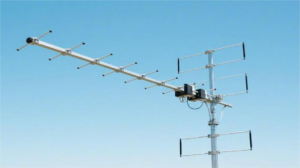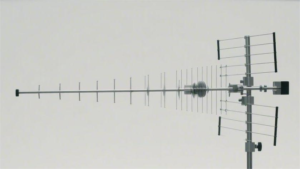
A 5G waveguide duplexer isolates transmit (TX) and receive (RX) signals in mmWave bands (e.g., 24-47GHz), critical for avoiding self-interference. Using resonant cavities or E-plane filters, it achieves >50dB isolation between TX (up to 100W power) and RX (<-100dBm sensitivity), with insertion loss <1.5dB, enabling simultaneous operation in high-bandwidth (100MHz+) 5G NR links.
Table of Contents
What is a Waveguide Duplexer
In 5G base stations, a single antenna must simultaneously handle high-power outgoing signals and extremely sensitive incoming signals. The core challenge is preventing the powerful transmitted signal—which can be 40 watts or more—from overwhelming and damaging the sensitive receiver, which is designed to detect incoming signals as weak as a few picowatts (10^-12 watts). This requires a separation of over 150 decibels (dB) between the two paths.
Fundamentally, it is a three-port device—typically one antenna port, one transmitter (Tx) port, and one receiver (Rx) port—that uses advanced filtering to route signals based on their frequency. In modern 5G Massive MIMO active antenna units (AAs), the duplexer is not a separate box but is miniaturized and integrated directly into the antenna assembly, with a typical weight of 300 to 800 grams and a volume of less than 0.5 liters per unit.A waveguide duplexer’s function is built upon the physical properties of a waveguide—a metal pipe, usually rectangular with inner dimensions around 47mm x 22mm for the 3.5 GHz band, that guides electromagnetic waves with exceptionally low loss. Unlike coaxial cables, which suffer increasing attenuation at higher frequencies, waveguides become more efficient. The primary building blocks inside the duplexer are two high-order cavity filters—one for the transmit band and one for the receive band—mechanically tuned with precision screws to achieve a bandwidth of 100-400 MHz and a roll-off sharpness of better than 15 dB per megahertz.
The key advantage of a waveguide duplexer over a microstrip-based counterpart is its significantly lower insertion loss, typically <0.5 dB. This translates directly into system efficiency; for every 0.1 dB reduction in loss, a base station’s power amplifier can output roughly 2% less power for the same radiated signal, reducing operational expenses and heat dissipation.
| Parameter | Waveguide Duplexer | Microstrip / LTCC Duplexer | Impact on System Performance |
| Insertion Loss (Tx/Rx paths) | < 0.4 dB | 1.5 – 2.5 dB | Lower loss means better energy efficiency and longer battery life for cell-edge devices. |
| Power Handling (per channel) | > 60 W average | 10 – 20 W average | Essential for macro-cell base stations covering large areas. |
| Isolation (Tx to Rx) | > 55 dB | > 45 dB | Higher isolation prevents receiver desensitization, protecting the sensitive low-noise amplifier (LNA). |
| Size / Mass (per channel) | ~150 cm³ / 400g | ~50 cm³ / 100g | Waveguides are bulkier, a trade-off for their superior RF performance. |
| Operating Temperature Range | -40°C to +85°C | -40°C to +85°C | Both are designed for harsh outdoor environmental conditions. |
The operational principle hinges on frequency separation defined by the 3GPP standards. For example, in Band n78, the uplink (receive) is from 3300 – 3800 MHz and the downlink (transmit) is from 3300 – 3800 MHz, often with a small guard band of 10-50 MHz in between. The Tx filter is engineered to have a passband insertion loss of only 0.3 dB but an attenuation of over 60 dB in the Rx band, effectively creating a one-way street for the high-power signal to the antenna.
How Filters Inside It Work
For a 5G band n78 duplexer, the Tx filter must pass a 100 MHz wide block of spectrum centered around 3.5 GHz while rejecting the adjacent Rx band with an attenuation exceeding 60 dB. This performance is achieved not with discrete components like coils and capacitors, but by carefully controlling the physical dimensions of hollow cavities within the aluminum block.
A single filter typically comprises between 4 to 8 of these coupled cavities, with each cavity’s physical length determining its fundamental resonant frequency, calibrated to within a tolerance of ±10 microns to achieve a center frequency accuracy of ±0.05%.The core mechanism is electromagnetic resonance within each cavity. The dominant mode of operation is the TE10 mode, where the critical dimension is the width of the waveguide, which for the 3.5 GHz band is approximately 47.55 mm, representing half a wavelength in the dielectric material (typically air) inside the guide.
When a signal enters the first cavity, it excites a standing wave. The unloaded Q-factor (Quality factor) of each individual cavity is paramount, often reaching values between 8,000 and 12,000. This high Q-factor is a measure of the cavity’s “sharpness” or frequency selectivity; a higher Q means lower energy loss per cycle and a steeper roll-off outside the passband. The physical surface finish of the cavity interior is critical here; even minor surface roughness increases resistance. This is why the interior is often plated with 3-5 microns of silver, which has a surface resistivity of just 1.6 μΩ·cm, compared to aluminum’s 2.8 μΩ·cm. This small difference reduces resistive losses, which is the primary contributor to the filter’s remarkably low insertion loss of less than 0.4 dB.Coupling between these cavities is what creates the filter’s passband.
The design goal is to create a specific “transfer function,” most commonly a Chebyshev response, which provides the sharpest possible roll-off for a given passband ripple, typically specified at 0.1 dB. This means the signal strength within the desired 100 MHz band varies by no more than 0.1 dB, but outside the band, the attenuation rises dramatically, achieving 30 dB of rejection within just 20 MHz of the band edge.Tuning is the final, critical manufacturing step. Even with computer-controlled milling, microscopic variations exist. Each cavity is equipped with one or more metallic tuning screws, usually made of non-corrosive Invar or brass, plated with gold. These screws, with a diameter of 3-5 mm, are mechanically driven into the cavity, perturbing the electromagnetic field and effectively lowering the resonant frequency.
Separating Transmit and Receive Signals
A typical 5G base station might transmit at 40 watts (46 dBm) of power, while the receiver needs to detect signals as weak as 0.000000000001 watts (-120 dBm). This represents a 166 dB power difference.
| Parameter | Transmit (Tx) Path | Receive (Rx) Path | Duplexer Requirement |
| Signal Power at Port | +46 dBm (40 W) | -100 dBm (0.1 pW) | Handle high power, amplify weak signals. |
| Target Frequency Band | e.g., 3.5 – 3.6 GHz | e.g., 3.3 – 3.4 GHz | Separate bands with ~100 MHz guard band. |
| Isolation Needed | N/A | > 55 dB | Tx signal must be attenuated by >55 dB at Rx port. |
| Allowed Insertion Loss | < 0.5 dB | < 0.7 dB | Minimize power loss on both paths. |
| Resulting Rx Input | < -9 dBm after isolation | -100 dBm desired signal | Tx noise at Rx port must be below noise floor. |
A high-order 6-pole or 8-pole filter design achieves a rejection slope of 15 to 25 dB per megahertz. This means that while the Tx filter allows the 3.5 GHz signals to pass with minimal loss, it must attenuate any energy leaking into the 3.3 GHz Rx band by more than 55 dB. Similarly, the Rx filter is designed to be “deaf” to the high-power Tx frequencies. This frequency separation provides the first and most significant layer of isolation, typically accounting for 40-50 dB of the total required isolation.However, frequency filtering alone is insufficient due to a phenomenon called passive intermodulation (PIM).
When high-power signals above 20 watts pass through any mechanical junction or a material with non-linear magnetic properties (e.g., ferrous contaminants or nickel plating), they can generate spurious signals at unwanted frequencies. A PIM product, such as a 3rd-order intercept at 2f1 – f2, could fall directly into the sensitive receive band. If two Tx carriers at 3.51 GHz and 3.53 GHz are transmitted, a third-order PIM product could appear at 3.49 GHz, which is squarely in the Rx band. Since the Rx filter is behind the antenna and the PIM source, it cannot block this noise. Therefore, the duplexer’s internal components must be manufactured to ultra-precise specifications with surface finishes like silver or gold plating over aluminum to minimize PIM, typically specified at <-150 dBc to ensure these generated noise products remain below the receiver’s thermal noise floor of about -105 dBm.
Installation and Temperature Control
The installation of a waveguide duplexer is a precision task that directly impacts its 15-year service life and stable performance. Unlike consumer electronics, these components are mounted on cell towers or base station masts, exposed to temperature swings from -40°C to +85°C, wind loads exceeding 150 km/h, and humidity up to 100%. A macro-cell base station might house 32 to 64 of these duplexers in a single Massive MIMO array, with a total weight of over 20 kg.
| Parameter | Specification Range | Tolerance | Consequence of Deviation |
| Flange Bolt Torque | 2.5 – 3.0 N·m | ±0.2 N·m | Under-torque causes RF leakage; over-torque warps flange. |
| Waveguide Alignment Gap | < 0.1 mm | ±0.05 mm | Gap causes impedance discontinuity, increasing VSWR >1.2. |
| Grounding Resistance | < 5 mΩ | N/A | Inadequate grounding increases lightning strike damage risk. |
| Surface Flatness (Flange) | < 15 µm | N/A | Uneven surface compromises EMI gasket seal effectiveness. |
The duplexer’s aluminum flanges are mated to the antenna interface flanges using four or eight stainless steel bolts, typically M4 or M5 size. Applying the correct 2.8 N·m of torque is critical. Insufficient torque leaves a microscopic gap, leading to RF leakage and a voltage standing wave ratio (VSWR) increase above 1.25:1, which can reflect over 1% of the transmitted power back towards the amplifier. Excessive torque, beyond 3.5 N·m, can permanently warp the flatness of the soft aluminum flange, creating a permanent leak path.
A conductive EMI gasket, often made of beryllium copper with a compression set of less than 15% after 1000 hours at 85°C, is placed between the flanges to ensure an RF-tight seal. The entire connection is then covered with a butyl rubber-based waterproofing tape, applied with a 50% overlap and a minimum stretch of 25% to form a continuous environmental seal for a minimum rated lifespan of 10 years.Temperature control is managed passively through material science rather than active cooling.
The duplexer’s body is typically made from aluminum alloy 6061, which has a thermal conductivity of 167 W/m·K to efficiently dissipate heat from the ~16 watts of power dissipated when operating a 40-watt transmitter with 0.4 dB loss. The primary challenge is thermal expansion. Aluminum has a linear coefficient of thermal expansion of 23.6 µm/m·°C. Over a 70°C temperature swing (from -15°C to +55°C), a 200 mm long waveguide can expand or contract by over 0.33 mm. This dimensional change directly alters the resonant frequency of the internal cavities. A 0.3 mm change in a cavity’s width can cause a frequency shift of up to 2.5 MHz, which is enough to misalign the filter passband and violate the 3GPP mask. To compensate, designers use tuning screws made of Invar, a nickel-iron alloy with an extremely low expansion coefficient of 1.2 µm/m·°C.
Key Performance Metrics Explained
Selecting a waveguide duplexer isn’t about a single “best” specification; it’s about balancing a set of interdependent parameters that directly define the performance and cost of the entire 5G base station. These metrics are measured under strict laboratory conditions across a temperature range of -40°C to +85°C and are the ultimate determinant of a unit’s quality and suitability for a specific deployment, whether it’s a dense urban small cell or a high-power macro cell. Key metrics include:
- Insertion Loss: The amount of signal power lost within the desired passband.
- Isolation: The attenuation of the unwanted signal between the Tx and Rx paths.
- Return Loss: The measure of how well the duplexer is matched to the system impedance.
- Power Handling: The maximum continuous wave (CW) power the device can transmit without degradation.
- Passband Ripple: The variation in signal strength across the intended frequency band.
For a Tx signal of 40 watts (46 dBm), an insertion loss of 0.4 dB means approximately 3.7 watts are dissipated as heat within the duplexer itself. In contrast, a lossier duplexer with 0.8 dB IL would waste 7.4 watts. This 3.7-watt difference directly increases the power amplifier’s load and the base station’s electricity consumption.
For the receive path, the impact is even more sensitive; every 0.1 dB of additional loss on the Rx side degrades the system’s noise figure by a similar amount, effectively reducing the cell’s uplink coverage radius by 1-2%. High-performance waveguide duplexers maintain an insertion loss of less than 0.5 dB across the entire 100 MHz operating band.Isolation measures how effectively the duplexer prevents the high-power Tx signal from leaking into the sensitive Rx port. This is specified as a minimum value, typically 55 dB to 60 dB across the entire Tx band. If a transmitter outputs +46 dBm, 55 dB of isolation ensures the leaked signal at the Rx port is reduced to -9 dBm. This is critical because the low-noise amplifier (LNA) at the receiver has a 1 dB compression point around -15 dBm. If the leaked power exceeds this level, the LNA goes into saturation, causing receiver desensitization and a complete drop in uplink capacity.
Future Trends in Duplexer Technology
The evolution of waveguide duplexers is being driven by the relentless push for higher network capacity, lower latency, and reduced total cost of ownership for 5G-Advanced and future 6G systems. While today’s aluminum waveguide duplexers offer exceptional performance with insertion loss below 0.4 dB, they face challenges in size, weight, and integration cost, especially for massive MIMO arrays that may contain 64, 128, or even 256 radio channels. The key trends focus on overcoming these limitations by leveraging new materials, advanced manufacturing, and intelligent system design.
- Miniaturization and Integration: Moving from bulky machined assemblies to compact, integrated modules.
- Higher Frequency Bands: Adapting to the demands of mmWave spectrum above 24 GHz.
- Active and Tunable Designs: Incorporating semiconductor components for dynamic performance.
- Material Science Innovations: Shifting from traditional aluminum to advanced composites and ceramics.
For frequencies below 6 GHz, a major focus is on Hollow-Baseplate Co-fired Ceramic technology. This approach builds the resonant cavities from multiple layers of ceramic tape (e.g., alumina or glass-ceramic) laminated and fired at 850-900°C to form a monolithic block. This allows for the creation of complex, compact 3D cavity structures with volume reductions of over 60% compared to traditional machined aluminum units. The internal surfaces are then plated with a 5-8 micron layer of silver or gold to achieve a comparable unloaded Q-factor. A key advantage is the ability to co-fire the duplexer directly onto the power amplifier (PA) and low-noise amplifier (LNA) substrate, creating a single, highly integrated Front-End Module (FEM). This integration can slash the total bill of materials cost by up to 25% and reduce the assembly time for a 64T64R antenna from several hours to mere minutes.
These materials can have a thermal conductivity of 150-200 W/m·K, rivaling aluminum, but with a much lower coefficient of thermal expansion (CTR) of 5-7 ppm/°C. This inherent stability reduces frequency drift by up to 70% over a -40°C to +105°C range, which is critical for maintaining performance in passively cooled outdoor units.
For frequencies above 24 GHz, the physics of signal propagation change dramatically. Traditional rectangular waveguides become impractically small, with cross-sections under 3 mm. The future lies in Silicon Germanium (SiGe) or Gallium Arsenide (GaAs) based Acoustic Wave (BAW/SMR) duplexers that are manufactured using semiconductor fabrication processes. These devices can be smaller than 1.5 mm² and integrated directly onto the RFIC (Radio Frequency Integrated Circuit). While their power handling is currently limited to about 1-2 watts, their tiny size and potential for low-cost mass production make them ideal for customer premises equipment (CPE) and small cells.