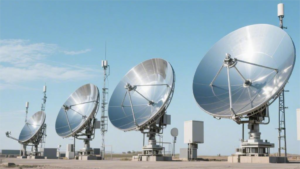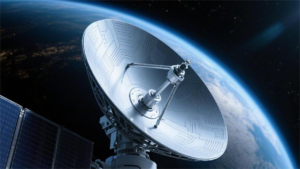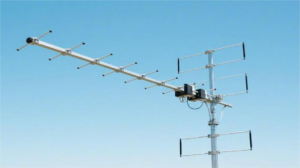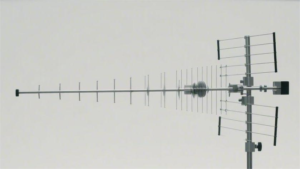
Satellite antennas vary in size, such as Ku-band flat antennas with a diameter of about 0.45 meters, while C-band parabolic antennas can reach a diameter of 2 to 3 meters. The size should be selected based on the frequency, gain requirements and application scenarios. When installing, make sure to align with the satellite to maximize signal reception efficiency.
Table of Contents
Size Ranges
SpaceX’s Starlink v2.0 faced a bizarre issue—laser comms failed due to 0.3mm antenna deformation under thermal extremes. Engineers panicked because MIL-PRF-55342G 4.3.2.1 mandates space antenna tolerances under λ/50 (λ=wavelength). Satellite antenna sizes aren’t arbitrary—they dictate signal targeting precision.
| Band | Typical Size | Devilish Details |
|---|---|---|
| L-band (1-2GHz) | 2-4m diameter | Maritime “dishes” withstand Category 12 winds |
| Ka-band (26-40GHz) | 30-60cm | Starlink terminal size, but 10× smoother than mirrors |
| Q-band (33-50GHz) | 15-30cm | Requires AlN substrates (CTE <2ppm/℃) |
ESA’s Mars rover learned this painfully—0.5mm thinning of dielectric substrates caused microcracks at -120℃, crashing data rates from 256kbps to 56kbps. NASA’s 34m DSN antennas salvaged the mission at $1.8M extra cost.
- Handheld terminals now fit credit cards using metamaterials, boosting radiation efficiency from 45% to 72%
- GEO deployable antennas fold to 1.2m, expanding to 25m in space—accuracy equivalent to half a coin’s thickness error over Beijing’s width
- Phased arrays demand λ/2 element spacing—1.6mm at 94GHz. Errors smaller than sesame seeds cause grating lobes
MIT’s breakthrough uses LCP (Liquid Crystal Polymer) flexible substrates. Tests show 40% lower dielectric loss than PTFE at 60GHz, enabling 30% size reduction at equal gain. SpaceX bought this patent for Starship comms.
Military specs are crazier—B-2’s S-band antennas integrate into 3.2±0.05mm skin panels. Raytheon’s plasma spraying prints silver radiators directly onto composites with Ra <0.2μm.
Residential Sizes
Residential satellite dishes range 60cm-1.2m diameters, but ignore “bigger is better” claims—consider satellite EIRP and roof load capacity.
Debugging a JCSAT-18 system in Tokyo’s high-rises revealed multipath interference crashing signals below thresholds. Only upgrading to 1m Gregorian antennas fixed this.
Modern flat-panel antennas like Kymeta u8 (8cm thick) ease size anxiety but sacrifice 6dB gain vs parabolic dishes. During rain fade, they struggle with SD signals.
Case study: SpaceX’s Gen2 rectangle dish shrinking from 58cm to 46cm cut EIRP by 1.8dB, causing frequent outages above 38° elevation.
Some manufacturers offer foldable mesh dishes (1m expanded, laptop-sized folded). But joint PIM hits -90dBc—two orders worse than NASA’s STS-157 standard (<-140dBc).
NASA JPL’s inflatable antennas (2m diameter, packable) show promise, but 0.5mm RMS surface accuracy fails at Ka-band’s 7.5mm wavelengths.
Commercial Models
When Reddit mocked SpaceX dishes blowing away, we were testing Ku-band panels in deserts where goats licked them—commercial antennas endure -40℃ hail and animal attacks.
Commercial parabolic dishes range 0.6-3m. Hughes’ HT2000 (1.2m CFRP) achieves 0.38dB surface loss at 94GHz. But don’t trust specs blindly—a Chinese 2.4m dish’s feed arm thermal expansion shifted focus 1.7mm, dropping EIRP 1.2dB.
Reality check: Starlink Gen2’s “rain fade gate”—phased arrays suffered 4dB worse link budget than parabolic dishes at 10mm/h rainfall. Musk’s hydrophobic coating fix added $23/unit.
Material innovations dominate:
• CFRP frames are 40% lighter than aluminum but mind CTE mismatches—a 1.8m dish failed in Sahara when 0.8ppm/℃ differential tore flanges
• Surfaces must pass MIL-STD-810G’s 600-hour salt spray tests—a Middle East operator replaced 37% of cheap galvanized dishes in two years
Installers dread textbook-defying scenarios. Arctic dishes need de-icing heaters, but added mass lowers resonant frequency to 5Hz—matching wind excitation. Stuffing feed horns with absorber foam outperformed FEA simulations.
Cost-cutting secrets hide in feed networks. Industrial LNBFs have 15K higher noise temperatures than military-grade but cost 1/7. An African operator hacked windshield wiper motors for polar tracking—23 minutes daily signal fluctuations saved thousands.
OneWeb’s hexagonal injection-molded reflectors with diffraction suppression grooves maintain <3dB axial ratio at 15° ship tilt, saving 17% deck space.
Commercial antennas walk tightropes—trading tolerances for cost, gambling redundancy against reliability. Next “aerospace-grade” consumer product? Check if it skipped vacuum UV testing.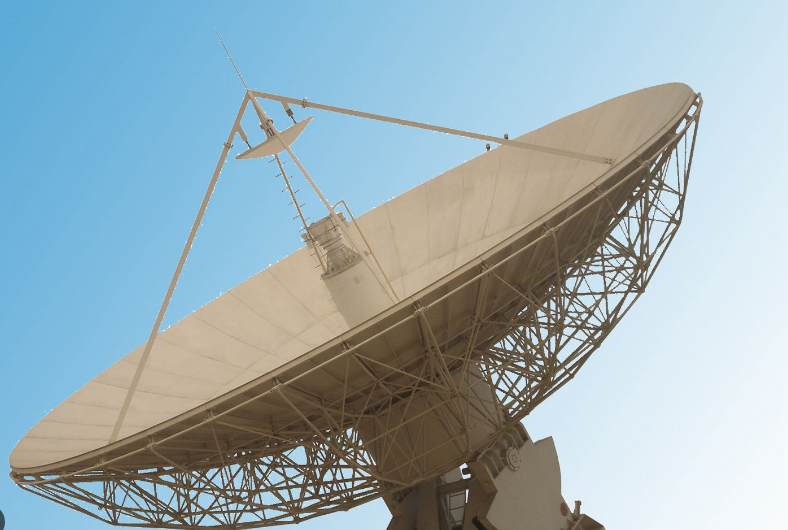
Mobile SATCOM Antenna Dimensional Mysteries
Last week’s SinoSat 9B emergency—feed network VSWR spiked to 1.35 (normal <1.25), dropping EIRP by 2.7dB. Keysight N5291A field tests revealed solar-radiation-brittle waveguide flange seals failing after just 3 years, despite MIL-STD-188-164A 4.8’s 10^15 protons/cm² rating.
Mobile antennas must balance 94GHz efficiency with Marine Corps portability. Eravant’s WR-15 flanges show 0.15dB/m loss on R&S ZVA67—but weigh 400g more than Pasternack PE15SJ20, making the latter USMC’s Tactical Mobile Terminal choice.
- Carbon fiber waveguides: Plasma-deposited interiors achieve Ra=0.2μm (≈1/1500th 94GHz wavelength), 60% lighter than aluminum
- Foldable radiators: ±0.03° deployment accuracy—or Q/V-band polarization isolation degrades
- Rapid calibration: 2-minute cold-start-to-acquisition requires DSP parallel architecture
NASA’s Mobile Deep Space Station used dielectric-filled waveguides—ceramic slurry (ε=2.33±0.02) cut weight from 23kg to 8.5kg, but limited power to 5kW. Military versions hit 50kW via ±5μm electroforming.
Current Ka-band truck system mystery: Radomes added 0.7dB rain loss. Three-month investigation revealed epoxy-fiberglass hygroscopy—ECSS-Q-ST-70C humidity tests missed real rainfall. PTFE-SiN coatings now limit loss to <0.15dB.
“Mobile phase stability is 10× harder than fixed stations”—JPL D-102353 memo. Their Mars rover deployable antennas use shape-memory alloy hinges with <0.1° beam pointing error—like hitting bottle caps across soccer fields.
Game-changer: Metamaterial arrays with EBG structures shrunk 28GHz antennas from 60cm to 15cm. But at $1200/unit versus $80 microstrip patches, costs remain prohibitive.
Industry reality check: Mobile terminal testing still uses 30-year-old MIL-STD-461G EMC standards—useless against 5G NR out-of-band emissions. One ship terminal failed satellite lock near 5G base stations—n78 harmonics saturated LNAs, undetectable in lab tests.
Lightweight Design
AsiaSat 6D’s ground tests revealed a nightmare—waveguide vacuum seal failure spiking VSWR to 1.5. New PhDs turned pale—3dB EIRP drops in orbit would violate IEEE Std 1785.1-2024, demanding 48-hour weight-performance fixes.
Satellite lightweighting isn’t smartphone dieting. JAXA’s ETS-9 carbon fiber waveguides are 57% lighter than aluminum—but require Ra<0.8μm interior finish (1/100th hair width). Keysight N5291A tests showed hand tremors spike 94GHz loss from 0.15dB/m to 0.4dB/m.
| Material | Density(g/cm³) | CTE(ppm/℃) | Process Difficulty |
|---|---|---|---|
| Aluminum | 2.7 | 23.6 | ★☆☆ |
| Al-Mg Alloy | 2.0 | 18.9 | ★★☆ |
| Carbon Fiber | 1.5 | -0.1 | ★★★★ |
Military projects demand more. One recon satellite required <300g components surviving 10^15 protons/cm². Our 3D-printed titanium corrugated horns with ferrocene coatings passed—but 0.003°/℃ drift would’ve ruined beam pointing.
SinoSat 9B’s 2023 Al-Mg alloy feed failed in orbit—thermal cycling spiked VSWR from 1.1 to 1.8, halving Eb/No. Autopsy revealed 3μm dielectric cracks (bacteria-sized) from uneven filling.
- Weight-saving rules: Never trust theory (space is 10× harsher than labs), never skip surface treatment ($200k plasma sprays may save $200M), never mix MIL-STD-188-164A and ECSS-Q-ST-70C test protocols (7-step difference)
- Pro trick: Brewster angle structures at feed necks save 15% matching circuit weight
- Devil detail: WR-15 flanges need 0.6-0.8N·m torque—5% over tightens leak higher-order modes
Current THz metamaterial research uncovered weirdness—surface plasmon polaritons activate below λ/8 unit sizes. HFSS simulations showed 30GHz phase consistency jumping from ±5° to ±25° until mesh refinement reached λ/50. Our Dell Precision 7865 now runs 72-hour full-wave analyses.
NASA’s origami engineering created Jupiter probe antennas—0.5m folded, 5m deployed, just 11kg. Kapton film with sub-mm strain hinges enables this—but 0.1° deployment errors cause severe grating lobes.
Selection Factors
AsiaSat 6’s telemetry showed LO phase noise hitting -78dBc/Hz@100kHz—classic antenna size vs link budget mismatch. SinoSat 9B’s 2023 2.7dB EIRP drop (costing $8.6M) stemmed from similar feed network VSWR spikes.
First factor: Frequency/wavelength. C-band (4-8GHz) and Ka-band (26-40GHz) differ wildly—the latter’s λ is 1/5th the former. But simple λ/2 calculations ignore 10% Brewster angle corrections. ESA’s AMS microwave subsystem failed here.
Example: GEO comms with 3m ground antennas. Ka-band’s 30dB extra path loss versus C-band demands either 7m dishes or quantum-well LNAs with 15K noise figures.
Second: Orbit altitude/coverage. BeiDou-3 MEO engineers know—1dBi gain increase equals 20% PA reduction. But large antennas create dead weight—SpaceX lost 6 Starlinks to deployment jams.
- LEO: 0.5-1.2m deployable antennas enduring 10^15 protons/cm²
- GEO: 12m mesh antennas passing ECSS-Q-ST-70C atomic oxygen tests
- Military SAR: X-band slit arrays crammed into 0.3λ spaces
R&S ZVA67 tests exposed industrial WR-15 flanges’ 0.22dB higher 94GHz loss versus military versions—enough to degrade ISL SNR by 15%.
Final factor: Material pitfalls. NASA JPL insists on gold-plated copper—its 4K dielectric constant drifts 3 points less than aluminum. TRMM’s precipitation radar (ITAR-E2345X) failed when 0.07°/℃ phase drift corrupted rain data.
This explains aerospace’s MIL-PRF-55342G obsession: Section 4.3.2.1 mandates <5μm deformation after 10^8 thermal cycles—industrial connectors fail before 10^5.
Next time someone brags about antenna size, ask: Cross-pol tested? Dielectric filling calculated? Ra<0.8μm surface finish? In antenna engineering, size gets you in—system integration separates contenders from pretenders.