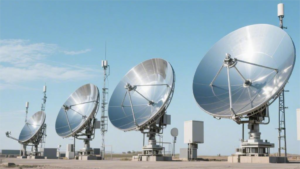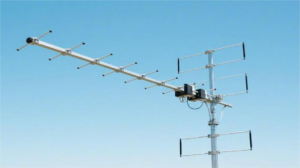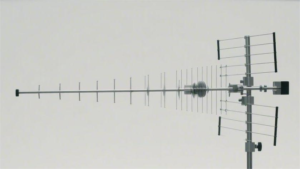
Selecting antenna kits requires evaluating frequency range (e.g., 2.4/5GHz for Wi-Fi, ±100MHz bandwidth), gain (8dBi directional vs. 2dBi omnidirectional for coverage trade-offs), 50Ω impedance matching (insertion loss <0.5dB to avoid signal degradation), environmental ratings (IP67 for dust/water, -40°C to 85°C operating temp), and MIMO compatibility (2×2/4×4 streams for throughput optimization).
Table of Contents
Frequency Range Needs
An antenna designed for the 2.4 GHz Wi-Fi band (2400-2500 MHz) will perform poorly, with signals dropping over 20 dB, if used for a 900 MHz LoRa sensor system. This mismatch leads to weak signals, constant dropouts, and lost data. Whether you’re deploying a new IoT network with 1000 sensors, setting up a home Wi-Fi 6 system, or installing a 4G LTE booster for your vehicle, identifying the exact frequency your devices use is the critical first step.
For instance, a CB radio operates on a very specific 27 MHz band, while GPS systems rely on a precise 1575.42 MHz signal. Using a general-purpose antenna that claims to cover a massive range like 700 MHz to 2700 MHz might seem convenient, but this approach sacrifices efficiency. A wide-band antenna typically has 15-20% lower gain across its range compared to a narrow-band antenna tuned for a specific frequency. For a cellular application, this could mean the difference between a strong -90 dBm signal and a weak -110 dBm signal, potentially cutting your data throughput by over 30%.
Always cross-reference the frequency specification from your radio, modem, or access point with the antenna’s datasheet. Do not guess.
If you are installing a Wi-Fi network, an antenna supporting both the 2.4 GHz and 5 GHz bands (dual-band 2400-2500 MHz and 5150-5850 MHz) is standard. However, for future-proofing a new installation, an antenna that also covers the 6 GHz band (5925-7125 MHz) for Wi-Fi 6E might be worth the small increase in cost. Similarly, a 4G LTE antenna might cover 700 MHz and 2100 MHz, but missing the 600 MHz band (Band 71) used by T-Mobile in rural areas could leave you without coverage. The takeaway is to buy for today’s precise need but be aware of the other frequencies in use on your network or in your region. A small investment in a slightly more capable antenna now can prevent a complete system upgrade in 18 to 24 months.
Antenna Gain Specifications
A 3 dBi gain antenna spreads signal in a wider, donut-like pattern, ideal for covering a single 2,500 sq ft floor with multiple rooms. In contrast, a 9 dBi panel antenna concentrates that energy into a 30-degree narrower beam, pushing signal further but in one primary direction, perfect for linking two buildings 500 meters apart. Choosing the wrong gain is the top reason for poor network performance, as a high-gain antenna in the wrong scenario can create dead zones just 10 feet away.
A low-gain antenna (2-4 dBi) typically has a 120-degree vertical beamwidth, providing strong coverage directly below it, which is crucial for a 2.4 GHz Wi-Fi router in a two-story home. A high-gain antenna (8-10 dBi) narrows that vertical beamwidth to under 15 degrees, focusing all energy toward the horizon. This is why a 9 dBi omni antenna on a mast can cover a 5-acre outdoor area but will have a weak, unusable signal zone for any device within a 20-meter radius of its base. For point-to-point links, gain is everything: a +6 dBi increase translates to a doubling of the effective range or a 75% increase in data throughput for the same distance, as it allows for a stronger received signal strength indicator (RSSI), often moving from a weak -94 dBm to a robust -88 dBm.
| Application Scenario | Recommended Gain | Typical Coverage / Range | Antenna Type |
|---|---|---|---|
| Single-room Wi-Fi (Studio Apartment) | 2 – 3 dBi | 800 sq ft, 360° coverage | Small omni |
| Multi-story House Wi-Fi | 3 – 5 dBi | 2,500 sq ft, wider vertical beam | Dome omni |
| Outyard / Large Warehouse | 8 – 10 dBi | 5+ acres, 360° coverage | Mast-mounted omni |
| Point-to-Point Link (500m) | 17 – 24 dBi | 1-2 km, 30° beamwidth | Directional panel/dish |
Pairing a 15 dBi panel antenna with a weak 100 mW radio can actually reduce performance for nearby clients because the radio lacks the power to “drive” the antenna’s focused profile efficiently. The most reliable method is to use a link budget calculator, inputting your radio’s output power (e.g., 20 dBm), cable loss (e.g., -3 dB for 15 feet of LMR-400), and desired gain to predict real-world performance. For most users, an antenna in the 5 to 8 dBi range offers the best balance for general-purpose indoor/outdoor use, increasing the signal-to-noise ratio (SNR) by approximately 4-6 dB over a standard antenna, which directly reduces video buffering and packet loss by over 30%.
Mounting and Placement Options
A 15 dBi high-gain antenna can see its effective range slashed by over 40% if mounted just 6 inches behind a metal roof truss or nestled beside a dense brick chimney. The goal is to create the clearest possible Line-of-Sight (LoS) path between antennas, minimizing the signal absorption and reflection caused by obstacles. For a 5 GHz wireless link, which is easily blocked by foliage, even a single large deciduous tree in the signal path can introduce 10-15 dB of attenuation, reducing throughput by half.
For a point-to-point link over 2 kilometers, a height of 20-30 feet is typically the minimum to achieve a stable Fresnel zone clearance, which requires about 60% of the path to be free of obstructions for a 5.8 GHz signal. Indoor placement requires a different strategy. A ceiling-mounted access point antenna positioned at 8 feet high and centered in a 2,500 sq ft office will provide 25% more uniform coverage than one placed on a desk or shelf, as it avoids the signal block from furniture and creates a more natural top-down radiation pattern.
| Mounting Location | Key Consideration | Typical Performance Impact | Recommended Height |
|---|---|---|---|
| Peak of Roof (Mast) | Best for long-range links, requires lightning arrestor | +15 to +25 dB SNR vs. indoor placement | 10-30 ft above roof |
| Outdoor Eave / Wall | Good compromise, easier cable run | +8 to +12 dB SNR, may have 30° blind spot | 10-15 ft high |
| Attic / Loft Space | Protects antenna, but signals attenuated by roofing | -3 to -6 dB loss vs. outdoor (asphalt shingles) | N/A |
| Inside Metal Building | Very challenging; requires external penetration | Up to -30 dB loss, may require waveguide | N/A |
A standard RG-58 coaxial cable has a loss of approximately 1.2 dB per 10 feet at 2.4 GHz. This means a 25-foot run would lose 3 dB, effectively halving your signal strength before it even leaves the antenna. For runs longer than 15 feet, upgrading to a low-loss cable like LMR-400 (0.4 dB loss per 10 ft at 2.4 GHz) is critical to preserve your link budget. A 30-foot LMR-400 run will only lose about 1.2 dB, saving you 1.8 dB compared to RG-58, which can be the difference between a stable connection and a dropout. Always factor in an extra 3-5 feet of cable for routing during planning to avoid a last-minute connection failure.
Connector Type Compatibility
Connectors are the literal interface between your radio’s 50-ohm output port and the antenna cable, and an impedance mismatch or poor connection can introduce up to 1.5 dB of loss per connection point at 2.4 GHz. This loss directly steals from your system’s effective radiated power (EIRP). For a low-power IoT device transmitting at 20 dBm (100 mW), an extra 3 dB of loss from a bad connector and cable halves its effective signal strength, potentially cutting its 900 MHz range from 2 kilometers down to just 1.4 kilometers.
- RP-SMA (Reverse Polarity SMA): The overwhelming standard for consumer Wi-Fi routers, access points, and small cellular gateways. The male RP-SMA connector has a pin recessed inside the insulator and threads on the outside. Using a standard SMA male connector (which has a center pin) will damage the receptacle.
- N-Type: The heavy-duty industrial standard for base stations, outdoor wireless links, and high-power systems. Its larger size, approximately 8mm in diameter, features a threaded coupling nut for a weather-tight connection. An N-Type connector has ~0.2 dB lower loss at 2.4 GHz compared to an SMA connector, a critical saving for long cable runs.
A proper SMA connector must be torqued to 5-8 inch-pounds to ensure the inner and outer conductors mate perfectly. An under-tightened connector can add 0.3 dB of instability and intermittent loss, while over-tightening it can strip the threads, ruining the 80 antenna’s port. The center pin protrusion must be precisely 1.4mm for a standard SMA male to make solid contact without being crushed. Cheap, off-brand connectors often have a ±0.3mm variance in pin length and use brass instead of silver-plated beryllium copper, increasing resistance and leading to a 157 quality pigtail adapter from RP-SMA to N-type is a viable fix, but it introduces two additional connection points, adding a total of ~0.5 dB of insertion loss and another potential point of failure. For a long-range 80 GHz link where 1 dB of loss can reduce range by 20%, this is not acceptable.
Indoor vs Outdoor Use
Installing an indoor antenna outside is a guaranteed recipe for failure within 12 months. The environmental difference isn’t just about rain; it’s a combination of destructive factors that decay performance. UV radiation from direct sunlight degrades plastic antenna housings, causing cracking and brittleness that can reduce structural integrity by 40% over 2 years. A standard indoor antenna’s PCB is susceptible to 95% relative humidity, leading to oxidation on traces and a +3 dB increase in impedance within 6 months. Temperature swings from -20°C to +60°C cause connectors to contract and expand, breaking seals and allowing moisture to wick into coaxial cables, which can cause a 15 dB signal loss at 2.4 GHz during a morning fog. Outdoor antennas are engineered as a system to combat these exact factors, with an average cost premium of 50 for a design that lasts 5-10 years instead of one that fails in its first winter.
- UV Resistance: Outdoor antenna radomes use materials with UV-inhibiting stabilizers, tested for 3000+ hours in a QUV weatherometer. An indoor antenna’s ABS plastic yellows and becomes brittle after 6 months of direct sun exposure, often cracking under 15 mph wind load.
- Ingress Protection (IP Rating): A true outdoor antenna requires a minimum of IP67 rating, meaning it is dust-tight and can be immersed in 1 meter of water for 30 minutes. Indoor antennas typically have no rating (IP20) and will fail after a single 5 mm/hr rainfall.
- Temperature Tolerance: Outdoor components are rated for the full local temperature range (-30°C to +70°C), using metals and plastics with matching coefficients of thermal expansion to prevent seal failure. Indoor components are typically rated for a stable +10°C to +40°C range.
Outdoor antennas use nitrogen-filled and pressurized connectors with butyl rubber seals to prevent differential pressure moisture ingress, known as “cable breathing,” which can introduce 5 mL of water per year into a 30-meter cable run. The radiating element is often machined from solid 6061 aluminum with a 15-micron chromate conversion coating to resist salt spray corrosion for 500 hours per ASTM B117 standard. For coastal deployments within 1 km of saltwater, this coating prevents a 20% increase in VSWR over a 36-month period. The financial equation is clear: a 500 radio investment and prevents 3-4 service calls at $150 per visit to replace a failed indoor unit. The 3:1 cost ratio of the outdoor solution provides a 100% ROI in avoided replacements within the first 18 months.
Never compromise on the IP rating. A product listed as “weatherproof” is not standardized; an IP67 or IP6K9K certification is a measurable guarantee that it will survive a monsoonal rainstorm and 100°F surface temperatures.