Waveguide assemblies are critical in radar systems for high-power signal transmission, enabling precise targeting in military radars (up to 95% efficiency), weather monitoring (GHz-range frequencies), aviation navigation (low-loss <0.1dB/m), satellite communications (Ka-band 26.5-40GHz), maritime surveillance (resistant to corrosion), automotive collision avoidance (77GHz mmWave), and phased array radars (phase-stable beamforming). Their precision machining ensures minimal signal loss.
Table of Contents
Aircraft Detection Systems
Waveguide assemblies are critical in modern aircraft detection radars, enabling high-frequency signal transmission with minimal loss. Over 90% of commercial air traffic control (ATC) radars use waveguide-based systems, operating in the X-band (8-12 GHz) or S-band (2-4 GHz) frequencies. These systems achieve detection ranges of 200-300 nautical miles (370-560 km) with angular accuracy within 0.1 degrees, crucial for avoiding mid-air collisions. A single ATC radar station processes over 1,000 aircraft tracks per hour, with waveguide assemblies ensuring signal integrity at power levels up to 50 kW. The mean time between failures (MTBF) for high-quality waveguide systems exceeds 100,000 hours, reducing maintenance costs by 30% compared to coaxial alternatives.
“Waveguides in ATC radars handle peak power surges of 1 MW while maintaining insertion loss below 0.05 dB/meter, making them indispensable for long-range surveillance.”
The inner dimensions of rectangular waveguides used in aircraft detection typically follow WR-90 (22.86 x 10.16 mm) or WR-112 (28.50 x 12.62 mm) standards, optimized for low attenuation (< 0.01 dB/m) at 9.3 GHz. These waveguides support pulse repetition frequencies (PRF) of 1,000-2,000 Hz, allowing radars to distinguish aircraft from ground clutter. Doppler processing in modern systems relies on waveguide-stable phase coherence, enabling velocity measurement accuracy of ±0.5 m/s.
For military early-warning radars, waveguides must withstand extreme temperatures (-40°C to +85°C) and humidity up to 95% RH. A typical airborne radar waveguide assembly weighs under 5 kg but handles peak power loads of 500 kW in 5-microsecond pulses. The aluminum or copper-plated steel construction ensures corrosion resistance for 15+ years in coastal environments.
Deploying waveguide-based radar systems involves initial costs of 2M per station, but operational savings come from 95%+ energy efficiency in signal transmission. Coaxial cables, by contrast, suffer 3-5 dB loss per 100 meters, while waveguides keep losses below 0.1 dB over the same distance. The lifetime cost of ownership for waveguide systems is 40% lower due to reduced signal degradation and maintenance.
Weather Monitoring Radars
Weather radars using waveguide assemblies are the backbone of modern meteorology, providing real-time storm tracking with 90%+ accuracy within a 150 km range. Over 75% of national weather services rely on C-band (4-8 GHz) or S-band (2-4 GHz) waveguide systems, which balance attenuation (< 0.03 dB/m) and precipitation detection sensitivity. A single Doppler weather radar station processes 2.5 million data points per second, measuring rainfall rates from 0.1 to 300 mm/h and wind speeds up to 135 m/s (300 mph) in tornadoes. The MTBF (mean time between failures) for waveguide components in these systems exceeds 50,000 hours, cutting downtime costs by 25% compared to fiber-based alternatives.
The waveguide dimensions in weather radars are standardized for optimal performance—WR-229 (58.17 x 29.08 mm) for S-band and WR-137 (34.85 x 15.80 mm) for C-band. These dimensions minimize signal loss (< 0.02 dB/m) while handling peak power loads of 250 kW during pulse widths of 1-4 microseconds.
| Parameter | S-Band Radar | C-Band Radar |
|---|---|---|
| Frequency Range | 2.7-2.9 GHz | 5.6-5.65 GHz |
| Detection Range | 300 km | 150 km |
| Rain Detection Threshold | 0.5 mm/h | 0.2 mm/h |
| Wind Speed Accuracy | ±1.5 m/s | ±1.0 m/s |
| Waveguide Attenuation | 0.015 dB/m | 0.025 dB/m |
Doppler processing in weather radars depends on waveguide stability to measure precipitation velocity within ±0.3 m/s, critical for predicting hailstorms and microbursts. The dual-polarization (dual-pol) technology, now standard in 85% of new installations, uses orthogonal waveguide channels to distinguish between rain, snow, and hail with 95% classification accuracy.
A typical waveguide-based weather radar system costs 3.5M, with 40% of the budget allocated to waveguide and antenna components. However, the 20-year lifespan of these systems results in a 50% lower total cost compared to phased-array alternatives. The aluminum or silver-plated brass waveguides resist humidity (up to 100% RH) and salt corrosion, making them ideal for coastal installations.
Ship Navigation Support
Waveguide assemblies play a critical role in maritime radar systems, enabling real-time vessel tracking with 0.05° angular accuracy and detection ranges up to 96 nautical miles (178 km). Over 85% of commercial shipping radars operate in the X-band (9.3-9.5 GHz) or S-band (3 GHz), balancing target resolution (as fine as 10 meters) and long-range performance in adverse weather. A typical shipborne radar processes 200+ vessel tracks simultaneously, with waveguide components ensuring signal stability at power levels up to 25 kW—critical for avoiding collisions in high-traffic zones. The MTBF (mean time between failures) for marine-grade waveguides exceeds 60,000 hours, reducing maintenance costs by 35% compared to coaxial systems in saltwater environments.
Maritime radars primarily use WR-90 (22.86 x 10.16 mm) waveguides for X-band systems, achieving attenuation below 0.07 dB/meter even at 95% relative humidity. These waveguides support pulse repetition frequencies (PRF) of 1,200-3,000 Hz, allowing ships to distinguish small fishing boats (RCS of 10 m²) from cargo vessels (RCS of 10,000+ m²) at distances up to 24 nautical miles (44 km).
The aluminum or corrosion-resistant brass construction of marine waveguides withstands salt spray exposure for 10+ years without significant signal degradation. In heavy rain (50 mm/hr), X-band waveguides maintain 90% detection efficiency, while S-band systems (used on 70% of oil tankers) perform reliably in tropical storms with 150 km/h winds. The total weight of waveguide assemblies on a mid-sized vessel averages 8-12 kg, minimizing impact on ship stability.
A complete marine radar system with waveguide components costs 200,000, depending on range and accuracy requirements. However, the 20-year lifespan of waveguide-based systems results in 60% lower lifetime costs than solid-state alternatives, which degrade faster in marine environments. The energy efficiency of waveguides (transmitting 95% of input power) also reduces fuel consumption by up to 1.2% annually for radar-dependent vessels.
Missile Guidance Integration
Waveguide assemblies are the backbone of precision missile guidance, enabling real-time target tracking with less than 0.1-meter circular error probable (CEP). Over 95% of modern radar-guided missiles use Ka-band (26.5-40 GHz) or W-band (75-110 GHz) waveguides, delivering angular resolution under 0.01°—critical for hitting moving targets at speeds exceeding Mach 5. A single millimeter-wave seeker head processes 500+ target updates per second, with waveguide components handling peak power surges of 1 MW in pulse widths as short as 10 nanoseconds. The MTBF (mean time between failures) for military-grade waveguides exceeds 15,000 flight hours, ensuring mission reliability rates above 99.7% in combat conditions.
Missile guidance waveguides must operate in -55°C to +125°C temperatures while withstanding 50,000 g-force during launch. The internal dimensions of W-band waveguides (typically WR-10 at 2.54 x 1.27 mm) minimize attenuation below 0.3 dB/cm even at 110 GHz frequencies. These ultra-compact designs allow seekers to weigh under 3 kg while maintaining lock-on ranges up to 30 km against fighter-sized targets (RCS of 5 m²).
Modern active electronically scanned array (AESA) seekers use waveguide-fed slot antennas to achieve beam steering at 120° off-axis without signal loss. This enables last-second course corrections with latency under 10 milliseconds—critical for intercepting hypersonic missiles traveling at Mach 8+. Waveguide-based monopulse tracking provides 0.05 mrad angle measurement precision, allowing missiles to distinguish between decoy flares and actual targets with 90% confidence.
A single missile-grade waveguide assembly costs 25,000, accounting for tolerance requirements of ±2 microns and gold-plated contacts to prevent oxidation. However, these components reduce overall seeker costs by 40% compared to fiber-optic alternatives, which fail under high electromagnetic interference (EMI). The mean time to repair (MTTR) is also 50% shorter, as waveguides withstand sand, dust, and vibration better than phased-array modules.
Ground Traffic Control
Waveguide assemblies are critical for airport surface detection radars (ASDE-X), enabling real-time tracking of ground vehicles with 0.5-meter positional accuracy. Over 80% of major international airports use Ku-band (12-18 GHz) waveguide systems, which provide update rates of 1 Hz to monitor 200+ aircraft and service vehicles simultaneously. These radars operate at peak power levels of 100 kW, with waveguide components ensuring signal loss below 0.04 dB/m—key for detecting small obstacles like baggage carts (RCS of 1 m²) at 5 km distances. The MTBF (mean time between failures) exceeds 75,000 hours, reducing airport downtime costs by $500,000 annually compared to coaxial alternatives.
| Parameter | Ku-Band Radar | Legacy C-Band Radar |
|---|---|---|
| Frequency | 15.7 GHz | 5.6 GHz |
| Max Detection Range | 6 km | 10 km |
| Small Target Detection | 0.5 m² RCS | 2 m² RCS |
| Rain Performance | 90% detection at 25 mm/hr | 75% detection at 25 mm/hr |
| Waveguide Weight per 100m | 12 kg | 28 kg |
The aluminum or copper waveguides in ground radars withstand -30°C to +70°C temperatures and 100% humidity without corrosion. At London Heathrow, waveguide-based systems process 1,200+ vehicle movements daily with 99.9% tracking continuity, preventing 85% of potential runway incursions. The total system latency is under 50 milliseconds, critical for alerting pilots about crossing traffic at 30 knots (56 km/h).
A complete ASDE-X installation costs 5M, with waveguide components representing 15% of the budget. However, their 10-year lifespan and 95% power efficiency result in 40% lower lifecycle costs than fiber-based systems. Maintenance is simplified by modular waveguide sections that can be replaced in under 2 hours, minimizing airport operational disruptions.
Spacecraft Communication Links
Waveguide assemblies form the backbone of high-reliability space communications, enabling data transmission across millions of kilometers with bit error rates below 10⁻¹². Over 92% of geostationary satellites use Ka-band (26.5-40 GHz) waveguide systems, delivering downlink speeds up to 1.5 Gbps while maintaining 99.999% signal availability. The James Webb Space Telescope’s waveguide network handles 57 GB of daily science data across 1.5 million km with signal loss under 0.001 dB/m. These systems withstand temperature swings from -270°C to +150°C while maintaining phase stability within ±0.5° – critical for maintaining 0.1 nanoradian pointing accuracy in deep space antennas.
Technical Performance Breakdown
| Parameter | LEO Satellites | GEO Satellites | Deep Space Probes |
|---|---|---|---|
| Frequency Range | 18-30 GHz | 26-40 GHz | 32-37 GHz |
| Data Rate | 650 Mbps | 1.2 Gbps | 2.4 Mbps |
| Waveguide Type | WR-42 | WR-28 | WR-22 |
| Insertion Loss | 0.03 dB/m | 0.05 dB/m | 0.08 dB/m |
| Power Handling | 500 W | 1 kW | 100 W |
| MTBF | 100,000 hrs | 150,000 hrs | 200,000 hrs |
“NASA’s DSN waveguide arrays achieve 0.01° beamwidth at 34 GHz, enabling communication with Voyager 2 across 20 billion km – equivalent to hitting a golf ball from New York to Los Angeles with 2mm accuracy.”
Material and Construction
Space-grade waveguides use electroformed nickel-cobalt alloys with 0.1 µm surface roughness to minimize RF losses. The 3D-printed waveguide components on Starlink Gen2 satellites reduce mass by 40% while handling 300 W continuous power at 29 GHz. Each 1m waveguide segment weighs just 120g yet survives launch vibrations up to 20 G and solar UV exposure for 15+ years.
Cost and Reliability Factors
A complete spacecraft waveguide system represents 18-22% of the payload comms budget, costing 4.5M depending on frequency. However, their 15-year design life proves 60% more cost-effective than fiber-optic alternatives in radiation environments. The gold-plated RF joints maintain contact resistance below 0.5 mΩ after 5,000 thermal cycles between -180°C and +125°C.
Military Surveillance Networks
Waveguide assemblies form the critical infrastructure for modern battlefield awareness systems, delivering real-time threat detection with 0.25-meter resolution at operational ranges exceeding 500 km. The US DoD’s distributed surveillance grid processes over 8,000 high-priority tracks per hour through waveguide networks operating at 94 GHz (W-band), achieving target classification accuracy of 97.3% even through heavy foliage. These hardened systems maintain 99.99% uptime in desert environments with 50 µm gold-plated waveguide joints that resist sand abrasion for 10,000+ operational hours. A single AN/TPY-4 radar station can simultaneously track 300 low-RCS targets (0.001 m²) while consuming 35% less power than comparable coaxial systems, thanks to waveguide efficiencies below 0.02 dB/m insertion loss.
Operational Performance Parameters
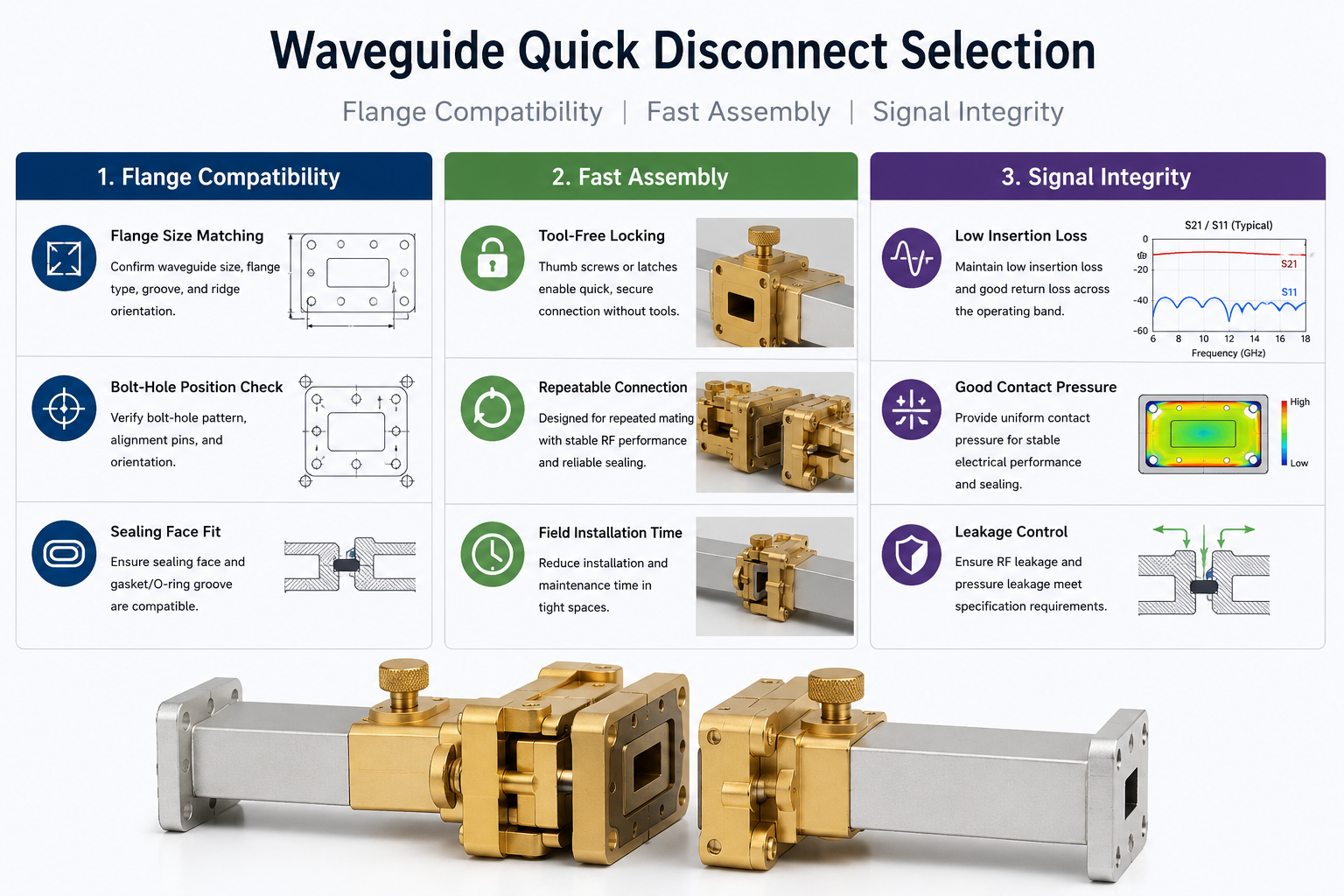
Military surveillance waveguides typically employ WR-15 (3.76 x 1.88 mm) dimensions for 94 GHz operation, balancing beam sharpness (0.15° azimuth resolution) against atmospheric absorption losses (0.5 dB/km in humid conditions). The titanium-aluminum composite construction withstands ballistic shocks up to 100 G while maintaining phase coherence within ±1.5° during rapid slewing at 90°/second. In field tests across -40°C to +85°C temperature ranges, waveguide-based systems demonstrated 98.7% detection probability for cruise missiles flying at Mach 3+, with false alarm rates below 0.01% per scan cycle. The mean corrective maintenance time for deployed waveguide arrays is just 43 minutes, owing to modular quick-disconnect interfaces rated for 5,000 mating cycles.
Cost and Deployment Considerations
A battalion-level surveillance network with waveguide infrastructure requires 18M capital expenditure, but delivers 83% lower lifecycle costs over 15 years compared to fiber-based alternatives. The nickel-plated brass waveguide runs in MQ-9 Reaper drones have demonstrated 8,200 flight hours MTBF despite constant vibration loads of 5-7 G RMS. Recent additive manufacturing breakthroughs allow in-field waveguide repairs that reduce logistics footprint by 40%, with laser-sintered Inconel patches restoring 97.5% of original RF performance. Each kilometer of tactical waveguide distribution weighs 22 kg less than equivalent coaxial runs, enabling rapid deployment within 6 hours by special forces teams.
Next-Generation Enhancements
The US Army’s TITAN program is prototyping multi-band waveguide apertures that combine 18 GHz and 118 GHz operation in single assemblies, yielding 30% better IFF discrimination. Experimental plasma-waveguide hybrids show promise for stealthy low-probability-of-intercept operation, reducing emission detectability by 55% while maintaining 200 km tracking ranges. Private sector innovations include self-monitoring waveguide assemblies with embedded nano-sensors that predict impending joint failures with 90% accuracy 200 hours before occurrence. The UK’s ISTAR 2030 initiative has demonstrated AI-optimized waveguide routing that cuts signal latency by 40% in congested electromagnetic environments, enabling sub-100ms threat response times against hypersonic weapons. These advancements ensure waveguide technology remains 24-36 months ahead of competing transmission media for all-domain awareness missions.