When selecting SMA-to-waveguide adapters, prioritize frequency range (e.g., 18–26.5GHz for WR-42), VSWR (<1.25:1), and insertion loss (<0.3dB). Choose gold-plated brass connectors for corrosion resistance and ensure 0.9Nm torque on SMA threads to prevent signal leakage. Verify TE10 mode purity with >30dB suppression of higher-order modes, and opt for PTFE-loaded waveguide sections to minimize thermal drift beyond 85°C.
Table of Contents
Connector Size & Type
When choosing an SMA to waveguide adapter, the connector size and type directly impact performance and compatibility. SMA connectors typically come in 3.5mm, 2.92mm, or 2.4mm diameters, with 50Ω impedance being the industry standard for RF applications. The waveguide side must match the flange type—common options include WR-90 (for 8.2-12.4 GHz), WR-62 (12.4-18 GHz), and WR-42 (18-26.5 GHz). A mismatch here can cause up to 30% signal loss, especially in high-frequency (18+ GHz) environments.
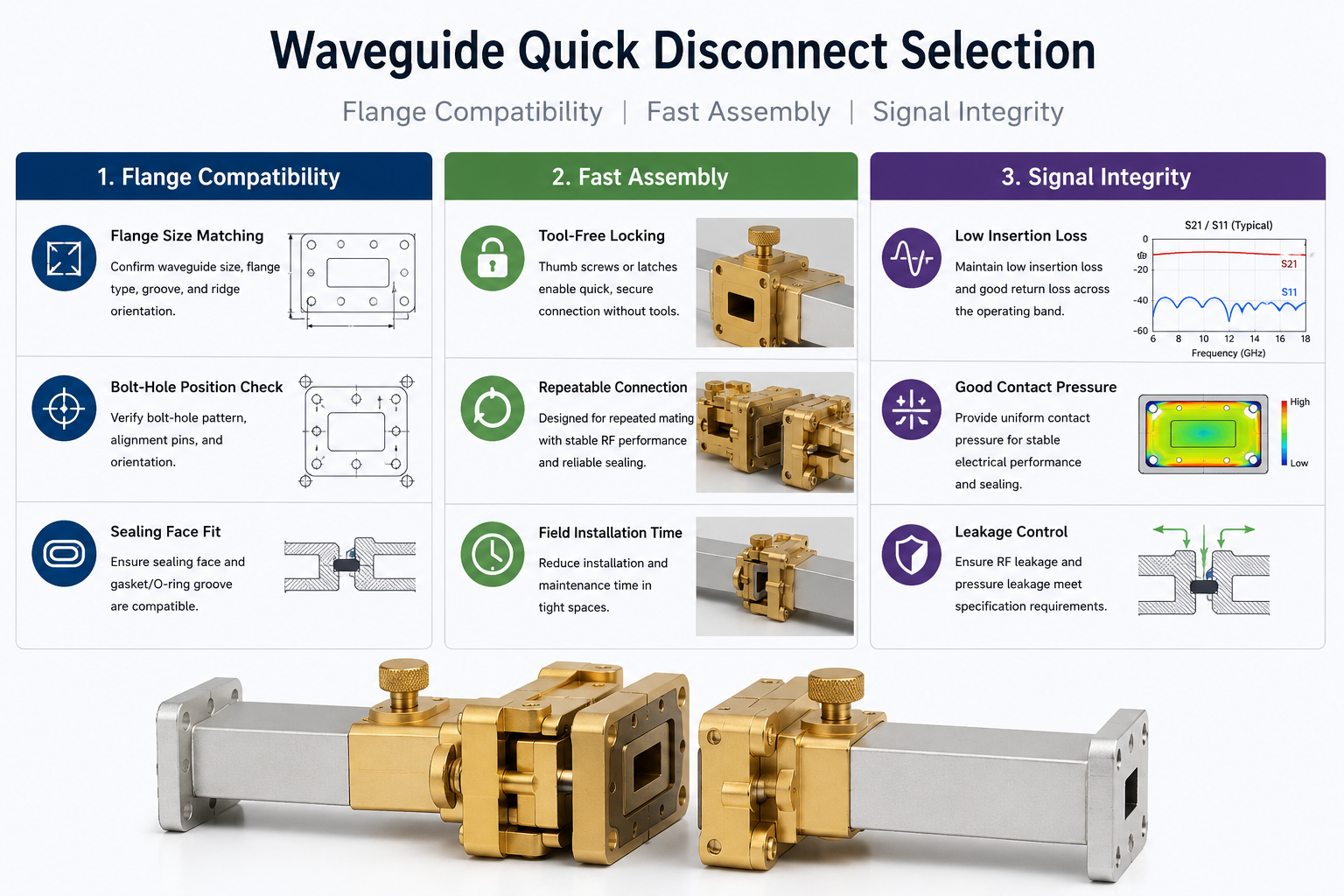
The SMA male vs. female decision also matters. Male connectors (plug) have a center pin, while female (jack) has a receptacle. If your setup involves frequent disconnections, a female SMA with a gold-plated center contact (durability: 500+ mating cycles) is preferable. For waveguide flanges, UG-387/U or UG-387A are common, but MIL-DTL-3922/67 is required in military/aerospace applications.
Material selection affects both cost and performance. Brass SMA connectors are cheaper (~25) but wear out faster (~300 mating cycles). Stainless steel or beryllium copper versions last longer (1,000+ cycles) but cost 80 per unit. The waveguide adapter body is usually aluminum (for lightweight use) or brass (for better thermal conductivity).
| Waveguide Band | Frequency Range (GHz) | Compatible SMA Size | Typical Insertion Loss (dB) |
|---|---|---|---|
| WR-90 (R100) | 8.2-12.4 | 3.5mm | 0.15-0.25 |
| WR-62 (R140) | 12.4-18 | 2.92mm | 0.20-0.35 |
| WR-42 (R220) | 18-26.5 | 2.4mm | 0.30-0.50 |
For mmWave applications (30+ GHz), even a 0.1mm misalignment in the SMA center pin can cause 3dB+ loss. Always verify the mechanical drawings (e.g., IEEE 287 standards) before purchasing. If weight is critical (e.g., drones, satellites), titanium adapters reduce mass by 40% vs. stainless steel, but cost 200 per unit.
Frequency Range Limits
Picking the wrong frequency range for your SMA-to-waveguide adapter is like using a garden hose for a fire hydrant—it might work, but not well. These adapters operate within strict GHz boundaries, and exceeding them causes signal degradation, heat buildup, or even hardware failure. For example, a WR-90 waveguide handles 8.2–12.4 GHz, but if you push it to 15 GHz, insertion loss spikes from 0.2 dB to over 1.5 dB, effectively killing your signal integrity.
”Waveguide cutoff frequency is non-negotiable—go beyond it, and your adapter becomes an expensive paperweight.”
Most SMA connectors max out at 18 GHz (for 3.5mm types) or 40 GHz (for 2.4mm types). But the waveguide side dictates real-world performance. A WR-42 adapter (18–26.5 GHz) paired with a 2.92mm SMA will start showing return loss > -15 dB near 24 GHz if the machining tolerances aren’t tight (±0.01mm). That’s why millimeter-wave setups (30+ GHz) demand precision electroformed adapters, which cost 500 but keep VSWR under 1.2:1 across the band.
Temperature drift also matters. A cheap aluminum adapter might shift 0.01 dB/GHz per °C, while invar alloy versions (used in radar/satcom) cut that to 0.002 dB/GHz per °C. For phased array antennas, where phase stability is critical, this difference can mean ±3° beam steering errors at 28 GHz.
Pro tip: If your application hops between bands (e.g., 5G n258 at 26 GHz vs. n260 at 39 GHz), get a dual-band adapter with broadband matching. Some copper-plated steel models cover 18–40 GHz with <0.4 dB loss, but they weigh 2x more than aluminum—a trade-off for UAVs or handheld test gear.
Material & Durability
The materials used in SMA-to-waveguide adapters aren’t just about cost—they determine how long your RF connection survives in real-world conditions. A brass SMA connector might cost 20 andlast 300 matingcycles, while a berylliumcopperversion runs 65 but withstands 1,200+ cycles—a 4x lifespan improvement that pays off fast in test labs or field deployments.
Plating thickness matters more than material hype. Gold plating under 0.8µm wears off after 200 insertions in humid environments (RH >60%), while 2–3µm gold lasts 800+ cycles even with salt spray exposure.
Now let’s break down material tradeoffs. Aluminum waveguide flanges are lightweight (30% lighter than brass) and cheap (80), but their thermal expansion coefficient (23 µm/m·°C) causes impedance shifts at >5°C/min temperature ramps—bad news for outdoor 5G mmWave gear. Stainless steel solves this (expansion: 17 µm/m·°C) but adds 40% weight and 2x cost.
For the SMA side, nickel-plated brass is the budget choice (25), but its 0.5–1.0 dB higher loss at 18+ GHz makes it unsuitable for precision measurements. Phosphor bronze center contacts maintain <0.1dB loss up to 26 GHz but cost 60 per connector.
Corrosion resistance separates lab queens from field warriors. In a 96-hour salt fog test, bare brass develops >50µm oxide layers increasing VSWR by 15%, while passivated stainless steel shows <3% change. For coastal radar sites, this means choosing MIL-DTL-38999 spec adapters despite their 200 price tag.
Vibration fatigue is another silent killer. Standard SMA connectors fail after 5 million cycles at 7Hz vibration (simulating vehicle-mounted gear), but triple-reinforced designs with stainless steel coupling nuts survive 20+ million cycles. The tradeoff? They’re 25% heavier and require 10 in-lb torque for proper sealing.
Impedance Matching
Getting impedance wrong in SMA-to-waveguide adapters is like putting diesel in a gasoline engine—it might seem to work at first, but the performance penalties add up fast. The standard 50Ω impedance for SMA connectors must perfectly transition to the waveguide’s characteristic impedance, which varies from 350Ω to 700Ω depending on the band. A 5% mismatch can cause 0.3dB insertion loss at 18GHz, and that number doubles every 10GHz you go up.
The transition design is what makes or breaks the match. Quarter-wave transformers are common, but their narrowband nature means they only work within ±5% of the target frequency. For wideband applications (18-40GHz), tapered transitions perform better, keeping VSWR under 1.25:1 across the entire range. But they cost 30-50% more than simple stepped designs.
| Waveguide Type | Cutoff Frequency (GHz) | Typical Impedance (Ω) | Best SMA Transition Type | VSWR at Mid-Band |
|---|---|---|---|---|
| WR-90 | 8.2 | 500-550 | Stepped | 1.15:1 |
| WR-62 | 12.4 | 450-500 | Quarter-wave | 1.20:1 |
| WR-42 | 18.0 | 400-450 | Tapered | 1.10:1 |
| WR-28 | 26.5 | 350-400 | Tapered + RF absorber | 1.25:1 |
Material conductivity plays a bigger role than most engineers realize. While aluminum (61% IACS conductivity) works fine below 18GHz, copper (100% IACS) or silver-plated brass (105% IACS) becomes mandatory at 26GHz+ to prevent skin effect losses from adding 0.05dB per connector. The plating thickness matters too—3µm gold over 5µm nickel gives the best balance between durability (500+ cycles) and loss performance (<0.1dB at 40GHz).
Manufacturing tolerances make or break high-frequency matches. At 40GHz, a 0.02mm misalignment in the SMA center conductor causes 0.2dB additional loss. That’s why precision-machined adapters with ±0.005mm tolerances cost 400, while standard ±0.03mm versions run 120. For phase-sensitive arrays, this difference means ±3° phase errors per connector at 28GHz.
Installation Tips
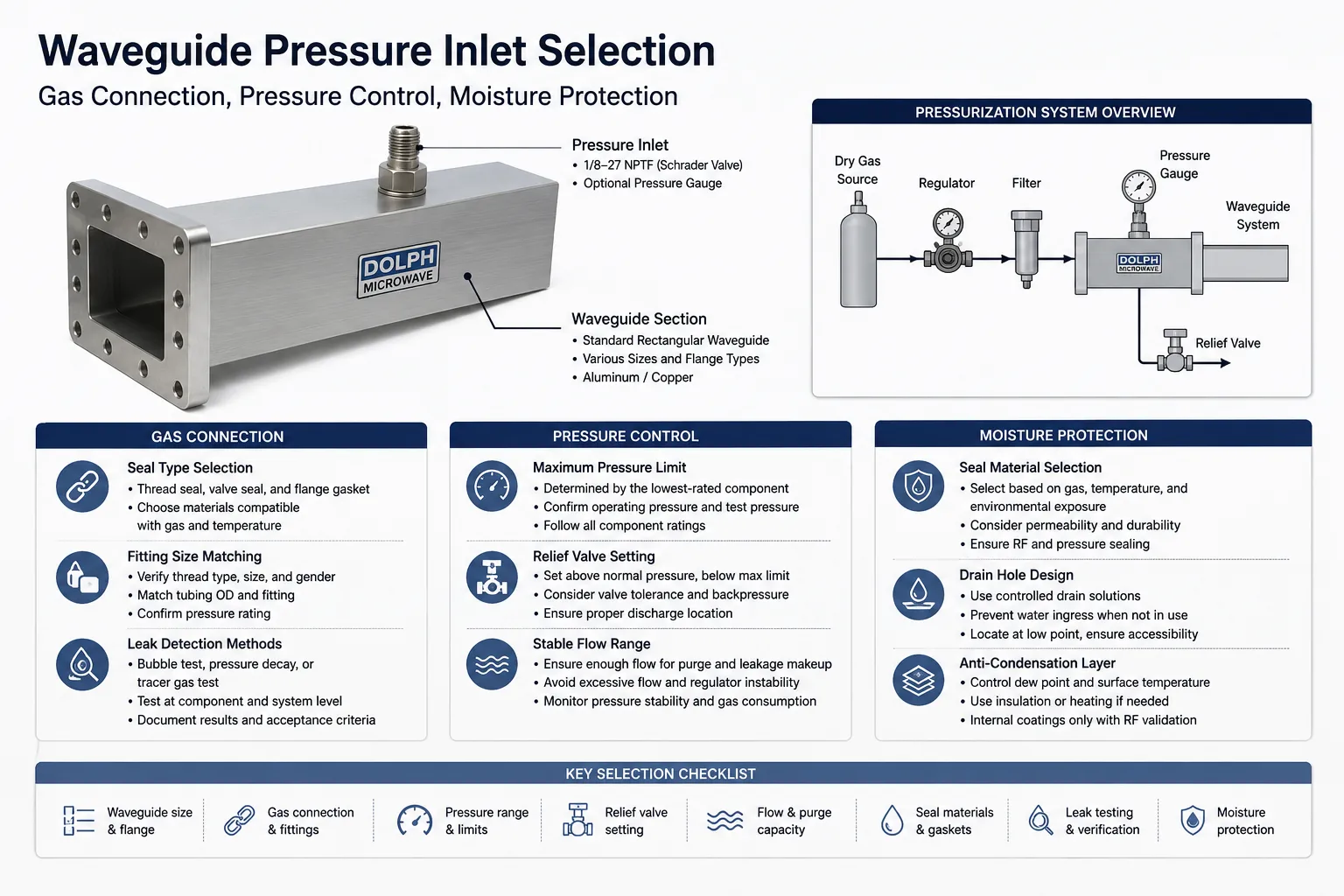
Installing SMA-to-waveguide adapters looks simple until you realize 90% of RF performance issues stem from improper mounting. A connector torqued to 6 in-lb instead of the recommended 8-10 in-lb can leak 0.5dB of signal at 18GHz, while over-tightening beyond 12 in-lb permanently deforms the center pin, increasing VSWR by 20%. The first rule is to always use a calibrated torque wrench—those 80-$120** but prevent costly mistakes.
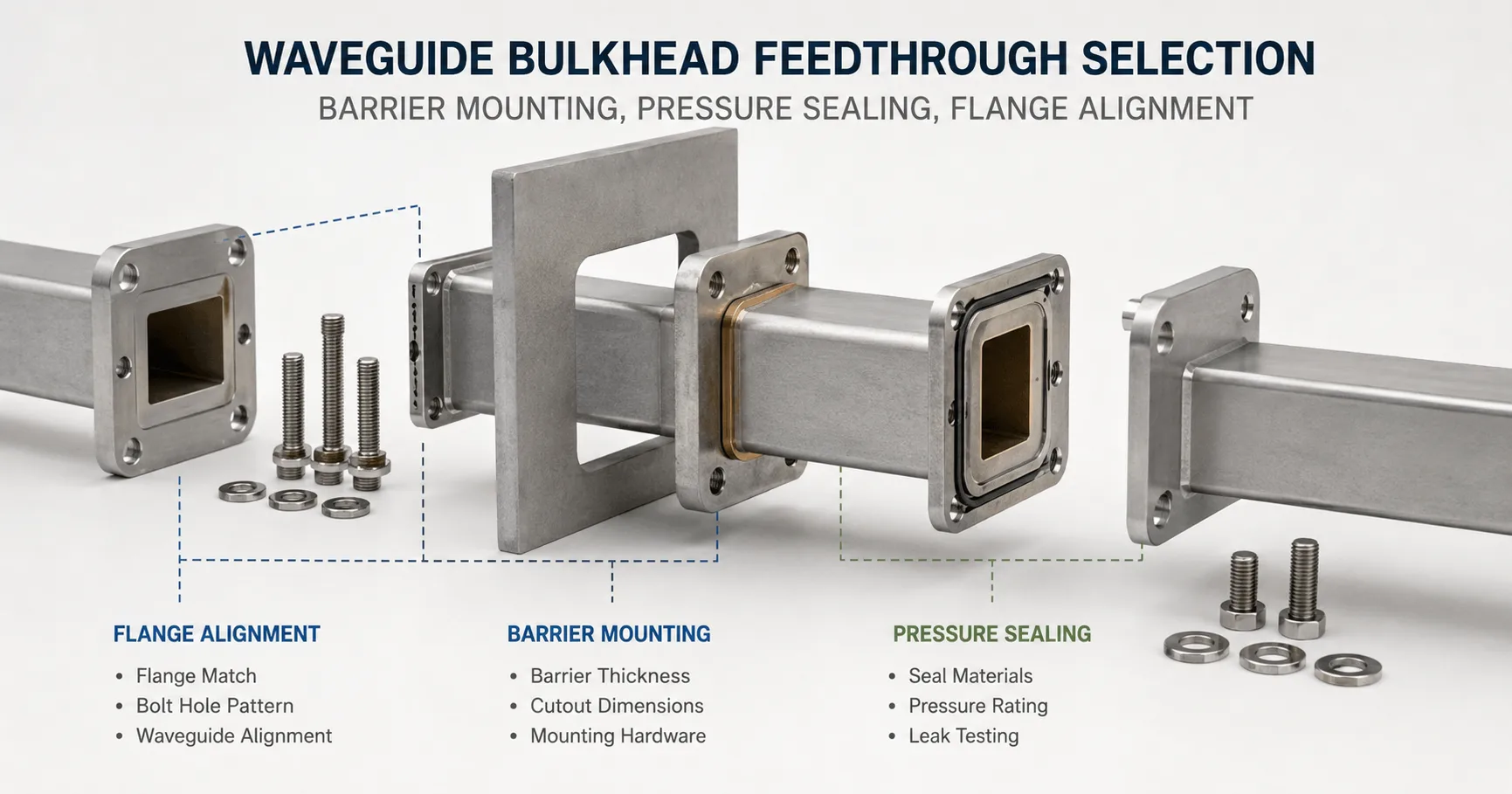
Waveguide flange alignment requires sub-millimeter precision. Even a 0.1mm gap between flanges creates 0.3dB insertion loss at 26GHz, and the problem compounds with frequency. For WR-28 adapters (26.5-40GHz), use alignment pins and feeler gauges to verify contact before applying the four-bolt clamping force (35-45 in-lb per bolt in crisscross pattern). Cheap aluminum flange bolts stretch under torque, causing 0.02dB/°C loss drift—upgrade to stainless steel hardware for stable performance across -40°C to +85°C operating ranges.
Thread lubrication is non-negotiable for field installations. Dry SMA threads gall after 50 mating cycles, but 0.1ml of nickel anti-seize compound extends this to 500+ cycles while maintaining <0.1Ω contact resistance. Just avoid silicone-based lubes—they outgas under vacuum and contaminate RF absorber materials in high-power systems. When mounting to vibrating surfaces (engine compartments, drone avionics), add a Belleville washer stack to maintain 2-4kg of constant pressure despite 7-200Hz vibration spectra.
Thermal cycling demands special attention. A brass SMA-to-aluminum waveguide adapter experiences 15µm/m thermal mismatch during 20°C temperature swings, enough to crack solder joints in 10-15 cycles. The fix? Either use invar transition rings (thermal expansion 1.2µm/m·°C) or design in 0.5mm of radial compliance for 200+ cycle durability. For outdoor mmWave radios, apply UV-resistant conformal coating (50-100µm thickness) to prevent 0.1-0.5dB loss increases from corrosion over 5 years.