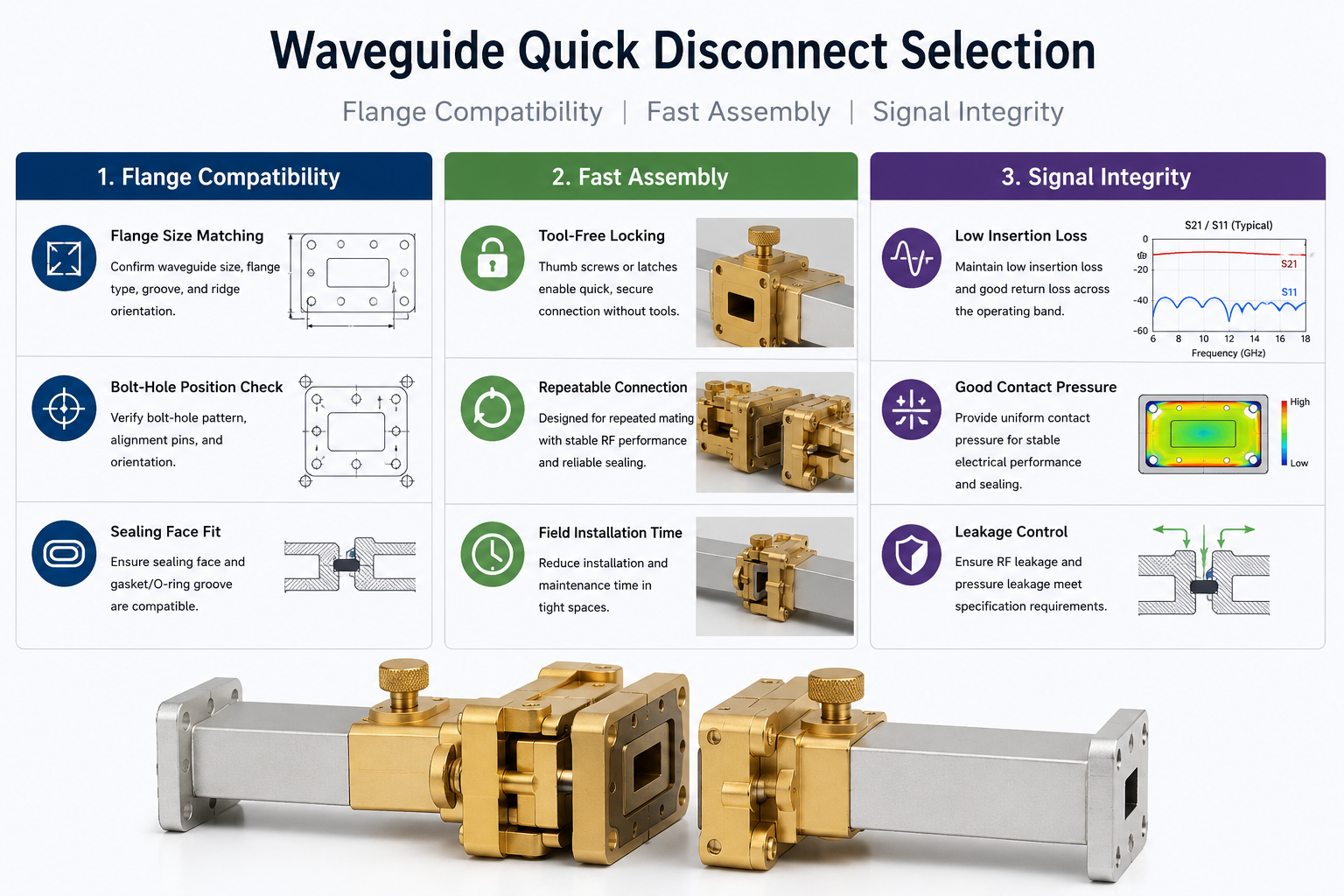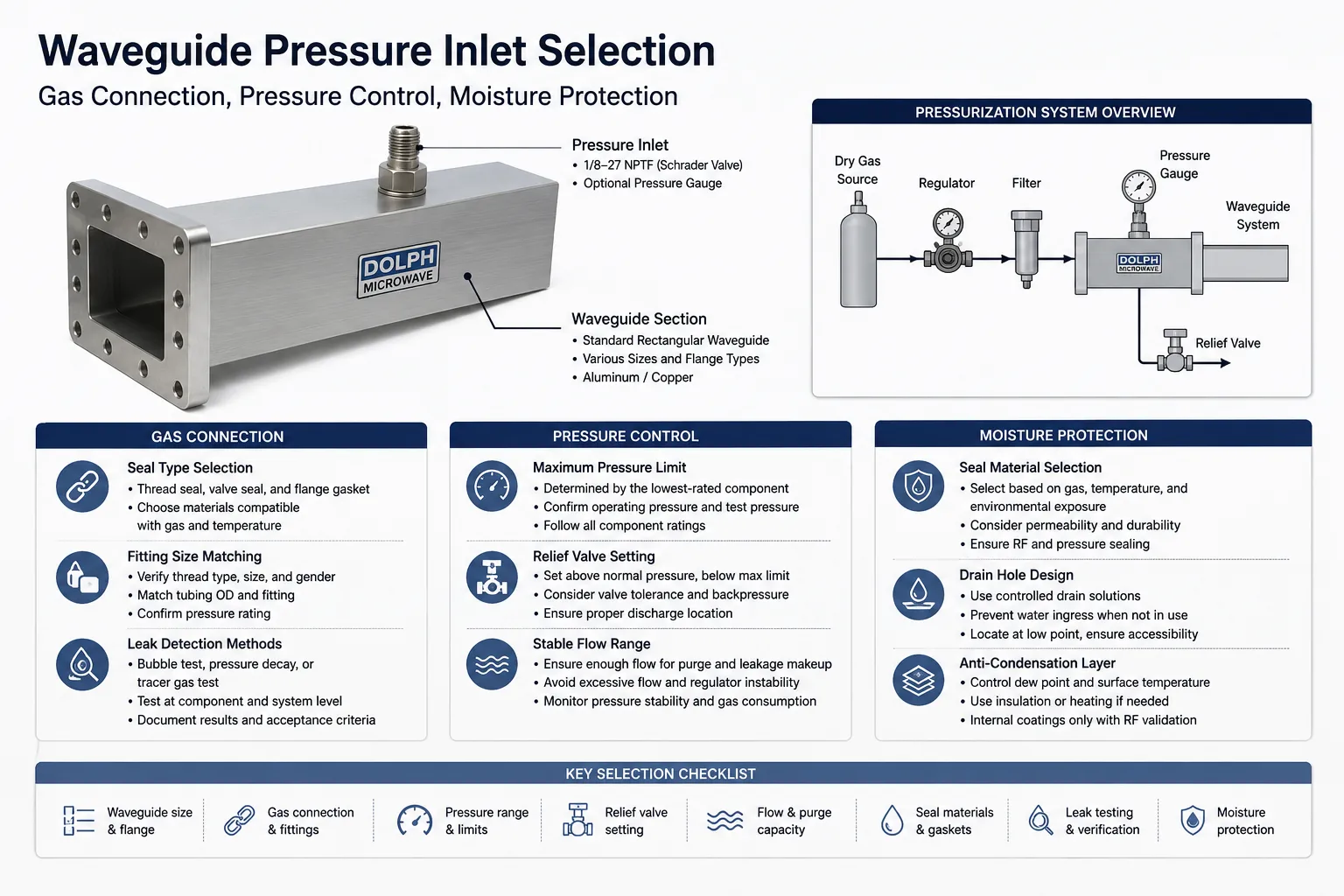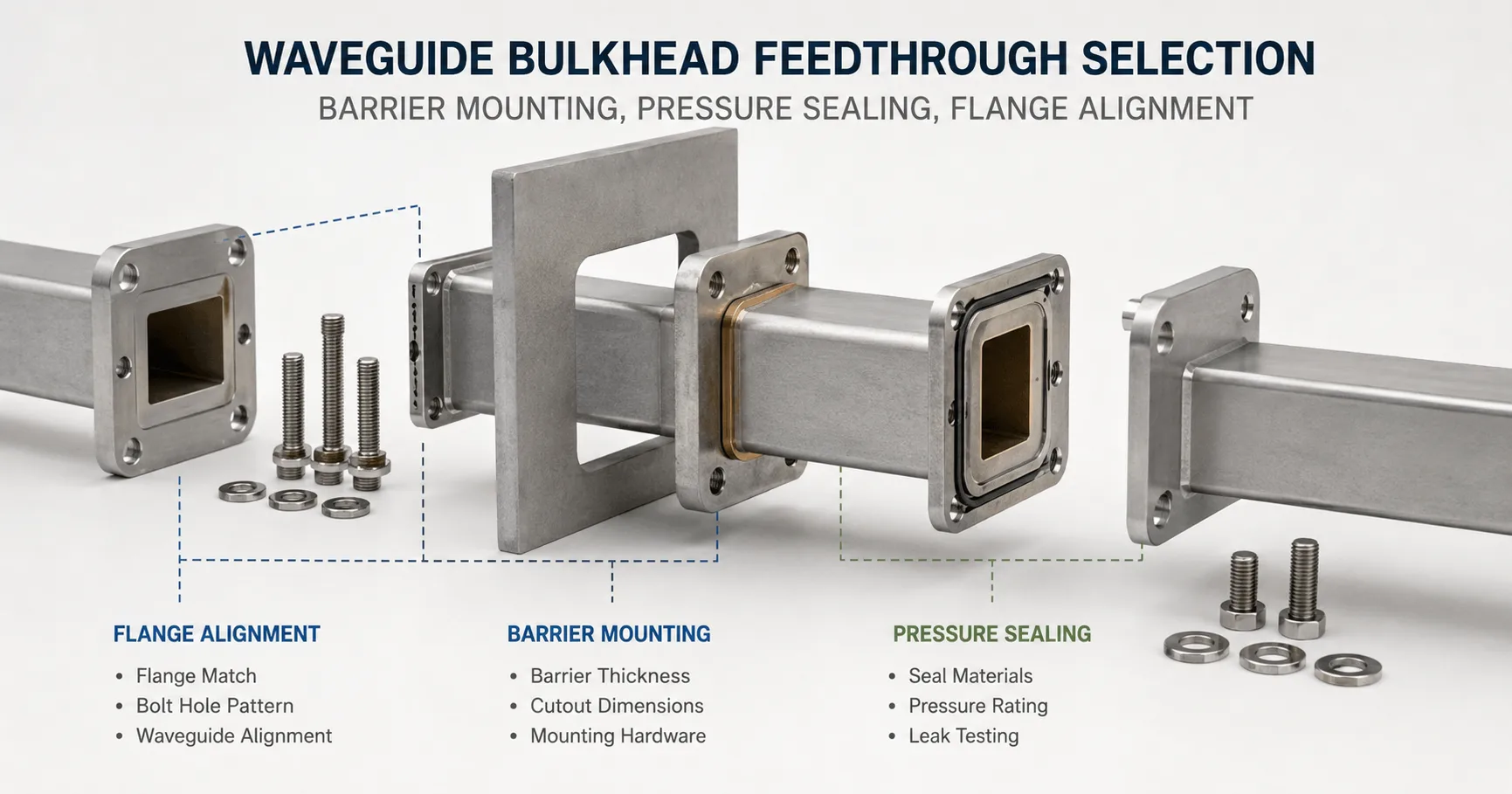
Waveguides outperform coaxial cables for high-frequency (5GHz+) antenna systems, offering lower signal loss (0.1dB/m vs 0.5dB/m in RG-8U at 10GHz) and higher power handling (kW range vs 300W for 1-5/8″ coax). Their rigid aluminum construction minimizes EMI interference, though requiring precise flange connections (WR-90 standard for X-band) versus coax’s flexible F-connector installations. Choose waveguides for millimeter-wave radar/5G base stations, coax for sub-6GHz mobile antennas.
Table of Contents
What Waveguides Do
Waveguides are hollow metal tubes or dielectric structures designed to carry high-frequency electromagnetic waves (typically above 1 GHz) with minimal signal loss. Unlike coaxial cables, which rely on an inner conductor and outer shield, waveguides guide radio waves through their interior via reflections off the inner walls. This makes them ideal for high-power and high-frequency applications, such as radar systems (operating at 8-12 GHz), satellite communications (18-40 GHz), and microwave links (6-38 GHz).
A standard rectangular waveguide (WR-90) used in X-band radar has an inner width of 22.86 mm and height of 10.16 mm, optimized for 8.2-12.4 GHz signals. At these frequencies, attenuation is as low as 0.1 dB/m, compared to 0.5-1 dB/m for coaxial cables like LMR-400. Waveguides also handle higher power loads—up to 10 kW in pulsed radar systems—without overheating, whereas coaxial cables struggle beyond 1 kW due to dielectric losses.
However, waveguides have limitations. They only work above a cutoff frequency (e.g., 6.56 GHz for WR-90), making them impractical for lower frequencies like UHF (300 MHz-3 GHz). Their rigid structure also complicates installation, requiring precise bends (radius ≥ 2x width) to avoid signal reflections. In contrast, coaxial cables are flexible and work from DC to 50 GHz, albeit with increasing loss at higher frequencies.
Key Performance Comparison (Waveguide vs. Coaxial Cable)
| Parameter | Waveguide (WR-90) | Coaxial Cable (LMR-400) |
|---|---|---|
| Frequency Range | 8.2-12.4 GHz | DC-6 GHz (optimal) |
| Attenuation | 0.1 dB/m @ 10 GHz | 0.22 dB/m @ 1 GHz |
| Power Handling | 10 kW (pulsed) | 1 kW (continuous) |
| Bend Flexibility | Rigid (min. 50 mm radius) | Flexible (bend radius ≥ 50 mm) |
| Cost (per meter) | 200 | 5 |
Waveguides excel in low-loss, high-power, and high-frequency scenarios but are overkill for short-range or sub-6 GHz applications. For example, a 5G mmWave base station (28 GHz) might use waveguides for feeder links, while a Wi-Fi router (2.4/5 GHz) relies on coaxial cables. The choice depends on frequency, power, budget, and installation constraints—no single solution fits all.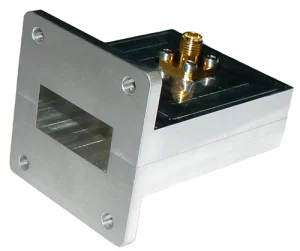
Coaxial Cable Basics
Coaxial cables are the workhorses of RF transmission, used everywhere from home TV antennas to cellular networks. They consist of a central copper conductor (usually 0.5–5 mm thick) surrounded by a dielectric insulator, a braided shield, and an outer jacket. The most common types, like RG-6 and LMR-400, handle frequencies from DC up to 6 GHz with losses ranging from 0.1 dB/m at 100 MHz to 1.5 dB/m at 5 GHz. Unlike waveguides, coax cables are flexible, affordable (typically 10 per meter), and easy to install—making them the default choice for most consumer and commercial applications.
The key advantage of coax is its broad frequency compatibility. A single RG-58 cable can carry signals from DC to 1 GHz, making it suitable for everything from analog radio (88–108 MHz) to early 4G LTE (700–2600 MHz). However, as frequency increases, so does attenuation. For example, LMR-600, a thicker low-loss variant, reduces signal loss to 0.07 dB/m at 1 GHz, but even this degrades to 0.4 dB/m at 6 GHz. That’s why high-frequency systems like 5G mmWave (24–40 GHz) rarely use coax—instead opting for waveguides or fiber.
Power handling is another limitation. Standard RG-8X coax can manage about 300W continuous power, while thicker Heliax cables (like 1-5/8″) push this to 5 kW. But beyond that, heat buildup from dielectric losses becomes a problem. In contrast, waveguides handle 10 kW or more with ease because they lack a central conductor to overheat. Coax also suffers from shield leakage at high frequencies—above 3 GHz, even well-shielded cables can lose 1–3% of signal through gaps in the braid.
Durability varies by design. Outdoor-rated coax (PE-jacketed) lasts 10–20 years in harsh weather, while cheaper PVC-jacketed cables degrade in 5–8 years under UV exposure. Connectors also matter—a poorly crimped F-type connector can add 0.5 dB of loss per connection, while precision N-type connectors keep losses below 0.1 dB. For long runs, like CATV trunk lines (500+ meters), engineers often use thick-core coax (e.g., 0.75″ diameter) to keep losses under 3 dB total.
Signal Loss Comparison
Signal loss is the biggest factor in choosing between waveguides and coaxial cables. At 1 GHz, a standard LMR-400 coax loses about 0.22 dB per meter, while a WR-90 waveguide loses just 0.05 dB/m—making waveguides 4x more efficient at this frequency. But the gap widens as frequency increases. At 10 GHz, coax losses jump to 0.7 dB/m, while waveguides stay under 0.1 dB/m. This means a 50-meter run at 10 GHz would lose 35 dB in coax but only 5 dB in waveguide—a difference that can make or break a radio link.
The main reason for this disparity is skin effect and dielectric losses. In coax, high-frequency signals travel mostly along the outer surface of the inner conductor, and the dielectric material between conductors absorbs energy. At 24 GHz (5G mmWave), even premium 1/2″ Heliax coax loses 1.2 dB/m, while a WR-42 waveguide keeps losses below 0.3 dB/m. For long-distance microwave backhaul (e.g., 5 km at 38 GHz), waveguides are the only viable option—coax would lose 600 dB, rendering the signal unusable.
Signal Loss Comparison (Waveguide vs. Coaxial Cable)
| Frequency | Coaxial Cable (LMR-400) | Waveguide (WR-90) |
|---|---|---|
| 1 GHz | 0.22 dB/m | 0.05 dB/m |
| 6 GHz | 0.5 dB/m | 0.08 dB/m |
| 10 GHz | 0.7 dB/m | 0.1 dB/m |
| 24 GHz | 1.2 dB/m (Heliax) | 0.3 dB/m (WR-42) |
Temperature also affects loss. Coax performance degrades in hot environments (above 50°C), with losses increasing by 0.2% per °C. Waveguides, being hollow, are more stable—their loss only rises by 0.05% per °C. Humidity is another factor; water ingress in coax can spike losses by 10–20%, while waveguides, if properly sealed, remain unaffected.
For short runs (under 10 meters), coax is often good enough—a 3-meter RG-58 patch cable at 2.4 GHz loses just 0.9 dB, which most Wi-Fi routers can tolerate. But for high-power, high-frequency, or long-distance applications, waveguides dominate. A satellite ground station transmitting at 18 GHz over 30 meters would lose 3 dB with waveguide but 36 dB with coax—forcing an impractical 4000W amplifier just to compensate.
Frequency Range Limits
The usable frequency range is where waveguides and coaxial cables show their most fundamental differences. Waveguides have a strict cutoff frequency below which they simply won’t work – for standard WR-90 waveguides this is 6.56 GHz, making them useless for common frequencies like 2.4 GHz Wi-Fi or 5G sub-6 bands. Coaxial cables, on the other hand, can theoretically carry signals from DC to 50 GHz, though practical limitations kick in much earlier.
Here’s the key breakdown of frequency limitations:
- Waveguides: Only work above their cutoff frequency (6.56 GHz for WR-90, 15.8 GHz for WR-42)
- Coaxial cables: Work from DC up to frequency where losses become prohibitive (typically 6-18 GHz depending on cable quality)
- Hybrid solutions: Semi-rigid coax can reach 40 GHz but costs $50+/meter
The physics behind these limits is straightforward. In waveguides, the signal needs enough energy to “bounce” properly between the walls – at lower frequencies, the wavelength is too long (e.g., 12.5 cm at 2.4 GHz) to propagate efficiently. Coax doesn’t have this limitation because the central conductor provides a continuous path, but as frequencies climb above 6 GHz, three problems emerge:
- Skin effect forces current to the conductor’s outer layer, effectively reducing usable diameter
- Dielectric losses in the insulation material become severe (up to 3 dB/m at 18 GHz)
- Shield imperfections start leaking significant signal (1-3% per connector above 10 GHz)
For millimeter wave applications (24-40 GHz), even premium coax like 0.047″ diameter micro-coaxial cables struggle with insertion losses exceeding 2 dB/m, while proper waveguides maintain losses below 0.5 dB/m. This explains why 5G mmWave base stations use waveguides for antenna feeds – a 3-meter coax run would lose 6 dB (75% of signal power), while waveguide loses just 1.5 dB.
Temperature stability also differs dramatically. Coax center conductors expand with heat, changing impedance – a 10°C rise can shift VSWR by 0.2-0.5 at 10 GHz. Waveguides, being hollow, maintain stable performance from -40°C to +85°C with less than 0.1% frequency drift. This makes them indispensable for aerospace applications where temperature swings exceed 100°C during ascent/re-entry.
Installation Differences
When it comes to installing waveguides versus coaxial cables, the physical and technical challenges couldn’t be more different. A standard RG-6 coaxial cable installation takes about 5 minutes per connection with basic tools, while properly aligning and sealing a WR-90 waveguide flange requires 30-45 minutes of precision work. The weight difference is equally dramatic – 100 meters of LMR-400 coax weighs around 15 kg, while the same length of WR-112 waveguide tips the scales at 85 kg, requiring heavy-duty support brackets every 1.5 meters.
Here are the key installation challenges for each:
- Waveguides: Require precise alignment (±0.1mm tolerance), rigid mounting, and specialized tools for flange connections
- Coaxial cables: Can tolerate ±2mm misalignment, flexible routing, and use standard crimp/SMA connectors
- Environmental factors: Waveguides need nitrogen purging for outdoor use, while coax only needs basic weatherproofing
Bending radius is where coax shines. A typical 10mm diameter coax can bend at 50mm radius without significant signal degradation, allowing tight spaces in equipment racks. Compare this to WR-90 waveguide which needs at least 150mm bend radius – and that’s only with expensive custom elbow joints. Straight waveguide sections typically come in 3 meter lengths, requiring careful planning for long runs, while coax is available in 100+ meter reels for continuous installation.
The cost of mistakes is vastly different too. A poorly installed F-connector on coax might cost 200+ in damaged parts and hours of rework. This is why waveguide installations typically require RF engineers with 5+ years experience, while coax can be handled by technicians after basic training.
Outdoor durability presents another key difference. While both need protection, waveguides demand pressurized dry air systems (2000 per run) to prevent moisture buildup, whereas coax only needs $5 waterproof tape at connection points. The maintenance burden reflects this – waveguide systems typically need quarterly inspections, while coax installations can go 2-3 years between checks in moderate climates.
Cost and Durability
When comparing waveguides to coaxial cables, the price difference hits you immediately. A standard WR-90 waveguide costs 200 per meter, while LMR-400 coax runs just 5 per meter—a 40x price jump for the waveguide. But that’s only the start. Installation labor for waveguides is 3–5x higher due to precision alignment needs, specialized tools, and the physical bulk of the components. A 50-meter waveguide run can easily hit 25,000 in total cost, while the same length in coax stays under $500 for materials and labor.
”Waveguides are like buying a Ferrari—expensive upfront but built to last. Coax is the reliable pickup truck—cheaper but needs replacing sooner.”
Durability is where waveguides justify their cost. A properly installed aluminum waveguide in a controlled environment lasts 25+ years with minimal maintenance. Coax, even the high-end Andrew Heliax, degrades after 10–15 years due to connector wear, dielectric breakdown, and shield corrosion. Outdoor coax in harsh climates (coastal, desert) often fails in 5–8 years, while waveguides withstand salt spray, UV exposure, and -40°C to +85°C swings without performance drops.
Moisture resistance is another key factor. Coax relies on rubber seals and gel-filled connectors, which dry out and crack after 3–5 years, leading to 0.5–2 dB increased loss. Waveguides, when pressurized with dry nitrogen (0.5–1 psi), stay moisture-free for decades. The nitrogen system adds 2000 to the install but prevents the 10–20% signal degradation that wet coax suffers.
Power handling also affects long-term value. A WR-112 waveguide can transmit 10 kW continuously for 50,000+ hours before needing inspection, while 7/8″ coax handling the same power requires annual replacement of connectors and often the entire cable. For broadcast towers running 24/7, this means waveguides save 10,000 in replacement costs over a decade.
Frequency stability over time favors waveguides too. After 10 years, coax typically shows 5–10% impedance drift, causing VSWR to creep up from 1.2:1 to 1.5:1. Waveguides maintain 1.1:1 VSWR for their entire lifespan unless physically damaged. This reliability is why military radars and satellite ground stations prefer waveguides despite the cost—downtime is far more expensive than the initial investment.