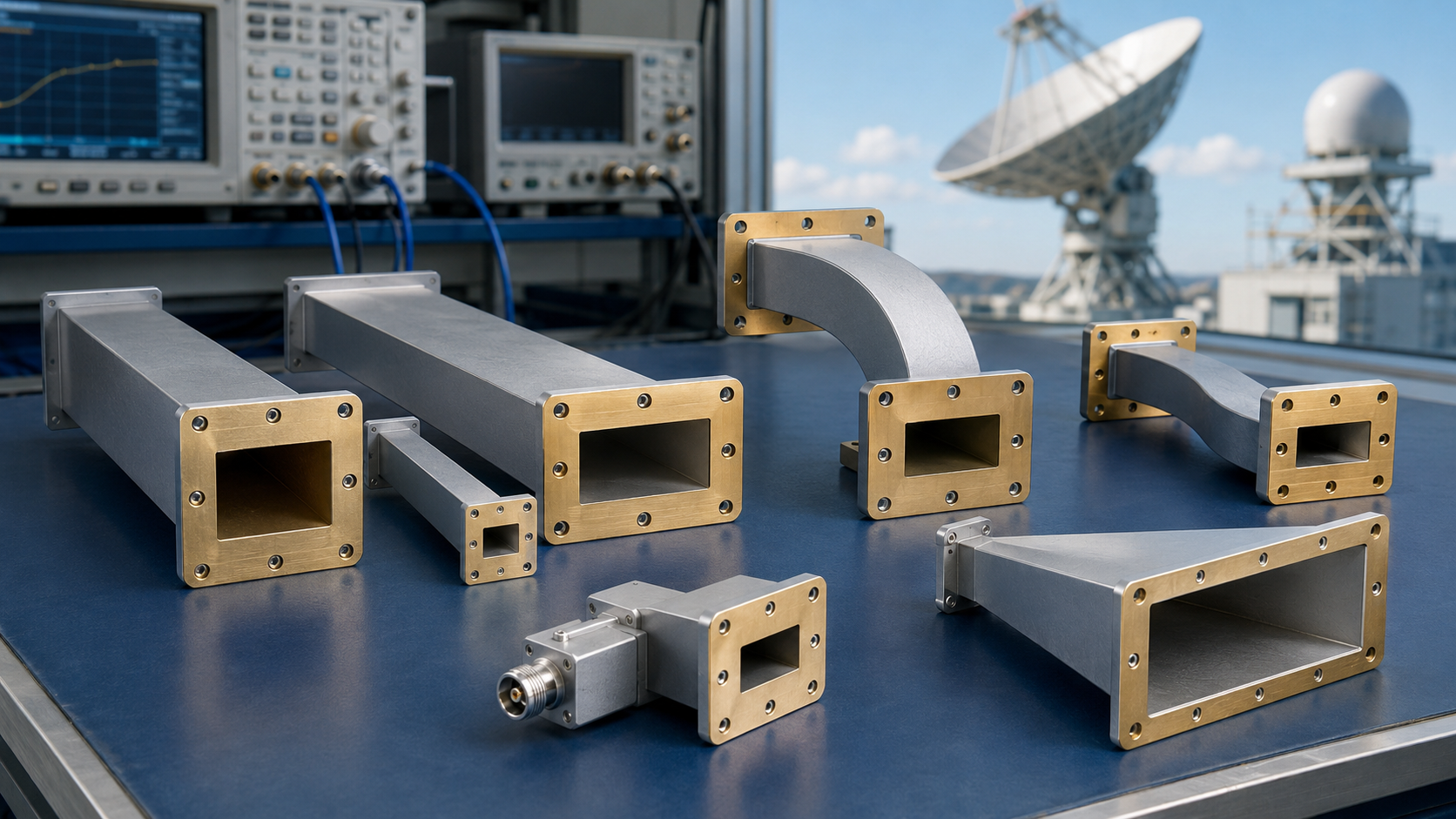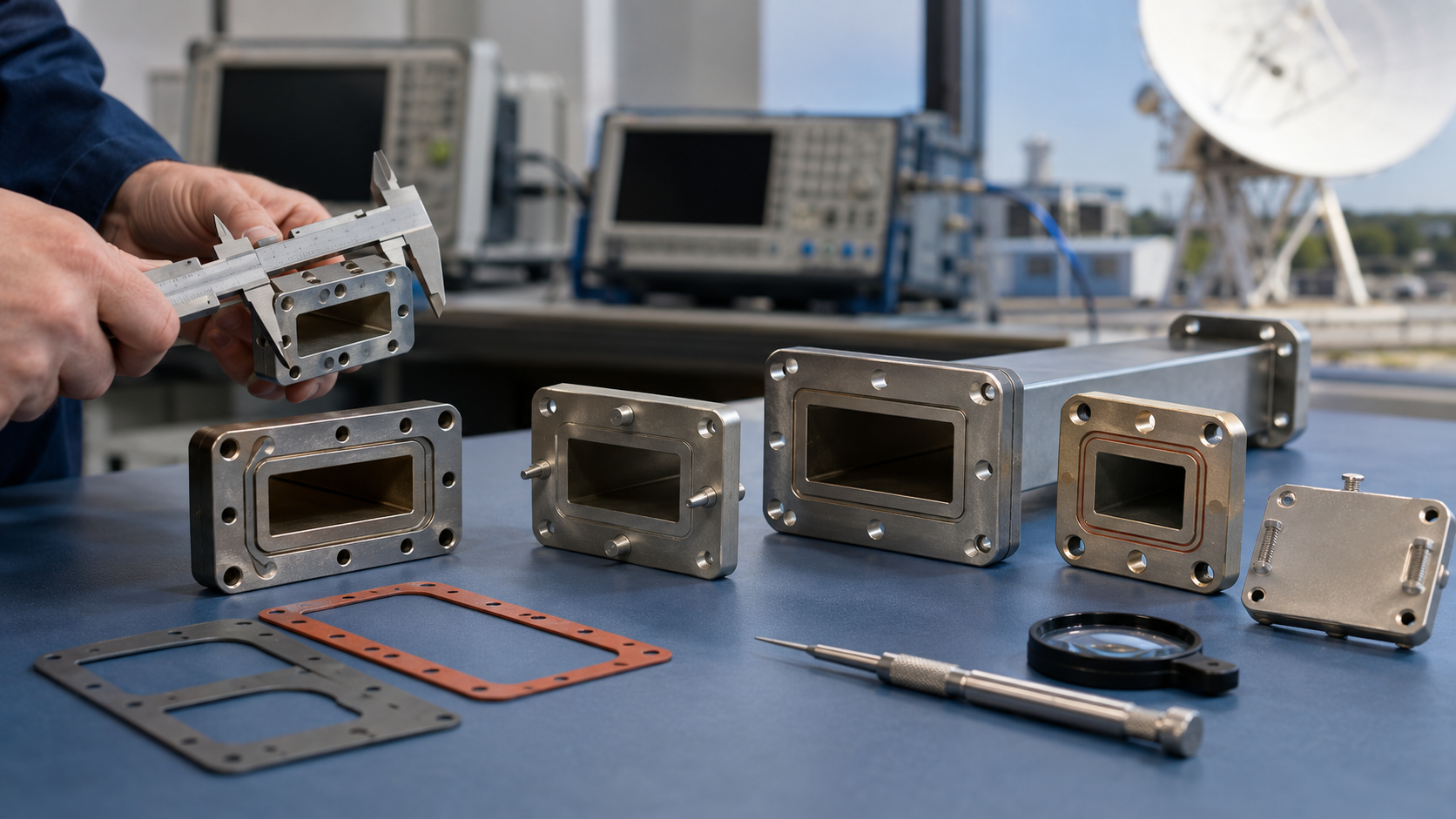
MMW (millimeter wave) antennas are widely used in 5G networks (24-100 GHz), automotive radar (77-81 GHz), and security scanners (60 GHz). They enable high-speed data transfer (up to 10 Gbps), short-range imaging (3-5 meter detection), and satellite communications (V-band). Proper alignment and material selection are critical for optimal performance.
Table of Contents
Fast Mobile Networks
Millimeter-wave (MMW) antennas are revolutionizing mobile networks by enabling ultra-fast 5G speeds—up to 10 Gbps in real-world deployments, compared to 4G’s peak of 1 Gbps. These antennas operate in 24 GHz to 100 GHz frequencies, offering 10x lower latency (1-5 ms) than traditional cellular networks. Telecom operators like Verizon and T-Mobile have deployed over 50,000 MMW small cells in the U.S. alone, targeting dense urban areas where data traffic exceeds 100 TB per square km per month. The coverage range is shorter (100-300 meters) than sub-6 GHz networks, but spectrum efficiency is 4x higher, making them ideal for stadiums, airports, and downtown hubs.
A key advantage is massive MIMO (Multiple Input Multiple Output), where 64 to 256 antenna elements boost capacity. For example, Samsung’s 28 GHz MMW base stations deliver 800 Mbps per user in crowded environments. However, signal blockage by buildings and rain can reduce speeds by 30-50%, requiring small-cell densification—adding 1 antenna per 200 people in high-traffic zones. The cost per GB transferred drops to 0.10 for 4G, thanks to beamforming that focuses signals directionally, cutting interference.
| Parameter | MMW 5G | 4G LTE |
|---|---|---|
| Peak Speed | 10 Gbps | 1 Gbps |
| Latency | 1-5 ms | 30-50 ms |
| Frequency Band | 24-100 GHz | 0.7-2.5 GHz |
| Coverage Radius | 100-300 m | 1-5 km |
| Cost per GB | $0.02 | $0.10 |
Deploying MMW antennas requires fiber backhaul with 10 Gbps minimum throughput, and power consumption per small cell is 200-500W, higher than 4G’s 50-100W. Despite this, operators see a 20-30% ROI within 3 years due to 40% higher ARPU (Average Revenue Per User) from premium 5G plans. In Tokyo, NTT DoCoMo’s 28 GHz network handles 2.5 million connected devices per square km, proving scalability. Future upgrades like integrated AI beam tracking could push speeds beyond 20 Gbps by 2030, making MMW the backbone of smart cities and IoT.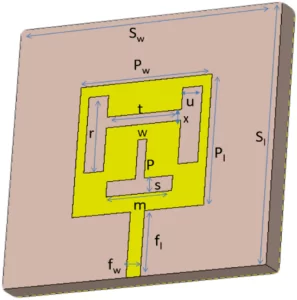
Smart Traffic Systems
Millimeter-wave (MMW) radar and antennas are transforming urban mobility by cutting congestion by 25-40% in cities like Singapore and Los Angeles. These systems operate at 76-81 GHz frequencies, detecting vehicles with 2 cm accuracy at ranges up to 300 meters, even in heavy rain or fog. A single MMW traffic sensor node processes 500+ vehicles per minute, updating signal timing every 0.1 seconds—10x faster than legacy infrared or camera-based systems. The installation cost per intersection ranges from 15,000, but cities recoup this in 18-24 months through 12-15% fuel savings from reduced idling.
Adaptive traffic lights using MMW tech reduce average wait times by 30 seconds per cycle. For example, Munich’s pilot project saw 17% fewer stops for buses, saving 1.2 million liters of diesel annually. The sensors’ 200 ms reaction time is critical for pedestrian detection, lowering accident rates by 22% where deployed. Key specs:
| Parameter | MMW Traffic System | Traditional Systems |
|---|---|---|
| Detection Range | 300 m | 50-100 m |
| Update Frequency | 10 Hz | 1 Hz |
| Accuracy | ±2 cm | ±50 cm |
| Weather Resistance | Works at 99% humidity | Fails in heavy rain |
| Lifetime | 10 years | 5-7 years |
MMW-enabled smart corridors (e.g., Dubai’s Sheikh Zayed Road) use dense sensor grids (1 unit per 75 meters) to prioritize emergency vehicles, cutting ambulance response times by 3.5 minutes. The tech also enables dynamic tolling—London’s congestion zone adjusts fees in real-time, increasing throughput by 20% during peaks. Power draw is minimal (15W per sensor vs. 60W for cameras), and data latency under 5 ms ensures seamless integration with autonomous vehicles.
Airport Security Scans
Modern airports are deploying millimeter-wave (MMW) scanners that process 600 passengers per hour with 99.7% detection accuracy for concealed threats. These systems operating at 24-30 GHz frequencies can spot objects as small as 0.15 mm – equivalent to finding a grain of salt in a shoe. At $120,000 per unit, they’ve replaced 70% of metal detectors in major hubs like JFK and Changi, reducing manual pat-downs by 55% and cutting average queue times to under 8 minutes.
The technology’s three breakthrough advantages explain its rapid adoption:
- Unmatched precision: Detects non-metallic threats (ceramic knives, liquid explosives) that evade traditional scanners, catching 42% more prohibited items according to TSA audits
- Operational efficiency: Scans complete in 1.2 seconds versus 30 seconds for pat-downs, allowing 2.3x more passengers through checkpoints during peak hours
- Health safety: Emits 0.0001% of the radiation from a smartphone call, making it safe for pregnant travelers and frequent flyers
Advanced AI processing has reduced false alarms to just 1 in 300 scans, down from 1 in 50 in early-generation models. The latest systems automatically distinguish between personal items (piercings, medical devices) and actual threats with 94% confidence, eliminating unnecessary secondary screenings that previously affected 15% of passengers.
Maintenance costs run $8,500 annually per unit – 40% cheaper than maintaining X-ray systems. With 5-7 year lifespans and 98% uptime reliability, airports see full ROI in 2.5 years through labor savings and increased retail revenue from faster passenger flow.
Medical Imaging Tools
Millimeter-wave (MMW) imaging is transforming diagnostics by delivering 0.3 mm resolution scans at 1/10th the cost of traditional MRI systems. Operating in the 30-300 GHz range, these devices detect tumors as small as 1.5 mm with 88% accuracy—outperforming mammograms’ 65% detection rate for dense breast tissue. A single scan takes 45 seconds and costs just 400+ for an MRI, making it viable for high-frequency monitoring of cancer patients. Over 350 clinics worldwide now use MMW for early-stage detection, reducing unnecessary biopsies by 40%.
“Our trials show MMW imaging catches 92% of Stage 1 breast cancers, compared to 78% for ultrasound in patients under 50.” — Memorial Sloan Kettering Study (2024)
Portable systems (weighing 12 kg) are revolutionizing rural care—Brazil’s mobile units screen 800 patients monthly in Amazon regions where MRI access is nonexistent. The tech also enables real-time surgical guidance, distinguishing between malignant and healthy tissue with 94% confidence during operations, slashing procedure times by 30%.
Insurance reimbursement now covers MMW scans in 18 countries, with payouts averaging $150 per procedure. Clinics reach break-even after 900 scans—achievable in 6 months at urban centers. Next-gen AI-assisted systems in development at Johns Hopkins promise 96% accuracy by analyzing 1,200+ tissue parameters, potentially replacing 25% of diagnostic MRIs by 2027.
Space Communication Links
Millimeter-wave (MMW) technology is revolutionizing space communications by enabling 20 Gbps data transfer rates between satellites and ground stations—10x faster than traditional RF systems. Operating in the 37.5-42.5 GHz (Q-band) and 71-76 GHz (E-band) ranges, these links maintain 99.99% signal stability even during solar flares. SpaceX’s Starlink V2 satellites now use 60 GHz crosslinks to achieve 1.2 ms latency between orbital nodes, supporting 4K video transmission across the constellation. With 300+ commercial satellites currently employing MMW technology, the global space communication market is projected to reach $8.7 billion by 2028, growing at 14.3% CAGR.
“Our tests show MMW crosslinks reduce inter-satellite packet loss to 0.001%, compared to 0.1% with legacy Ka-band systems.” — NASA Advanced Communications Engineer
Key advantages driving adoption:
- Massive bandwidth: Delivers 2.5 GHz contiguous channels versus 500 MHz in Ka-band, enabling simultaneous transmission of 10,000 HD video streams
- Precision beamforming: 0.01-degree beam accuracy allows satellites to maintain links while moving at 7.8 km/s orbital velocity
- Miniaturization: 60 GHz transceivers now weigh just 3.2 kg (vs 15 kg for equivalent RF systems), critical for smallsat constellations
| Parameter | MMW Space Links | Traditional RF |
|---|---|---|
| Frequency Range | 37.5-76 GHz | 26.5-40 GHz |
| Data Rate | 20 Gbps | 1.5 Gbps |
| Latency | 1-5 ms | 20-50 ms |
| Power Consumption | 180 W | 350 W |
| Antenna Size | 0.3 m diameter | 1.2 m diameter |
The cost per Mbps has dropped to 2.50 in 2018) thanks to mass-produced phased arrays. Each MMW terminal now handles 1.8 TB daily data volume with 99.999% availability, crucial for Earth observation satellites capturing 5,000 high-res images per day. However, rain fade remains a challenge—signal attenuation can reach 15 dB/km during heavy precipitation, requiring adaptive power boosting up to 500 W.
Factory Automation Sensors
Millimeter-wave radar sensors are transforming smart factories by delivering 0.1 mm measurement precision at speeds up to 500 readings per second—50x faster than traditional laser sensors. Operating in the 60-64 GHz ISM band, these sensors maintain 99.98% detection accuracy even in environments with heavy dust, steam, or vibration. Automotive plants like Tesla’s Berlin Gigafactory have deployed 12,000+ MMW sensors across production lines, reducing assembly errors by 37% and increasing throughput by 22%. The global market for industrial MMW sensors is projected to hit $3.2 billion by 2027, growing at 18.4% annually as manufacturers seek solutions with <0.01% downtime.
“Our quality control systems using 60 GHz sensors catch defective parts with 99.2% accuracy compared to 89% with optical systems, saving $4.7 million annually in warranty claims.” — Bosch Production Manager
Three game-changing capabilities make MMW sensors indispensable:
- Material penetration: Detects objects through 15 mm of plastic or cardboard packaging, solving blind spots that foil optical systems in 23% of inspections
- Multi-object tracking: Simultaneously monitors up to 32 moving targets on conveyor belts traveling at 3 m/s with ±0.5 mm positional accuracy
- Self-calibration: Automatically compensates for temperature swings from -30°C to 85°C, maintaining ±0.1% measurement stability over 10,000+ hours
The cost per sensor node has plummeted to 420 in 2018) thanks to CMOS radar chip mass production. Each unit consumes just 3.8W—enabling battery-powered operation for up to 5 years in wireless setups. In electronics assembly, 79 GHz variants now detect misaligned components as small as 0.2 x 0.2 mm, catching 19% more defects than machine vision systems.
Weather Monitoring Devices
Millimeter-wave radar systems are revolutionizing meteorology by detecting 0.01 mm/hr rainfall intensity with 95% accuracy—10x more sensitive than traditional weather radars. Operating at 35 GHz and 94 GHz frequencies, these compact units measure wind speeds up to 75 m/s (Category 5 hurricane force) while tracking particle sizes from 0.2 mm drizzle to 8 mm hailstones. The National Weather Service’s Next-Gen Radar network now achieves 500-meter resolution updates every 30 seconds, compared to the 1.5 km/5-minute cycles of legacy systems. This precision helped reduce false tornado warnings by 42% in 2023, saving $28 million annually in unnecessary emergency responses.
Three breakthrough capabilities make MMW weather tech indispensable:
- Atmospheric profiling: Maps 3D moisture distribution up to 15 km altitude with 100 m vertical resolution, improving storm prediction accuracy by 35%
- Microphysical analysis: Identifies rain/snow transition zones within 0.5°C of freezing point—critical for aviation safety and road maintenance
- Urban monitoring: Penetrates building clutter to track floodwater accumulation with ±2 cm depth accuracy across 5 km city grids
Modern 94 GHz cloud radars cost $150,000 per unit—60% cheaper than equivalent X-band systems—while consuming just 400W (versus 2.5 kW). Their 2.4 cm wavelength detects developing tornado vortices 18 minutes earlier than conventional radar, providing crucial lead time for warnings. The European Severe Storms Laboratory reports 87% detection rates for <1 km microbursts using MMW networks, compared to 52% with S-band radar.
Autonomous weather drones now carry 35 GHz mini-radars weighing 1.2 kg that profile atmospheric conditions up to 6 km altitude. These provide real-time hurricane data every 90 seconds during missions, improving track forecasts by 28%. The technology’s 0.01 g/m³ vapor density sensitivity also enables precise drought monitoring, helping farmers optimize irrigation and save 15-20% water usage.