Parabolic dish antennas, common in long-distance communication, feature high gain (30–40 dBi) and narrow beamwidth (1–2° half-power), ideal for focusing signals over kilometers. Operating at 2–40 GHz (e.g., satellite links), a 1m diameter dish minimizes path loss; precise pointing (<0.1° alignment) ensures strong reception, outperforming omnidirectional antennas by 20–30 dB in distant transmission.
Table of Contents
Antennas for Miles of Talk
Unlike VHF or UHF signals that travel in straight lines, HF radio waves (from 3 to 30 MHz) bounce between the Earth’s ionosphere and the ground. This skywave propagation enables a small transmitter, using just 100 watts of power (about the same as a bright light bulb), to send signals across oceans. For instance, a well-designed 20-meter dipole antenna can reliably establish voice and data links over distances of 1,000 to 4,000 km. The efficiency of this communication is highly dependent on the antenna’s design and the time of day; daytime communication is best on higher frequencies like 21 MHz, while nighttime favors lower bands like 7 MHz. This makes HF a cost-effective solution for long-distance communication where infrastructure like satellites or fiber optics is unavailable or too expensive, with initial setup costs for a robust station ranging from 2,000.
For the 20-meter amateur radio band (14.0-14.35 MHz), that means a wire about 10 meters (33 feet) long, strung between two supports at a height of at least 6 meters (20 feet) for decent performance. Its efficiency can range from 30% to 60% based on its installation height and the surrounding terrain. For more focused power and greater range, directional antennas like the Yagi-Uda are used. A 3-element Yagi for the 20-meter band can have a forward gain of approximately 7 dBi, effectively tripling the effective radiated power compared to a dipole. This allows it to push signals further and pull in weaker ones, making it a favorite for contesting and DXing (long-distance communication). However, these are larger and more complex; a 3-element Yagi can have a boom length of 5-6 meters and weigh over 25 kg, requiring a sturdy and often expensive mast or tower for rotation.
| Antenna Type | Typical Frequency Range | Approx. Gain | Key Advantage | Common Use Case |
|---|---|---|---|---|
| Dipole | 3-30 MHz | 0 dBi (reference) | Simple, low-cost, omnidirectional | Beginner setups, portable operations |
| Vertical | 3-30 MHz | -1 to 3 dBi | Small footprint, 360-degree coverage | Maritime mobile, limited-space installations |
| Yagi-Uda | 14-30 MHz | 7-12 dBi | High directional gain and selectivity | Fixed stations aiming for a specific region |
| Log-Periodic | 3-30 MHz | 5-8 dBi | Wide frequency coverage, directional | Monitoring stations, government/commercial use |
For omnidirectional coverage, a vertical or dipole is sufficient. But for targeting a specific continent over 5,000 km away, the 15 dBi gain from a large Yagi array can make the difference between a faint whisper and a clear, readable signal, effectively increasing your signal strength at the receiving end by a factor of 30. These systems are workhorses in amateur radio, maritime shore stations, and remote government outposts, providing a resilient communication link that is independent of vulnerable infrastructure.
Big Dishes for Global Calls
When your communication needs extend beyond the Earth’s atmosphere, you need a big dish. Parabolic reflector antennas, commonly called “dishes,” are the workhorses of satellite and deep-space communication. These massive structures, ranging from a compact 1.2-meter model for home satellite TV to the colossal 70-meter diameter of NASA’s Deep Space Network antennas, operate by focusing microwave signals with extreme precision. They primarily function in the super high-frequency (SHF) bands, from 3 GHz to 30 GHz (wavelengths from 10 cm to 1 cm). This high-frequency focus allows them to beam immense amounts of data over interplanetary distances. A standard 3.8-meter commercial satellite dish can achieve a gain of approximately 48 dBi at 12 GHz. This incredible focusing power means a 20-watt transmitter hooked to such a dish can effectively radiate over 1.2 megawatts of power in its targeted direction, enabling reliable data links to satellites orbiting 36,000 km away in geostationary orbit at speeds exceeding 100 megabits per second.
The core principle behind these antennas is the parabolic reflector’s ability to concentrate both incoming and outgoing radio waves into a single focal point where a feed horn is placed. The size of the dish is the single most important factor for performance; gain increases with the square of the diameter. Doubling the diameter from 3 meters to 6 meters quadruples the gain, adding roughly 6 dB, which can be the difference between maintaining a link during a heavy rain fade or losing it.
For a satellite operating in the Ku-band (12-18 GHz), a 60 cm dish might provide a stable link in clear weather, but a 1.2 m dish is often the minimum for reliable service in areas with frequent rainfall, which can attenuate the signal by 10-20 dB. The surface accuracy of the dish is also critical; for high-frequency Ka-band (26-40 GHz) operations, deviations in the panel must be less than 1 mm to maintain efficiency above 60%. This is why large dishes are engineered from materials like aluminum or fiberglass with low thermal expansion coefficients, ensuring performance remains consistent under temperature swings of 40° Celsius.
A commercial 5-meter dish used for teleport operations can cost between 150,000, excluding the massive concrete foundation and motorized tracking systems required to keep it pointed with an accuracy of less than 0.05 degrees at a target moving across the sky. These systems are fundamental to global television broadcasting, international telephony, and weather satellite data reception, handling terabytes of data every single day with a bit error rate (BER) better than 10e-12.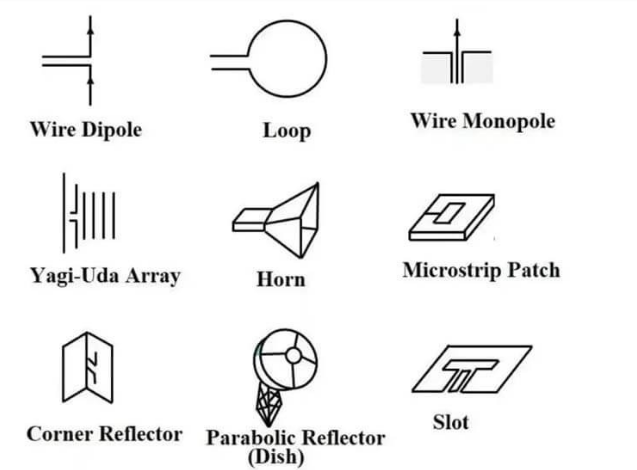
Wire Loops for Far Distances
For decades, radio enthusiasts and professionals have utilized loop antennas for efficient long-distance communication, particularly in the challenging low-frequency (LF) and medium-frequency (MF) bands. Unlike a simple wire dipole, a loop antenna consists of a coil of wire, often circular or square, that can be remarkably compact relative to its operating wavelength. A typical small transmitting loop for the 160-meter band (1.8-2.0 MHz) might only be 3 meters in diameter, a fraction of the 80-meter full-wave length, yet it can effectively radiate a signal when fed with a high-voltage capacitor. These antennas are renowned for their deep nulls in their reception pattern, which are incredibly effective for rejecting static crashes and interference from specific directions, often improving the signal-to-noise ratio (SNR) by 15-20 dB. While their radiation efficiency is inherently lower—often between 2% and 40% depending on size and frequency—their small footprint and directional selectivity make them a unique tool for DXing from city balconies or remote field operations where space is a primary constraint.
The operational principle hinges on a high circulating current within the loop. For a 2-meter diameter loop tuned to 7.2 MHz, the circulating current can be 10 to 20 times higher than the feedline current. This necessitates the use of a high-quality vacuum variable capacitor with a voltage rating of at least 5,000 volts to handle the intense RF fields, a component that can alone cost between 600. The efficiency of a small loop is brutally governed by physics: it is proportional to the area of the loop multiplied by the number of turns squared. However, doubling the number of turns quadruples the RF resistance, so a single turn loop made from thick 25mm copper tubing almost always outperforms a multi-turn loop made from thin wire. For a 1-meter loop on 14 MHz, the radiation resistance might be a mere 0.01 ohms, meaning conductor and loss resistance must be kept below 0.05 ohms to achieve even a 20% efficiency rating. This is why material choice is critical.
A small loop antenna, measuring 1.5 meters in circumference and constructed from 30mm aluminum tubing, when tuned to 3.85 MHz with a matching network, exhibited a -3 dB bandwidth of just 3 kHz. This required retuning every time the frequency shifted more than 1.5 kHz.
Key considerations for deploying a loop antenna include:
- Tuning Unit: An absolute requirement for overcoming the loop’s inherently narrow bandwidth, which can be less than 10 kHz on the 160m band. Motorized remote tuning is often essential for frequent band changes.
- Location: Loop performance is severely degraded by nearby metal objects and structures. Elevation above ground (minimum 0.1 wavelength) significantly reduces ground loss, which can account for over 50% of total system losses.
- Application: While less efficient for high-power broadcasting, they are exceptional for directional nulling of noise sources and for stealthy low-power (QRP) operations where a large dipole is impractical.
Despite their challenges, a well-constructed loop antenna costing under $200 in materials can facilitate contacts over 2,000 km using just 10 watts of power, proving that physical size isn’t the only factor for achieving global reach.
Choosing by Frequency Band
A dipole optimized for the 40-meter amateur band (7.0-7.3 MHz) will be nearly 20 meters long, while a 2.4 GHz Wi-Fi antenna is just a few centimeters. This size-to-frequency relationship is governed by wavelength (λ), calculated as 300 / frequency in MHz, giving a result in meters. An antenna’s efficiency is directly tied to how well its dimensions resonate with this wavelength. For instance, a half-wave dipole must be approximately 95% of the calculated half-wavelength due to a real-world effect called velocity factor. Operating an antenna significantly outside its designed band leads to a high Standing Wave Ratio (SWR), often above 3:1, which can reflect over 25% of your transmitter’s power back into its final amplifier stages, potentially causing damage and reducing your effective radiated power by more than half.
Lower frequencies, from 3 MHz to 30 MHz (HF), rely on ionospheric refraction, bouncing signals back to Earth for intercontinental communication. Antennas for these bands are large; a full-sized 80m dipole spans 40 meters. Higher frequencies, from 30 MHz to 300 MHz (VHF) and 300 MHz to 3 GHz (UHF), typically travel in straight lines (line-of-sight). Antennas here are smaller but require height and clear paths. Above 3 GHz (SHF/EHF), signals are highly susceptible to atmospheric absorption but allow for massive data capacity and very small antennas, used for satellite links and 5G. The critical trade-off is between physical size and data bandwidth; a 1.2-meter satellite dish can handle a 50 Mbps data stream at 12 GHz, while a 20-meter long HF wire might only handle 3 kHz of bandwidth suitable for SSB voice.
| Frequency Band | Wavelength Range | Key Antenna Types | Typical Gain Range | Primary Use Case |
|---|---|---|---|---|
| HF (3-30 MHz) | 100m – 10m | Dipole, Vertical, Yagi | 0 dBi to 15 dBi | Long-distance skywave communication |
| VHF (30-300 MHz) | 10m – 1m | J-Pole, Yagi (5-8 elements) | 3 dBi to 12 dBi | FM radio, local two-way radio (line-of-sight) |
| UHF (300 MHz-3 GHz) | 1m – 10cm | Panel, Patch, Helical | 8 dBi to 24 dBi | TV, GPS, GSM, Wi-Fi, Bluetooth |
| SHF (3-30 GHz) | 10cm – 1cm | Parabolic Dish, Horn | 20 dBi to 50 dBi | Satellite, radar, point-to-point microwave links |
Key considerations when choosing by band include:
- Physical Size: A VHF antenna for 146 MHz is roughly 1 meter long, while a UHF antenna for 440 MHz is about 34 cm. Installation space often dictates the feasible band and antenna type.
- Gain and Radiation Pattern: Lower gain omnidirectional antennas provide 360-degree coverage for local contacts, while high-gain Yagis or dishes focus power into a beamwidth as narrow as 10 degrees for targeting distant signals.
- Material and Construction Costs: HF antennas can be built from wire for under 2,000 per unit.
- Atmospheric Absorption: At frequencies above 10 GHz, rain fade can cause signal attenuation exceeding 20 dB during a heavy downpour, a critical factor for satellite internet reliability in rainy climates.
Directional vs. Omni Antennas
An omnidirectional antenna, like a common vertical whip, radiates power equally in all horizontal directions (like a doughnut), providing 360-degree coverage. This is ideal for mobile applications or when communicating with multiple stations in different locations. However, this convenience comes at a cost: its gain is typically low, ranging from -1 to 5 dBi, because it spreads the transmitter’s limited power thinly in all directions.
In contrast, a directional antenna, like a Yagi or a panel, focuses its energy into a narrower beam, often between 30 and 60 degrees wide. This focus provides a significant power gain, effectively amplifying your signal in one specific direction while ignoring others. For example, a well-designed 8-element Yagi for the 432 MHz band can provide a forward gain of 14 dBi, which multiplies the effective radiated power of a 100-watt transmitter by a factor of 25 in its main lobe, making distant signals appear over 20 times stronger. This makes directional antennas the workhorses for fixed point-to-point links, satellite tracking, and overcoming weak signal challenges.
A directional antenna sacrifices coverage for gain and rejection. This rejection is a key benefit; a Yagi can attenuate unwanted signals and noise coming from the sides or rear by 15 to 25 dB, dramatically cleaning up the received audio and data. This is quantified by the front-to-back ratio, a specification often between 15 dB and 30 dB for quality designs. The physical size is also a constraint. A 144 MHz omnidirectional vertical can be a slender 1-meter tall antenna, while a directional Yagi for the same band with 10 dBi gain might be over 3 meters long and require a heavy-duty rotator to turn its 15 kg weight.
| Antenna Type | Typical Gain | Beamwidth (Degrees) | Key Advantage | Best Use Case |
|---|---|---|---|---|
| Omnidirectional | 0 dBi to 5 dBi | 360 (Horizontal) | Simplicity, full coverage | Mobile operations, AP coverage, talking to moving targets |
| Directional (Yagi) | 8 dBi to 19 dBi | 30 to 60 | High forward gain and signal rejection | Fixed point-to-point links, DXing, satellite communication |
| Directional (Panel) | 10 dBi to 17 dBi | 30 to 50 | Flatter profile, easier mounting | Wi-Fi bridging, sector coverage for base stations |
| Directional (Dish) | 20 dBi to 50 dBi | 5 to 15 | Highest possible gain and directivity | Satellite downlinks, long-haul microwave links |
If you need to communicate with a single remote base station 50 km away, a directional antenna is unequivocally superior; it will allow you to use less power and achieve a more reliable link margin, often by 10 dB or more. If you are monitoring general activity across an entire band or communicating while moving, an omnidirectional antenna is the only practical choice.
For permanent installations, a hybrid approach is common: an omnidirectional antenna for general monitoring paired with a directional antenna on a rotator for serious long-distance work, allowing the operator to switch between convenience and performance in under 30 seconds.
Key Traits of Long-Range Types
Achieving reliable communication over hundreds or thousands of kilometers requires antennas optimized for efficiency, not just size. The most critical trait is gain, a measure of how effectively an antenna focuses power in a desired direction. For long-distance HF communication, a well-designed Yagi-Uda array can provide a gain of 12 to 15 dBi, effectively multiplying a 100-watt transmitter’s output by a factor of 30 to 60 in its main beam.
This focus is quantified by its half-power beamwidth, which for such an antenna might be only 60 degrees azimuth and 40 degrees elevation. However, high gain is useless without a second critical trait: low angle radiation. Signals aimed at a 10-degree elevation angle travel farther in a single hop (up to 3,500 km) than those radiated at 30 degrees (around 1,200 km). The antenna’s height above ground directly controls this; a dipole for the 14 MHz band must be elevated to at least 12 meters (0.3 wavelengths) to ensure its maximum radiation is below 30 degrees, while 20 meters (0.5 wavelengths) is ideal for pushing the main lobe below 15 degrees.
Beyond gain and radiation angle, system efficiency dictates performance. This encompasses conductor losses, matching network losses, and ground system losses. A Yagi might have 5% conductor loss, but a poor coaxial cable feedline can add another 40% loss (1.5 dB) before the signal even reaches the antenna. For a vertical antenna, the ground system is paramount; a single 2.5-meter long radial wire offers high resistance, but a network of 120 radial wires, each 10 meters long, can reduce ground loss from over 95% to under 20%, boosting effective radiated power by 6 dB. The operating bandwidth is another practical constraint. A large, high-gain HF Yagi might have a 2:1 SWR bandwidth of only 80 kHz on the 28 MHz band, requiring a remote automatic tuner for continuous frequency coverage, adding $400 to the system cost.
For permanent installations, durability traits like wind load and weight are quantified; a 5-element 14 MHz Yagi presents over 0.5 square meters of wind load and can weigh 25 kg, requiring a mast capable of handling 50 kg loads with a safety factor of 3:1 to survive 130 km/h winds. These tangible parameters—gain in dBi, elevation angle in degrees, ground loss resistance in ohms, and wind load in newtons—are the definitive metrics that separate a marginal contact from a solid 5,000 km circuit.