O-rings are circular elastomeric seals (e.g., nitrile, Viton) with a round cross-section, ideal for static/dynamic applications up to 3,000 psi, sealing via radial compression between mating surfaces. U-seals, U-shaped with a lip, handle higher pressures (5,000+ psi) in reciprocating motion (e.g., hydraulics), resisting extrusion better due to their profile, reducing wear in high-cycle systems.
Table of Contents
Basic Shape Differences
At its core, the physical form of an O-ring and a U-seal dictates their entire function. An O-ring is precisely what its name implies: a simple, torus-shaped loop with a circular cross-section. This cross-section, its most critical dimension, is standardized. Common sizes include a 1.5 mm or 2 mm cross-sectional diameter (CS), matched with an inner diameter (ID) that can range from a few millimeters to over a meter. Its simplicity means it’s a one-size-fits-all component in many design drafts. In contrast, a U-seal, also called a U-cup, has a more complex profile that resembles the letter ‘U’. This isn’t just for show; this shape creates distinct lips—usually two—that are designed to interact dynamically with the mating surface. The critical dimensions here are the lip thickness, which can be as slim as 0.5 mm for delicate applications, the overall seal height, and the base width. This U-shaped design inherently includes small voids or spaces on either side of the central nib, which are crucial for allowing the lips to flex and maintain contact under pressure.
The O-ring’s round circular cross-section is its key feature. When installed, it sits in a gland and is designed to be compressed radially or axially by a precise amount, typically 15-30% of its cross-sectional diameter. This compression creates a initial seal by bulging the material slightly to fill the gap. However, this simple shape means it has a single sealing surface that makes contact around its entire circumference. A U-seal operates on a fundamentally different principle. Its lips are not designed for high initial compression. Instead, the sealing lip is often slightly smaller than the mating rod or piston diameter, creating a zero-interference fit or even a tiny gap at rest.
The magic happens when system pressure, say 50 bar, is applied. This pressure acts inside the U-cavity, pushing the lips outward against the mating surface with a force that increases proportionally with the pressure. This pressure-activation is the primary sealing mechanism, making the seal more effective as system demand grows. The other lip often acts as a secondary low-pressure seal or a dust lip. This is why U-seals excel in dynamic, high-pressure hydraulic cylinders, while O-rings are the go-to for static seals or lower-pressure dynamic applications where their simplicity and lower cost, often 5.00 per unit depending on material and size, are major advantages.
How Each Seal Functions
The core difference between an O-ring and a U-seal isn’t just shape; it’s their fundamental sealing philosophy. An O-ring relies on brute-force, pre-loaded compression, while a U-seal uses intelligent, pressure-activated design. This functional divergence dictates where each seal excels. For instance, a standard NBR O-ring might handle static applications up to ~3,500 psi, but in dynamic scenarios, its performance can plummet due to friction and nibble. In contrast, a polyurethane U-seal can reliably operate in dynamic piston applications from 50 to 5,000 psi, its efficiency actually improving as pressure increases. Understanding this mechanical principle is key to selecting the right seal and preventing system failure, which can cost $5,000+ in unplanned downtime and parts for a single hydraulic cylinder rebuild.
An O-ring functions by being mechanically squeezed within its gland. During installation, its circular cross-section, say 2.0 mm, is compressed by a calculated 15-30%. This deformation creates a continuous, 360-degree sealing contact line against the gland walls and the mating surface. The seal is effective immediately, even at 0 psi, because it’s this pre-load that contains the fluid or gas. However, this creates constant high friction, generating heat and wear. In a dynamic application, like a reciprocating rod moving at 0.5 m/s, this friction can cause the O-ring to twist (nibble) or abrade, drastically reducing its life from a potential 500,000 cycles to under 50,000 cycles. Its performance in dynamic high-pressure situations is also limited; system pressure can force the O-ring into the extrusion gap—the tiny clearance between metal parts—which, if wider than 0.15 mm for a 3,000 psi system, can shear the elastomer.
The U-seal’s primary lip is designed with a minimal interference fit, often as low as 0.1-0.3 mm, at rest. This initial contact provides a basic seal for low pressures up to ~100 psi but generates very little friction. The critical functional element is the U-cavity behind the lips.
When system pressure is applied, for example 2,000 psi from a hydraulic pump, this fluid pressure fills the U-cavity. The pressure acts radially, forcing the primary lip outward to expand against the mating rod or bore with a force directly proportional to the system pressure. This pressure-energized sealing means the seal contact pressure increases automatically as the system demand increases, preventing leaks under peak load. The secondary lip serves to scrape fluid back into the system on the return stroke and protect the primary lip from contaminants. This design results in dramatically lower running friction—often 30-50% less than an equivalent O-ring—which translates into higher mechanical efficiency, less heat generation (operating temperatures can be 20°C lower), and significantly longer seal life, routinely exceeding 1 million cycles in well-maintained systems. 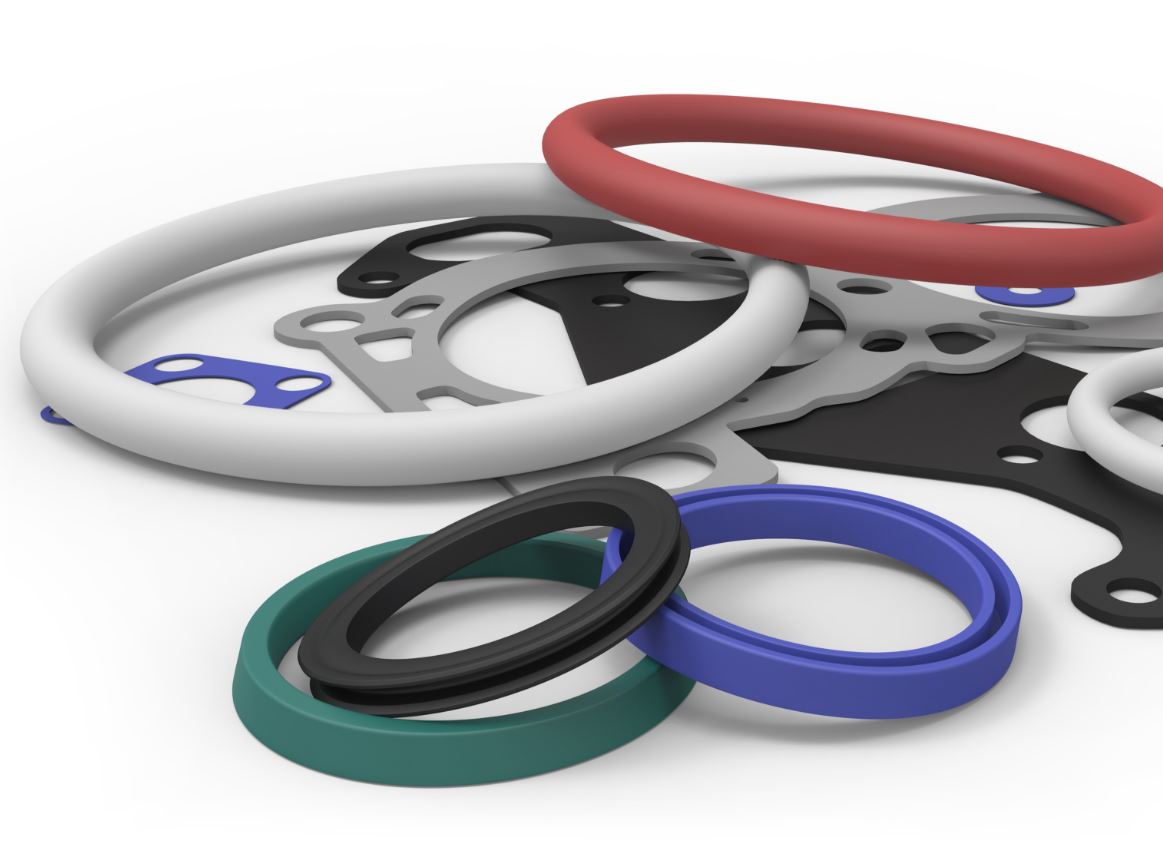
Common Usage Examples
Selecting between an O-ring and a U-seal often comes down to the specific application’s demands for pressure, motion, and cost-effectiveness. You’ll find O-rings dominating static environments and low-pressure dynamics, where their simplicity and low unit cost, often 2.00, make them the default choice for high-volume manufacturing. In contrast, U-seals are the workhorses of high-performance hydraulic and pneumatic systems, where their ability to handle dynamic pressure spikes exceeding 5,000 psi and their low friction are critical, justifying their higher price point of 25.00 each. For example, a compact hydraulic log splitter cylinder operating at 2,500 psi and 10 cycles per minute will almost certainly use a U-seal on its piston for reliable, long-term performance, while its fluid ports will use inexpensive O-rings for static sealing.
You’ll find them sealing fuel injector connections, where they handle constant exposure to biofuels and pressures up to ~500 psi in a static state. They are also the standard for sealing engine oil filters, with a typical NBR O-ring rated for temperatures between -40°C to +120°C and the occasional 25 psi surge during a cold start. Their low cost allows for replacement with every filter change, a 10,000 to 20,000-mile service interval. Conversely, inside the same vehicle’s brake caliper, which involves dynamic reciprocating motion and extreme pressure pulses, a U-seal (or a similar pressure-energized seal) is used. It must reliably contain brake fluid and retract the piston slightly to prevent pad drag, operating flawlessly for over 100,000 miles and 200,000+ actuations under pressures that can momentarily exceed 2,000 psi during panic stops.
A standard dishwasher’s water inlet valve uses a small, ~15 mm ID O-ring to statically seal against water pressure that rarely exceeds 80 psi, lasting for the appliance’s 7-10 year average lifespan. Similarly, a refrigerator’s compressor uses specialized HNBR O-rings to statically seal refrigerant lines, handling temperatures from -30°C to +150°C and pressures up to 450 psi. U-seals find their home in industrial and mobile equipment. A 5-ton excavator’s main hydraulic cylinder uses large polyurethane U-seals, often over 100 mm in diameter, on its piston to control the arm. These seals must withstand constant abrasive contamination, pressure cycles from 50 to 3,500 psi multiple times per minute, and thousands of hours of operation before a rebuild is needed.
Pressure Handling Comparison
An O-ring’s sealing capability is almost entirely dependent on its initial compression, making it effective for static applications up to ~3,500 psi in ideal conditions. However, in dynamic scenarios, its performance degrades rapidly above ~500 psi due to friction and nibble. In stark contrast, a U-seal’s pressure-energized design means its sealing force increases proportionally with system pressure, allowing it to perform reliably from a vacuum up to over 5,000 psi in continuous operation, with some specialized designs handling peak surges beyond 6,000 psi.
The high, constant friction from its 15-30% pre-compression generates heat, which can soften the material. When system pressure, say 2,500 psi, is applied, it forces the softened elastomer into the microscopic clearance gap between metal components. If this radial gap exceeds 0.1 mm for a standard Buna-N O-ring at this pressure, the seal will begin to shear and fail, often within 1,000 cycles. This is why high-pressure O-ring applications require extremely hard compounds, like 90 Shore A Durometer FKM, and reinforced anti-extrusion rings made of Teflon or metal, which can add 50+ to the assembly cost. Even with these additions, an O-ring gland’s tolerances must be held within a tight ±0.05 mm range to control the gap, increasing machining costs by 15-20%.
A U-seal tackles pressure from the opposite direction. Its initial low-interference fit generates minimal heat. When pressure enters its U-cavity, it uses that energy to its advantage.
- Pressure Activation: At 0 psi, the primary lip may only exert 0.2 N/mm² of contact stress. At 3,000 psi system pressure, this contact stress can increase to over 5 N/mm², creating a superior seal precisely when it’s needed most.
- Extrusion Resistance: The U-seal’s lip geometry and its ability to decompress at lower pressures make it inherently resistant to extrusion. It can reliably function with gland clearance gaps up to 0.25 mm at 5,000 psi, a tolerance that would destroy an O-ring. This reduces machining precision requirements, lowering part cost by ~10%.
- Unidirectional vs. Bidirectional: Standard U-seals are designed for unidirectional pressure (from the base of the ‘U’). For applications like hydraulic cylinders where pressure alternates sides (e.g., extending and retracting under load), a double-acting seal with two opposing U-profiles is used, effectively handling 5,000 psi from both directions.
For ultra-high-pressure static sealing—such as in oil and gas wellhead equipment handling 15,000 psi—specialized, massive O-rings with custom glands are still the solution. But for 99% of dynamic hydraulic applications operating between 500 and 5,000 psi, the U-seal’s superior pressure handling, lower friction, and forgiveness to system variances make it the unequivocally more robust and cost-effective choice over its lifecycle, despite its higher initial 1.50.
Installation Methods Compared
Getting it wrong can lead to immediate failure, even with a perfectly designed seal. A damaged O-ring during installation is a primary cause of leaks, accounting for an estimated 30% of premature seal failures in static applications. The installation cost for a simple O-ring might be just $0.50 in labor, but if it fails inside a critical valve, the downstream cost of downtime can exceed $10,000. U-seals are more complex to install correctly, often requiring specific tools and lubricants, which can increase the initial installation time by 50-100% compared to an O-ring. However, this careful upfront investment pays off in a drastically reduced risk of installation damage and a longer, more reliable service life, often exceeding 1 million cycles.
An O-ring installation is deceptively simple but demands extreme care. The primary risk is over-stretching or cutting the seal on a sharp edge like a thread or groove. For a standard 2 mm cross-section O-ring, the maximum recommended stretch during installation over a shaft is 5-8% of its inner diameter. Exceeding this can permanently reduce its cross-sectional diameter by 0.1 mm or more, critically undermining its sealing compression. Every gland should have chamfered edges with a lead-in angle of 15-20 degrees and a minimum radius of 0.2 mm to guide the O-ring without slicing it. Engineers must also meticulously calculate the gland depth and width; for a 2 mm CS O-ring, the gland depth is typically 1.4-1.6 mm (a 20-30% compression) and the width is 2.8-3.2 mm, ensuring adequate squeeze without overfill.
U-seal installation is a more deliberate process focused on protecting its delicate sealing lips. The following steps are critical:
- Lubrication: The seal and gland must be liberally lubricated with the system fluid or compatible grease. Using 5-10 grams of lubricant reduces friction during installation by over 70%, preventing the lips from folding over or tearing.
- Tooling: Metal tools are forbidden. Installers must use dedicated, polished nylon or plastic insertion tools costing 100 each. These tools have a specific 3-5 mm radius to guide the lip over the edge without catching.
- Lip Orientation: This is the most common error. The primary sealing lip, often slightly longer, must face the pressure side. Installing it backwards leads to instant, catastrophic leakage at pressures as low as 50 psi.
| Installation Factor | O-ring | U-seal |
|---|---|---|
| Primary Risk | Cutting, Over-stretching | Lip Folding, Incorrect Orientation |
| Tooling Cost | Minimal (often fingers) | 100 for dedicated tools |
| Critical Tolerance | Gland Depth (±0.05 mm) | Lip Clearance (±0.1 mm) |
| Installation Time | ~30 seconds | ~60-90 seconds |
| Lubricant Requirement | Helpful but not always critical | Mandatory (5-10g per seal) |
| Skill Level Required | Low to Moderate | Moderate to High |
An O-ring nicked by a 0.1 mm burr will likely fail within the first 10 pressure cycles. A U-seal with a folded lip might survive low-pressure operation but will leak 100% of the time once pressure exceeds 500 psi, as the damaged lip cannot react to energize. The total cost of ownership must include this installation complexity; while a U-seal itself costs 500+ service calls over the life of a machine, making it the more economical choice for complex, inaccessible systems.
Choosing the Right Seal
Selecting between an O-ring and a U-seal isn’t about which is better, but which is the most cost-effective and reliable solution for your specific operating conditions. This decision impacts not just the initial part cost—which can range from 25.00 for a complex U-seal—but also the long-term operational expenses.
The first and most critical filter is the pressure dynamic. If the application involves dynamic motion (reciprocating rod or piston) and system pressure regularly exceeds 500 psi, a U-seal is almost always the correct choice. Its pressure-energized design ensures sealing force scales with system demand, and it operates reliably up to 5,000 psi with standard materials. For static applications, O-rings are predominant and can perform up to ~3,500 psi in a properly designed gland with tight clearance gaps below 0.1 mm. The motion type is equally decisive. O-rings in dynamic service suffer from high friction and twisting, especially at speeds above 0.2 m/s, leading to premature failure often before 20,000 cycles. U-seals, with their low-friction lips, are designed for this, easily achieving 1 million cycles at speeds of 0.5 m/s.
| Selection Factor | Choose an O-ring when… | Choose a U-seal when… |
|---|---|---|
| Pressure (Dynamic) | Pressure is < 500 psi | Pressure is > 500 psi (up to 5,000+ psi) |
| Motion Type | Static sealing or very low-speed oscillation | Reciprocating dynamic motion is present |
| Unit Budget | Budget is < $5.00 per seal | Budget allows 30.00 per seal |
| Life Requirement | Expected life is < 100,000 cycles | Expected life is > 500,000 cycles |
| Operating Temp | Temperature is within -40°C to +120°C (NBR) | Temperature is within -30°C to +110°C (Polyurethane) |
| Installation Space | Gland space is limited; simple groove design | Adequate space for the U-profile and lubricant |
Standard Nitrile (NBR) O-rings handle temperatures from -40°C to +120°C and are fine for petroleum-based oils. For high-temperature (>200°C) static seals, a Fluorocarbon (FKM) O-ring is the default. U-seals are commonly made from polyurethane, which offers superb abrasion resistance and a temperature range of -30°C to +110°C, but swells in water. If your system uses a water-glycol fluid, a different material like NBR for the U-seal would be specified, adding 15% to the cost.