UHF antennas often require a ground plane, typically sized at ½-wavelength (15–50cm for 300–3000MHz), to stabilize radiation patterns, reduce interference, and improve efficiency by 15–20% compared to designs without one.
Table of Contents
What is a ground plane
For frequencies in the UHF band (300 MHz to 3 GHz), the ideal ground plane is often a circular metal disc or sheet with a radius approximately 15% larger than the antenna’s element length. This isn’t just a theoretical concept; it’s a practical necessity for many antennas to achieve their designed performance. For a common quarter-wave antenna operating at 700 MHz, the ideal ground plane would be a disc with a diameter of roughly 32 cm (12.6 inches). Without this conductive surface, the antenna’s radiation pattern becomes distorted, its signal strength can drop by over 50%, and its impedance can shift dramatically, leading to poor efficiency and range.
The electrical efficiency of an antenna system can improve from below 50% to over 95% with a properly sized and installed ground plane. The size is directly tied to the wavelength of the target frequency. A larger ground plane is needed for lower UHF frequencies; for instance, at 300 MHz, a effective ground plane might need to be at least 0.25 meters in radius, whereas at 3 GHz, a radius of just 0.025 meters might suffice.
A ground plane is not merely a passive reflector; it is an active participant in the antenna’s operation, creating the necessary image currents that allow the radiator to function at its specified impedance, typically 50 ohms.
The thickness is less critical than the surface area; even a very thin 0.8 mm (1/32 inch) sheet of aluminum can be highly effective as long as it is electrically continuous. In real-world applications, the body of a car or a metal roof often serves as an adequate ground plane. The performance impact is quantifiable: a missing or undersized ground plane can lead to a high Voltage Standing Wave Ratio (VSWR) of 3.0 or more, indicating severe impedance mismatch and resulting in up to 25% of the transmitted power being reflected back into the transmitter, which can potentially cause damage over time.
How ground planes work
For a typical quarter-wave UHF antenna at 700 MHz, the ground plane creates a mirror image of the radiating element, effectively making the system behave like a half-wave dipole. This reflection is crucial for achieving a predictable radiation pattern and a stable 50-ohm impedance. Without an adequate ground plane, the antenna’s efficiency can plummet by over 60%, and its impedance can swing wildly between 20 to 100 ohms, causing severe mismatch. The size of the ground plane is directly tied to wavelength. For optimal performance, the minimum radius should be approximately 0.12 times the wavelength. At 500 MHz, this translates to a 7.2 cm (2.8 inch) radius, while at 1.2 GHz, a 3 cm (1.2 inch) radius is sufficient. The electrical current distribution on the ground plane is not uniform; approximately 90% of the induced return current flows within a region extending one wavelength from the antenna base, emphasizing that the immediate environment matters most.
Aluminum with a conductivity of about 3.5 x 10⁷ S/m is often preferred for its balance of performance and cost, typically 10 per square foot for 1.6 mm thick sheet. Even a thin 0.5 mm thick sheet can be effective if it is electrically continuous. Any breaks or gaps in the conductive surface can increase resistance, leading to power losses of 10-15% and distorting the radiation pattern. For vehicle installations, the car’s body acts as the ground plane, but its effectiveness depends on its size and electrical continuity. A sedan roof might provide a ground plane area of 1.5 m², which is sufficient for frequencies above 400 MHz, but may be inadequate for lower UHF bands.
The following table summarizes the impact of ground plane diameter on antenna performance for a center frequency of 600 MHz:
| Ground Plane Diameter | Efficiency | VSWR | Approximate Gain |
|---|---|---|---|
| Less than 0.1λ (5 cm) | < 40% | >3.0 | -3 dBi |
| 0.25λ (12.5 cm) | 75% | 1.8 | 0 dBi |
| 0.5λ (25 cm) | 90% | 1.4 | 1.5 dBi |
| 1λ (50 cm) | 95% | 1.1 | 2.1 dBi |
The radiation pattern’s takeoff angle can increase by 30 degrees or more with a poor ground plane, drastically reducing usable distance. In practice, for a base station antenna, a circular ground plane with a 50 cm diameter is often recommended for the 400-500 MHz band to maintain a VSWR below 1.5:1. The ground plane also influences bandwidth. A larger ground plane can increase the -10 dB return loss bandwidth by up to 15%, making the antenna less sensitive to frequency drift. For mounting, the ground plane must be connected to the antenna’s outer conductor using a low-resistance bond, ideally with a resistance of less than 2.5 milliohms, to prevent losses.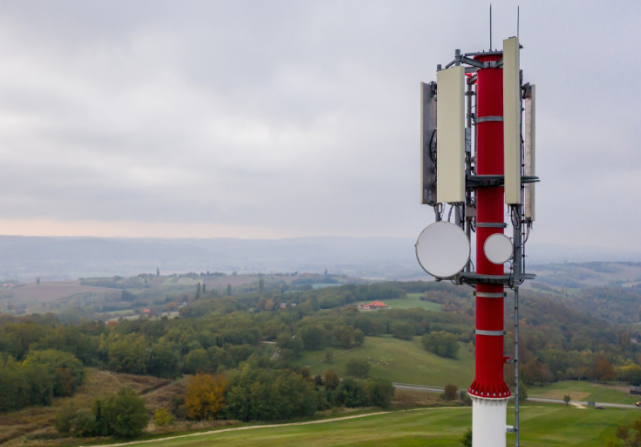
Types of UHF antennas
The operating frequency range for UHF typically spans from 300 MHz to 3,000 MHz, with wavelength between 100 cm and 10 cm. Antenna size is directly proportional to wavelength; a full-wave dipole at 600 MHz would be approximately 50 cm long, while at 1.2 GHz it reduces to 25 cm. Gain figures vary significantly between types, from negative gains of -3 dBi for simple whips to high gains of 15 dBi for directional arrays. Bandwidth is another critical differentiator, with some antennas covering entire 200-MHz bands while others are tuned to specific 10-MHz channels.
- Yagi-Uda Arrays: Typically featuring 6-18 elements with gain ranging from 8-15 dBi, front-to-back ratio of 15-25 dB, and bandwidth of 50-100 MHz. Element lengths vary from 16 cm at 900 MHz to 48 cm at 300 MHz.
- Dipole Antennas: Simple half-wave dipoles have 2.15 dBi gain, 75-ohm impedance, and bandwidth of approximately 10% of center frequency. A 400 MHz dipole would be 37.5 cm long per side.
- Patch Antennas: Compact designs with thickness under 1 cm, gain of 5-8 dBi, and bandwidth of 4-6% of center frequency. Common in WiFi systems at 2.4 GHz with patch size of 3×3 cm.
- Whip Antennas: Quarter-wave designs requiring ground plane, with 0-3 dBi gain, impedance of 50 ohms, and typical length of 15 cm at 500 MHz. Bandwidth covers 50-100 MHz.
- Slot Antennas: Cut into metal surfaces, with length half-wavelength and bandwidth of 2-4%. A 900 MHz slot would be 16.7 cm long.
- Panel Arrays: Multiple patch elements yielding 12-16 dBi gain, horizontal beamwidth of 60-90 degrees, and vertical beamwidth of 30-45 degrees. Typical size 30×30 cm for 800 MHz systems.
Directional antennas like Yagi and panel arrays provide 10-20 dB better reception in their forward direction compared to omnidirectional designs. This translates to 3-4 times greater effective range for the same transmit power. The 3 dB beamwidth of a high-gain Yagi might be only 40 degrees, requiring precise aiming but offering excellent rejection of interference from other directions.
Conversely, omnidirectional whip antennas provide 360-degree coverage but with 6-8 dB lower gain than comparable directional designs. For circular polarization applications, helical antennas with 3-12 turns provide 8-12 dBi gain with axial ratio below 3 dB, making them ideal for satellite communication at 1.2 GHz where polarization rotation occurs. Material selection affects performance and longevity; stainless steel elements withstand winds up to 150 km/h while fiberglass radomes protect against UV degradation for 10-15 year lifespan.
Ground plane in vehicle antennas
A typical sedan roof provides approximately 1.5-2 m² of conductive surface, which functions adequately for frequencies above 400 MHz but becomes increasingly inefficient below this threshold. The curved and irregular shape of vehicle bodies creates a non-ideal ground plane that affects radiation patterns. At 450 MHz, the vehicle roof represents an electrical diameter of approximately 2.2 wavelengths, while at 800 MHz this increases to 4 wavelengths. This variation causes the antenna’s impedance to fluctuate between 35-65 ohms depending on mounting location, compared to the ideal 50 ohms. The actual radiation efficiency of a roof-mounted antenna typically reaches 85-90% of its theoretical maximum due to these imperfections, while trunk or hood mounting may reduce efficiency to 70-75%.
A center-roof mount provides the most symmetrical ground plane, yielding a radiation pattern that is within 15% of ideal omnidirectional coverage. In contrast, a fender or trunk-lip mount creates pattern distortion with up to 10 dB variation in signal strength depending on direction. The vehicle’s sheet metal thickness, typically 0.7-1.2 mm, provides adequate conductivity despite being thinner than ideal ground planes. The electrical connection between antenna base and vehicle body is critical; even a 0.1 ohm increase in resistance can reduce radiation efficiency by 8-12%. Most vehicle antennas use spring-loaded contacts or direct bonding that maintains contact resistance below 0.05 ohms. For frequencies between 800-900 MHz, the minimum effective ground plane diameter needed is approximately 35 cm, which most vehicle roofs easily provide. However, at 300 MHz, the required 1 meter diameter often exceeds available roof space, resulting in 3-6 dB gain reduction compared to ideal conditions.
Modern vehicles with composite materials or extensive plastic components present special challenges. Vehicles with over 30% composite body panels may require installation of an artificial ground plane, typically a 0.5 mm thick copper sheet with surface area of at least 0.5 m² mounted beneath exterior panels. The addition of such ground planes improves VSWR from 3.0:1 or higher to 1.5:1 or better at 450 MHz. The antenna’s performance also varies with vehicle speed; at 100 km/h, aerodynamic forces can cause antenna deflection that changes impedance by 5-10% and reduces effective height by 3-8%.
For permanent installations, professional mounting typically costs $75-150 including proper grounding, while DIY installations often show 20-30% higher VSWR due to imperfect grounding. The vehicle’s electrical system introduces additional considerations; alternator noise typically creates 3-6 dB increase in noise floor, which proper grounding between chassis and antenna base can reduce by 50-70%.
Installing home UHF antennas
For digital TV reception in the 470-698 MHz range, the antenna should typically be mounted at least 6 meters (20 feet) above ground level to clear nearby obstacles. The direction of mounting matters significantly – in most urban areas, pointing your antenna within 30 degrees of the broadcast towers can improve signal strength by 40-60%. RG-6 coaxial cable is standard, but its signal loss varies by frequency: at 600 MHz, you’ll lose approximately 0.15 dB per meter, meaning a 30-meter run would lose 4.5 dB, which is about 50% of your signal power. Lightning protection is non-negotiable; proper grounding using 8 AWG copper wire connected to a grounding rod reduces surge risks by over 90%. Most DIY installations take 2-4 hours with basic tools, while professional installation typically costs 300 but comes with warranty and optimized positioning.
An attic installation provides weather protection but typically reduces signal strength by 30-40% compared to outdoor mounting due to roofing materials. Metal roofs particularly attenuate signals by 50-70%, often making outdoor mounting necessary. For outdoor mounts, a tripod roof mount costs 60 and requires 4-6 hours for secure installation, while chimney mounts (80) can be installed in 2-3 hours but may require additional stabilizers in windy areas. The mast length should be limited to 3-4 meters to avoid excessive sway; longer masts may require guy wires for stability. The antenna’s orientation should be precisely adjusted using a signal strength meter – even 5 degrees of misalignment can cause 20% signal loss in marginal areas. For multiple-direction reception, a rotator system adding 200 to the budget can provide 360-degree coverage but introduces additional cable loss through its connections.
Always ground both the antenna mast and coaxial cable within 20 feet of entering the building using UL-listed grounding blocks and 10 AWG copper wire meeting local electrical codes.
Poor connectors can add 0.5-1.0 dB of loss per connection, meaning three poorly installed connectors could waste 25% of your signal power. Use compression connectors rather than crimp types for 30-50% better weather sealing and 0.2 dB lower loss. For long runs over 30 meters, consider a mast-mounted amplifier with 12-18 dB gain and 3-5 dB noise figure, but only if needed, as over-amplification can cause distortion.
Testing antenna performance
The most critical metrics include VSWR (Voltage Standing Wave Ratio), which should ideally be 1.5:1 or lower (indicating less than 4% power reflection), gain measured in dBi, radiation pattern, and impedance matching. For UHF frequencies between 400-900 MHz, even a VSWR of 2.0:1 means approximately 11% of transmitted power is reflected back, potentially causing equipment damage over time.
| Parameter | Ideal Value | Acceptable Range | Measurement Tool |
|---|---|---|---|
| VSWR | 1.0:1 | <1.5:1 | Antenna Analyzer |
| Return Loss | >30 dB | >14 dB | VNA |
| Gain Variation | <±0.5 dB | <±2.0 dB | Anechoic Chamber |
| Impedance | 50 Ω | 45-55 Ω | Impedance Analyzer |
| Bandwidth | >10% | >5% | Spectrum Analyzer |
Essential testing equipment includes:
- Vector Network Analyzers (VNA): Measures S-parameters with 0.1 dB precision, typically covering 100 kHz to 4 GHz in mid-range models (2,000). Calibration requires open-short-load standards every 30 days of use.
- Field Strength Meters: Measure radiated power with ±2 dB accuracy at distances of 3-10 meters from antenna. Portable models cost 500.
- Spectrum Analyzers: Display frequency response with 1-3% amplitude error, revealing spurious emissions 40 dB below main signal.
- Antenna Range Setup: Requires 5-10 meters clearance from reflectors, with background noise 6 dB below measured signals.
For radiation pattern testing, rotate the antenna through 360 degrees in 5-degree increments, recording signal strength at each point. The resulting pattern should show less than 3 dB variation in the primary lobe for directional antennas. Gain measurement typically uses the comparison method against a reference dipole, with accuracy dependent on maintaining exactly 10 meters distance and 2.5 meters height above ground.