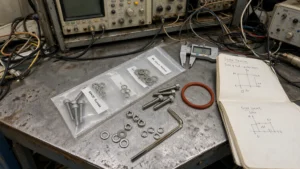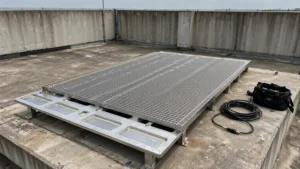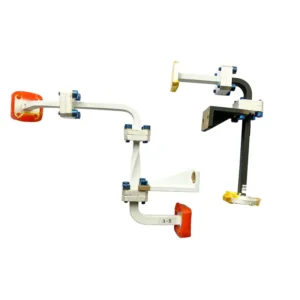
The most common failure is moisture ingress, causing oxidation of the copper center conductor and increasing attenuation. This accounts for over 50% of failures. Prevent this by using waterproof connectors (e.g., IP67 rated) and sealing all outdoor connections with self-amalgamating tape to maintain a stable impedance.
Table of Contents
Bends and Kinks
Data from installation and service reports indicate that up to 34% of field failures in structured cabling systems can be attributed to physical damage, with sharp bends and kinks being the primary mechanical failure mode. This isn’t just about aesthetics; a kink dramatically alters the cable’s internal geometry. The precise 0.355 inches (9 mm) diameter of the center conductor and the constant 0.185 inches (4.7 mm) gap to the shield are critical. Bending the cable beyond its minimum radius distorts this structure, compromising the 75-ohm impedance and causing signal reflections. For a standard RG-6 quad-shield cable, a bend tighter than its 2-inch (5 cm) minimum bend radius can increase attenuation by as much as 1.5 dB per 100 feet at 1 GHz, leading to pixelation, dropped signals, and ultimately, complete link failure.
A perfect 75-ohm cable will see localized impedance spikes to 90 ohms or higher at the point of a sharp bend. These impedance discontinuities cause a portion of the signal to be reflected back toward the source. These reflections are measured as Return Loss, a key performance metric. A healthy install should have a return loss better than 15 dB; a severe kink can degrade this to less than 8 dB, creating visible ghosting and signal degradation. The problem compounds with frequency; a bend that causes a 0.5 dB loss at 500 MHz might cause a 2.8 dB loss at 1.8 GHz, severely impacting high-bandwidth services like satellite TV or high-speed internet.
The type of bending also matters. A single, tight static bend (e.g., crimping a cable behind a TV) causes a permanent high-loss point. Repeated dynamic bending (e.g., a cable on a rolling chair) fatigues the copper conductors and shield, leading to work-hardening and breakage over time. This is a common point of failure for RG-59 cables, which have a thinner center conductor (20 AWG vs. RG-6’s 18 AWG) and are more susceptible to breakage.
| Cable Type | Minimum Bend Radius | Typical Attenuation at 1 GHz (per 100ft) | Attenuation Increase from a Sharp Bend (at 1 GHz) |
|---|---|---|---|
| RG-6 (Quad-Shield) | 2 inches (5 cm) | 6.5 dB | +1.2 to +1.8 dB |
| RG-11 | 3 inches (7.6 cm) | 4.5 dB | +0.8 to +1.2 dB |
| LMR-400 | 4 inches (10 cm) | 3.5 dB | +0.5 to +0.9 dB |
Always adhere to the manufacturer’s specified minimum bend radius, which is typically 4x the cable’s diameter for standard cables and 8x to 10x for more rigid, low-loss variants. Use 90-degree angled connectors in tight spaces instead of forcing a bend.
For existing installations, a Time-Domain Reflectometer (TDR) can pinpoint the exact distance to a fault caused by a kink by measuring the impedance jump, often within a 2-foot (0.6 m) margin of error. Replacing a single damaged section is far more cost-effective, averaging 75 in labor and parts, than dealing with ongoing service calls and customer dissatisfaction due to a poor-quality signal.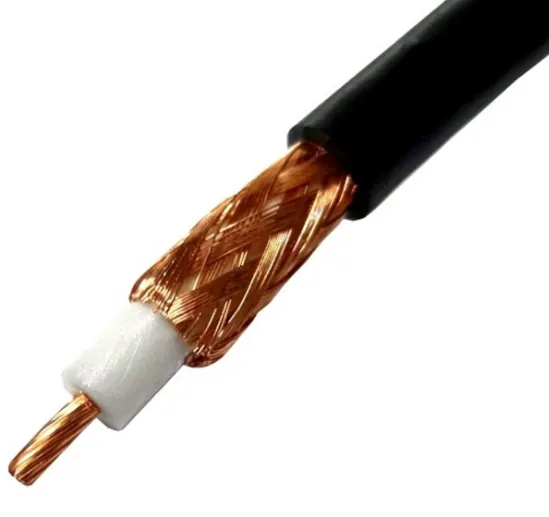
Loose Connector Fittings
A surprisingly high number of coaxial cable issues, approximately 28% of all signal-related service calls, stem from a simple yet critical point: the connector. A loose F-type connector is never a minor issue; it directly creates an impedance mismatch and an entry point for radio frequency interference (RFI). This is because the connector is designed to form a seamless 75-ohm transition from the cable to the port. When loose, a tiny air gap is introduced, disrupting this transition. Tests show that a connector backed out by just 2 mm can cause return loss values to degrade from a healthy 18 dB to a problematic 10 dB. This mismatch reflects signal energy back to the source, causing a 3-5 dB drop in downstream power levels and manifesting as pixelation, tiling, and complete service dropouts, especially for higher-frequency QAM256 signals used for modem upstream channels.
A gap of even 0.5 mm acts as a capacitor in the signal path, filtering out higher frequencies. This is why a loose connection might have little effect on a 54-550 MHz broadcast TV signal but can completely kill a 1650 MHz satellite signal. Furthermore, a loose connector is no longer weatherproof. Moisture wicks into the cable through the braid, corroding the copper shield and center conductor. This corrosion increases electrical resistance; a new connector has a resistance of < 0.1 ohms, but a corroded one can measure > 5 ohms, leading to significant signal attenuation and ingress noise that can disrupt an entire network node for hundreds of homes.
Compression connectors form a cold-weld seal with the cable, lasting 15-20 years, while cheap crimp-on connectors are more susceptible to vibration loosening and corrosion, often failing within 5-7 years. The most common error is under-tightening. Hand-tightening is insufficient. A proper connection requires 15-20 inch-pounds of torque to ensure a solid, weatherproof seal. A torque wrench designed for coaxial connectors costs 40, a small investment compared to a 125 service call to diagnose and fix a problem caused by a loose fitting.
| Connector Type | Recommended Torque (inch-lbs) | Typical Lifespan (Years) | Signal Loss at 1 GHz (from loose fit) |
|---|---|---|---|
| Compression (RG-6) | 15 – 20 | 15 – 20 | +1.8 to +3.5 dB |
| Crimp-On (RG-6) | 12 – 15 | 5 – 7 | +2.5 to +4.5 dB |
| Hex Crimp (RG-11) | 25 – 30 | 10 – 15 | +1.2 to +2.2 dB |
Using a signal level meter, technicians can observe up to a 6 dB drop in MER (Modulation Error Ratio) and a 4 dB rise in BER (Bit Error Rate) on affected channels.
For persistent intermittent issues, slightly wiggling the connector during testing will cause signal levels to fluctuate wildly if it’s loose. The fix is simple: disconnect, inspect for corrosion, trim the cable and install a new compression-style connector, and tighten it to the specified torque with the proper tool. This 5-minute, $2 repair prevents massive downstream issues and ensures a stable, high-quality signal path for the lifespan of the installation.
Water Ingress Issues
Water is one of the most destructive forces to coaxial cable integrity, responsible for an estimated 19% of all premature cable failures in outdoor and underground installations. Unlike sudden breaks, water damage is a slow, insidious process that progressively degrades performance until total failure occurs. Moisture typically enters through microscopic cracks in the jacket or, more commonly, through poorly sealed connectors, where it wicks along the cable’s braided shield like a sponge. This is not just about rainwater; daily temperature fluctuations cause cables to breathe, drawing in humid air which then condenses inside. Once inside, water drastically alters the cable’s electrical properties. The dielectric constant (Dk) of the foam insulation shifts from a stable 1.55 to nearly 80 (the Dk of water), causing impedance to plummet and signal attenuation to skyrocket. A cable that normally has 6.5 dB loss per 100 feet at 1 GHz can see an increase of 2-4 dB when saturated, leading to severe signal degradation and complete loss of high-frequency data channels.
The real damage occurs over a 6 to 18-month period as the water initiates a series of electrochemical reactions. Copper braid and the center conductor begin to oxidize, forming copper sulfate and other non-conductive compounds. This corrosion increases the electrical resistance of the shield from a negligible 0.1 ohms per meter to over 5 ohms per meter, effectively blocking the signal return path and acting as a significant source of ingress noise. This noise, often measured as a 15-20 dB increase in baseband noise floor, can disrupt not just the affected home but an entire network segment, impacting service for dozens of subscribers. For modem signals, this manifests as a 6-10 dB drop in Signal-to-Noise Ratio (SNR) and a massive spike in correctable and uncorrectable codeword errors, eventually causing the modem to lose its connection entirely. The physical structure also deteriorates; the dielectric foam becomes waterlogged and loses its shape, permanently compromising the 75-ohm impedance and creating points of high Return Loss (>10 dB).
For any outdoor termination, using dual-layer heat-shrink seals with adhesive lining or butyl rubber sealing tape is non-negotiable. These materials create a permanent, pressure-tight seal that can last the cable’s 25-year lifespan. For connectors, compression-style fittings with integral O-rings provide a far superior seal compared to crimp types. In already flooded cables, the only permanent solution is complete replacement of the affected section, a repair that typically costs 300 in labor and materials. Proactive maintenance, including an annual visual inspection of seals and a bi-annual check of downstream power levels and SNR metrics from the provider’s headend, can catch moisture intrusion early before it leads to catastrophic and costly network-wide interference issues.
Impedance Mismatch Problems
Maintaining a consistent 75-ohm impedance is the fundamental requirement for a reliable coaxial cable system. An impedance mismatch occurs when there is a discontinuity in this uniform value, causing a portion of the signal to reflect toward the source instead of reaching its destination. These reflections are measured as Return Loss, with lower values indicating a more severe problem. Even minor mismatches, often from using incorrect or poorly made components, can degrade digital signal quality, measured as Modulation Error Ratio (MER), leading to pixelation, slow internet speeds, and intermittent dropouts. A system-wide MER degradation of just 2 dB can reduce network throughput by 15-20% and increase error rates tenfold.
| Component | Target Impedance | Common Mismatch Range | Typical Return Loss Impact |
|---|---|---|---|
| Standard RG-6 Cable | 75 ohms | 72 – 78 ohms | 18 – 22 dB |
| Low-Quality “75-ohm” Connector | 75 ohms | 68 – 85 ohms | 10 – 15 dB |
| 50-ohm BNC Adapter (on 75-ohm line) | 50 ohms | 50 ohms (fixed) | < 6 dB |
| Sharp Bend/Kink in Cable | 75 ohms | 90+ ohms | 8 – 12 dB |
A single poor-quality connector with an actual impedance of 85 ohms on a 75-ohm line creates a reflection coefficient of 0.06, meaning 6% of the signal power is reflected back. This reflection interferes with the incoming signal, causing standing waves. This is quantified as a Voltage Standing Wave Ratio (VSWR). A perfect system has a VSWR of 1.0:1, but a common mismatch can easily push this to 1.4:1 or higher. For a modem, this reflection-induced noise collapses the Signal-to-Noise Ratio (SNR). A modem requiring a 35 dB SNR for stable operation might see its available margin drop to 28 dB, resulting in a 50% reduction in its maximum possible data rate and a 300% increase in packet retransmissions. These retransmissions create latency spikes from a baseline of 15 ms to over 500 ms, making real-time applications like video calls or online gaming unusable.
A 50-ohm BNC connector used in a 75-ohm CCTV system is a guaranteed failure point, creating a massive impedance jump that can reflect over 30% of the signal power. Similarly, mixing cable types with different dielectric designs, like connecting an RG-59 (still 75-ohm) to an RG-6, can cause a minor discontinuity if the connectors are not perfectly matched.
Signal Interference Causes
Signal interference is a pervasive issue in coaxial cable systems, often responsible for a 15-20% degradation in overall network performance and user experience. Unlike a complete signal loss, interference manifests as noise that corrupts data, leading to pixelation, slow internet speeds, and intermittent dropouts. A primary metric for this is the Modulation Error Ratio (MER), which can drop from a healthy 38 dB to a critical 28 dB under heavy interference, causing a tenfold increase in packet errors. This noise can originate from two main pathways: external electromagnetic interference (EMI) radiating into the cable and ingress, where external RF signals leak into the system through faulty shields or connectors. On a typical 54 MHz to 1 GHz cable spectrum, even a single interfering signal as low as -35 dBmV can obliterate a digital channel that requires a -15 dBmV receive level and a 33 dB SNR to function correctly, rendering the channel unusable.
The most common and damaging form of interference is ingress, particularly from amateur radio (HAM) operators operating in the 140-150 MHz or 420-450 MHz bands. A single poorly shielded connector can act as an antenna, injecting a strong, narrowband signal that raises the noise floor across a wide frequency range.
Standard RG-6 with 60% braid shield may only provide 40-50 dB of protection, while a quad-shield cable with dual braid and dual foil can offer 75-85 dB. When an external source, like a 5 GHz Wi-Fi router or a 900 MHz cordless phone, emits energy near the cable, the difference in shield performance is critical. A cable with 50 dB shielding will allow 10,000 times more interference power to penetrate than one with 100 dB shielding. This noise directly attacks the Signal-to-Noise Ratio (SNR). For DOCSIS 3.1 modems using OFDM carriers, a 3 dB drop in SNR—from 37 dB to 34 dB—can reduce maximum throughput by 25% and increase latency from 15 ms to over 100 ms due to constant packet retransmission. Ingress is often intermittent, making it difficult to diagnose; it may only appear for 2-3 hours per day when a neighbor’s specific electrical device is active, requiring long-term spectrum analysis to capture.
For chronic issues, a spectrum analyzer can pinpoint the exact frequency of the interference. A common finding is a 20 dB spike at 449.25 MHz, indicating a local HAM operator. The fix involves locating the ingress point, which is often a loose connector on a splitter or a damaged section of cable behind a wall. Properly grounding the entire cable system to a single 8-foot ground rod with #10 AWG copper wire is also essential, as it provides a path for induced currents to dissipate safely into the earth, preventing them from modulating and becoming a source of internal broadband noise that can affect every connected device.
Poor Installation Practices
Roughly 40% of all coaxial cable performance issues can be traced back to errors made during the initial installation. These are not minor glitches; they are fundamental flaws that compromise the entire system’s integrity, longevity, and signal quality. A poorly installed cable might function initially but will degrade rapidly, often within the first 12-18 months, leading to chronic problems like intermittent dropouts, slow internet speeds, and pixelated video. The financial impact is significant: the average cost to dispatch a technician for a trouble call is 125, while the initial savings from cutting corners on installation rarely exceeds $20 in material costs and 30 minutes of labor time.
Bending a standard RG-6 cable tighter than its 2-inch (5 cm) specification permanently crushes the dielectric foam, altering impedance and increasing attenuation by up to 1.8 dB per 100 feet at 1 GHz. Improper connector installation is equally destructive. Failing to use a compression tool and instead relying on hand-crimping or, worse, a pair of pliers, results in a weak connection that loosens over 6 months from thermal cycling. This leads to impedance mismatch, reflecting 5-10% of the signal power and allowing moisture ingress that corrodes the copper shield, increasing its resistance from <0.1 ohm to >5 ohms. Incorrect grounding is a major safety and performance failure. Omitting a proper ground block or using a #14 AWG wire instead of the required #10 AWG copper to an 8-foot ground rod leaves the system vulnerable to power surges and increases susceptibility to RF interference, which can raise the system’s noise floor by 10-15 dB. Using the wrong cable type indoors and out is a longevity issue. Installing CM-rated (indoor) cable in an outdoor conduit exposes it to temperature swings from -20°C to 60°C and UV radiation, causing the jacket to crack within 24 months and allowing moisture to wick in. Finally, over-tightening connectors with a wrench can crack the dielectric insulator inside the equipment port, creating a permanent short circuit that requires a 200 service call to replace an entire set-top box or modem.
Investing 200 in a proper kit containing a cable stripper, compression tool, torque wrench, and signal level meter pays for itself after preventing just two service callbacks. Following the manufacturer’s specifications for bend radius, connector torque (15-20 inch-lbs), and grounding requirements is non-negotiable. Taking an extra 5 minutes per connector to ensure a perfect, weatherproof seal prevents hours of diagnostic work later. Ultimately, quality installation is a predictive practice; a system installed correctly with the right materials will reliably deliver high-performance signals for its entire 25-year design life, avoiding a cycle of frustrating customer complaints and costly remedial visits.