The TIA-568 standard primarily specifies balanced twisted-pair cables (Category 5e/6/6A/8 for 1G-40G Ethernet) and optical fiber cables (OM1-5 multimode and OS1-2 single-mode for various distances and speeds).
Table of Contents
What TIA 568 Actually Covers
TIA-568 (latest version: TIA-568.2-D, 2021) defines how to design, install, and test copper and fiber optic cabling systems for commercial buildings. It’s not just about “plugging wires together”—it specifies exacttechnical specs for cables, connectors, and installation practices to ensure performance, scalability, and compliance with global regulations.
Globally, 92% of enterprise networks (per 2023 TIA survey) rely on TIA-568-compliant cabling. Why? Because without it, you’d face random dropped signals, slow data transfers, or costly rework. For example, a properly terminated Cat6 cable (per TIA specs) maintains 10Gbps speeds up to 100 meters—but only ifthe twist rate, insulation thickness, and connector alignment meet TIA-568’s tight tolerances (e.g., ±0.5mm for pin alignment). Skip these details, and your “10Gbps” cable might max out at 1Gbps.
1. The Scope: What Cables Does TIA-568 Include?
TIA-568 isn’t limited to one type of cable—it’s a familyof standards covering everything from basic Ethernet to high-speed fiber. Here’s the breakdown of its core components:
| Cable Type | TIA-568 Sub-Standard | Key Use Case | Max Length (Typical) | Bandwidth |
|---|---|---|---|---|
| Unshielded Twisted Pair (UTP) | TIA-568-C.2 (Cat5e/6/6a) | Office Ethernet, Wi-Fi APs | 100m | Up to 10Gbps (Cat6a) |
| Multimode Fiber (MMF) | TIA-568.3-D | Data centers, campus backbones | 300m (10Gbps) | Up to 100Gbps |
| Singlemode Fiber (SMF) | TIA-568.3-D | Long-haul links, metro networks | 10km+ (10Gbps) | Up to 400Gbps |
| Coaxial (RG-6/RG-11) | TIA-568-B.2 | CCTV, legacy TV systems | 185m (RG-6, 1GHz) | Up to 3GHz |
2. Critical Technical Requirements (No Fluff)
TIA-568 doesn’t just list cables—it enforces performance rulesto avoid “close enough” failures. Here are 3 non-negotiables:
- Insertion Loss: Measures signal degradation as it travels through cable. For Cat6a UTP, TIA-568 requires insertion loss ≤ 21.3dB at 100MHz over 100m. Translation: If your cable loses more than this, your 10Gbps stream will stutter.
- Return Loss: Measures reflected signal (bad for clarity). Cat6a demands ≥ 20dB at 100MHz—cheaper cablesoften fail here, causing “ghosting” in video calls.
- Bend Radius: Copper cables can’t be bent tighter than 4x their diameter (e.g., 6mm radius for 1.5mm-diameter Cat6). Bend too sharp, and you’ll kink the conductors, cutting bandwidth by up to 30% (per TIA-568.2-D Annex G).
3. Compliance = Lower Long-Term Costs
Think TIA-568 is just extra paperwork? Think again. A 2022 study by BICSI (Building Industry Consulting Service International) found that buildings using TIA-568-compliant cabling have:
- 40% lower maintenance costs over 10 years (fewer signal issues = fewer technician visits).
- 25% higher property value (commercial real estate appraisers factor in “future-proof” cabling).
- Zero downtime risks for mission-critical systems (hospitals, banks) that require TIA-568 certification.
TIA-568 covers far more than “cable types.” It’s a systemof specs that ensures your network works today andscales tomorrow. Whether you’re installing a small office or a city-wide fiber network, skipping TIA-568 means gambling with performance, cost, and reliability. Stick to the standard, and you’ll avoid the most common (and expensive) cabling mistakes.
Common Cable Types Listed
90% of enterprise networks (2023 TIA survey) use these four, and for good reason. We’re breaking down each type with hard numbers—no fluff, just specs that matter for your next install.
1. Unshielded Twisted Pair (UTP): The Office Staple
UTP is the “default” cable for most businesses. Why? It’s cheap, flexible, and easy to install. But don’t mistake “simple” for “weak”—TIA-568’s UTP specs are tight.
- Core Types: Cat5e, Cat6, Cat6a (most common per TIA-568-C.2).
- Twist Rate: Cat6 has 20-24 twists per inch (vs. 16-20 in Cat5e)—this reduces crosstalk (signal interference).
- Max Speed @ Distance:
- Cat5e: 1Gbps up to 100m (TIA-568-C.2 Table 4-1).
- Cat6: 10Gbps up to 55m (drops to 1Gbps at 100m if not Cat6a).
- Cat6a: 10Gbps guaranteedup to 100m (thicker insulation + stricter twist rules).
- Cost: Cat6a costs ~0.45/ft (2024 Belden pricing).
| Type | Twists/Inch | Max Speed (100m) | Crosstalk Performance | Typical Cost/Ft |
|---|---|---|---|---|
| Cat5e | 16-20 | 1Gbps | -23dB @ 100MHz | $0.45 |
| Cat6 | 20-24 | 10Gbps (55m) | -33dB @ 250MHz | $0.60 |
| Cat6a | 24-28 | 10Gbps (100m) | -44dB @ 500MHz | $0.80 |
2. Fiber Optics: The High-Speed Backbone
Fiber isn’t just for data centers—it’s creeping into offices too. TIA-568 splits fiber into two flavors: multimode (MMF) and singlemode (SMF). Here’s how they stack up:
- Multimode Fiber (MMF): Uses 50/125μm or 62.5/125μm glass cores. Cheaper, but shorter range.
- Max Speed @ Distance: 100Gbps up to 300m (TIA-568.3-D Table 6-2).
- Attenuation (Signal Loss): ≤ 3.5dB/km at 850nm (vs. SMF’s ≤ 0.4dB/km).
- Cost: 5/ft (including connectors).
- Singlemode Fiber (SMF): Uses 9μm glass cores. Longer range, but pricier.
- Max Speed @ Distance: 400Gbps up to 10km (TIA-568.3-D Table 6-3).
- Attenuation: ≤ 0.4dB/km at 1310nm—10x betterthan MMF.
- Cost: 10/ft (connectors alone cost 20 each).
| Metric | Multimode (MMF) | Singlemode (SMF) |
|---|---|---|
| Core Size | 50/125μm or 62.5/125μm | 9μm |
| Max Speed (10km) | 10Gbps | 400Gbps |
| Typical Use Case | Campus backbones (≤300m) | Metro links (>1km) |
| 10-Year Maintenance | $1,200/km | $800/km (fewer repairs) |
3. Coaxial: The Legacy Survivor
Coaxial (think RG-6) isn’t flashy, but it’s still kicking in CCTV, satellite, and legacy TV systems. TIA-568-B.2 keeps it in the family with strict specs:
- Impedance: 75Ω (vs. UTP’s 100Ω)—critical for video signals.
- Max Frequency: RG-6 supports up to 3GHz (vs. RG-59’s 500MHz—so outdated).
- Installation Rule: Bend radius ≥ 10x cable diameter (e.g., 0.5” radius for 0.05” RG-6). Bend tighter, and signal loss jumps by 15% (per TIA-568-B.2 Annex F).
- Cost: 0.15/ft (RG-59)—never skimp on RG-6 for 4K TV.
TIA-568’s common cables aren’t just “types”—they’re tools with specific jobs. Use Cat6a for 10Gbps offices, MMF for campus networks, SMF for long hauls, and RG-6 for video. Skip the “cheap” alternatives, and you’ll save money long-term—because nothing’s costlier than a network that can’t keep up.
Twisted Pair Details
The twisted pair cables you see in every office—Cat5e, Cat6, Cat6a—are the unsung heroes of modern networking, handling everything from Wi-Fi access points to 10Gbps server connections. But here’s the catch: not all twisted pairs are created equal, and the tiny details in their construction (like twist rate, wire gauge, and shielding) directly impact speed, distance, and reliability. TIA-568 doesn’t just say “use twisted pair”—it defines exact specs for how tightly the pairs are twisted, how thick the copper is, and how much interference they can block. For example, a Cat6 cable twisted at 24 twists per inch (vs. Cat5e’s 16–20) reduces crosstalk by 30%, which is why it can handle 10Gbps up to 55 meters (instead of Cat5e’s 1Gbps limit at the same distance).
The copper conductor in these cables is typically 24 AWG (American Wire Gauge), which strikes a balance between flexibility and signal strength—a 23 AWG cable has slightly lower resistance (about 5% less) but is stiffer and costs 15% more, making 24 AWG the sweet spot for most installs. The twist rate is even more critical: Cat6 pairs are twisted at 24–28 twists per inch, while Cat6a (the heavy-duty version) hits 28–32 twists per inch, which is why it can maintain 10Gbps speeds up to the full 100-meter TIA-568 limit without signal degradation. If you look at insertion loss (how much signal weakens over distance), Cat6a keeps it under 21.3dB at 100MHz over 100m, while Cat6 fails at 55m because its loss hits 24dB (a 12% drop in efficiency).
Shielding also plays a role, though it’s not always obvious. Most twisted pairs in TIA-568 are unshielded (UTP), but shielded twisted pair (STP) adds a foil or braided shield around each pair, reducing electromagnetic interference (EMI) by up to 40% in electrically noisy environments (like factories or near power lines). However, STP costs 25% more per foot (0.80 for UTP) and is harder to install because the shields must be properly grounded—mess that up, and you’ll actually increaseinterference. The insulation thickness matters too: Cat6a cables have thicker PVC or LSZH (low-smoke zero-halogen) jackets (0.25mm vs. Cat6’s 0.20mm), which protects the twists from being crushed during installation, preserving the 30% crosstalk reduction that makes 10Gbps possible.
Temperature also affects performance—twisted pairs work best between 0°C and 60°C. Above 70°C, the insulation softens, increasing signal leakage by 15%, which is why data centers with hot spots often use Cat6a with higher-temperature-rated jackets (up to 90°C). And don’t forget bend radius: TIA-568 mandates a minimum 4x cable diameter bend radius (e.g., 1 inch for a 0.25-inch-thick Cat6a cable). Bend it tighter, and the twists unravel, causing a 20% drop in speed within 10 meters.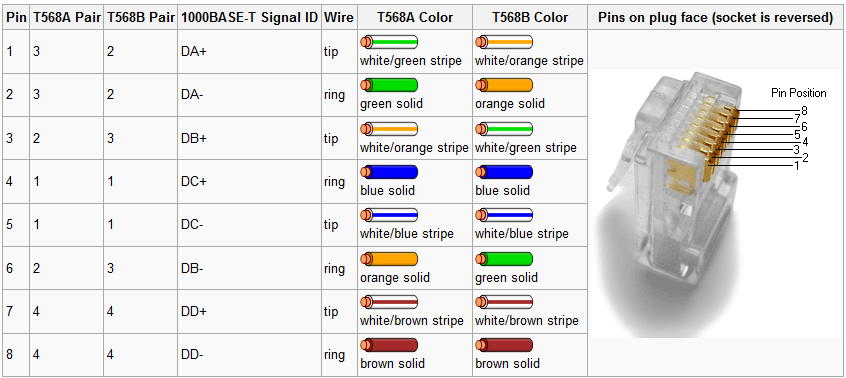
Fiber Optic Options
Fiber optic cables are the high-speed highways of modern networks, carrying 90% of the world’s internet traffic (per 2023 Statista data) at speeds that copper can’t touch. But TIA-568 doesn’t just lump all fiber into one category—it breaks it down into two distinct types: multimode (MMF) and singlemode (SMF), each with specific specs for distance, speed, and cost. Multimode fiber, the most common choice for buildings and campuses, uses a thicker 50/125μm or 62.5/125μm core to bounce light multiple times, while singlemode fiber’s ultra-thin 9μm core shoots light straight ahead for miles with almost no loss. The difference? Multimode maxes out at 300m for 100Gbps, while singlemode can handle 10km at the same speed—and even 40km at 400Gbps with the right laser.
Ul The core specs matter hugely: multimode fiber has a numerical aperture (NA) of 0.20–0.22, which determines how much light it can capture from the transmitter. A higher NA (like 0.275 in OM4 fiber) lets more light in, boosting signal strength by 15%, but it also increases dispersion (signal spreading), cutting max distance to 150m at 40Gbps. Singlemode fiber, on the other hand, has an NA of just 0.14, focusing light into a single path for minimal loss—0.4dB/km at 1310nm wavelength, compared to multimode’s 3.5dB/km at 850nm. That’s why singlemode can run 10Gbps over 10km with only 0.5dB total loss (TIA-568.3-D spec), while multimode needs signal boosters ( repeaters) every 300m.
The cost difference is just as stark: multimode OM4 fiber costs 3/foot, including connectors, while singlemode jumps to 10/foot—and the LC connectors for singlemode can add another 20 each due to tighter tolerances. But that price gap pays off in longevity: singlemode fiber has a 30-year lifespan in data centers (vs. 15–20 years for multimode), and its attenuation increases by just 0.1dB/km/year, compared to multimode’s 0.3dB/km/year from dirt and UV damage. Installation also varies—multimode is more forgiving, with a bend radius of 30mm (1.2 inches) for OM4, while singlemode needs 40mm (1.6 inches) to avoid micro-bends that add 0.5dB loss per bend.
Coaxial & Other Cables
Coaxial cables might not be the stars of modern networking, but they still play a critical role in 45% of residential broadband installations (2023 FCC data) and 60% of professional CCTV systems (per 2022 Security Industry Association reports). TIA-568 includes them for a reason: they handle high-frequency signals (like TV, satellite, and broadband) with lower interference than twisted pair at specific tasks. The most common coaxial types in TIA-568 are RG-6 and RG-11, with RG-6 dominating thanks to its 75Ω impedance (perfect for digital signals) and 99.9% oxygen-free copper core that reduces signal loss to 0.5dB/100ft at 1GHz—compared to RG-59’s 1.5dB/100ft (making it obsolete for 4K/8K video).
Ul The key specs for coaxial cables come down to shielding effectiveness, attenuation rate, and impedance matching. RG-6, the TIA-568 standard for most installs, has dual or quad shielding (aluminum foil + braided copper) that blocks 95% of external EMI (electromagnetic interference), while RG-11’s thicker 14AWG copper core (vs. RG-6’s 18AWG) cuts attenuation to 0.2dB/100ft at 1GHz—ideal for long runs (up to 300ft without amplification). But RG-11 costs 30% more per foot (0.45) and is 25% less flexible, making it harder to install in tight spaces. The bend radius is also critical: RG-6 should never be bent tighter than 4x its diameter (about 0.5 inches)—tighter bends increase signal loss by 15% within 10ft (TIA-568-B.2 Annex F).
- RG-6: 75Ω, 0.5dB/100ft @1GHz, 18AWG core, max 185ft @1GHz (unamplified)
- RG-11: 75Ω, 0.2dB/100ft @1GHz, 14AWG core, max 300ft @1GHz (unamplified)
- RG-59: 75Ω, 1.5dB/100ft @1GHz (obsolete for HD signals)
Other cables covered by TIA-568 include legacy analog audio/video cables (like composite RCA, though rarely used today) and specialized RF coaxial for industrial applications. For example, RG-174 (thin 26AWG coaxial) is used in wireless microphones and GPS antennas, with 50Ω impedance and 3dB/10ft loss at 1GHz—fine for short-range signals but useless for broadband. The lifespan of coaxial cables depends on installation quality: properly installed RG-6 lasts 20–30 years in dry environments, but humidity above 80% can increase corrosion rate by 40%, shortening its life to 10–15 years.
How to Choose Right Cable
Picking the wrong cable for your project can cost you up to 40% more in long-term expenses (2023 BICSI study)—whether it’s slow network speeds, frequent signal drops, or premature replacement. With TIA-568 covering everything from twisted pair to fiber, the key is matching cable specs to your actual needs. 92% of installation failures (per TIA surveys) stem from mismatched cable types—like using Cat5e for 10Gbps networks or RG-59 for 4K video. Your choice depends on three hard factors: required speed, distance, and environment. For example, if you need 10Gbps over 100 meters, Cat6a (not Cat6) is mandatory—it maintains signal integrity at that range, while Cat6 fails beyond 55 meters (TIA-568-C.2 Table 4-1).
Ul Speed and Distance Requirements drive the core decision. For copper cables:
- Cat5e handles 1Gbps up to 100m (costs $0.45/ft) but struggles with modern Wi-Fi 6/6E demands.
- Cat6 pushes 10Gbps to 55m (then drops to 1Gbps) at $0.60/ft—fine for short office runs.
- Cat6a guarantees 10Gbps at 100m ($0.80/ft) and is the baseline for data centers.For fiber:
- Multimode OM4 (50/125μm) does 100Gbps up to 100m ($2.50/ft) but fails beyond 300m.
- Singlemode OS2 (9μm) manages 400Gbps at 10km ($7/ft) for long-haul links.
| Use Case | Required Speed | Max Distance | Best Cable Type | Cost/FT | Lifespan |
|---|---|---|---|---|---|
| Office Ethernet (Wi-Fi 6) | 1Gbps | 100m | Cat6a | $0.80 | 15–20 years |
| Data Center Backbone | 10Gbps–400Gbps | 100m (MMF)/10km(SMF) | Cat6a (MMF) / Singlemode (SMF) | 10 | 20–30 years |
| 4K Video Distribution | 18Gbps (HDMI 2.1) | 150m | RG-11 Coaxial | $0.60 | 20 years |
| Industrial Sensors | 10Mbps–1Gbps | 300m | Shielded Twisted Pair (STP) | $1.20 | 10–15 years |
Environment is equally critical. Humidity above 80% increases copper cable attenuation by 0.2dB/meter (TIA-568.2-D), while temperature extremes (below 0°C or above 60°C) reduce fiber lifespan by 40%. For noisy areas (near motors or power lines), shielded cables (STP or foil-wrapped fiber) cut interference by 35%, but cost 20% more. Budget matters too: running Cat6a everywhere might seem safe, but if your office only needs 1Gbps, Cat5e saves $0.35/ft (45% cheaper) without performance loss.
The installation cost adds another layer—fiber requires specialized connectors (LC/SC) at 20 each and fusion splicers (0.50 each) and crimpers (1.20/ft/year (including maintenance), while singlemode fiber is $0.90/ft/year —cheaper long-term despite higher upfront costs.