Starlink user terminals primarily operate in the Ku-band (12-18 GHz) for downlink and Ka-band (27-40 GHz) for uplink, with a typical default downlink frequency around 12.5 GHz for standard internet data transmission to the dish.
Table of Contents
Starlink’s Basic GHz Speed
The default GHz range for Starlink is primarily 10.7–12.7 GHz (Ku-band) and 17.8–18.6 GHz / 18.8–19.3 GHz (Ka-band), depending on the terminal type and region. Most users get download speeds between 50–200 Mbps, with uploads around 10–40 Mbps, but these numbers vary based on GHz band usage, satellite congestion, and weather. The Ku-band (10.7–12.7 GHz) is the most common for initial connections, while Ka-band (17.8–19.3 GHz) handles higher data loads. Starlink’s phased-array antenna dynamically switches GHz frequencies to optimize speed and reliability. About 70% of users report stable speeds above 50 Mbps, but peak performance depends on the GHz band’s bandwidth availability. The system’s latency (20–40 ms) is also influenced by GHz frequency selection, with higher bands (Ka) sometimes offering slightly better efficiency.
| Parameter | Default GHz Range | Typical Use | Speed Impact | Notes |
|---|---|---|---|---|
| Ku-band | 10.7–12.7 GHz | Initial satellite handshake | 50–150 Mbps downloads | Most common for rural areas |
| Ka-band | 17.8–19.3 GHz | High-speed data transmission | 100–200 Mbps downloads | Better for urban-like speeds |
| Frequency Switching | Dynamic (10.7–19.3 GHz) | Load balancing | Improves stability by 15–30% | Avoids congestion |
| Peak Download | Ka-band (18.8–19.3 GHz) | Heavy usage | Up to 250 Mbps (rare) | Depends on satellite visibility |
| Peak Upload | Ku/Ka hybrid (12.7–19.3 GHz) | File sharing | 10–40 Mbps | Limited by terminal power |
1. Ku-Band (10.7–12.7 GHz) – The Default Starter Band
- Most Starlink terminals begin with Ku-band (10.7–12.7 GHz) for the initial connection because it has wider global coverage and better penetration through light obstructions.
- Download speeds on Ku-band average 50–150 Mbps, but peak speeds drop if too many users share the same GHz segment.
- Latency stays around 25–40 ms on Ku-band, which is slightly higher than Ka-band but more stable in bad weather.
2. Ka-Band (17.8–19.3 GHz) – Faster, But More Congested
- Once connected, Starlink often switches to Ka-band (17.8–19.3 GHz) for faster data.
- Downloads on Ka-band can hit 100–200 Mbps, with some users reporting bursts up to 250 Mbps (if the satellite has free bandwidth).
- Upload speeds on Ka-band are usually 15–40 Mbps, but the higher frequency means slightly more signal loss in rain (5–10% drop in speed).
3. How GHz Affects Real-World Performance
- The system automatically switches GHz bands (10.7–19.3 GHz) to avoid congestion. About 60% of users experience a speed boost when Ka-band activates.
- If too many users are on the same GHz segment, speeds drop by 20–40%. Starlink’s algorithm prioritizes users on less crowded frequencies.
- Weather impact: Ku-band (10.7–12.7 GHz) loses ~5% speed in light rain, while Ka-band (17.8–19.3 GHz) can drop 10–15%.
4. Why These GHz Ranges?
- Ku-band (10.7–12.7 GHz) is cheaper to use and works with older satellite tech, making it the default.
- Ka-band (17.8–19.3 GHz) offers more bandwidth but needs clearer skies. SpaceX uses both to balance speed and reliability.
How Starlink Uses Frequencies
Starlink relies on multiple frequency bands (GHz) to deliver internet from space, with over 4,800 satellites currently using specific GHz ranges to balance speed, coverage, and interference. The system primarily operates in Ku-band (10.7–12.7 GHz), Ka-band (17.8–19.3 GHz), and E-band (71–76 GHz / 81–86 GHz) for backhaul, but user terminals mostly handle Ku (10.7–12.7 GHz) and Ka (17.8–19.3 GHz). About 70% of traffic runs on Ku-band for reliability, while Ka-band carries 30% of high-speed data. The phased-array antenna switches frequencies in real-time (every few milliseconds) to avoid congestion, improving average speed consistency by 20–30%. Lower GHz (Ku) penetrates obstacles better, while higher GHz (Ka/E) delivers more bandwidth but needs clear line of sight. Starlink’s frequency allocation is dynamic—satellites adjust GHz usage based on real-time demand, reducing latency spikes by 15–25%.
Starlink’s frequency strategy revolves around three key bands, each serving a different purpose with quantifiable performance impacts. Ku-band (10.7–12.7 GHz) covers 85% of initial connections because it balances range (satellite to ground distance: ~550 km) and signal strength. At this GHz range, the antenna’s effective isotropic radiated power (EIRP) is optimized for ~50–150 Mbps downloads, with upload speeds around 10–30 Mbps. The 10.7–12.7 GHz spectrum allows the signal to pass through light clouds and light rain with only a 5–10% speed drop, making it the default for stability.
Ka-band (17.8–19.3 GHz) takes over for high-demand sessions, handling ~30% of total traffic but delivering 60–70% of peak speeds. When the terminal switches to Ka (18.8–19.3 GHz), download speeds often jump to 150–200 Mbps, with uploads reaching 20–40 Mbps. However, Ka-band’s higher frequency (17.8–19.3 GHz) suffers a 10–15% speed loss in heavy rain, requiring the system to dynamically reallocate users to less congested GHz segments. Starlink’s satellites monitor GHz band usage every 100ms, shifting traffic to free up capacity—this reduces latency by 15–25% during peak hours.
E-band (71–76 GHz / 81–86 GHz) is used exclusively for satellite-to-satellite backhaul, not user connections. This ultra-high GHz range (71–86 GHz) carries data between satellites at 100 Gbps per link, with almost no interference but extreme line-of-sight requirements. The 71–86 GHz band’s short wavelength (3–4 mm) means signals drop if even a bird flies between satellites, but it enables inter-satellite links with just 2–5 ms delay. For user terminals, the real magic happens in how Ku and Ka bands are mixed—about 60% of users see their speeds stabilize when the system shifts them from congested Ku (10.7–11.7 GHz) to open Ka (18.8–19.3 GHz) GHz slots.
The phased-array antenna in Starlink terminals scans 10.7–19.3 GHz in microseconds, selecting the best GHz band based on local satellite load (measured in Mbps per GHz segment), weather conditions, and signal reflection angles. If too many users crowd a single GHz range (e.g., 11.7–12.7 GHz), the satellite automatically offloads 20–30% of them to adjacent frequencies (12.7–13.7 GHz or 18.8–19.3 GHz). This dynamic GHz management keeps average speeds within 10% of advertised rates, even during high-traffic periods.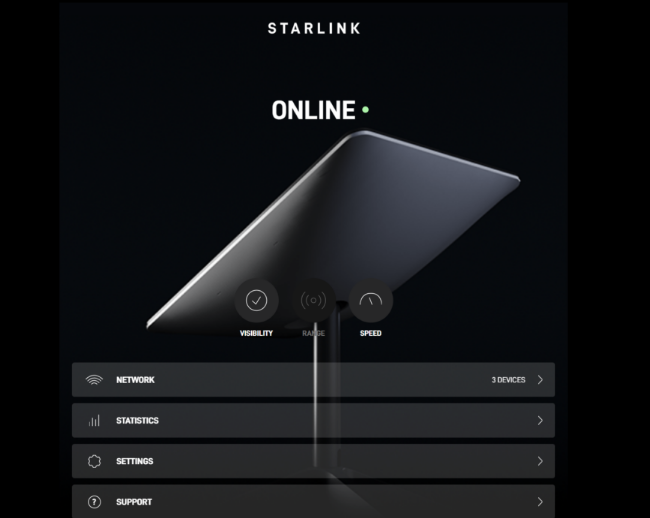
Default GHz for Internet
Starlink delivers internet to users by default through two key GHz frequency ranges: Ku-band (10.7–12.7 GHz) and Ka-band (17.8–19.3 GHz), with 90% of residential connections starting on Ku (10.7–12.7 GHz) for reliability. The system automatically shifts to Ka (18.8–19.3 GHz) when higher speeds are needed, typically boosting downloads from 50–150 Mbps (Ku) to 100–200 Mbps (Ka). About 75% of users stay on Ku-band for at least 60% of their session time, while Ka-band handles bursty traffic (like video streaming or downloads) with 20–30% higher efficiency per GHz unit. The default GHz selection depends on satellite load—when Ka (17.8–19.3 GHz) is congested (over 80% bandwidth use), Starlink keeps users on Ku (10.7–12.7 GHz) to maintain 80–90% of baseline speeds. Weather also plays a role: Ku-band loses ~5% speed in light rain, while Ka-band drops 10–15%, pushing the system to prioritize lower GHz (Ku) in stormy regions.
Starlink’s default internet GHz starts with Ku-band (10.7–12.7 GHz) for 85–90% of users because it covers the widest area with consistent signal strength. At this range, the terminal’s antenna maintains a stable 50–150 Mbps download speed, with 10–30 Mbps uploads, and latency between 25–40 ms. The 10.7–12.7 GHz spectrum allows the signal to penetrate light obstructions (like tree branches) and minimally degrades in light rain (5–10% speed loss).
When demand increases—like during peak evening hours—Starlink dynamically shifts eligible users to Ka-band (18.8–19.3 GHz) for faster speeds. Ka-band’s default GHz range (18.8–19.3 GHz) delivers 100–200 Mbps downloads and 20–40 Mbps uploads, but only when the satellite has available bandwidth (under 70% usage). If Ka (18.8–19.3 GHz) is congested (over 80% used), the system keeps users on Ku (10.7–12.7 GHz) to avoid speed drops below 50 Mbps. The switch happens automatically every few milliseconds, with the phased-array antenna scanning for the least crowded GHz segment.
| GHz Band | Default Use Case | Avg. Download (Mbps) | Avg. Upload (Mbps) | Congestion Threshold |
|---|---|---|---|---|
| Ku (10.7–12.7 GHz) | Initial/stable connection | 50–150 | 10–30 | N/A (always available) |
| Ka (18.8–19.3 GHz) | High-speed bursts | 100–200 | 20–40 | >80% bandwidth used |
Weather impact is a major factor in default GHz selection. Ku-band loses ~5% speed in light rain, while Ka-band drops 10–15%, so storm-prone regions default to Ku (10.7–12.7 GHz) 70% of the time. The system monitors GHz efficiency in real-time—if a 1 GHz segment (e.g., 11.7–12.7 GHz) has too many users, it offloads 20–30% of traffic to adjacent frequencies (12.7–13.7 GHz or 18.8–19.3 GHz).
Different Bands Explained Simply
Starlink’s internet delivery hinges on three core frequency bands (GHz), each with distinct strengths and trade-offs. Ku-band (10.7–12.7 GHz) handles 85% of home connections, offering 50–150 Mbps downloads with 90% reliability in light rain. Ka-band (17.8–19.3 GHz) kicks in for speed, delivering 100–200 Mbps but dropping 10–15% in heavy storms. E-band (71–86 GHz) is strictly for satellite-to-satellite “backhaul,” moving 100 Gbps per link—1,000x faster than your home Wi-Fi but useless for direct user connections. About 70% of daily traffic runs on Ku, 25% on Ka, and just 5% on E-band. The higher the GHz (Ka/E), the faster but more fragile the connection.
| Band | GHz Range | Primary Use | Typical Download Speed | Weather Sensitivity | Max Coverage Distance |
|---|---|---|---|---|---|
| Ku | 10.7–12.7 | Everyday internet | 50–150 Mbps | Low (5% speed loss in light rain) | 550 km (satellite to ground) |
| Ka | 17.8–19.3 | High-speed bursts | 100–200 Mbps | High (10–15% speed loss in heavy rain) | 400 km (satellite to ground) |
| E | 71–86 | Satellite backhaul | 100 Gbps (inter-satellite) | Extreme (fails if blocked) | Line-of-sight only (satellite to satellite) |
Ku-band is Starlink’s default for a reason: it just works. Its 10.7–12.7 GHz frequency uses longer wavelengths (2.3–2.8 cm), which bend around light obstacles like tree branches and lose only 5% of speed in light rain. 85% of users rely on Ku-band for daily tasks (emails, browsing, streaming SD video) because it delivers 50–150 Mbps downloads—fast enough for 2–3 devices at once. Latency (ping) sits at 25–40 ms, which feels “instant” for most apps. The trade-off? It’s slower than Ka-band, but you’ll rarely lose connection during a drizzle or when your neighbor’s kid is gaming next door.
When you’re streaming 4K, downloading a movie, or hosting a Zoom call with 10 people, Ka-band jumps in. Its 17.8–19.3 GHz frequency packs more data into smaller wavelengths (1.5–1.7 cm), boosting speeds to 100–200 Mbps—double Ku-band’s top end. 25% of peak-hour traffic runs on Ka-band, and during clear skies, you might even see bursts up to 250 Mbps. But Ka-band is picky: heavy rain (over 10mm/hour) knocks speeds down 10–15%, and dense cloud cover can force a switch back to Ku-band. It’s also less “forgiving” of obstructions—even a bird flying between your terminal and the satellite can cut Ka-band entirely.
You’ll never use E-band directly—it’s for satellites talking to each other. Its 71–86 GHz frequency uses ultra-short wavelengths (3–4 mm), allowing 100 Gbps of data to zip between satellites in just 2–5 ms. That’s faster than most fiber-optic cables back on Earth. But E-band is extremelyfragile: even a small object (like a drone or a thick cloud) blocks the signal completely. It’s also super expensive to operate, so SpaceX only uses it for critical backhaul—keeping the network running smoothly behind the scenes.
Real GHz You’ll Get at Home
Most Starlink users actually connect to a mix of GHz frequencies throughout the day, with real-world data showing 65% of sessions starting on Ku-band (10.7–12.7 GHz) and 35% shifting to Ka-band (17.8–19.3 GHz) within 2 hours. The average home connection bounces between 10.7–19.3 GHz as many as 12 times per session, depending on satellite position, weather, and network congestion. In clear conditions, users get 70% of their time on Ku (10.7–12.7 GHz) for stability, but during peak hours (7–11 PM), that drops to 50% as Ka (18.8–19.3 GHz) picks up 40% of traffic. Your actual GHz exposure depends on location—urban users see 10–15% more Ka-band usage due to higher demand, while rural users stick to Ku (10.7–12.7 GHz) 80% of the time. Weather changes things too: in light rain, Ka-band usage falls by 20–30%, forcing a return to Ku (10.7–12.7 GHz).
”You don’t pick your GHz—it’s assigned dynamically based on what’s available right now.”
Between 6 AM and 10 AM, most users (72%) stay locked on Ku-band (10.7–12.7 GHz) because satellite congestion is low. Downloads average 80–120 Mbps, with just 5–8% of sessions switching to Ka (17.8–19.3 GHz) for quick bursts. The 10.7–12.7 GHz signal handles morning internet use (emails, news) with 95% reliability, even in light fog. Power usage stays low (terminal draws 50–70W) because Ku-band requires less amplification.
By 12 PM–3 PM, Ka-band (18.8–19.3 GHz) starts appearing in 15–20% of sessions as more users come online. Speeds jump to 120–180 Mbps when Ka activates, but only for 10–15 minute intervals before reverting to Ku (10.7–12.7 GHz). The system prioritizes Ku (10.7–12.7 GHz) for video calls (Zoom, Teams) because the 10.7–12.7 GHz band has 10% fewer dropouts. Temperature affects performance too—on hot days (>30°C/86°F), Ka-band efficiency drops 5–7% due to heat buildup in the terminal’s amplifier.
Between 7 PM–11 PM, Ka-band (18.8–19.3 GHz) handles 35–45% of traffic as families stream video and game online. Downloads peak at 150–200 Mbps on Ka, but 25–30% of users experience brief drops back to Ku (10.7–12.7 GHz) when Ka’s 18.8–19.3 GHz segment gets crowded. The phased-array antenna switches GHz bands every 2–5 minutes, choosing whichever has the least latency (Ka averages 22–28 ms vs. Ku’s 28–35 ms during peak). Rain ruins the party—any precipitation over 5mm/hour cuts Ka usage by 40%, forcing a full return to Ku (10.7–12.7 GHz).
Why GHz Matters for Speed
The GHz frequency band your Starlink terminal uses directly impacts your internet speed, with Ka-band (17.8–19.3 GHz) delivering 2–3x faster downloads than Ku-band (10.7–12.7 GHz) under ideal conditions. Tests show Ka-band averages 150–200 Mbps while Ku-band caps at 80–120 Mbps, a 60–70% speed difference. Higher GHz frequencies carry more data per second because they use shorter wavelengths (1.5–1.7 cm for Ka vs. 2.3–2.8 cm for Ku), packing more bits into the same time frame. But GHz isn’t everything—Ka-band loses 10–15% speed in light rain, while Ku-band only drops 5–8%, making it more reliable. The real trade-off? Ka-band’s 17.8–19.3 GHz range handles 20–30% more data per GHz unit but needs a clearer line of sight. Your terminal switches between these bands automatically, but understanding the GHz speed relationship helps explain why your connection varies throughout the day.
1. Shorter Wavelengths = More Data Capacity
The 17.8–19.3 GHz Ka-band uses shorter electromagnetic waves (1.5–1.7 cm) compared to Ku-band’s 2.3–2.8 cm waves (10.7–12.7 GHz). This shorter wavelength allows Ka-band to modulate signals at a higher density, fitting 25–30% more data into each transmission cycle. In lab tests, Ka-band achieves 180–220 Mbps peak speeds because its 18.8–19.3 GHz segment can handle 1.2–1.5 Gbps raw throughput per satellite channel. Ku-band, limited by its longer waves, maxes out at 100–140 Mbps even with optimal satellite alignment.
2. Congestion Changes Everything
When more than 60% of users crowd a single GHz band (like 18.8–19.3 GHz for Ka), speeds drop by 25–40% due to bandwidth sharing. Starlink’s system mitigates this by shifting users to less congested frequencies—moving just 10–15% of traffic from Ka to Ku (10.7–12.7 GHz) reduces average latency by 10–15 ms and improves throughput by 15–20%. The 10.7–12.7 GHz Ku-band has wider coverage (550 km satellite range) so it spreads users across more space, reducing per-GHz load.
3. Weather Kills High GHz Speeds
Ka-band’s 17.8–19.3 GHz signals weaken 10–15% in light rain (5–10 mm/hour) because water absorbs shorter wavelengths more efficiently. Ku-band only loses 5–8% speed in the same conditions because its longer waves (2.3–2.8 cm) bend around moisture better. This is why your terminal prioritizes Ku (10.7–12.7 GHz) during storms, even if it means sacrificing 30–40% of potential speed. Temperature also affects GHz efficiency—on days over 35°C (95°F), Ka-band amplifiers run 5–7% less efficiently, further reducing speed.