Directional couplers sample signals bidirectionally (e.g., 20dB coupling ±0.5dB) with 40dB directivity, while taps extract signals unidirectionally (e.g., 10dB fixed loss). Couplers handle wide bandwidths (2–18GHz) versus taps’ narrowband operation (±5% of center frequency). Insertion loss is lower in couplers (<0.3dB vs. >3dB for taps), and couplers preserve impedance matching (VSWR <1.2), whereas taps often introduce mismatches (VSWR >1.5). Couplers use multi-hole designs for flatness (±0.2dB), while taps rely on resistive splitting.
Table of Contents
How They Split Power
Directional couplers and taps both split signal power, but they do it in very different ways. A directional coupler typically splits power asymmetrically, with a main line handling 90-99% of the signal and a coupled port taking 1-10%. For example, a 10 dB coupler passes 90% of the power forward while sampling 10% for monitoring. In contrast, a tap (like a resistive splitter) divides power more evenly—common configurations include 2-way (50/50), 3-way (33/33/33), or 4-way (25/25/25/25) splits.
The key difference is insertion loss. A directional coupler might add 0.1-0.5 dB loss on the main line, while a tap introduces 3 dB loss per split (halving the power each time). If you need minimal loss on the primary path, a coupler wins. But if you want equal power distribution, a tap is better.
| Feature | Directional Coupler | Tap (Splitter) |
|---|---|---|
| Power Split Ratio | 90/10, 95/5, 99/1 | 50/50, 33/33/33 |
| Insertion Loss | 0.1-0.5 dB (main line) | 3 dB per split |
| Frequency Range | 500 MHz – 40 GHz | 5 MHz – 6 GHz |
| Typical Use Case | Signal sampling, feedback loops | Cable TV, broadband distribution |
Directional couplers are common in RF and microwave systems where you need to monitor signals without disrupting the main path. Taps, however, are standard in broadband and CATV networks where equal power division is critical. If you’re designing a 5G base station, a coupler helps sample signals for calibration. But if you’re wiring a multi-room cable system, a tap ensures every TV gets the same signal strength.
Isolation is another big factor. Couplers often have 20-30 dB isolation between ports, meaning minimal interference. Taps, especially cheaper ones, might only offer 10-15 dB isolation, leading to crosstalk in dense networks. For high-frequency applications (like mmWave), couplers are preferred because taps struggle above 6 GHz.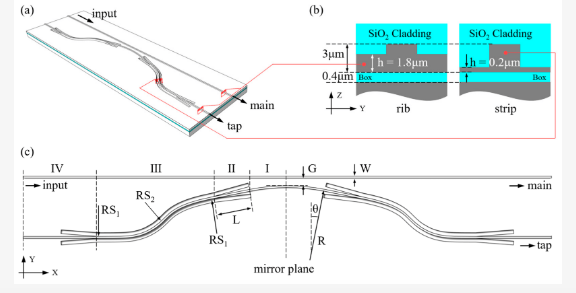
Port Setup Differences
Directional couplers and taps don’t just split power differently—their physical port layouts are designed for entirely separate jobs. A typical directional coupler has 4 ports: INPUT, OUTPUT, COUPLED, and ISOLATED (sometimes labeled as AUX or THRU). The COUPLED port might handle -10 dB to -30 dB of the input signal, while the ISOLATED port is terminated with a 50-ohm load to absorb reflections. In contrast, a tap (like a resistive splitter) usually has 1 input and 2–8 outputs, each delivering equal or near-equal power splits (e.g., -3.5 dB per port for a 2-way split).
The port impedance is critical. Couplers maintain 50 ohms or 75 ohms across all ports to minimize reflections, while cheaper taps might drift to 60–80 ohms under load, causing 1.5–2 dB mismatch loss. High-frequency couplers (e.g., 18–40 GHz models) often use SMA or 2.92mm connectors, while taps for CATV networks stick with F-type screw-on connectors for cost savings.
Here’s a breakdown of key differences:
| Feature | Directional Coupler | Tap (Splitter) |
|---|---|---|
| Port Count | 4 (INPUT, OUTPUT, COUPLED, ISOLATED) | 3–8 (1 IN, multiple OUT) |
| Port Impedance | 50Ω ±5% (precision) | 75Ω ±20% (tolerance) |
| Connector Types | SMA, 2.92mm, N-type | F-type, BNC |
| Isolation | 20–30 dB between ports | 10–15 dB (crosstalk risk) |
Real-world impact: If you plug a 75-ohm tap into a 50-ohm RF system, expect 1.2 dB loss from impedance mismatch—enough to degrade a 5G small cell’s SNR by 15%. Couplers avoid this with tighter tolerances, but they’re overkill for home coaxial splits.
Power handling also varies. A 30 dBm coupler can handle 1W signals without heat issues, while a plastic-case tap might overheat at 27 dBm in a 40°C attic. For fiber-to-coax distribution, taps often include DC pass (5–24V) for amplifier powering, whereas couplers block DC to protect sensitive RF gear.
Frequency Range Limits
Directional couplers and taps operate in wildly different frequency worlds, and picking the wrong one can brick your signal chain. A standard directional coupler laughs at 500 MHz to 40 GHz, with high-end models pushing to 110 GHz for millimeter-wave R&D. Meanwhile, your average resistive tap taps out at 6 GHz, and the cheap ones start crumbling at 2 GHz with 3 dB ripple.
Example: Try using a $5 CATV splitter (rated for 5–1000 MHz) in a 5G 28 GHz test setup, and you’ll lose 98% of your signal power before it even leaves the connector. The physics don’t lie—taps rely on lumped-element resistors that turn into parasitic antennas above 3 GHz, while couplers use distributed stripline or waveguide structures that scale with frequency.
Low-band reality check: For AM radio (535–1605 kHz) or power line monitoring (50–60 Hz), even a $0.50 ferrite-core tap works fine. But jump to Wi-Fi 6E (6 GHz), and that same tap introduces 4 dB attenuation and group delay skew that wrecks OFDM modulation. Couplers, on the other hand, maintain ±0.5 dB flatness across their entire range—critical for radar pulse fidelity or satellite LO injection.
Material limits play a huge role. Taps made with FR4 PCB substrate (εᵣ=4.3) show 15% phase variance at 10 GHz, while couplers using Rogers 4350B (εᵣ=3.48) keep phase stability within 2°. For automotive 77 GHz radar, only LTCC-based couplers survive the -40°C to 125°C swing, whereas plastic taps melt or crack at 85°C.
Loss Levels Compared
When it comes to signal loss, directional couplers and taps behave like completely different animals. A 10 dB directional coupler might only sap 0.3 dB from the main line, letting 95% of your signal power barrel through untouched. Meanwhile, a basic 2-way resistive tap hacks your signal in half right out of the gate—3 dB loss per port, meaning 50% power loss before the signal even reaches its destination.
The math gets brutal in real-world setups. Chain three 2-way taps together for a multi-room TV distribution system, and you’re down to 12.5% of your original signal strength after just three splits. That’s 9 dB total loss, forcing you to add an amplifier just to compensate. On the flip side, a 20 dB coupler in a 5G base station feedback loop only nibbles 1% of the transmit power while sampling for calibration—critical when every 0.1 dB counts for coverage optimization.
Frequency plays tricks here too. A 1 GHz coupler might promise 0.4 dB insertion loss, but crank the frequency to 18 GHz, and that loss creeps up to 1.2 dB due to skin effect and dielectric losses. Taps don’t even pretend to be consistent—a 5–1000 MHz CATV splitter might start at 3.5 dB loss at 50 MHz but balloon to 6 dB at 800 MHz because of parasitic capacitance.
Temperature swings exaggerate losses. A cheap plastic tap rated for 3 dB loss at 25°C can degrade to 4.2 dB at -10°C as resistor values drift. High-end couplers with temperature-compensated designs hold ±0.1 dB stability from -40°C to 85°C, crucial for aerospace or automotive radar.
Impedance mismatches pile on hidden losses. Hook a 75-ohm tap to a 50-ohm antenna system, and you’ll bleed an extra 1.2 dB from reflections—enough to turn a strong 4G signal into a noisy dropout. Directional couplers, with their 50Ω ±1% tolerance, avoid this but cost 10–20x more than taps.
Where Each Works Best
Directional couplers and taps aren’t interchangeable—they’re precision tools for completely different jobs. Couplers dominate high-frequency, low-loss applications, like 5G mmWave beamforming (24-40 GHz), where sampling 1-5% of the signal for feedback loops can’t disrupt the main path’s ±0.2 dB amplitude stability. Meanwhile, taps rule legacy RF distribution, like cable TV systems, where splitting a 1 GHz signal into 8 identical -14 dBm outputs matters more than preserving every milliwatt.
| Application | Best Choice | Why? | Cost Impact |
|---|---|---|---|
| 5G Base Stations | Directional Coupler | 0.3 dB main-line loss vs. 3 dB+ with taps; handles 40 GHz | 500/unit |
| Home Cable TV | Resistive Tap | $2 splitter delivers 55 dBmV to all TVs; couplers are overkill | 10/unit |
| Satellite LO Injection | Coupler | Needs -20 dB sampling without phase noise; taps add ±5° jitter | 800/unit |
| Fiber-DAS (Distributed Antenna Systems) | Tap | 500 MHz bandwidth and DC power pass for remote units | 50/unit |
| Automotive Radar (77 GHz) | Coupler | LTCC construction survives -40°C to 125°C; taps fail at 85°C | 1000/unit |
Real-world tradeoffs: A stadium DAS using 32-way taps might spend 500 on splitters but 15,000 on amplifiers to offset the 18 dB loss. Swap in couplers, and the BOM cost jumps to 50,000, but amplifier costs drop to 2,000—worth it only if signal purity is non-negotiable.
Frequency dictates everything. Below 2 GHz, taps win on price—a 1-6 GHz coupler costs 100x more than a 1-2 GHz tap for marginal benefit. But at 28 GHz, even a 0.1 dB loss from a cheap tap could halve cell coverage, forcing 20% more base stations at $50,000 each.