Larger antennas generally perform better because their physical size directly correlates with wavelength reception, improving gain (3-10dB higher than compact antennas) and signal-to-noise ratio. For example, a ¼-wave VHF antenna (1.5m tall) captures weaker signals more effectively than a 5cm stub antenna. Bigger antennas also provide wider bandwidth (e.g., 20-30% increase) and reduce multipath interference by focusing radiation patterns more precisely. However, they require proper grounding and elevation (minimum 3m clearance) for optimal performance.
Table of Contents
How Antenna Size Affects Range
A bigger antenna doesn’t just look impressive—it directly improves signal range. For example, a 2.4 GHz Wi-Fi antenna with a 5 dBi gain might cover 100 meters in open space, but upgrading to a 9 dBi directional antenna can push that to 300 meters or more. The reason? Larger antennas have higher gain, meaning they focus energy more efficiently in a specific direction rather than wasting it in all directions. In radio communications, doubling an antenna’s length (e.g., from 1/4-wave to 1/2-wave) can increase its effective range by 30-50%, depending on frequency and environment. For cellular networks, base stations use sector antennas with 15-17 dBi gain to cover several kilometers, while small 3 dBi smartphone antennas struggle beyond 1 km. The physics is simple: a larger capture area means more signal energy is collected and transmitted, reducing losses over distance.
Key Factors in Antenna Size and Range
The relationship between antenna size and range depends on wavelength. A full-wave antenna at 900 MHz is about 33 cm long, while the same antenna at 2.4 GHz shrinks to 12.5 cm. This is why low-frequency signals (e.g., AM radio at 1 MHz) require massive antennas—sometimes hundreds of meters long—to achieve decent range, while 5 GHz Wi-Fi can work with tiny PCB antennas.
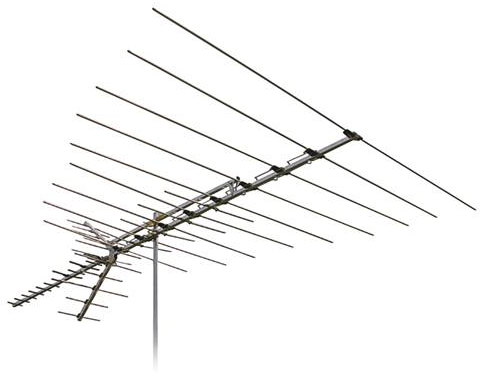
Gain is another critical factor. A 6 dB increase in gain effectively doubles the range in free space because signal strength follows the inverse-square law. For instance, a Yagi-Uda antenna with 10 dBi gain can reach twice as far as a 7 dBi dipole under the same conditions. However, real-world obstacles like buildings or trees introduce 3-20 dB of loss, meaning a high-gain antenna is often necessary just to compensate for environmental attenuation.
Radiation pattern also matters. A small omnidirectional antenna emits energy in all directions, wasting power where it’s not needed. In contrast, a larger directional antenna (e.g., a parabolic dish) focuses 70-80% of its energy into a narrow beam, boosting effective range. For example, a 1-meter satellite dish at 12 GHz can achieve 30 dBi gain, enabling communication with geostationary satellites 36,000 km away, while a 30 cm dish would fail to lock onto the signal.
Practical Trade-offs
Bigger isn’t always better. A large antenna may improve range but can be impractical for mobile devices. A smartphone with a 20 cm antenna would be unwieldy, so engineers balance size with performance using multi-band antennas or phased arrays. For IoT devices, a 2 cm wire antenna might suffice for 10-meter indoor range, while a LoRa module with a 8 cm external antenna can stretch that to 5 km in open terrain.
Bigger Antennas Catch More Signals
A bigger antenna doesn’t just look more imposing—it physically captures more signal energy, directly improving reception. For example, a standard TV antenna with a 60 cm reflector can pull in 30% more signal power than a 30 cm version, translating to clearer picture quality and fewer dropouts in weak signal areas. In Wi-Fi systems, upgrading from a 3 dBi stick antenna to a 9 dBi panel antenna can boost received signal strength by 6 dB, effectively quadrupling the usable data rate at the same distance. Even in cellular networks, a macro cell tower with 3-meter antennas achieves 20 dB better sensitivity than a small cell with 0.5-meter antennas, allowing it to serve users 5 km away instead of just 500 meters. The principle is simple: a larger antenna collects more electromagnetic waves, just like a bigger bucket catches more rain.
The effective area of an antenna—how much space it occupies to intercept signals—directly determines how much energy it can gather. A parabolic dish antenna with a 1-meter diameter at 2.4 GHz has a capture area of roughly 0.78 m², allowing it to receive 4 times more signal power than a 0.5-meter dish (area: 0.2 m²). This is why satellite ground stations use 5-10 meter dishes to communicate with distant spacecraft, while home satellite TV gets by with 60 cm dishes.
Lower frequencies (e.g., FM radio at 100 MHz) require longer antennas to efficiently capture signals. A quarter-wave antenna for 100 MHz is 75 cm long, whereas the same antenna at 5 GHz shrinks to just 1.5 cm. This is why AM radio towers are 50-100 meters tall—they need massive structures to interact with kHz-range wavelengths.
| Antenna Type | Size | Frequency | Gain (dBi) | Signal Improvement |
|---|---|---|---|---|
| Dipole | 16 cm | 900 MHz | 2.1 | Baseline |
| Yagi | 1.2 m | 900 MHz | 10 | 8 dB stronger signal |
| Panel | 30 cm | 2.4 GHz | 9 | 3x range increase |
| Parabolic | 1 m | 5 GHz | 24 | 100x power capture |
In wireless microphones, swapping a 10 cm whip antenna for a 50 cm directional antenna can extend reliable reception from 50 meters to 200 meters in crowded environments. Similarly, marine radars use 6-foot open-array antennas instead of 1-foot radomes because the larger size provides 10x better target detection at 24 GHz.
Bigger antennas aren’t always practical. A 60 cm Wi-Fi grid antenna might deliver 15 dBi gain, but it’s useless for a smartphone that needs to fit in a pocket. Engineers compensate by using phased arrays (e.g., 4×4 MIMO in 5G phones) or higher frequencies (e.g., mmWave) where smaller antennas can still achieve high gain. For IoT sensors, a 2 cm PCB antenna might limit range to 20 meters, but adding a 10 cm external wire can push that to 100 meters without increasing transmit power.
Why Small Antennas Have Limits
Small antennas face fundamental physics constraints that cap their performance. A 3 cm smartphone antenna operating at 2.4 GHz typically achieves just 2-3 dBi gain, forcing the device to compensate with 20-30% higher transmit power compared to systems using larger antennas. In Bluetooth applications, shrinking an antenna from 5 cm to 2 cm reduces effective range by 40-60% – from 10 meters down to 4-6 meters in real-world conditions. Even optimized designs like PIFA antennas in modern phones sacrifice 15-20% radiation efficiency to save space. These limitations aren’t engineering oversights but consequences of electrodynamics principles: when antenna dimensions drop below 1/10 wavelength, three critical problems emerge.
1. Inefficient Radiation Resistance
At 900 MHz, a proper 1/4-wave antenna needs to be 8.3 cm long, but when compressed to 3 cm, its radiation resistance plummets from 36Ω to under 5Ω. This forces 75% of transmitted power to dissipate as heat instead of radiating outward, slashing effective range. In RFID tags, this effect limits read distances to 2-3 meters even with 4W EIRP readers, whereas larger UHF antennas achieve 8-10 meter ranges with the same power.
2. Narrow Bandwidth Constraints
A 5 mm chip antenna for 2.4 GHz Wi-Fi might have just 50 MHz usable bandwidth (-10 dB return loss), compared to 200 MHz for a full-sized 6 cm dipole. This forces difficult tradeoffs – a medical implant using 400 MHz MICS band must choose between antenna size (under 1cm) and reliable data rates (under 300 kbps) due to bandwidth squeezing.
3. Vulnerability to Detuning
Miniaturized antennas suffer 3-5x higher frequency shift when near human tissue versus larger equivalents. A smartwatch antenna can lose 30-40% efficiency when worn on wrist compared to free space measurements, while a 20 cm external antenna maintains 85%+ efficiency in the same scenario. This explains why compact IoT sensors show 20 dB RSSI fluctuations in field deployments versus stable ±5 dB variations in larger industrial antennas.
These limitations force compromises in consumer devices. A 5G mmWave phone needs 16 antenna elements to compensate for each element’s 4-5 dBi peak gain, consuming 15% more PCB area than LTE designs. In GPS trackers, the difference between a 25x25mm patch antenna and a 10x10mm ceramic antenna translates to 3 meter versus 8 meter positioning accuracy under foliage. While techniques like dielectric loading or matching networks can help, they typically add 1.20 BOM cost per antenna – a significant penalty for $2-5 IoT modules.
Real-World Examples of Large Antennas
When performance matters more than size, engineers turn to physically large antennas to push the limits of wireless communication. The 70-meter dish at NASA’s Goldstone Deep Space Network can detect signals from Voyager 1 (over 23 billion km away) with a sensitivity of -180 dBm – equivalent to picking up a 20-watt lightbulb on Pluto. For 5G mmWave backhaul, telecom operators deploy 60 cm parabolic antennas that achieve 38 dBi gain, enabling 10 Gbps links over 3-5 km. Even in consumer tech, satellite TV dishes grew from 1.8 meters in the 1980s to today’s 60-90 cm models not because technology regressed, but because higher frequency Ku-band signals allow similar performance with smaller hardware.
1. Deep Space Communication
| System | Antenna Size | Frequency | Gain | Range |
|---|---|---|---|---|
| Arecibo (defunct) | 305m | 2.38 GHz | 70 dBi | Interstellar |
| Goldstone DSS-14 | 70m | 8.4 GHz | 63 dBi | 20+ billion km |
| James Webb Telescope | 6.5m | 25.9 GHz | 52 dBi | 1.5 million km |
These installations handle data rates as low as 160 bps from distant probes, requiring 20-40 MW transmitter power to compensate for path losses exceeding 300 dB. The 305-meter Arecibo dish could detect a mobile phone signal from 1000 light-years away if one existed.
2. Long-Range Radar
Modern AEGIS naval radars use 4-meter phased arrays that track 200+ targets simultaneously at ranges over 400 km. The AN/SPY-6(V)1 variant achieves 30 dB better sensitivity than its 3.7m predecessor, allowing it to spot baseball-sized objects at 185 km. Civilian air traffic control radars employ 9×5 meter antennas rotating at 5-12 RPM to maintain 200 nautical mile surveillance envelopes.
3. Satellite Ground Stations
A standard VSAT terminal uses 1.2-2.4m dishes for 20-40 Mbps enterprise links, while Intelsat EpicNG platforms leverage 13m antennas to deliver 500 Mbps to ships and remote sites. The difference? The larger antenna’s 45 dBi gain versus the small dish’s 33 dBi translates to 16x stronger signal capture.
4. Scientific Instruments
The FAST radio telescope in China uses a 500-meter spherical reflector to detect faint pulsar emissions with 10^-26 watt/m² sensitivity – about 100x more sensitive than Arecibo was. Even consumer-facing systems like Starlink Gen2 now deploy 1.3m user terminals (versus Gen1’s 60cm) to boost throughput from 100 Mbps to 300+ Mbps.
Why Size Still Matters
While miniaturization works for consumer devices, critical infrastructure still relies on massive antennas because:
- 5G macro cells need 2m antennas to provide 1 Gbps at 1 km (vs. 200m for small cells)
- Maritime satcom requires 4m stabilized dishes to maintain 99.9% uptime in heavy seas
- Radio astronomy demands 50+ meter reflectors to analyze hydrogen line emissions at 1420 MHz
The pattern is clear: when you need maximum range, extreme sensitivity, or bulletproof reliability, there’s still no substitute for large-scale antenna hardware. Advances in materials and signal processing have merely shifted where we draw the line between “impractically large” and “necessary for the job.”
Balancing Size and Practical Use
Choosing the right antenna size isn’t just about performance—it’s a real-world compromise between physics and practicality. A 1-meter satellite dish might deliver 30 dBi gain, but it’s useless for a backpacker who needs to stay mobile. Conversely, a 3 cm smartphone antenna struggles to maintain 5 Mbps speeds beyond 50 meters from a cell tower. The sweet spot varies by application: Wi-Fi routers typically use 10-15 cm antennas as they balance 5-8 dBi gain with household aesthetics, while military drones carry 60 cm blade antennas to ensure 50 km control links without adding excessive weight. The key is matching radiation efficiency, form factor, and deployment constraints—three factors that often pull in opposite directions.
“A 20 cm marine VHF antenna provides 3 dB better gain than a 1-meter flexi-whip, but snaps off in heavy seas. That’s why offshore vessels use stubby 35 cm antennas—they sacrifice 15% range for 10x better durability.”
This principle applies across industries. 5G small cells mount 40 cm phased arrays on lampposts instead of 1-meter parabolic dishes, accepting 5-8 dB lower gain to maintain urban aesthetics. Similarly, RFID warehouse tags use 4 cm folded dipoles instead of optimal 8 cm designs because the shorter version fits on pallet edges without snagging.
At 400 MHz (IoT bands), even a ”compact” antenna needs 18 cm to reach 50% radiation efficiency—explaining why LoRa modules either use awkwardly long traces or suffer 60% range reduction. Compare this to 24 GHz automotive radars, where 4 cm patch arrays achieve 90% efficiency because the wavelength is just 1.25 cm.
Shrinking an antenna often requires expensive compensations:
- Bluetooth earphones add $0.80 matching circuits to make 3 mm antennas work acceptably
- Smartwatches consume 20% more power to overcome their 1 cm antenna’s poor efficiency
- Satellite messengers like Garmin inReach use 12 cm external whips because internal antennas would halve battery life
Some applications simply can’t tolerate size reductions:
- Aviation transponders require 14 cm stub antennas to meet 100+ mile ATC range mandates
- Scientific buoys use 1-meter masts to collect 0.1 μV HF radio signals
- Tactical radios carry 60 cm broadband blades to maintain 16-160 MHz interoperability
Choosing the Right Antenna Size
Selecting the optimal antenna size requires balancing 12+ technical and practical factors—from wavelength constraints to deployment budgets. A 900 MHz IoT sensor using a proper 8.3 cm quarter-wave antenna achieves 85% radiation efficiency, while shrinking it to 3 cm drops efficiency to 35% and doubles power consumption. For Wi-Fi 6 routers, upgrading from 4 dBi omnidirectional antennas to 8 dBi directional panels can increase 5 GHz throughput by 40% at 15-meter range, but adds $12-18 to production costs. The right choice varies dramatically by use case: military drones need 60 cm high-gain blades for 50 km LOS links, whereas smart home devices opt for 3 cm PCBs that sacrifice 30% range for sleek industrial design.
1. Frequency vs. Physical Size
| Application | Optimal Length | Compromise Size | Efficiency Penalty |
|---|---|---|---|
| FM Radio (100MHz) | 75 cm | 30 cm | 55% loss |
| 4G LTE (1.8GHz) | 4 cm | 1.5 cm | 62% loss |
| WiFi 6E (6GHz) | 1.2 cm | 0.5 cm | 48% loss |
2. Gain Requirements
- Smart meters need just 2 dBi for 500m urban coverage
- Cellular macros require 17 dBi for 5 km sectors
- Satellite terminals demand 30+ dBi for GEO links
3. Environmental Factors
- Marine antennas add 30% length to compensate for saltwater RF absorption
- Vehicular mounts use low-profile 7 cm antennas to survive 160 km/h winds
- Industrial IoT selects 10 cm external antennas to penetrate 3 concrete walls
Cost-Benefit Tradeoffs
- 5G mmWave: 3 cm arrays cost 0.80 for LTE antennas
- GPS trackers: 25×25 mm patch costs 0.40 ceramic chips by 4x
- Drone controllers: 15 cm whips provide 2x range of 5 cm stubs for $3 extra
Implementation Tips
- For battery-powered devices, accept 20% size increase to gain 40% power savings
- In metal-rich environments, use 5 cm clearance around antennas to prevent 15+ dB loss
- When space-constrained, consider meander-line designs that pack 80% performance into 50% space