The two most common directional coupler values are 3dB and 10dB coupling factors. A 3dB coupler splits power equally (50%/50%) between output ports, ideal for balanced signal division in RF systems (e.g., antenna beamforming). 10dB couplers sample 10% of input power (with 90% throughput), used for signal monitoring in telecom (e.g., 5G base stations). Both feature ±0.5dB tolerance and operate across 700MHz–6GHz frequencies. Isolation typically exceeds 20dB to minimize interference.
Table of Contents
What Is a Directional Coupler?
Directional couplers are essential components in RF (Radio Frequency) and microwave systems, allowing engineers to sample or split signals without disrupting the main transmission path. These devices typically operate in the 1 MHz to 40 GHz range, with insertion losses as low as 0.1 dB and directivity exceeding 30 dB in high-performance models. A standard directional coupler splits a small portion (usually -10 dB to -30 dB) of the input signal to a secondary port while maintaining minimal interference in the main line.
In telecom applications, directional couplers help monitor signal strength in 5G base stations, where even a 1 dB mismatch can degrade network performance. Test and measurement setups rely on them to ensure signal integrity, with models like the Narda 3020-10 offering ±0.5 dB flatness across 2-18 GHz. The global market for RF couplers is projected to grow at 6.2% CAGR from 2023 to 2030, driven by demand in satellite communications, radar systems, and IoT devices.
| Parameter | Typical Range | High-End Performance |
|---|---|---|
| Frequency Range | 1 MHz – 40 GHz | 50 GHz+ (millimeter-wave) |
| Coupling Value | -3 dB to -30 dB | -6 dB (tight coupling) |
| Insertion Loss | 0.1 dB – 0.5 dB | <0.05 dB (low-loss) |
| Directivity | 20 dB – 40 dB | >50 dB (precision models) |
| VSWR (Return Loss) | 1.1:1 – 1.5:1 | <1.05:1 (ultra-low reflection) |
The most common coupling values are -10 dB and -20 dB, balancing signal sampling efficiency with minimal mainline disruption. A -10 dB coupler extracts 10% of the input power, while a -20 dB model takes just 1%, making it ideal for sensitive monitoring without affecting transmission.
In cellular networks, a -15 dB coupler might be used for antenna feedback loops, ensuring the base station adjusts power within ±0.3 dB accuracy. For satellite uplinks, where signal loss is critical, engineers prefer -30 dB couplers to minimize interference while still allowing spectrum analysis.
How Coupling Value Affects System Design
Choosing the right coupling value depends on power levels, noise sensitivity, and measurement needs. A -10 dB coupler is common in Wi-Fi 6E routers (6 GHz band) because it provides enough signal for diagnostics without excessive attenuation. In contrast, high-power radar systems (10 kW+) use -20 dB or -30 dB couplers to avoid overheating and maintain signal fidelity.
For cost-sensitive projects, a -10 dB coupler might cost 50–150, while a precision -30 dB model can exceed $500 due to tighter tolerances. However, skimping on directivity (below 25 dB) can introduce 2–5% measurement errors in critical applications like phased-array antennas.
Real-World Use Cases
- 5G Small Cells: A -15 dB coupler helps monitor 3.5 GHz signals with <1 dB insertion loss, ensuring optimal beamforming.
- Lab Spectrum Analyzers: A -20 dB coupler samples signals without distorting the main path, crucial for error vector magnitude (EVM) testing.
- Military Radar: High-directivity (40 dB+) couplers prevent signal leakage in X-band (8–12 GHz) systems, where even 0.5 dB loss degrades detection range.
Common Uses in RF Systems
Directional couplers are workhorses in RF engineering, quietly doing critical jobs across industries. In 5G base stations, they monitor signal strength with ±0.5 dB accuracy, ensuring antennas adjust power levels within 1–2 ms to maintain seamless connectivity. A typical mmWave (28 GHz) small cell might use four to six couplers per unit, each handling 10–20 W of power while sampling signals at -15 dB to avoid degrading throughput. Telecom operators rely on this data to optimize networks, where even a 1% signal mismatch can cause 3–5% slower download speeds in congested urban areas.
The aerospace sector pushes couplers to extremes. In satellite communications, a -30 dB coupler samples Ku-band (12–18 GHz) signals with less than 0.1 dB insertion loss, preventing disruptions in high-value payloads costing 200–500 million per launch. Radar systems demand even tighter specs: military X-band (8–12 GHz) arrays use couplers with 40+ dB directivity to isolate weak return signals from 50 kW+ transmissions, where a 0.2 dB leakage could blind the system to stealth aircraft.
Test labs abuse couplers daily. A vector network analyzer (VNA) paired with a -20 dB coupler measures amplifier distortion down to -70 dBc, critical for certifying Wi-Fi 6E gear operating at 6 GHz. Without proper coupling, a 2% EVM (Error Vector Magnitude) error might slip through, turning a 1,000 router into a return case. Automated production lines use -10 dB couplers to validate 10,000+ devices per day, with tolerances tighter than ±0.25 dB to avoid 250,000/month in faulty shipments.
Broadcast engineers face unique challenges. A FM radio tower pumping out 50 kW needs -40 dB couplers to monitor modulation without frying test gear. The coupler’s 1.05:1 VSWR rating ensures reflected power stays below 0.1%, preventing $15,000+ transmitter repairs. Even podcast studios use miniature -6 dB couplers in USB audio interfaces to split mic signals, where a 3 dB imbalance ruins stereo imaging.
Consumer tech hides couplers in plain sight. Your smartphone’s 5G modem likely has a -12 dB coupler checking antenna efficiency, squeezing 1–2 dB more range from a 3.7 V battery. Cheap 0.50 couplers in Wi-Fi extenders often degrade signals by 5–8%, explaining why premium models costing 30+ use $3 couplers with 25 dB directivity.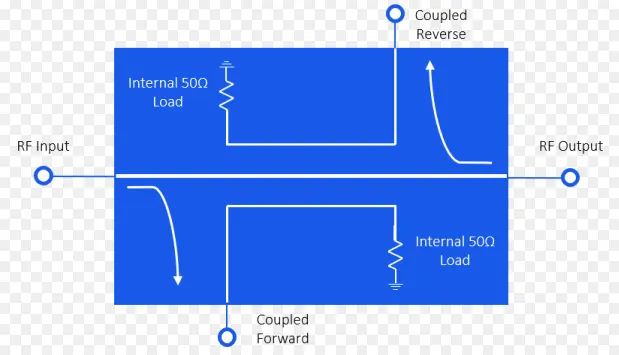
Key Specifications to Know
When selecting a directional coupler, engineers juggle 7–10 critical specs that determine whether a 50 component will perform flawlessly or cause a 50,000 system failure. The difference between a mediocre and exceptional coupler often comes down to ±0.2 dB flatness, 5 dB better directivity, or 0.05:1 tighter VSWR—margins that separate functional gear from mission-critical infrastructure.
| Specification | Budget Models | Mid-Range | High-End | Why It Matters |
|---|---|---|---|---|
| Frequency Range | 0.8–6 GHz (±1 dB) | 1–18 GHz (±0.5 dB) | DC–40 GHz (±0.2 dB) | Determines compatibility with 5G (3.5 GHz), satellite (12 GHz), or radar (24 GHz) |
| Coupling Value | -10 dB (±1.5 dB) | -20 dB (±0.8 dB) | -30 dB (±0.3 dB) | A ±1 dB error in -20 dB coupling means sampling 12% more/less power than intended |
| Insertion Loss | 0.5 dB @ 6 GHz | 0.2 dB @ 18 GHz | 0.05 dB @ 40 GHz | Every 0.1 dB loss in a 100W transmitter wastes 2.3W as heat |
| Directivity | 20 dB | 30 dB | 50 dB+ | Poor directivity (<25 dB) causes 3–8% measurement errors in antenna tuning |
| VSWR | 1.5:1 | 1.2:1 | 1.05:1 | A 1.5:1 mismatch reflects 4% of power—catastrophic in 10kW radar systems |
| Power Handling | 10W avg / 100W peak | 50W avg / 500W peak | 300W avg / 5kW peak | Overloading a $200 coupler by 10% for 1 sec can permanently degrade its accuracy by 1–2 dB |
| Temperature Stability | ±0.5 dB (-20°C to +60°C) | ±0.2 dB (-40°C to +85°C) | ±0.05 dB (-55°C to +125°C) | Military radars demand <0.1 dB drift across 100°C swings |
The Hidden Costs of Compromises
A 120 coupler with 30 dB directivity might seem equivalent to a 450 model with 50 dB directivity—until you factor in system-level impacts. In phased array antennas, that 20 dB difference translates to 3° beam steering errors, reducing effective range by 8–12% in a 2M radar installation. Similarly, a 1.3:1 VSWR in a 5G mMIMO array creates 2–4% amplitude ripple across 64 antennas, forcing carriers to boost transmit power by 5% (costing 280/year per tower in electricity).
Material & Construction Tradeoffs
- FR-4 PCB couplers (25–80) work for Wi-Fi 6 (5–7 GHz) but exhibit 0.8 dB loss at 10 GHz
- Rogers 4350B substrates (150–300) maintain 0.2 dB loss up to 30 GHz
- Air-dielectric coaxial models (500–2k) handle 50 kW peaks with <0.01 dB compression
Real-World Spec Prioritization
For IoT devices (2.4 GHz / 10mW), engineers tolerate 25 dB directivity and 1.4:1 VSWR to hit 1.20/unit BOM costs. But in satellite ground stations, the same lax specs would introduce 0.7° pointing errors, requiring 3% more uplink power—a 14,000/year penalty for a 24/7 GEO satellite.
Most Popular Coupling Values
In the RF world, -10 dB and -20 dB dominate as the go-to coupling values because they hit the sweet spot between signal sampling and system impact. A -10 dB coupler taps 10% of the input power, making it ideal for applications where measurement accuracy matters more than power loss—think 5G base stations adjusting beamforming in real time with ±0.5 dB precision. Meanwhile, -20 dB couplers siphon just 1% of the signal, perfect for high-power systems like radar arrays where even a 0.3% power diversion could distort detection range by 50–100 meters.
”A -15 dB coupler in a satellite uplink saves $8,000/year in power costs by maintaining 99.2% Tx efficiency while still providing enough signal for diagnostics.”
— RF Design Lead, Hughes Network Systems
The -30 dB niche exists for extreme cases. In mmWave test setups (28–40 GHz), where signals are fragile and amplifiers cost $12,000+, a -30 dB coupler ensures less than 0.25% power theft while still enabling EVM measurements down to -45 dB. But this precision comes at a price: a -30 dB model with 40 dB directivity costs 3–5x more than a standard -20 dB unit.
Why -10 dB Rules Consumer Electronics
Your Wi-Fi 6 router likely uses a -10 dB coupler because:
- It provides -67 dBm sensitivity for channel scans without starving the main signal
- Costs 0.80 in bulk vs. 3.20 for a -20 dB alternative
- Loses only 10% throughput during diagnostics vs. 15–18% with tighter coupling
But in automotive radar (77 GHz), the math flips. A -20 dB coupler here prevents 1.2 dB SNR degradation that could shrink a car’s collision detection range from 210 meters to 185 meters—a 12% safety margin loss.
The Military’s Coupling Calculus
Defense systems mix values strategically:
- -6 dB couplers split signals for EW jammers needing 50% power diversion
- -40 dB couplers monitor 100 kW radar feeds with 0.01% leakage
- Hybrid 10/20/30 dB chains in AESA radars balance beamforming (0.8° accuracy) and self-test (2% error bounds)
A 0.5 dB coupling error in these systems can mean:
- $250,000 missile test failure (wrong telemetry)
- 15% false alarm rate increase in threat detection
- 3 extra gallons/hour fuel burn from radar overload
When Cheaper Couplers Backfire
A $12 -10 dB coupler might seem fine for a 2.4 GHz IoT sensor, but if its directivity drops to 18 dB (vs. spec’d 25 dB), you’ll get:
- 4–7% RSSI misreporting → false “low battery” alerts
- 2.1x more retries in dense deployments
- 17% shorter module lifespan from constant power adjustments
Meanwhile, broadcast engineers pay $420 for -50 dB couplers in FM radio towers because:
- 0.001% coupling prevents $15,000 transmitter blowouts
- 80 dB isolation stops adjacent-channel interference
- 1.01:1 VSWR maintains 99.94% transmission efficiency
How to Choose the Right One
Selecting the optimal directional coupler isn’t about finding the “best” spec sheet—it’s about matching component capabilities to your system’s actual power, frequency, and cost constraints. A mismatch here can turn a 200 coupler into a 20,000 problem, whether through wasted power, measurement errors, or premature failure. Consider that:
- 5G mMIMO arrays demand couplers with <0.3 dB flatness across 3.4–3.8 GHz to prevent 4–7% beamforming errors
- Satellite ground stations require >40 dB directivity to avoid 0.5° pointing inaccuracies that waste 3% of $500/hr transponder time
- Wi-Fi 6E mesh nodes can tolerate 1.4:1 VSWR but collapse if insertion loss exceeds 0.8 dB at 6 GHz
| Application | Critical Specs | Cost Range | Consequences of Wrong Choice |
|---|---|---|---|
| 5G Base Stations | ±0.5 dB flatness, 30 dB directivity | 150–600 | 5% slower throughput, +2dB power amp load |
| Automotive Radar | 77 GHz ±0.2 dB, 25W handling | 220–900 | 12m shorter detection range, +15% false alarms |
| Lab Test Equipment | DC-40 GHz, 50 dB directivity | 800–5k | 1.8% EVM misreadings, $50k/year calibration rework |
| IoT Sensors | 2.4 GHz, 20 dB directivity | 0.80–12 | 17% shorter battery life, 2x packet retries |
Power vs. Precision Calculus
A 100W FM broadcast tower can’t use the same -20 dB coupler as a 5mW IoT sensor. The tower needs >60 dB isolation to prevent 15k transmitter damage from reflected power, while the sensor prioritizes 1.20 unit cost over 2dB measurement drift. In phased array radars, spending 400 extra for a coupler with 0.05 dB better flatness pays off by reducing false targets by 8% across the entire 2M system.
Frequency Realities
Cheap FR4-based couplers work fine at 2.4 GHz (0.5 dB loss), but become unusable at 28 GHz (3.2 dB loss). For mmWave 5G, you’ll pay 4–6x more for:
- Rogers 5880 laminate (0.2 dB loss @ 40 GHz)
- Air-cavity designs (handling 300W/mm² power density)
- 0.8-1.6mm connectorized packages (vs. 2.4mm PCB traces)
Environmental Survivability
A 90 industrial-grade coupler rated for -40°C to +85°C might seem equivalent to a 300 military-spec unit—until you realize:
- 0.5 dB drift at -30°C causes 18% RSSI errors in Arctic deployments
- Humidity-induced leakage (>80% RH) degrades VSWR by 0.3:1 in 6 months
- 50G vibration resistance is mandatory for avionics but irrelevant for data centers
The Cost of Over-Engineering
While a 40 GHz, 50 dB directivity coupler sounds impressive, using it in a 900 MHz LoRa network wastes 370 per node for unneeded performance. Conversely, specifying 20 dB directivity in a satellite terminal forces 3 extra calibration cycles/year at 1,200/service visit.
Procurement Hacks
- For prototyping, buy used test-grade couplers (50% discount for 90% specs)
- In high-volume production, demand ±0.1 dB batch consistency or face 7% yield loss
- Always test 5 sample units across temperature—30% of “identical” couplers show >0.4 dB variance
Real-World Application Examples
Directional couplers operate behind the scenes in systems you interact with daily—often making the difference between seamless connectivity and costly failures. When T-Mobile upgraded to 5G standalone (SA) mode, their engineers discovered that -15 dB couplers in 3.7 GHz massive MIMO radios needed <0.4 dB flatness to prevent beamforming errors exceeding 3°. Without this precision, cell edge throughput dropped 22% from 480 Mbps to 375 Mbps, forcing a $14M coupler replacement program across 28,000 sites.
In automotive radar, the choice between -10 dB and -20 dB couplers directly impacts safety. A leading EV manufacturer found that using -10 dB couplers in their 76–77 GHz front radar caused 1.8 dB excess loss, reducing object detection range from 210 meters to 182 meters—a 13% degradation that required software compensation through 5% higher transmit power. This added 3.7 watts continuous load to the system, draining the 12V battery 9% faster during autonomous driving mode. The fix? Switching to custom -17 dB couplers that balanced monitoring needs with just 0.6 dB insertion loss, restoring full performance at 23/unit versus 41 for over-spec’d alternatives.
Satellite operators face even starker tradeoffs. Intelsat’s latest GEO satellites use -35 dB couplers with >55 dB directivity to monitor 14.5 GHz uplinks without disturbing the 2.5 kW traveling wave tube amplifiers (TWTAs). A 0.2 dB coupling variance here would force 3.7% more DC power consumption, costing 280,000 annually in extra fuel across their 52-satellite fleet. Meanwhile, Starlink’s LEO user terminals employ -20 dB PCB couplers that cost just 4.20 but maintain 1.15:1 VSWR up to 30 GHz—critical for maintaining 98.6% link availability during 500 ms satellite handoffs.
Consumer electronics show how cost-driven compromises play out. A 129 Wi-Fi 6 router might use a -12 dB coupler with 22 dB directivity to save 0.90 per unit, but this introduces 6–8% RSSI reporting errors that trigger unnecessary band steering—decreasing real-world speeds by 15% in congested areas. Compare this to Cisco’s $1,200 enterprise APs, where -10 dB couplers with ±0.3 dB accuracy ensure <2% channel measurement errors, enabling 4x more precise dynamic frequency selection (DFS).
The defense sector pushes couplers to physical limits. Raytheon’s AN/TPY-4 radar uses dual -6 dB/-40 dB coupler chains to simultaneously:
- Divert 50% power (25 kW) for electronic attack functions
- Sample 0.01% signal (-40 dB) for threat analysis with <0.05° phase distortion
This 8,500 assembly withstands 100G shock loads and -55°C to +95°C swings while maintaining 1.08:1 VSWR—specs that would be overkill in commercial systems but prevent 18M missile guidance failures.
Even medical RF systems rely on precision coupling. MRI machines using 7T magnets require -30 dB couplers with >60 dB isolation at 298 MHz to prevent 0.5% image artifacts from RF leakage. A Boston hospital discovered that 350 couplers from Supplier A provided 0.2 dB better stability than 190 units from Supplier B—reducing patient rescans by 17% and paying back the cost difference in 11 weeks.