
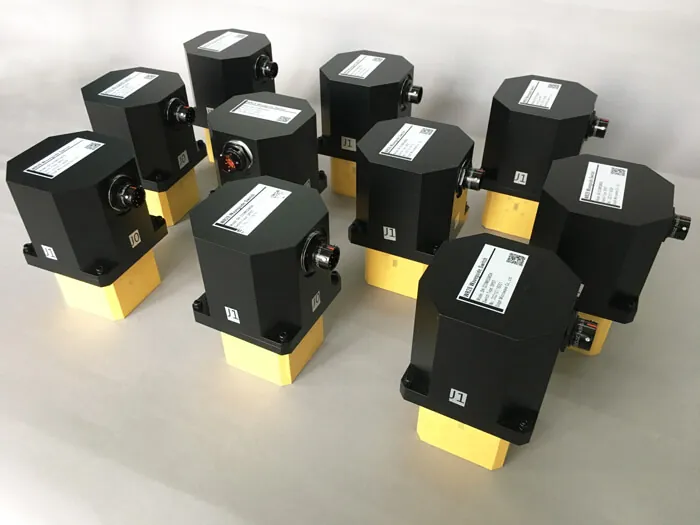
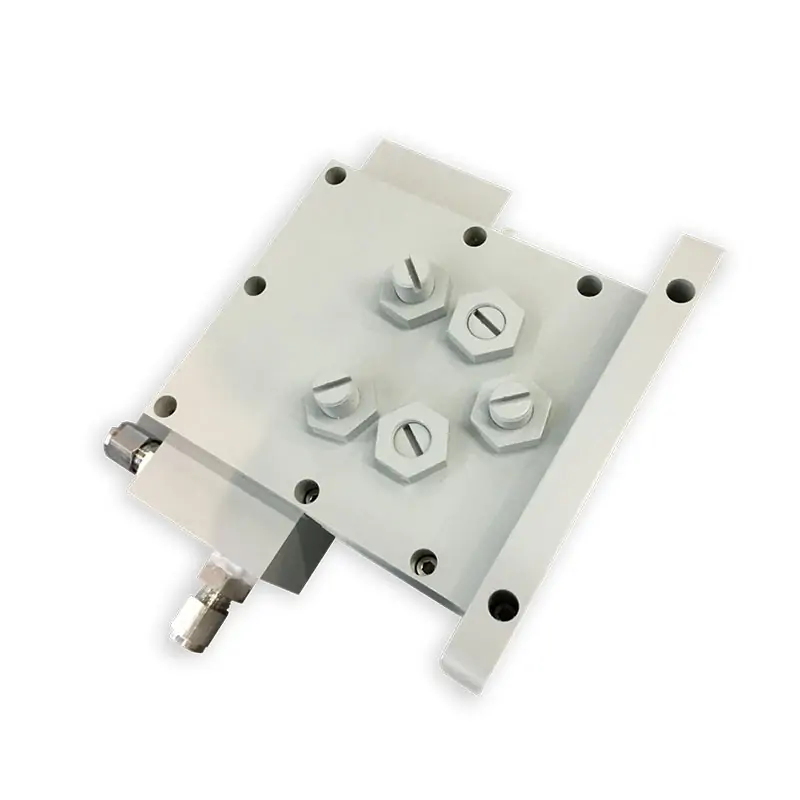
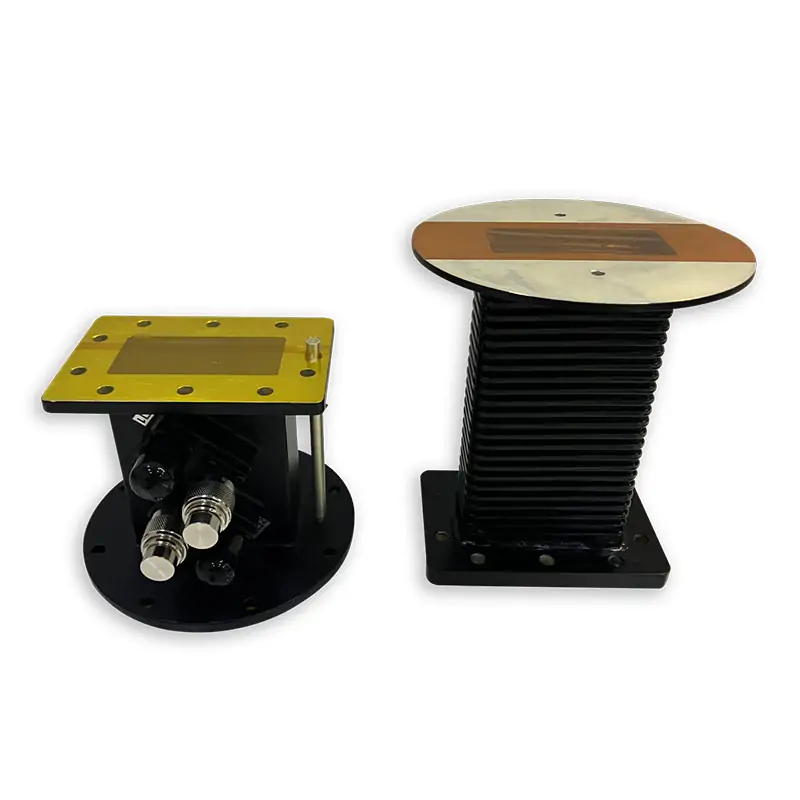
WR340 Pressure Window
2450 ± 25 MHz30 psig10 kW
Built for a 2450 MHz high-power line that runs under pressure.
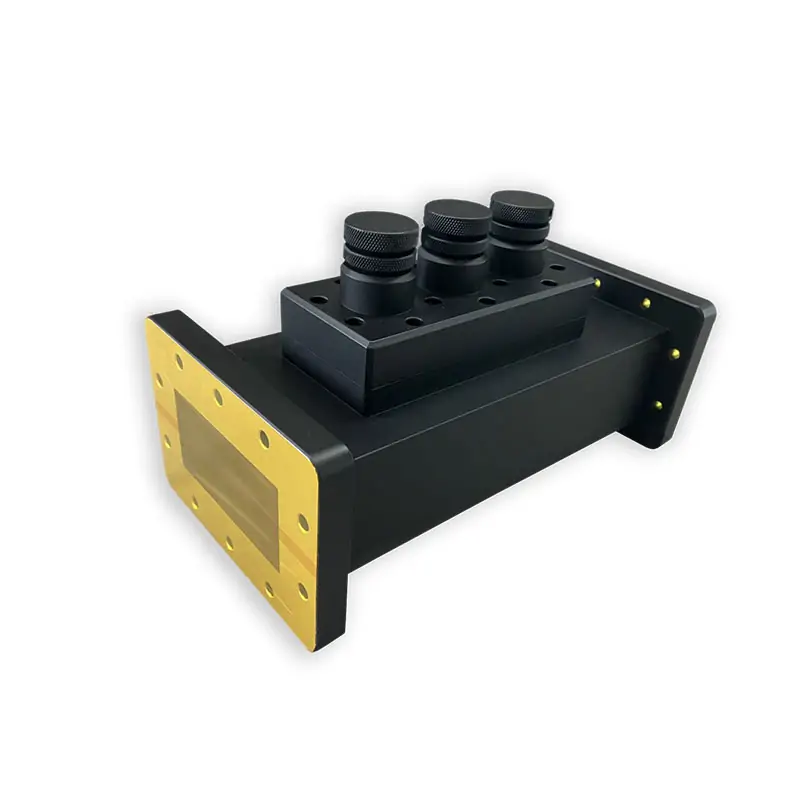
A high-power microwave tuner from our industrial line
We build high-power waveguide components for 915 MHz and 2450 MHz industrial systems — tuners, circulators, isolators, water loads, bends and pressure windows, handling 6 kW to 20 kW CW. Standard or fully custom, all made in our own factory.
Every part below is machined, brazed and tested in our own workshop. Send us your drawing, or pick a standard model and we adapt it to your system.
Match the load impedance and pull VSWR down in high-power systems.
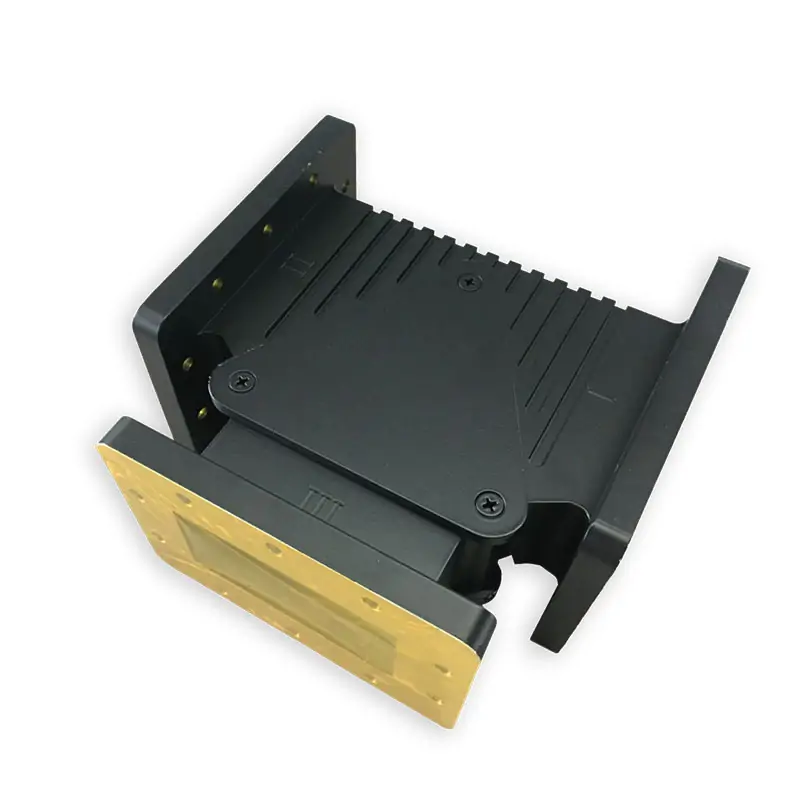
Route the signal one way and keep reflected power away from your source.
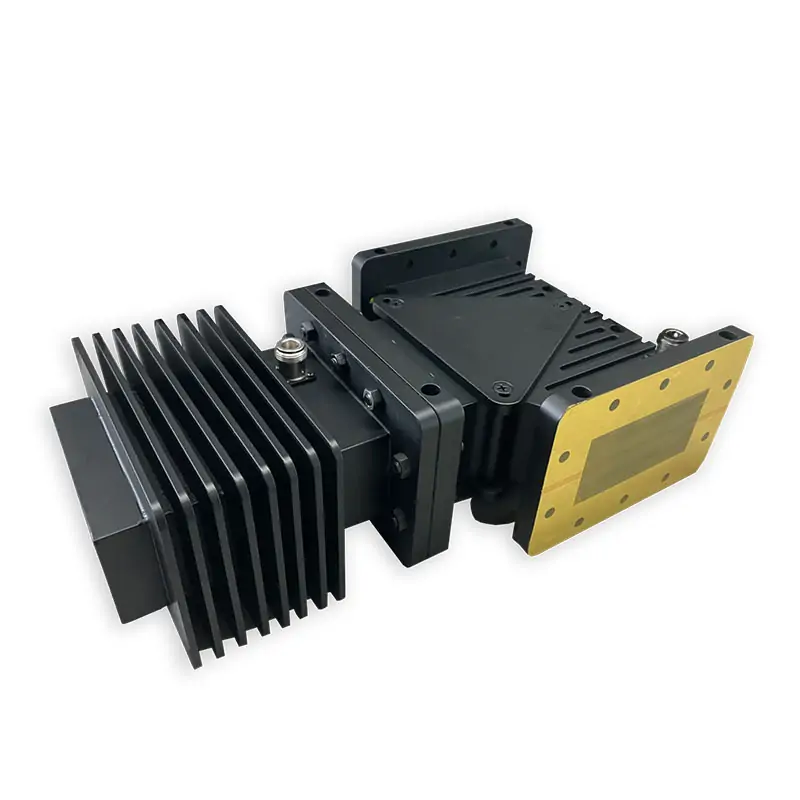
Let power through one way, absorb what comes back. Protects the magnetron.
Absorb excess microwave energy safely — for testing and power measurement.
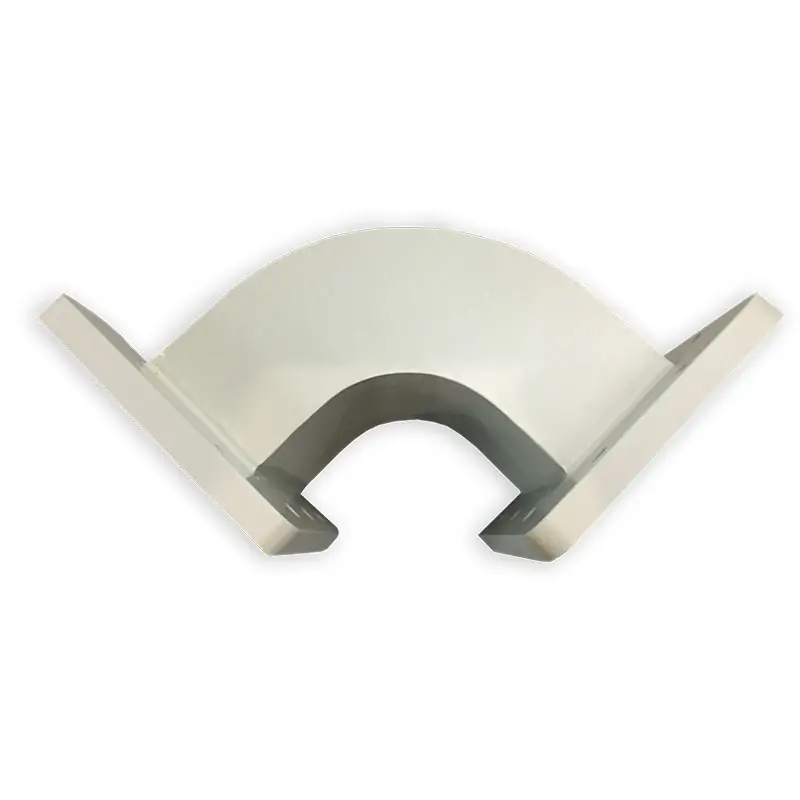
E-bends and H-bends, sweep or miter type, to route power around your layout.
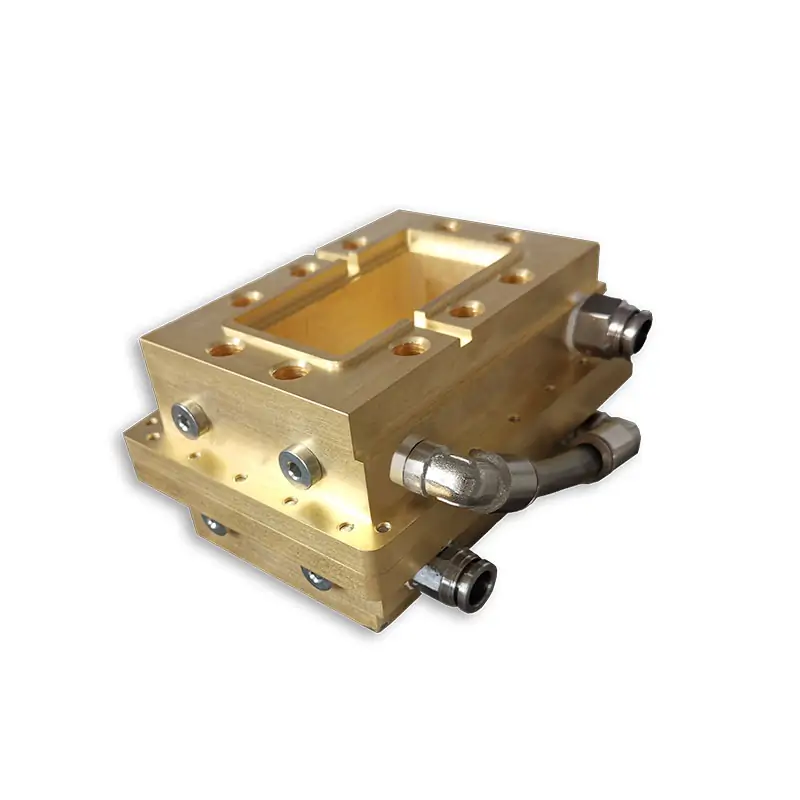
Seal the waveguide against pressure and dust, let the microwave pass.
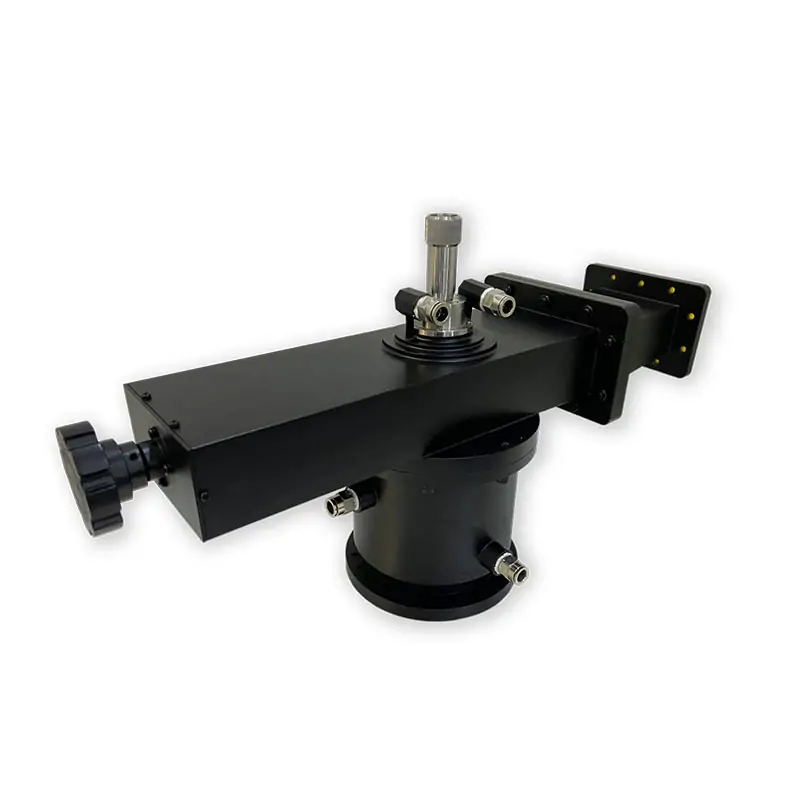
Change the microwave from one transmission mode to another, with low loss.
Sample or split the signal so you can measure power without stopping the line.
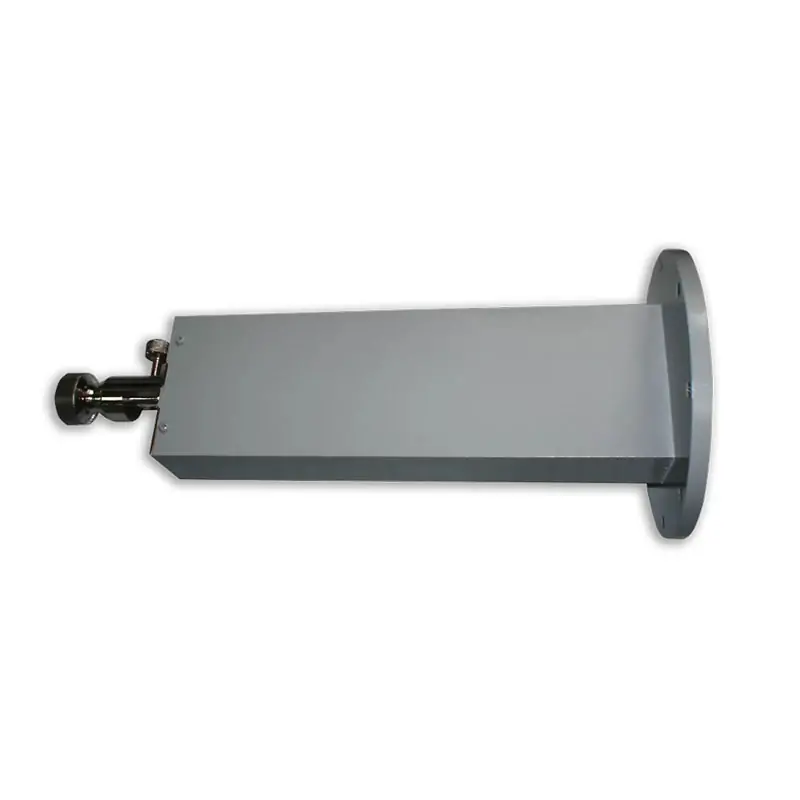
A movable short for fine-tuning phase and impedance in test setups.
Need something not listed here?Microwave Customized ProductsCustom Waveguide Systems
A high-power microwave line is a chain. Each part has one job — here is the chain from the source to the load, in plain words.
Magnetron
Makes the microwave power.
Isolator / Circulator
Stops reflected power from going back into the source.
Tuner / Sliding Short
Matches the line, so more power reaches your product.
Coupler / Water Load
Lets you check power without stopping the line.
Bends / Transitions / Windows
Carries the power to the chamber where the work happens.
Termination / Load
Safely eats any leftover power.
Almost every industrial microwave system runs on one of these two frequencies. We build hardware for both.
Big lines, deep heating
The longer wavelength goes deeper into the material, so 915 MHz is the usual choice for large continuous heating and drying lines. The waveguide is physically bigger — this is where sizes like WR975 come in.
Compact systems, batch work
The same frequency as the microwave oven in your kitchen. Hardware is more compact — sizes like WR340 — and it is the common choice for batch systems, oven-style chambers and smaller industrial setups.
At this power level, heat and arcing decide whether a part lasts weeks or years. That is why we offer cooling options, the right flange for your line, and materials that hold up — and why every high-power part is tested before it ships.
The usual ranges buyers ask about. Need something outside these numbers? Ask — custom is most of our work.
| Component | Frequency | Power | Waveguide | Notes |
|---|---|---|---|---|
| Tuners | 915 / 2450 MHz | 6–20 kW CW | WR340 / WR430 / WR975 | Load impedance matching |
| Circulators | 915 / 2450 MHz | Up to 20 kW CW | WR340 / WR430 / WR975 | Cover & grooved flanges |
| Isolators | 915 / 2450 MHz | 6 / 10 / 20 kW CW | WR340 / WR430 / WR975 | Water or air cooled |
| Bends | 915 / 2450 MHz | 6–20 kW CW | — | E / H, 45° / 60° / 90° |
| Pressure windows | 0.32 – 112 GHz | — | WR-2300 ~ WR-10 | Seals up to 70 psi |
| Sliding shorts | — | — | WR-2300 ~ WR-10 | Cover / grooved / choke |
| Terminations | Models 1.1 – 50 GHz | 100 – 6000 W CW | WR2300 ~ WR10 | Air or water cooled |
| Water-cooled loads | By band | Up to 150 kW | WR975 ~ WR28 | MIL-D-3954, VSWR ≤ 1.2:1 |
These are parts we actually built for customers. The numbers come from our own delivery notes.
Built for a 2450 MHz high-power line that runs under pressure.
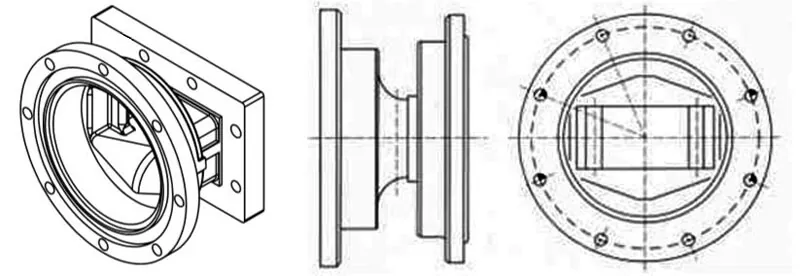
A TE10-to-TE11 rectangular-to-circular adapter for a high-power magnetron source.
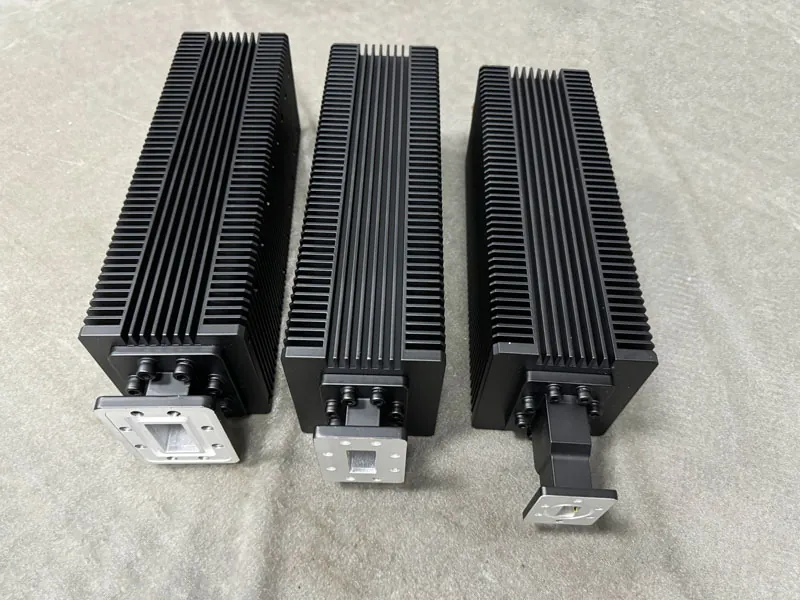
Cast with cooling fins and heat-resistant absorber, for a 5–6 GHz line.
Our parts run in systems like these every day.
Heating, drying and cooking lines in commercial food production.
Water loads and tuners for measuring microwave power and heating efficiency.
Sliding shorts, tuners and couplers for lab setups and calibration work.
Circulators and isolators that keep microwave energy flowing one way.
No long procedures. Four steps, and you always know which step your order is in.
Frequency, power, waveguide size, flange. A drawing helps, but is not required.
You get a technical proposal and a price from our engineers.
Machining, brazing and surface treatment in our own workshop.
Checked in our lab, packed for export, sent to your door.
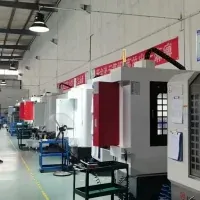

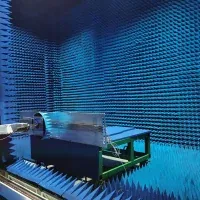
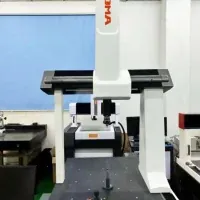
We don’t send critical steps outside. Milling, turning, bending, brazing and assembly all happen in our own workshop, so we control the quality at every step.
We solder and braze all the common waveguide materials in-house.
Every component is checked in our testing lab before packing.
A spec sheet is easy to print. We back ours with real measurement equipment and test services in-house.
Vector and scalar measurement systems covering the bands we build for.
Quiet rooms for antenna and radiation tests without outside noise.
So high-power parts can be checked at real working levels.
Calibration service for waveguide measurement setups.
Check how equipment behaves with electromagnetic interference.
Temperature, altitude, salt fog and humidity — for parts that work outdoors.
If your system needs more than the parts above, these product lines come from the same workshop and the same quality checks.
Up to 150 kW average power. Refractory ceramic absorber, welded aluminium housing, built to MIL-D-3954, VSWR ≤ 1.2:1.
100 W to 6000 W CW, air or water cooled, in waveguide sizes from WR2300 down to WR10.
Change the signal path in your line. DH series covers 2.6 to 110 GHz, in rectangular and double-ridge waveguide.
Anything outside the catalog — send a drawing or a requirements list and we build it.
If a part is defective, we replace it. Repairs from normal use are free within one year of delivery.
Our sales team handles international shipping and customs paperwork every week — your order arrives without surprises.
You talk to people who design and build the parts — not a call center. Technical questions get technical answers.
Save these for your supplier file. The ISO certificate is the same one we show in audits.
Short, practical articles from our team. Useful background before you specify a high-power part.
01
A high-power pressure window we built and shipped.
02
Why arcing happens in high-power lines, and what to do about it.
03
Specs of a finned termination from our high-power line.
04
Waveguide modes explained in plain terms.
05
Practical notes on moving between waveguide sizes.
06
Full test data from a switch we delivered: 65 dB isolation, 120 ms.
Keep reading:Cutoff Frequency, in 4 StepsCan You Clean a Waveguide?Waveguide vs Transmission LineThe 3 Waveguide ModesAll Articles
Dolph grew out of the state-owned 806 Factory. Waveguide work is not new to us — it is what the company was built on. About our company.
Our Quality Manual and Quality Procedure follow ISO 9001:2015. Every job goes through the same checks.
Technical questions go straight to our engineers — not a call center.
One year from delivery. Defective parts are replaced, and normal-use repairs are free.
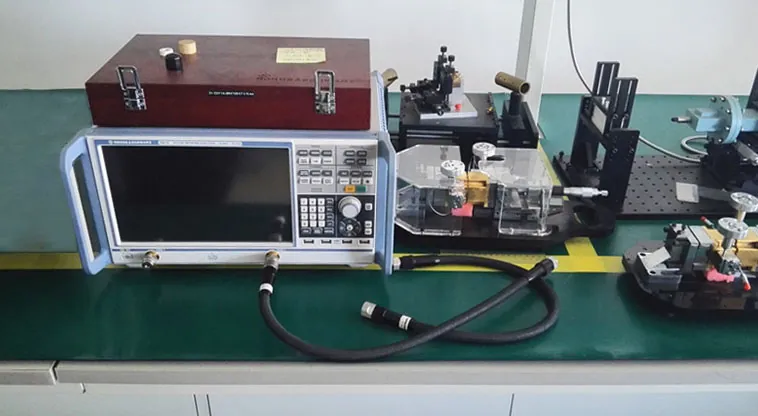
Quality inspection in our Xi’an factory
Microwave tuners, circulators, isolators, water loads, bends, couplers, mode converter antennas, pressure windows, sliding shorts and transitions — mainly for 915 MHz and 2450 MHz systems, handling 6 kW to 20 kW CW.
The high-power industrial line covers WR340, WR430 and WR975 at 6 kW, 10 kW and up to 20 kW CW. Pressure windows and sliding shorts cover the full range from WR-2300 down to WR-10.
High power terminations handle 100 W to 6000 W CW with air or water cooling. Water-cooled waveguide loads go up to 150 kW average power, built with refractory ceramic absorbers to MIL-D-3954.
We run RF vector and scalar measurement systems up to 100 GHz, antenna anechoic chambers, high power transmitters, waveguide calibration, EMI and EMS testing, plus environmental tests like temperature, altitude, salt fog and humidity.
Yes — that is most of our work. Machining, bending, brazing, plating and testing are all done in-house, so custom dimensions are not a problem.
The factory works to a written Quality Manual and Quality Procedure based on ISO 9001:2015. Products meet RoHS requirements, and every product has a one-year warranty.
Email your frequency, power level, waveguide size and flange type to sales@dolphmicrowave.com, or call +86 29 8881 0979. You will get a technical proposal and a price.
The more of these you include in your first email, the faster our engineers can answer. Don’t have all of them? Send what you have — we will ask about the rest.
915 MHz, 2450 MHz, or another band you work in.
Continuous power in kW, and any peak power.
For example WR340, WR430 or WR975.
Cover, grooved or choke flange; water or air cooling.
Any size or shape limits on your line, or a drawing.
How many pieces, and when you need them.
Send your frequency, power and waveguide size. Our engineers will reply with a technical proposal and a price — usually the same week.
Dolph Microwave · FengHuiNan Road NO.34, High-Tech Zone, Xi’an, China · sales@dolphmicrowave.com