
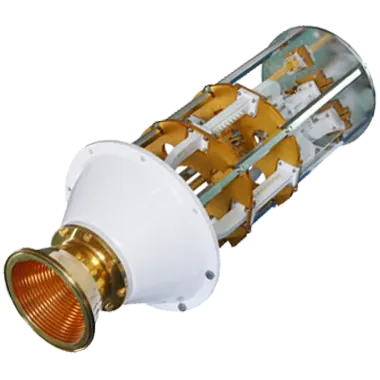
Combined Multi-Band Feeds
One dish, several bands. A combined feed lets your antenna work in C and Ku band at the same time, without swapping parts. See our antenna feeder networks.
Tell us your frequency band and dish size — we build the complete feed system for it. Single-band, dual-band or triple-band. The horn, OMT, filter, diplexer, polarizer and rotary joint are all made in our own factory, so you deal with one supplier for the whole feed chain.
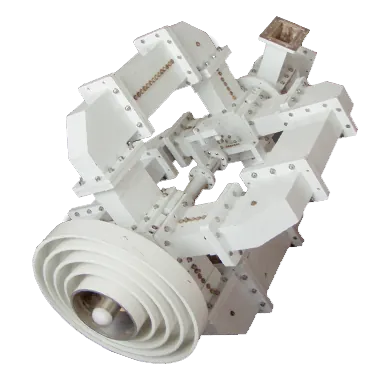
An S/X-band feed system we built for a customer project
The feed decides how well the whole antenna works. We design each feed system for your band, your polarization and your dish — not the other way round.
One dish, several bands. A combined feed lets your antenna work in C and Ku band at the same time, without swapping parts. See our antenna feeder networks.
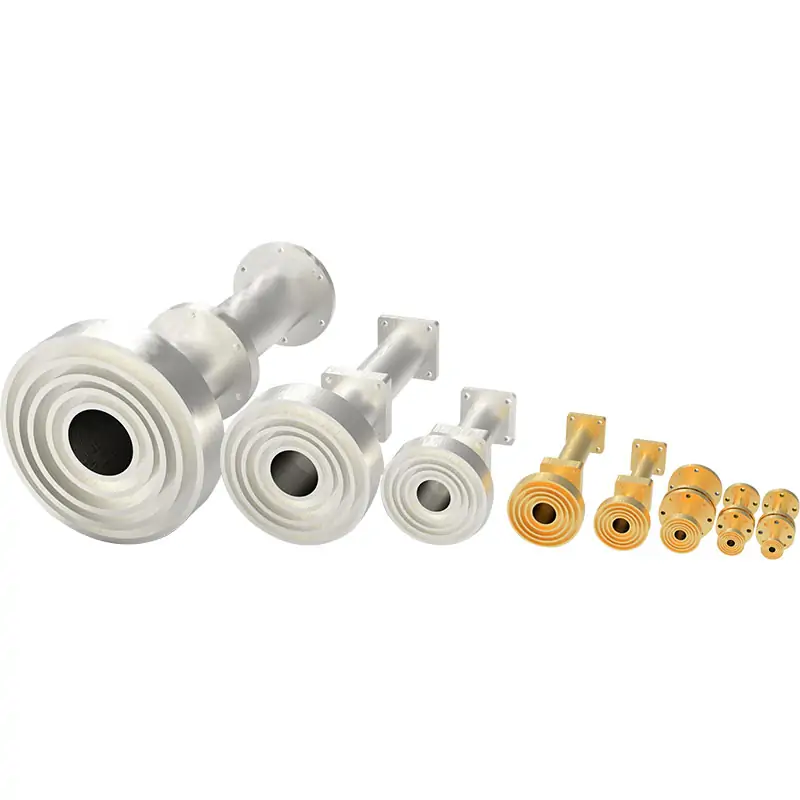
The horn sits at the focus of your dish and shapes how the dish is lit up. We build horns for prime focus, offset, ring focus and Cassegrain dishes.
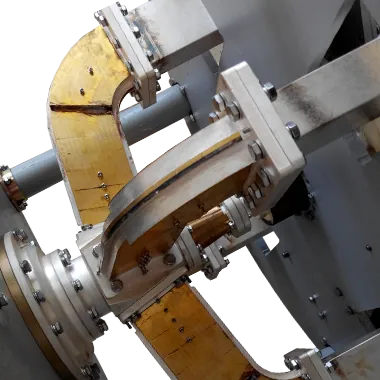
Send us a drawing or just your requirements. We build the full feed chain from our own waveguide parts — read about our custom feed network work.
Most of our feed systems are built for these four satellite bands. Other bands on request.
4 – 8 GHz
The classic satellite band. Keeps working well in heavy rain, so it is common for links that must stay up all year.
8 – 12 GHz
Used heavily by defence, weather and science satellites — a band we know well from government-style projects.
12 – 18 GHz
The most common band for VSAT, TV broadcast and flyaway antennas. Most quick-deploy feeds we build are Ku.
26.5 – 40 GHz
For high-data-rate satellite links. We build Ka feeds down to our 1.2 m Ka-band prime focus antenna.
Many suppliers sell you single parts. We make all of them, so every connection in your feed chain fits and is tested together before shipping.
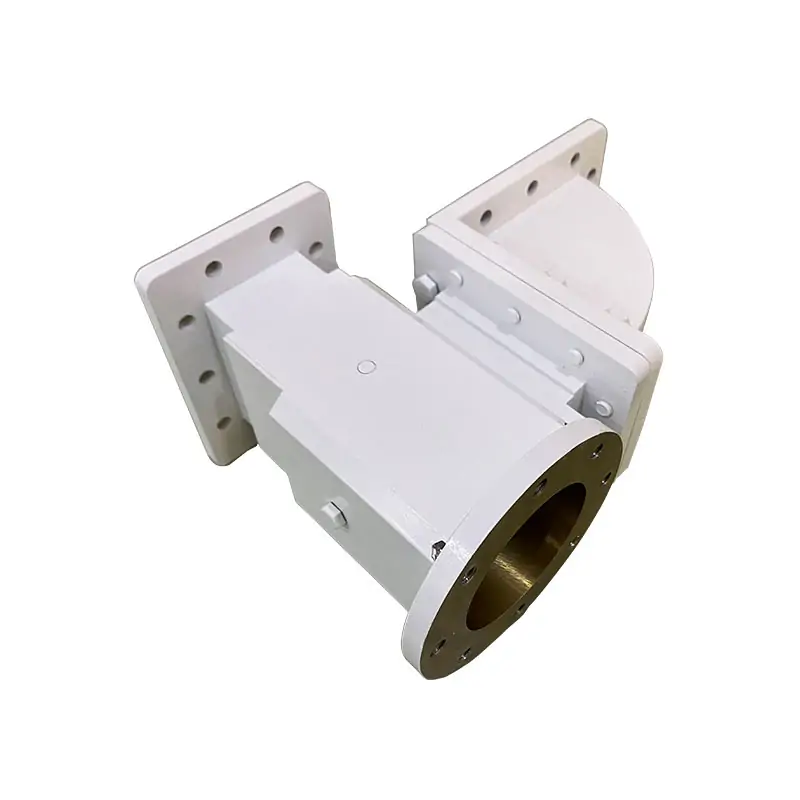
Splits one signal into two polarizations, or combines them back into one.
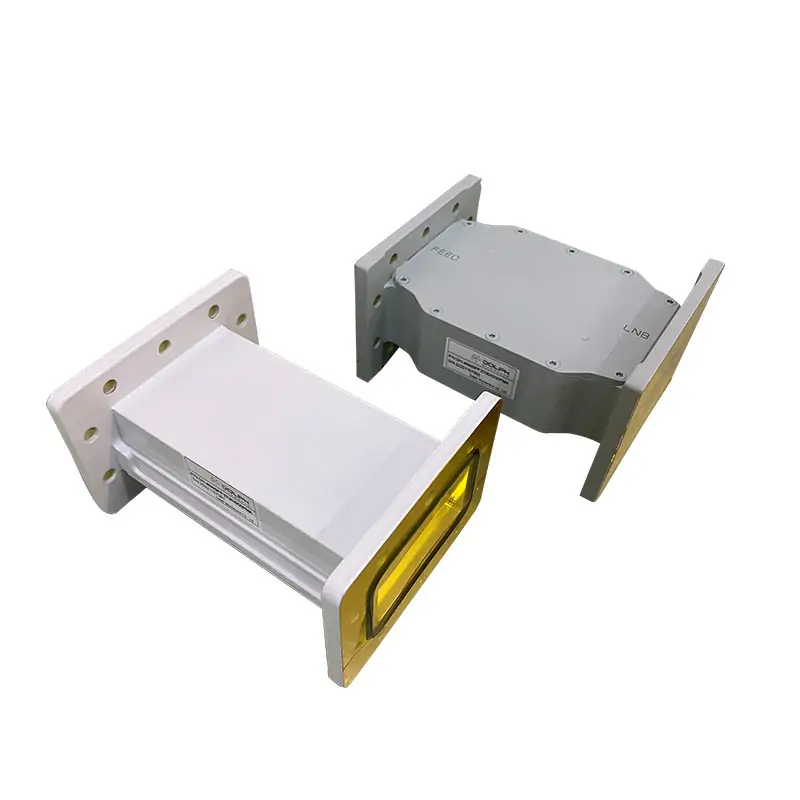
Let the band you want pass through and block everything else.
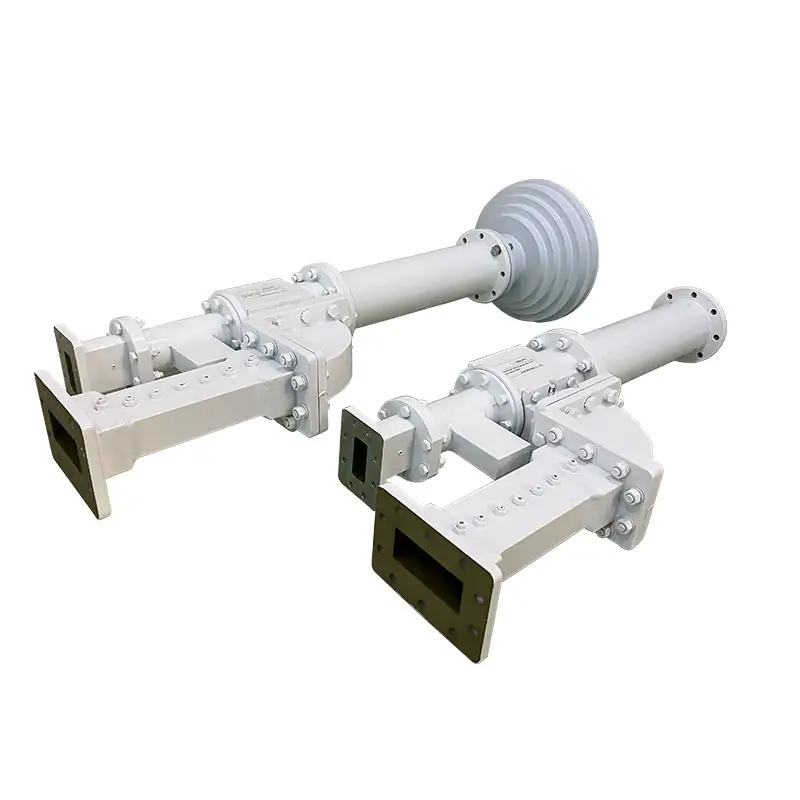
Put transmit and receive on different bands in one waveguide run.
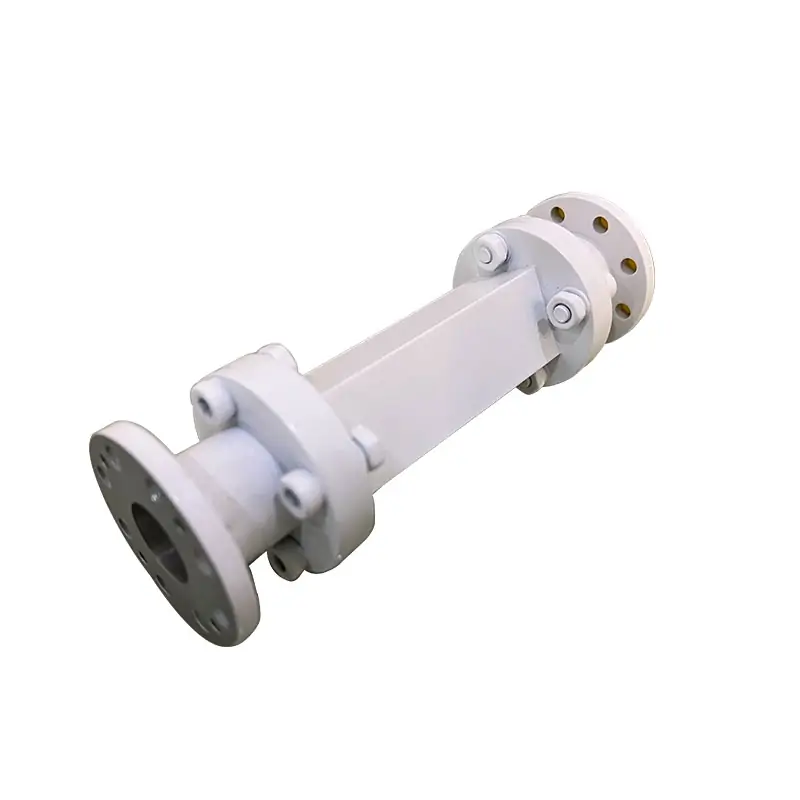
Turn linear polarization into circular, and set phase anywhere from 0 to 360°.
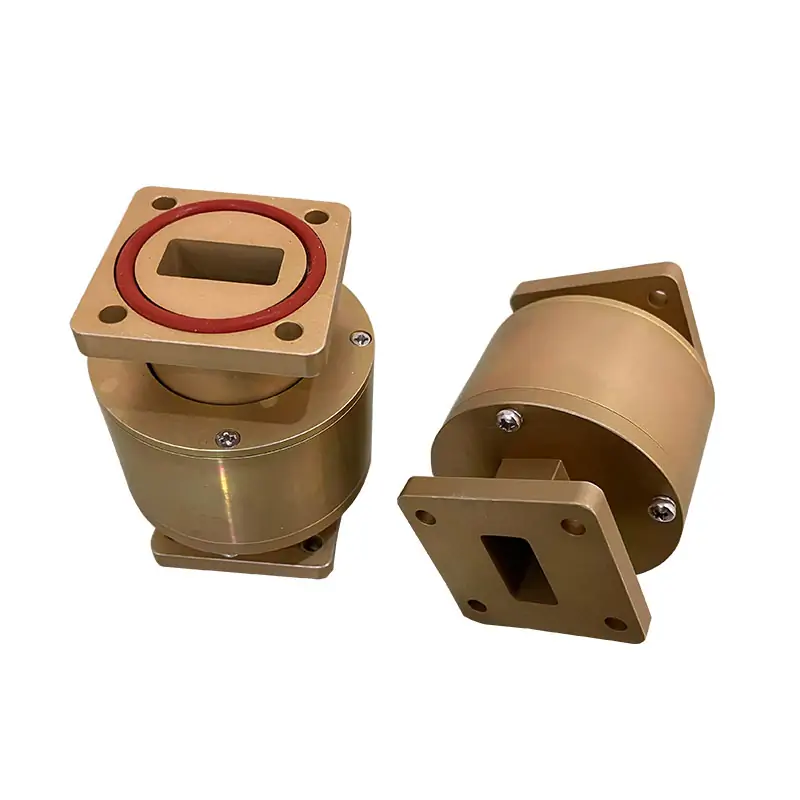
Pass the signal while the antenna turns — for tracking antennas and radar.
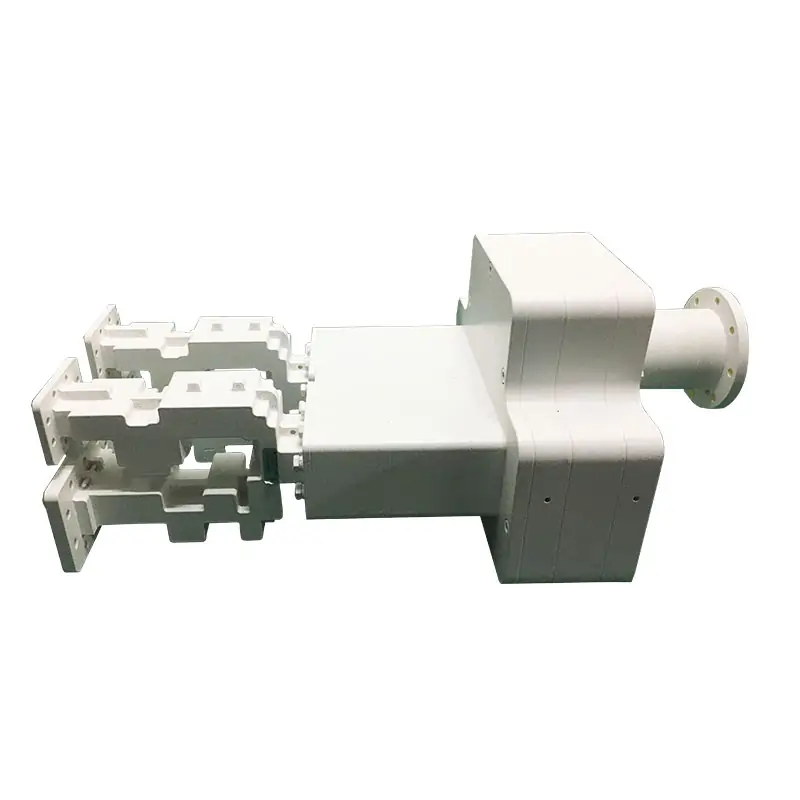
The full chain — horn, OMT, filter, diplexer — built and tested as one unit.
Not sure which layout your dish needs? Tell us the dish type and band — we will recommend one.
Our standard gain horns are linearly polarized, light and corrosion-resistant. Customers use them for EMI/EMC testing, direction finding, surveillance and antenna gain measurement. Need a different gain or size? We build that too.
No long procedures. Four steps, and you always know which step your order is in.
Step 01
Band, polarization, power, flange. A drawing helps, but is not required.
Step 02
You get a technical proposal and a price from our engineers.
Step 03
Machining, brazing and surface treatment in our own workshop.
Step 04
Checked in our lab and anechoic chamber, then sent to your door.
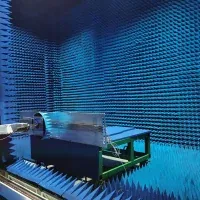
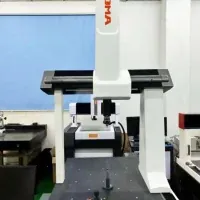
We don’t send critical steps outside. Milling, turning, bending, brazing and assembly all happen in our own workshop, so we control the quality at every step.
We solder and braze all the common waveguide materials in-house.
Every feed system is checked in our testing lab and on-site hybrid anechoic chamber.
Our feeds and microwave parts are running today in satellite, aerospace, defence and research projects.
Feed chains for earth station, flyaway and quick-deploy antennas in daily operation.
Feeds for ground stations that receive data from low and medium orbit satellites.
Our products have played key roles in space exploration tasks.
Feeds for research antennas, spectrum monitoring stations and radar systems.
We also supply complete antennas, and can put the whole system together — our feed, our waveguide parts, and antennas from partner factories we have worked with for years.
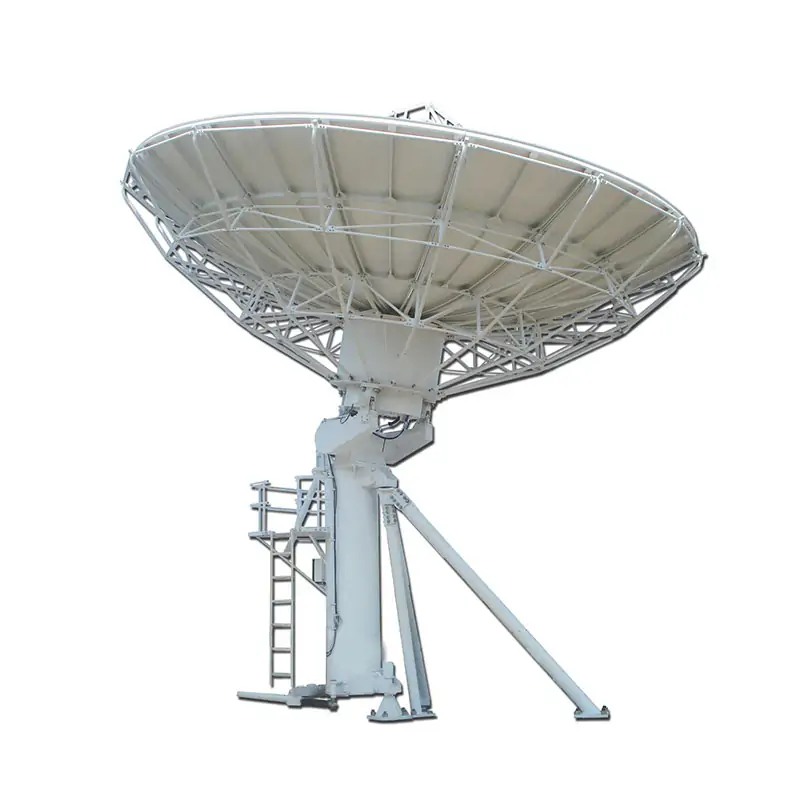
View product
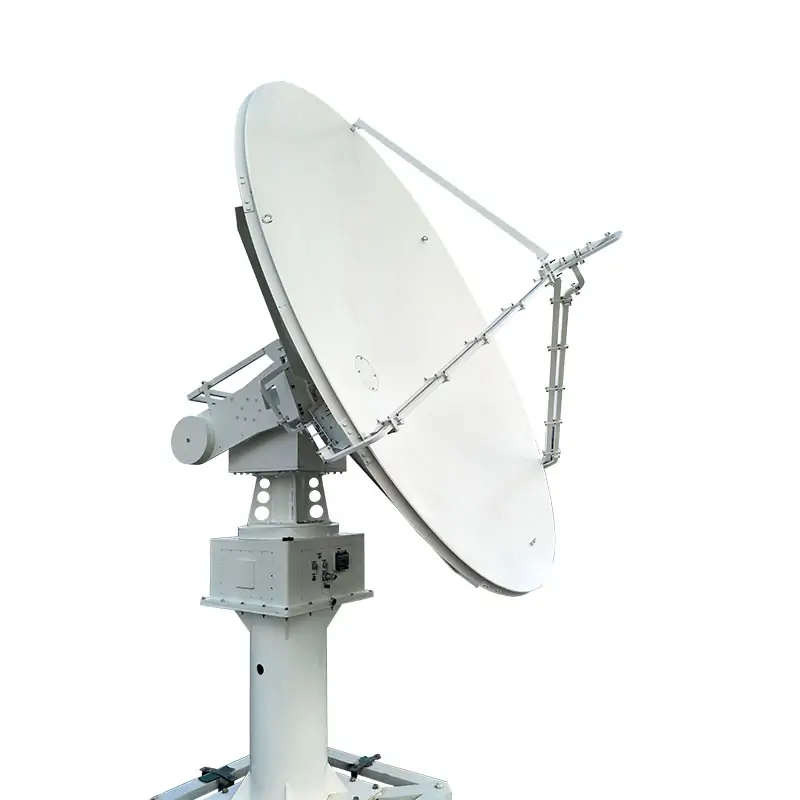
View product
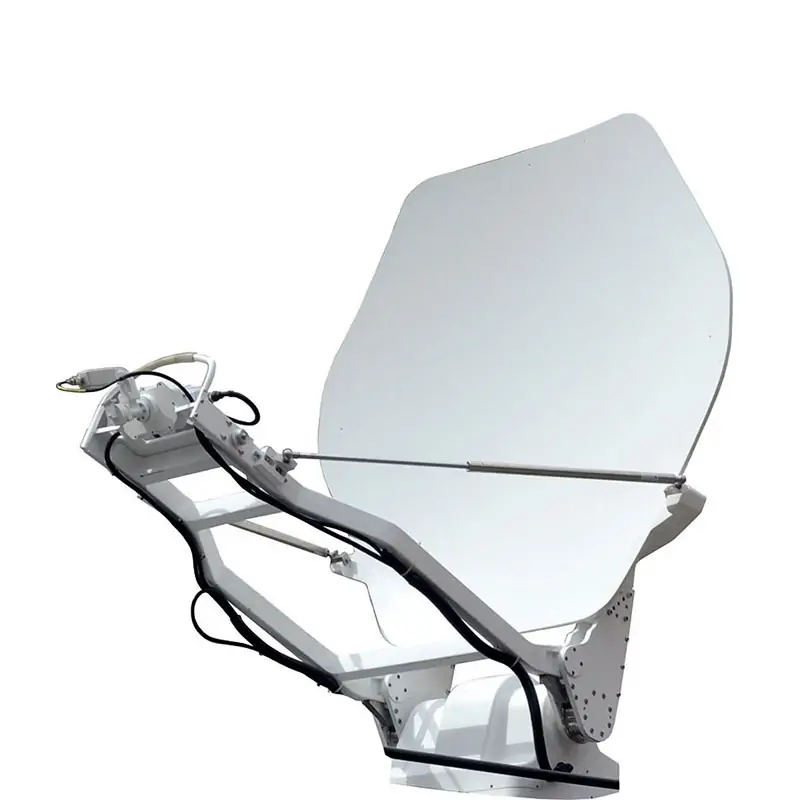
View product
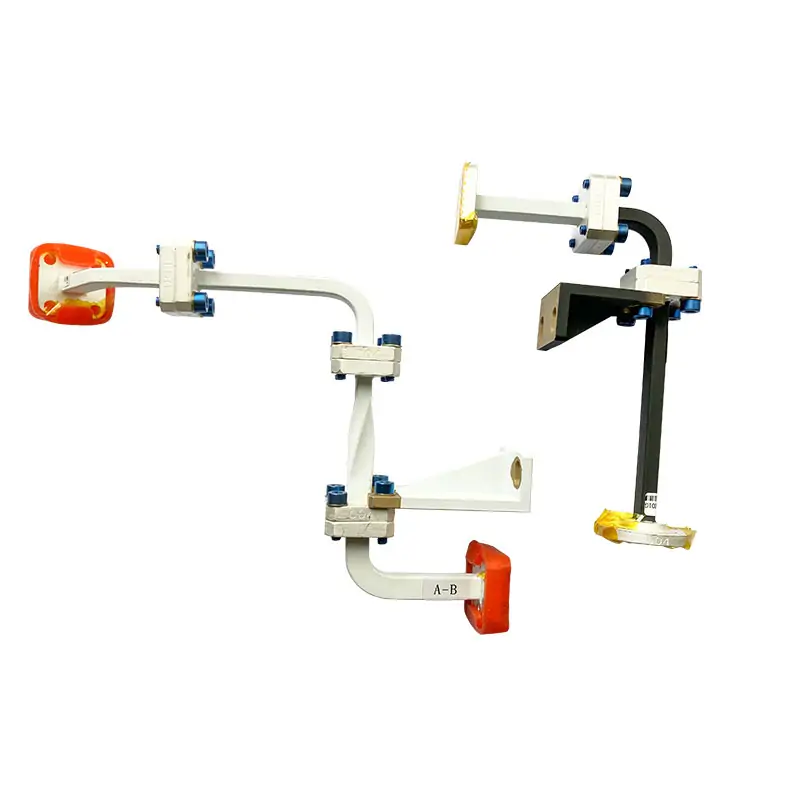
View product
If a part is defective, we replace it. Repairs from normal use are free within one year of delivery.
Our sales team handles international shipping and customs paperwork every week — your order arrives without surprises.
You talk to people who design and build the parts — not a call center. Technical questions get technical answers.
Save these for your supplier file. The ISO certificate is the same one we show in audits.
Download PDF
Download PDF
Download PDF
Download PDF
Short, practical articles written by our team. Good background reading before you specify a feed.
The six parts every feed network designer should check.
Read article
Three feeder design errors we see often — and how to avoid them.
Read article
Feed line types compared, in plain terms.
Read article
Which horn shape fits your dish — a quick comparison.
Read article
The basics of horn antennas, explained simply.
Read article
A recent OMT assembly we built and shipped.
Read article
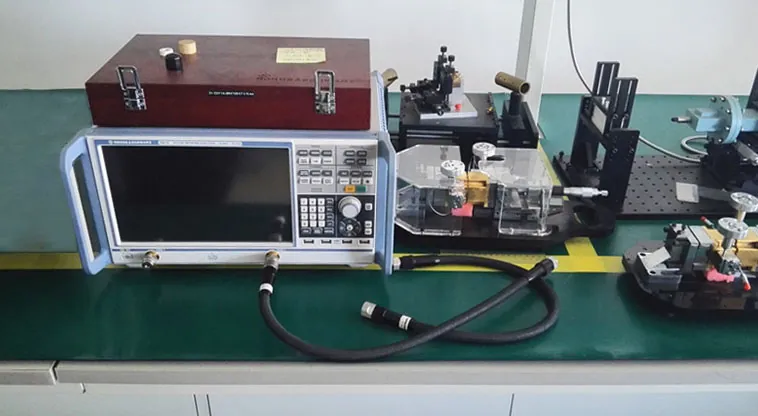
Quality inspection in our Xi’an factory
Dolph grew out of the state-owned 806 Factory. Waveguide work is not new to us — it is what the company was built on. About our company.
Our Quality Manual and Quality Procedure follow ISO 9001:2015. Every job goes through the same checks.
Feed, waveguide parts and antennas — we put the full chain together so you don’t have to coordinate three vendors.
One year from delivery. Defective parts are replaced, and normal-use repairs are free.
Single-band, dual-band and triple-band feed systems, with horns, OMTs, filters, diplexers, polarizers and rotary joints. They fit prime focus, offset, ring focus and Cassegrain dishes.
C, X, Ku and Ka band. Our standard gain horns run from 0.32 to 112 GHz, with waveguide sizes from WR-2300 to WR-28.
In satellite communication, earth observation, deep space missions, radio astronomy and radar. Our products have worked in satcom systems and space exploration tasks.
The factory works to a written Quality Manual and Quality Procedure based on ISO 9001:2015. Products meet RoHS requirements, and every product has a one-year warranty.
Yes — that is most of our work. Machining, bending, brazing, plating and testing are all done in-house, including RF checks in our testing lab and on-site hybrid anechoic chamber.
Email your frequency band, polarization, dish size and interface to sales@dolphmicrowave.com, or call +86 29 8881 0979. You will get a technical proposal and a price.
The more of these you include in your first email, the faster our engineers can answer. Don’t have all of them? Send what you have — we will ask about the rest.
For example: Ku-band receive 10.7–12.75 GHz.
Linear or circular, single or dual.
Diameter, f/D ratio, or just the antenna model you use.
How much transmit power the feed must handle.
Flange types, coaxial connectors, and any space limits.
How many sets, and when you need them.
Send your band, polarization and dish size. Our engineers will reply with a technical proposal and a price — usually the same week.
Dolph Microwave · FengHuiNan Road NO.34, High-Tech Zone, Xi’an, China · sales@dolphmicrowave.com