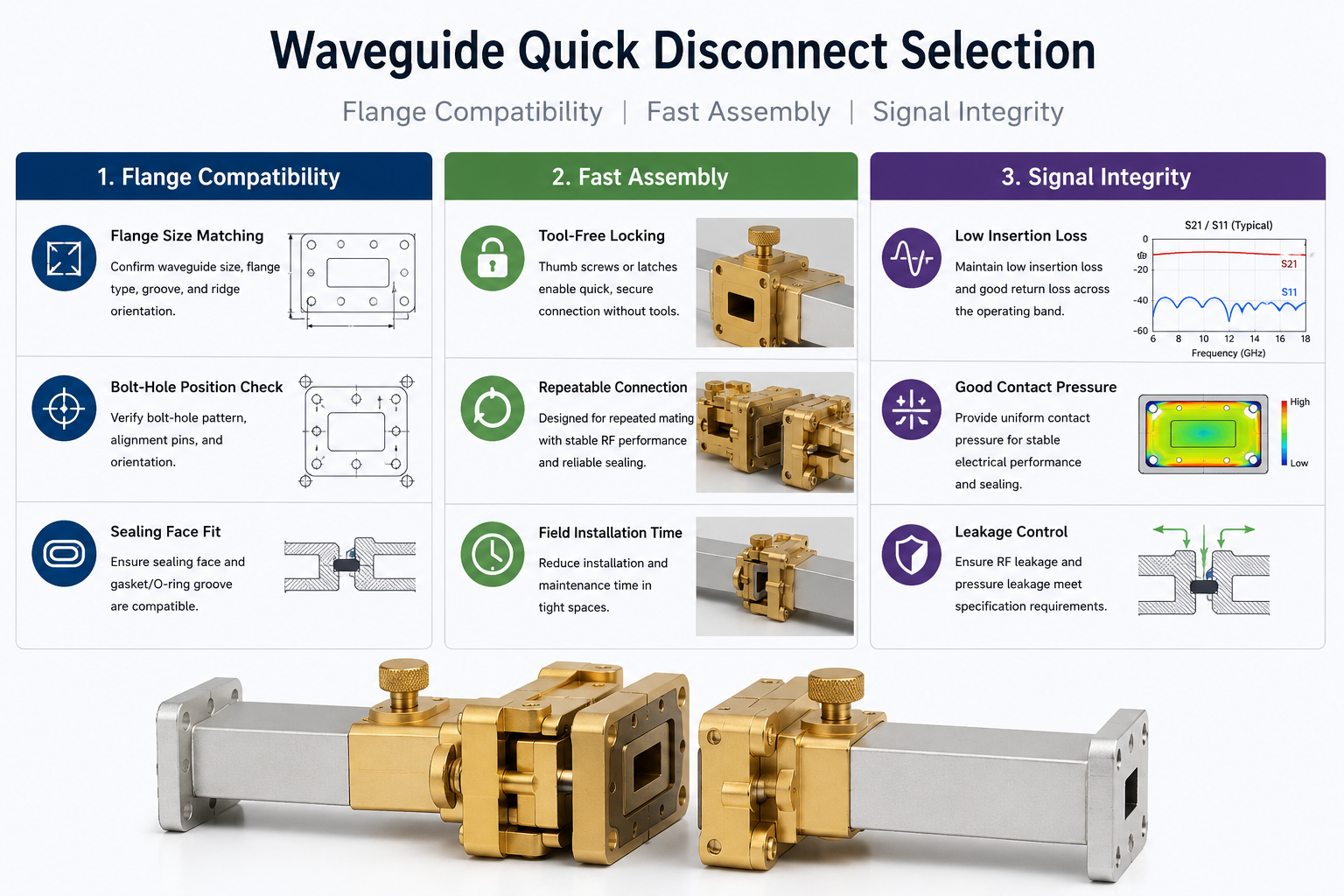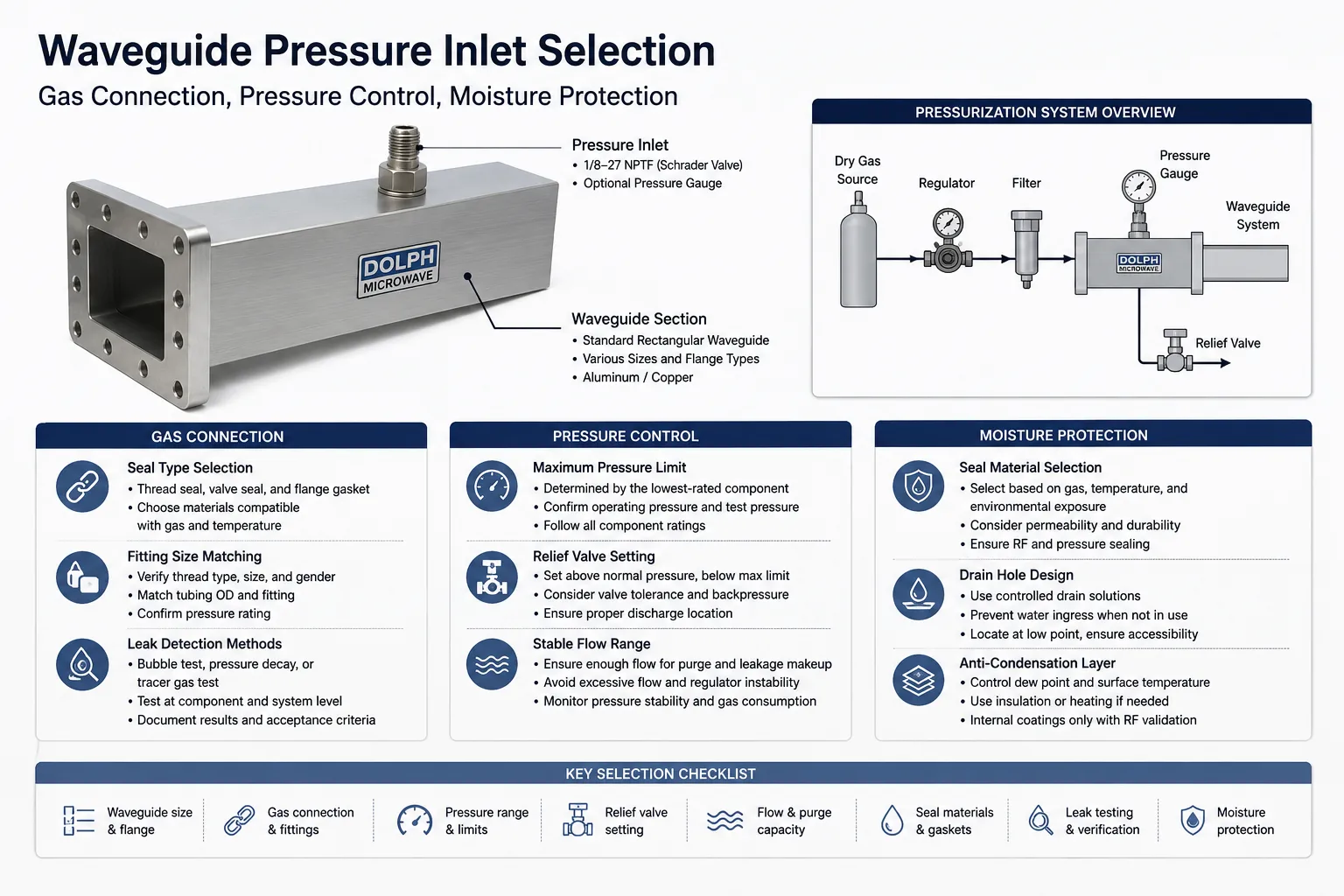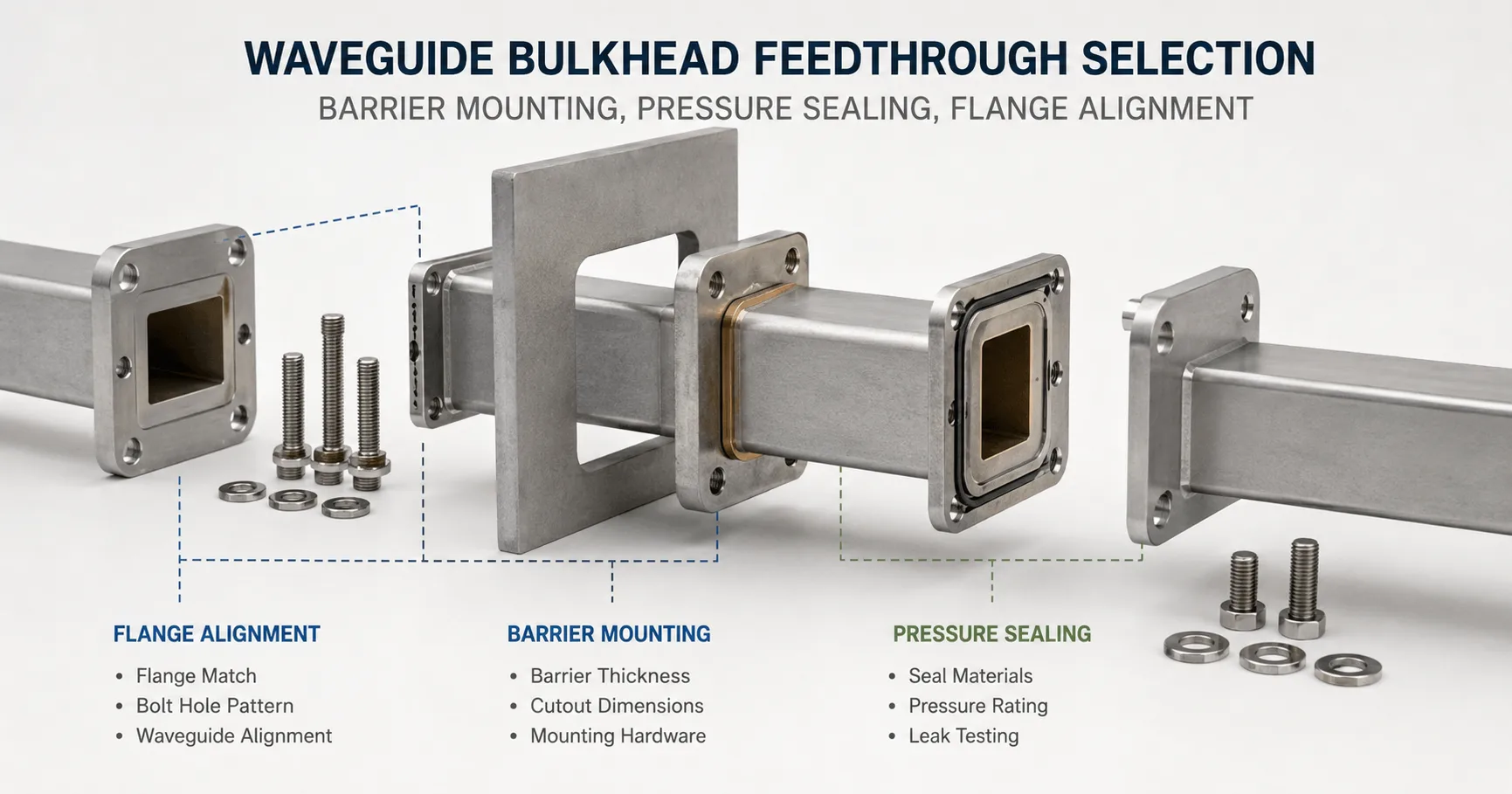
| Mechanical Positioning | Power-Off Operation | Project Context |
|---|---|---|
| The internal linkage mechanism positions the waveguide channel at the selected port. | This mechanical switching action does not depend on electronic control and remains operable when power is unavailable. | I participated in a commissioning project for a shipborne satellite communication system that used manual waveguide switches in a humid, salty marine environment. |
Table of Contents
Control
Manual Operation
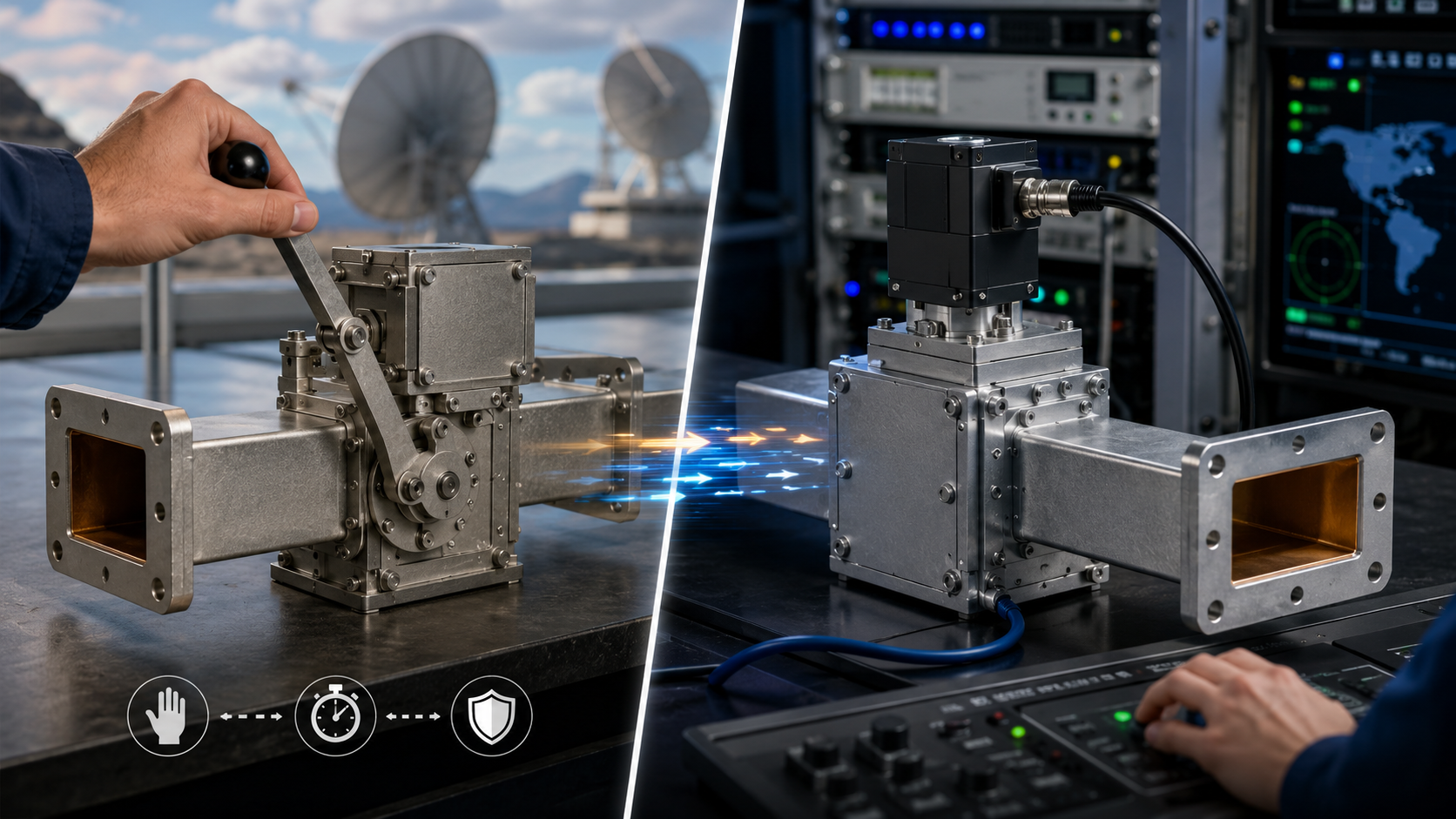
Manual waveguide switches route the RF path through a mechanical transmission and indexing mechanism.
The operator turns a handwheel or moves a lever, and the linkage positions the waveguide channel at the selected port.
This purely mechanical structure does not rely on any electronic components and can operate reliably even when powered off.
- I was involved in a commissioning project for a shipborne satellite communication system, where the manual waveguide switches used operated in the humid and salty marine environment for over 5 years without any switching failures due to electronic malfunctions.
- The main advantage of a manual switch is its self-contained operation: it needs no external power or control circuit and is not affected by control-line electromagnetic interference. This can suit shielded rooms or strong electromagnetic environments.
- Manual switching speed depends on the mechanism, access, and operator. A trained technician may complete a port change in about 2 to 3 seconds, but this is not a guaranteed product value.
- In cases of power outages caused by lightning strikes, the immediate operability of manual waveguide switches becomes crucial for communication recovery.
- In an emergency communication upgrade project for a border station, I replaced the original electric switches with manual switches equipped with mechanical position indicators, enabling the duty personnel to complete the main/backup channel switching within 30 seconds after the equipment lost power.
- WR-42 has an internal broad-wall width of 10.67 mm. A high-quality WR-42 manual switch may be specified below 0.1 dB insertion loss, but the limit must be taken from the selected model’s datasheet and verified across its frequency band.
Motor-Driven Switching
Motor-driven waveguide switches use a stepper motor, servo motor, DC motor, or solenoid with a drive and indexing mechanism. The motion may remain rotary or be converted into translated movement, depending on the design.
- Depending on the model, control may use TTL-level lines, RS-485, USB, Ethernet, relays, or a dedicated driver. The controller interprets the command and moves the mechanism to the requested position.
- I was once responsible for the construction of a Ku-band (12.4-18GHz) satellite ground station, where all 8 waveguide switches used stepper motor-driven types, achieving one-click automatic switching through monitoring software running on an industrial computer, with a single switching time of about 1.2 seconds.
- Compared to manual operation, motor-driven types can transform switching operations from on-site manual intervention to remote automated execution, significantly reducing personnel requirements.
- Motor-driven systems may use a microcontroller, PLC, limit switches, Hall sensors, or optical encoders to confirm the selected position. The exact feedback method is model-specific.
- In a 5G millimeter wave base station test field project, I encountered a typical fault in the motor drive circuit: the aging of the optocoupler on the drive board led to distortion of the control signal, causing the switch to “idle” after receiving the switching command — the motor turned but the waveguide channel did not actually switch.
- This issue was resolved by replacing the optocouplers in bulk.
From a system-integration perspective, some motor-driven switches use 24 V DC, while others use different supply voltages. The design must follow the selected model’s supply and inrush-current requirements, with surge suppression and filtering added where required.
Remote Control Options
Remote control is common in modern waveguide-switch systems. Interfaces may include RS-485, CAN, Ethernet, relay or TTL control, USB, and the IEEE 488 bus known as GPIB.
RS-485 uses differential signaling and supports robust multidrop communication. Cable runs approaching 1,200 meters are possible only at suitable low data rates and with correct cabling, termination, grounding, and topology.
- I participated in the integration project of a naval shipborne radar waveguide switching system, where the system connected a total of 12 waveguide switches distributed across the deck and various levels via an RS-485 bus to a centralized control room, allowing operators in the control room to monitor the status of each switch in real-time and execute switching commands.
- For a Dolph Microwave WR-90 switch configured with RS-485 and Modbus RTU, the interface can be integrated with a compatible SCADA system. The protocol and option set must be confirmed from the selected model’s datasheet or order specification.
- For applications requiring higher integration, network control solutions based on the TCP/IP protocol are gradually becoming mainstream.
- In a smart upgrade project for a satellite ground station, I upgraded the traditional relay control scheme to a network control architecture based on ROS (Robot Operating System), with each waveguide switch equipped with a unique IP address, enabling status monitoring and remote operation through a web interface.
- Network control does not provide unlimited distance by itself; range depends on the network architecture, latency, security, and available links. Its main advantage is easier integration with monitoring, visualization, event logging, and fault tracing.
- In a 77 GHz automotive-radar test system, allowable phase variation may be around ±1° to ±4° when defined by the specific test plan. Network control can record switching timestamps and support phase-calibration data logging.
Speed
Comparison of Switching Time
| Manual Switch | Motor-Driven Switch |
|---|---|
| Manual-switching time depends on the mechanism, access, and operator. A representative port change may take about 2 to 5 seconds. | Motor-driven switching time depends on the actuator, gearing, travel, control mode, and settling requirement. Commercial waveguide switches range from about 0.2 seconds to 1.5 seconds, while some precision models specify less than 500 ms. |
- During an equipment upgrade for a certain communication base station, I measured a set of data: the traditional manual switch took an average of 3.8 seconds to switch from “Port 1” to “Port 2”, while the same model of motor-driven type took an average of 1.1 seconds.
- This time difference directly affects the channel establishment speed in fast beam pointing adjustment scenarios of satellite communications.
- The engineering significance of switching time lies not only in the speed of operation but also in the system’s response capability.
- In the bypass maintenance scenario of phased array radars, the time window for switching from the primary channel to the standby channel directly determines the duration of service interruption.
- A certain institute’s X-band project used the standard 8.2 to 12.4 GHz WR-90 band and set a device-actuation target of no more than 500 ms. The measured end-to-end switching time was 1.2 seconds after control-link and system delays were included.
- It is worth noting that the switching time here refers to the time from the issuance of the control command to the complete positioning of the waveguide channel, not just the motor action time—the control link delay often accounts for a considerable proportion of the total time.
Load Response
The behavior of the complete RF path during sudden load changes is an important system-level consideration in high-frequency applications.
Load changes are mainly caused by the switching of the operating state of the connected RF front end, such as power amplifier switching, frequency band switching, etc.
- When I was debugging a set of C-band (4-8 GHz) satellite beacon machines, I found that when adjacent power amplifiers were hot-swapped, the VSWR of the waveguide channel instantly rose from 1.15 to 1.48.
- The control circuit of the motor-driven switch detected the overcurrent signal and automatically executed a protective power-off, with a response time of about 80 milliseconds.
- Manual switches, due to the lack of a control circuit, rely entirely on the operator’s judgment for load changes and have no active protection mechanism.
- Load response involves multiple aspects of electromagnetic compatibility design.
- An external load change can create transient reflections and raise the local electric field. In some high-power systems, including systems above 100 W, this can contribute to arcing or partial discharge at discontinuities, but 100 W is not a universal threshold.
- In an integration project of a gallium nitride power amplifier system, I added a ferrite isolator at the input end of the waveguide switch, which attenuated the reflected power by 20dB during load changes, effectively protecting the switch contacts.
- Motor-driven switches do not usually include VSWR detection as a universal built-in function. At system level, they may be interlocked with an external reflected-power or VSWR monitor so that switching is blocked and an alarm is generated above a configured threshold, such as 2.0 when the system design permits that setting.
- This threshold can be adjusted in the control software according to the specific application.
- WR-28 has an internal broad-wall width of 7.11 mm and normally covers 26.5 to 40 GHz in Ka-band. V-band from 50 to 75 GHz normally uses WR-15; at these smaller waveguide sizes, alignment and contact accuracy have a stronger effect on impedance matching.
Repeat Cycling Speed
The repeat cycling speed refers to the maximum possible frequency of the waveguide switch in continuous reciprocating switching operations, mainly limited by mechanical inertia and motor response.
A manual rate of about 10 to 15 operations per minute may be possible for some mechanisms, but it is only a practical estimate. Sustained accuracy and safety can decline with operator fatigue, especially above about five operations per minute.
- I participated in the testing of a certain broadcast satellite’s backup switching system, which required an automatic switch between the main and backup channels every 5 seconds.
- The motor-driven switch was tested to be able to withstand this frequency continuously for more than 72 hours, with the contact temperature rise controlled within 25°C.
- Repeat-cycling tests verify mechanical life and RF repeatability. Some specifications use more than 100,000 cycles with an insertion-loss change limit of 0.1 dB, while other commercial designs are rated for one million or more operations; the acceptance value is model-specific.
- When I reviewed a supplier’s specification, I found that the claimed one-million-cycle life was tested at one operation per second. That condition must still be compared with the real dwell time, RF load, temperature, acceleration, and duty pattern of the application.
- High-speed cycling increases the thermal demand on the motor and driver. Winding temperature can exceed 80°C in some designs, so the enclosure, heat sink, duty rating, or forced-air cooling must follow the actuator specification.
- I once encountered a fault where the switching time gradually increased due to poor driver heat dissipation: after 2 hours of continuous operation, the switching time increased from the initial 1.1 seconds to 1.8 seconds, and after replacing it with a driver model with a heat sink, it returned to normal.
Reliability
Cycle Life Limitations
The cycle life of a waveguide switch depends on the indexing mechanism, bearings, gears, RF contact or interface surfaces, seals, actuator, and driver rather than on one electrical contact pair alone.
Contact and indexing surfaces can experience friction, impact, RF heating, and wear during repeated switching.
Over long operation, plating can wear and spring force can change, which may increase loss or reduce RF repeatability where sliding or pressure contacts are used.
- I once found during equipment maintenance that the contact resistance of a manual switch used for over 8 years increased from the initial 0.3mΩ to 1.2mΩ, and the insertion loss deteriorated from 0.08dB to 0.25dB.
- For precision phase-control applications, small mechanical or contact changes can affect phase. There is no universal conversion stating that every 0.1 mΩ increase causes a 0.5° phase shift at 77 GHz; the relationship depends on the complete RF geometry and must be measured.
- Key design factors affecting cycle life include the contact surface plating material, contact pressure, and switching speed.
- Where separate electrical contacts are used, hard-gold plating of roughly 50 to 100 μin may offer better wear resistance than soft gold, and nickel underplating can limit copper diffusion. These values do not automatically apply to every waveguide RF surface.
- When reviewing a supplier’s sample, I found that the contact plating thickness was only 5 μin. A 15 μin minimum may be a project requirement, but it is not a universal industrial requirement for all waveguide switches.
- Accelerated life testing verified that this batch of products developed poor contact after 20,000 switching cycles.
- For motor-driven switches, gear wear must also be considered. Some plastics can become brittle below −20°C, while the behavior of both polymer and metal gears depends on the material grade, lubrication, load, and temperature cycling.
- In a project for a polar research station, the waveguide switch operating at -30°C experienced gear breakage on the 8,000th switching cycle, after which all were replaced with metal gear models.
- The temperature range should be specified as a clear technical requirement during selection.
Common Failure Points
- Manual waveguide switches have a smaller set of mechanical failure modes, and bearing or indexing-mechanism wear is one common failure rather than a universal single most common failure.
- I participated in the maintenance of a naval radar system that had been in use for over 12 years.
- The manual switch’s worm and wheel mechanism was severely worn, causing the switching feel to become significantly heavier and requiring twice the initial torque to complete the operation.
- More seriously, bearing wear can lead to a decrease in waveguide channel positioning accuracy, introducing errors in precision phase control applications.
- Motor-driven switches add possible failures in the actuator, wiring, sensors, power supply, and control circuit. I once dealt with a driver MCU firmware crash that left the switch in an intermediate position until the system was power-cycled.
Troubleshooting motor-driven switches requires systematic thinking.
- In a telecommunications base station fault diagnosis, I encountered a typical problem: the switch could respond normally to switching commands, but the attenuation of the switched port was abnormally high.
- The troubleshooting process followed three checks: first, confirming that the motor reached the target position and that encoder feedback was normal; second, measuring the contact condition and finding slight fretting wear with reduced pressure; and third, using an endoscope to confirm slight plating damage on the waveguide inner wall.
- This case illustrates that the failures of motor-driven switches are often concealed, and the control system reporting “switching complete” does not guarantee reliable physical connection.
- From a maintenance perspective, contact-condition checks and VSWR tests can be scheduled at a risk-based interval, such as every two years when supported by operating hours, cycle count, environment, and manufacturer guidance. Baseline data helps track aging.
- WR-75 has an internal broad-wall width of 19.05 mm and commonly covers about 10 to 15 GHz, spanning upper X-band and part of Ku-band. A VSWR of ≤1.15 may be a product or project target, but it is not a universal limit for every WR-75 switch.
Long-Term Performance
Long-term performance is the core indicator for evaluating the return on investment of waveguide switches, requiring a comprehensive consideration of MTBF (Mean Time Between Failures), performance stability, and maintenance costs.
MTBF values must come from the manufacturer and a defined reliability model. Manual switches are often specified by cycle life rather than MTBF, and there is no general basis for stating that motor-driven switches always have 50,000 to 100,000 hours versus 30,000 to 50,000 hours for manual types because of operator fatigue.
- I conducted a total life cycle cost analysis during the equipment procurement evaluation for a provincial broadcasting station: although the initial procurement cost of the motor-driven switch is about three times that of the manual type, the maintenance cost savings due to reduced manual monitoring and lower failure rates over a 10-year operation period can reach 2.4 times the initial price difference.
- The long-term performance of waveguide switches is closely related to the operating environment.
- I once tracked the performance of two sets of the same model equipment in completely different environments: the coastal base station in Hainan Island (high temperature, high humidity, high salt spray) showed significant oxidation of the contact plating after 5 years, with an increase in insertion loss of 0.15dB; while the equipment in the dry area of Northwest China showed almost no change in performance after the same operating time.
- For corrosive environments, select a model tested to the required salt-spray method. GB/T 10125 defines salt-spray test methods, while durations such as 48 or 96 hours and the acceptance criteria must be set by the product or project specification.
- In a satellite communication system for an offshore drilling platform, the waveguide switch used a reinforced protective shell and sealing structure, successfully passing the acceptance requirement of 5 years of trouble-free operation.
- For Dolph Microwave orders, the factory test scope should be confirmed in the order documentation. Where 100% electrical testing is specified, the records should cover VSWR, insertion loss, and withstand voltage as applicable, so each unit can be compared with its ordered parameters.
MTBF values must come from the manufacturer and a defined reliability model. Manual switches are often specified by cycle life rather than MTBF, and there is no general basis for stating that motor-driven switches always have 50,000 to 100,000 hours versus 30,000 to 50,000 hours for manual types because of operator fatigue.
I conducted a total life-cycle cost analysis during the equipment procurement evaluation for a provincial broadcasting station.