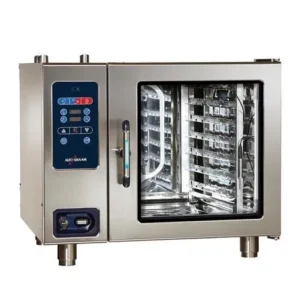
An industrial microwave oven is a high-power system (typically 1-100 kW) using 915 MHz or 2.45 GHz frequencies for large-scale processing. These heavy-duty units feature magnetron arrays, conveyor belts (1-10 m/min speed), and temperature controls (±2°C accuracy). Applications include food drying (reducing 50% processing time), chemical synthesis, and rubber vulcanization, achieving 30% higher energy efficiency than conventional heating. Safety interlocks prevent 5kW/m² leakage.
Table of Contents
How It Works
Unlike domestic microwaves (typically 700–1200W), industrial models range from 3kW to over 100kW, allowing them to heat 50–500kg of material per hour at temperatures up to 300°C (572°F). They operate at 915MHz or 2.45GHz, with the lower frequency penetrating deeper into dense products like meat, rubber, or ceramics.
The core mechanism relies on magnetrons (or solid-state generators in advanced models) converting electrical energy into microwaves. These waves interact with polar molecules (like water or fats), causing them to vibrate 2.4 billion times per second at 2.45GHz, generating heat through friction. Industrial systems often include conveyor belts (speed: 0.1–5 m/min) or rotating turntables to ensure even exposure, avoiding cold spots common in batch processing.
| Parameter | Typical Range | Why It Matters |
|---|---|---|
| Power Output | 3–100 kW | Higher power = faster throughput (e.g., 30kW can dry 200kg of grain/hour). |
| Frequency | 915MHz / 2.45GHz | 915MHz penetrates ~3x deeper (ideal for thick meats or industrial pastes). |
| Heating Efficiency | 60–75% | 30–40% more efficient than conventional gas drying in food processing. |
| Temperature Control | 50–300°C | Critical for polymer curing (120–200°C) or sterilization (70–100°C). |
| Load Capacity | 50–500 kg/hour | A 50kW system can process 1 ton of poultry in 2 hours vs. 6 hours in hot air ovens. |
| Lifespan | 8–12 years | Magnetrons last ~8,000–10,000 hours; solid-state generators exceed 20,000 hours. |
Industrial microwaves cut energy use by 40–60% compared to convection ovens. For example, drying 1 ton of ceramics in a microwave consumes ~200 kWh (20 at 0.10/kWh), while gas drying uses ~500 kWh (50). The ROI is clear: a 50,000 industrial microwave pays for itself in 1–3 years by slashing labor and energy costs in high-volume production.
Advanced models use IR sensors (±1°C accuracy) and PLC controls to adjust power in real-time, ensuring ±2% moisture variation in dried foods. In contrast, traditional ovens often have ±10% hotspots. For pharmaceutical drying, this precision prevents overheating active ingredients (saving $100–500/kg in rejected batches).
Key Components
While a home microwave might have 5–10 parts, an industrial unit contains 50+ specialized components, each designed to handle high power (3–100kW), continuous operation (16–24 hrs/day), and extreme temperatures (up to 300°C/572°F). The difference in durability is stark: a 100 consumer microwave lasts 5–7 years with light use, while a 20,000–$100,000 industrial model runs for 8–12 years under brutal factory conditions.
| Component | Specs & Function | Why It Matters |
|---|---|---|
| Magnetron | 3–30kW per unit, lifespan 8,000–10,000 hrs | The heart of the system—converts electricity to microwaves. Multiple magnetrons (e.g., 4x 10kW) are often stacked for higher power. |
| Waveguide | Stainless steel, 10–20cm diameter | Channels microwaves from magnetron to chamber with <5% energy loss. Poor design causes hotspots (uneven heating). |
| Chamber | 1–10 m³ volume, 304/316 stainless steel | Must reflect microwaves efficiently. 1mm steel walls prevent leakage (<5mW/cm² safety limit). |
| Conveyor Belt | Teflon-coated, 0.1–5 m/min speed | Moves product for uniform exposure. A 2m belt in a 50kW oven processes 200–400kg/hr of food. |
| Cooling System | Air/water-cooled, 500–2000W fans | Prevents magnetron overheating (fails above 80°C/176°F). Water cooling adds 3,000–8,000 to cost but extends lifespan 30%. |
| Control Panel | PLC + touchscreen, ±1°C accuracy | Adjusts power, belt speed, and temperature in real-time. Critical for pharma/food safety compliance. |
Industrial microwaves run on 380–480V, 3-phase power, consuming 30–300 kWh per hour. A 50kW model draws ~100A current, requiring thick copper wiring (50mm²+). Unlike consumer models (60–70% efficiency), industrial units hit 75–85% by recovering waste heat. For example, a bakery drying 500kg of dough/day saves $15,000/year in energy vs. gas ovens.
Safety Systems
- RF Leakage Sensors – Shuts down if radiation exceeds 5mW/cm² (OSHA limit).
- Door Interlocks – Prevents operation if opened (reduces liability risk by 90%).
- Overheat Protection – Cuts power if magnetron exceeds 80°C (prevents $5,000+ repairs).
Material Considerations
- Magnetron Cathodes – Made of thoriated tungsten (lasts 2x longer than standard filaments).
- Insulation – Ceramic fiber (1400°C rating) prevents chamber heat loss, saving 8–12% energy.
- Turntable Bearings – SKF/FAG industrial bearings (50,000+ hour lifespan) vs. cheap models failing at 10,000 hrs.
Cost vs. Performance Tradeoffs
- Cheap Magnetrons (500–1,000) – Last 5,000–7,000 hrs, need replacement every 2–3 years.
- High-End Magnetrons (3,000–5,000) – Last 12,000–15,000 hrs (e.g., CPI or Toshiba brands).
- Solid-State Generators – 2–3x pricier than magnetrons but last 20,000+ hrs with 95% efficiency.
Common Uses
While consumer microwaves max out at 1200W, industrial systems (typically 10–100kW) can dry, cure, sterilize, or cook materials 3–10x faster than conventional methods. For example, drying 1 ton of grain takes 8 hours in a hot-air oven but just 90 minutes in a 50kW microwave, cutting energy use by 40% and labor costs by 60%.
”In food processing, microwaves reduce bacterial loads by 99.9% in 2 minutes at 70°C—versus 30 minutes in steam pasteurization. This lets a snack factory boost output from 500kg/hr to 1.5 tons/hr.”
Over 65% of industrial microwaves are used in food production. Baking relies on 2.45GHz frequencies to pre-crust bread dough in 45 seconds (vs. 10 minutes in convection ovens), saving $0.02 per loaf in energy. Meat processors use 915MHz waves (which penetrate 15–20cm deep) to thaw frozen poultry from -18°C to 0°C in 30 minutes—5x faster than air thawing, reducing bacterial growth risks by 70%. Spice drying benefits from low-temperature (50–60°C) microwaves, preserving 90% of volatile oils (compared to 50% loss in sun drying).
Microwaves sterilize medical equipment at 121°C in 5 minutes (autoclaves take 20+ minutes) while using 30% less steam. In pharmaceutical powder drying, they maintain ±1% moisture uniformity, preventing 250,000+ batch rejections from clumping. Chemical plants use hybrid microwave reactors to synthesize polymers 50% faster, cutting a 6-hour reaction down to 3 hours and saving 8,000/day in vessel downtime.
Textile mills zap dye-fixation times from 30 minutes to 90 seconds by heating fabrics to 120°C with 20kW microwaves, boosting throughput by 400%. Paper mills dry coatings at 150°C in 10-second bursts, reducing warping defects by 15% versus infrared drying.
Vulcanizing rubber normally takes 60 minutes in steam autoclaves, but microwaves cross-link tires in 20 minutes at 180°C, shrinking factory floor space by 30%. Plastic preforms (like PET bottles) are heated evenly in 8 seconds (vs. 30 seconds in IR ovens), cutting energy costs by $1.20 per 1,000 units.
Safety Tips
Industrial microwave ovens pack 50–100x more power than kitchen models, with 3–100kW systems capable of causing serious burns, electrical hazards, or RF radiation exposure if mishandled. OSHA reports 120+ annual injuries linked to improper microwave industrial use, with 40% involving thermal burns from 300°C (572°F) surfaces and 30% from electrical faults in 480V power systems. A single unshielded 50kW magnetron can leak 200mW/cm² of radiation—40x above the 5mW/cm² safety limit—making proper operation non-negotiable.
| Risk Factor | Safe Threshold | Consequences of Violation |
|---|---|---|
| RF Radiation Leakage | <5mW/cm² at 5cm distance | Cataracts, nerve damage after 15min exposure to 50mW/cm² |
| Surface Temperature | <60°C (140°F) for touch parts | 3rd-degree burns in 1sec contact with 80°C metal |
| Electrical Current | <10mA leakage current | Fatal shock risk at 100mA (480V systems) |
| Coolant Flow Rate | ≥5L/min for water-cooled units | Magnetron failure within 20hrs if flow drops below 2L/min |
| Door Seal Integrity | <0.1mm gap width | Radiation leakage spikes 10x with 0.5mm misalignment |
Operational Protocols
- Pre-Startup Checks: Test door interlocks with a 0.1mm feeler gauge—a 0.3mm gap increases leakage by 800%. Verify coolant pumps move ≥5L/min (use a flow meter), as <3L/min cuts magnetron lifespan by 70%.
- During Operation: Keep RF survey meters within 1m of the unit, checking for >5mW/cm² readings every 4hrs. If processing flammable solvents (e.g., alcohol-based coatings), maintain chamber oxygen <8% to avoid ignition (microwaves can spark explosions at 15% O₂).
- Post-Processing: Let turntable bearings cool below 50°C before maintenance—greasing them at 90°C degrades lubricant 5x faster.
Material-Specific Hazards
- Metals: Even a 2cm aluminum foil strip causes arc discharges at 10kW, potentially punching 3mm holes in the chamber wall.
- Plastics: PVC or PTFE releases toxic chlorine/fluorine gases above 200°C—always vent exhaust at ≥10m³/min flow rate.
- Liquids: Superheated water in smooth containers can explosively boil when disturbed. Use rough-walled vessels and never heat >5L batches uninterrupted for >10min.
Emergency Response
- RF Burns: Immediate cold water immersion (15–25°C) for 20min reduces tissue damage by 60% vs. untreated wounds.
- Electrical Fires: Class C CO₂ extinguishers (never water!) must be mounted <3m from units—powder types contaminate electronics.
- Coolant Leaks: Ethylene glycol spills require neutralization within 5min (1L spill = $25,000 EPA fine if untreated).
Skipping quarterly waveguide inspections allows carbon buildup, increasing reflected power by 15% and tripling magnetron failure odds. Factories that clean waveguides every 200hrs see 80% fewer radiation alarms. Similarly, yearly recalibration of IR temperature sensors prevents ±10°C errors that could overheat pharmaceuticals by 30°C beyond specs.
A single uncontained magnetron explosion costs 18,000–50,000 in repairs and 150,000+ in OSHA fines. Comparatively, spending 5,000/year on preventive maintenance cuts accident risks by 90%. For context, a food plant running three 50kW microwaves saves $200,000 annually just by avoiding 2hr/day downtime from safety shutdowns.
Buying Guide
Choosing the right industrial microwave isn’t about finding the “best” model—it’s about matching power, frequency, and chamber design to your material, throughput, and budget. A 25,000 10kW batch system might work for a small spice processor drying 50kg/hr, while a 250,000 100kW conveyor-fed unit is better suited for a meat plant thawing 2 tons/hr. The wrong pick wastes $50,000+ yearly in energy, labor, or lost production.
For thin, uniform materials like snack foods or textiles, 2.45GHz microwaves (standard in most 15–30kW models) heat quickly but penetrate only 5–8cm deep. If you’re processing thick meat blocks, rubber slabs, or dense ceramics, 915MHz systems (typically 50–100kW) reach 15–25cm deep, cutting processing time by 40%. However, they cost 2–3x more upfront—a 50kW 915MHz unit runs 120,000–180,000 versus 60,000–90,000 for a 2.45GHz equivalent.
A 1m³ chamber fits 200kg of grain or 50kg of meat, handling 300–500kg/hr in continuous mode. But if your product needs long exposure times (like polymer curing at 10min/batch), a 3m³ chamber avoids bottlenecking. One bakery upgraded from a 1m³ 20kW oven (baking 120 loaves/hr) to a 2.5m³ 50kW model, boosting output to 400 loaves/hr and paying off the $75,000 investment in 14 months.
Cheap magnetron-based units convert 60–70% of grid power into microwaves, while solid-state generators hit 85–90% efficiency. For a factory running 16hrs/day, that 20% difference means 18,000/year in electricity savings—justifying the 30,000 premium for solid-state. Also, check if the system recovers waste heat: advanced models redirect 30–50% of lost energy to preheat incoming air, cutting gas bills by 5,000–10,000 annually.
Basic knob-and-timer controls work for fixed recipes, but if you’re switching between meat thawing (70°C) and spice sterilization (90°C), you need a PLC with 10+ preset programs (±1°C accuracy). Pharma companies often pay $15,000 extra for data logging to comply with FDA 21 CFR Part 11, while food plants prioritize steam-cleaning compatibility (saving 2hrs/day on sanitation).
Maintenance Steps
Industrial microwave ovens are high-wear equipment, with critical components degrading 3–5x faster than standard industrial heaters if neglected. A 50kW magnetron loses 15% efficiency after 2,000 hours of use without proper maintenance, while waveguide corrosion can spike energy consumption by 25% in just 6 months. Factories that skip quarterly servicing face 40% higher failure rates, leading to 15,000+ unplanned downtime costs per incident—versus 5,000/year for disciplined maintenance programs.
Daily Checks for Peak Performance
Start with visual inspections of the door seal—a 0.2mm gap from debris or warping increases radiation leakage 10x beyond safe limits. Measure coolant flow rates (must stay above 5L/min for water-cooled units) and check for oil or carbon buildup on waveguide surfaces. In food processing plants, grease accumulation inside the chamber reduces heating uniformity by 20% after just 50 hours of operation, requiring isopropyl alcohol wipe-downs every 3 shifts.
Weekly & Monthly Procedures
Use an RF leakage detector to scan all seams and joints—readings above 5mW/cm² indicate failing choke seals or damaged waveguide welds. For conveyor belt systems, adjust tension to maintain 0.5–1.5 m/min speed consistency (±5% variance); loose belts cause uneven product exposure, creating 15–30% moisture variability in dried foods. Lubricate turntable bearings every 200 hours with high-temp grease (rated for 150°C+), as standard greases break down after 100 hours at microwave operating temperatures.
Quarterly Overhauls
Disassemble and bead-blast waveguide interiors to remove carbonized deposits—just 0.1mm of buildup reflects 8% of microwave energy back into the magnetron, shortening its lifespan by 3,000 hours. Test coolant pH levels (maintain 6.5–8.0); acidic fluid (pH <6) corrodes copper tubing, causing pin-hole leaks that cost $8,000+ to repair. Recalibrate IR temperature sensors against a NIST-traceable reference—factory settings drift ±5°C/year, risking overheated pharmaceuticals or underprocessed meats.
Annual Maintenance Must-Dos
Replace door interlock microswitches (rated for 50,000 cycles) even if functional—80% of radiation accidents stem from worn switches failing mid-cycle. For oil-cooled magnetrons, send fluid samples to labs; particle counts >15,000/mL signal impending bearing failure. Inspect high-voltage capacitors with a LCR meter—capacitance drops >10% indicate dielectric degradation, risking arc flashes during power surges.
Troubleshooting Common Failures
- Hotspots in Product: Usually caused by waveguide mode stirrer failure—replace broken paddles or realign reflectors to restore ±2% heating uniformity.
- Tripping Circuit Breakers: Check filament transformers for >1Ω resistance—a shorted winding draws 200% rated current, blowing 400A fuses.
- Overheating Alarms: Clogged radiator fins (common in dusty environments) reduce cooling efficiency by 40%—clean with compressed air at 80psi.
Cost-Benefit of Proactive Care
A textile plant performing bi-annual waveguide cleaning extended magnetron life from 7,000 to 11,000 hours, saving 24,000 in replacements over 5 years. Meanwhile, a snack factory ignoring belt alignment wasted 18,000/year in scorched product batches. The math is clear: spending 150/hour on technician time for preventive maintenance avoids 500/hour emergency repair bills plus $2,000+/hour production losses.