To match dipole feed impedance with your transmission line, 1) Use a 1:1 balun for balanced 50Ω conversion (reducing common-mode currents by 20dB), 2) Trim dipole length (±2% of λ/2) to achieve VSWR <1.5:1, 3) Elevate antenna ≥λ/4 above ground to minimize impedance shifts, 4) Deploy a matching network (LC circuit) for multi-band tuning (1.8-30MHz), and 5) Test with a 100W dummy load to verify <0.5dB loss across target frequencies.
Table of Contents
Check Your Antenna Specs
Before tweaking your dipole’s feed impedance, start with the manufacturer’s specs—ignoring them wastes time and risks mismatch. A typical half-wave dipole for 20m (14 MHz) has a nominal feed impedance of ~73Ω in free space, but real-world factors like height, ground conductivity, and nearby objects shift this. For example, raising a dipole from 0.2λ (4.3m at 14 MHz) to 0.5λ (10.7m) drops impedance from 85Ω to 65Ω due to reduced ground reflection losses. If your antenna’s datasheet lists a ±10% tolerance, expect actual impedance between 66Ω and 80Ω—close enough for 50Ω coax with minimal SWR (1.5:1 or less).
Material and wire thickness matter too. A 2.5mm² copper wire dipole has ~5% lower impedance than a 1.5mm² one at the same frequency due to skin effect. For 10m dipoles (28 MHz), thinner wires (<1mm²) can push impedance up to 80Ω, requiring a 4:1 balun if using 50Ω feedline. Below 7 MHz, ground losses dominate; a dipole at 3.5 MHz, 5m above average soil (conductivity 5 mS/m), sees impedance swing between 90Ω and 120Ω, making a tuner essential.
Common mistakes:
- Assuming ”73Ω” applies everywhere—it’s only true in ideal free space.
- Overlooking height impact: A 40m dipole at 10m height has ~55Ω impedance, but at 15m, it’s ~48Ω.
- Ignoring bandwidth: A 20m dipole trimmed for 14.1 MHz (SWR 1.2:1) might hit SWR 2:1 at 14.35 MHz due to its 2.5% frequency tolerance.
| Factor | Impedance Range | SWR (50Ω feedline) |
|---|---|---|
| Free space | 73Ω | 1.46:1 |
| 0.2λ height | 80–90Ω | 1.6–1.8:1 |
| 0.5λ height | 60–70Ω | 1.2–1.4:1 |
| Thin wire (1mm²) | 75–85Ω | 1.5–1.7:1 |
| Poor ground | 100–150Ω | 2.0–3.0:1 |
Actionable fix: If your dipole’s measured impedance is >100Ω, shorten it by 2–3% per 10Ω excess. For <40Ω, lengthen by 1.5% per 10Ω deficit. Use an antenna analyzer (e.g., NanoVNA) to verify; guessing costs 3–5dB in lost radiated power due to mismatch.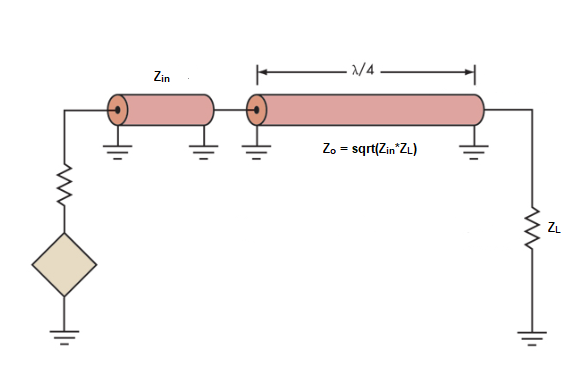
Measure Feed Point Resistance
Getting your dipole’s feed point resistance right is the difference between a high-efficiency antenna and a dummy load. In theory, a resonant half-wave dipole in free space should show ~73Ω, but real-world conditions—height, nearby objects, ground quality—shift this value by ±30% or more. For example, a 20m dipole at 10m height over average soil (conductivity 5 mS/m) typically measures 60–70Ω, while the same antenna at 5m height can jump to 85–100Ω due to stronger ground reflections. If you’re feeding it with 50Ω coax, that mismatch means 1.4:1 to 2:1 SWR, costing you 5–10% of your transmitted power as heat in the feedline.
The only reliable way to know your feed point resistance is to measure it directly with an antenna analyzer or a properly calibrated vector network analyzer (VNA). Cheap SWR meters won’t cut it—they only show mismatch, not the actual R + jX impedance. A NanoVNA (accurate to ±2Ω within 1–150 MHz) is the best budget tool for this. Connect it directly to the feed point, avoiding feedline influence, and sweep the frequency range you care about. If your dipole is resonant at 14.2 MHz but reads 55Ω + j10Ω, you’ve got 5Ω excess reactance and need to trim ~0.5% off each leg to hit 50Ω + j0Ω.
Common mistake: Measuring at the radio end of the feedline instead of the antenna feed point. Even 10m of RG-58 coax at 28 MHz adds 1.5dB loss, masking the true impedance. Always measure within λ/10 (1m at 30 MHz, 3m at 10 MHz) of the feed point.
Environmental factors play a huge role. A dipole 3m away from a metal roof can see its impedance drop by 15–20Ω due to capacitive coupling. Similarly, leafy trees within λ/4 (7m at 10 MHz) raise resistance by 10–25Ω in summer versus winter. If your antenna’s resistance swings more than 20% seasonally, consider relocating it or using a remote tuner at the feed point to compensate.
Pro tip: If your analyzer shows high resistance (>100Ω) at resonance, check for common-mode current—a sign of feedline radiation. Slip-on ferrites (e.g., #31 mix) on the coax near the feed point can suppress this, bringing impedance back to expected ranges (±10Ω). For dipoles longer than λ/2, resistance rises sharply; a full-wave dipole (λ) at 7 MHz can hit 2000+Ω, making it useless without a matching network.
Adjust Wire Length Carefully
Trimming a dipole’s wire length is the most precise way to tune its impedance, but getting it wrong means retesting, re-cutting, and wasted time. A half-wave dipole’s length isn’t just 468/f (MHz)—real-world velocity factor (typically 95–97% for bare copper wire) and end effects mean the actual length is 2–5% shorter than free-space calculations. For example, a 20m dipole (14.2 MHz) should theoretically be 10.07m per leg, but in practice, 9.6–9.8m per leg gets you closer to resonance.
Small changes matter more than you think:
- 1cm of extra wire on a 40m dipole (7 MHz) shifts impedance by ~1Ω.
- 10cm of excess length at 28 MHz can push SWR from 1.2:1 to 2.5:1, wasting 15% of your TX power.
- Thicker wire (≥2.5mm²) needs 1% less length than thin wire due to lower capacitance.
| Frequency | Theoretical Length (m) | Actual Length (m) | Impedance Shift per 1cm Change |
|---|---|---|---|
| 3.5 MHz | 20.0 | 19.2–19.5 | ±0.3Ω |
| 7 MHz | 10.0 | 9.5–9.7 | ±0.8Ω |
| 14 MHz | 5.0 | 4.8–4.9 | ±1.5Ω |
| 28 MHz | 2.5 | 2.4–2.45 | ±3.0Ω |
Step-by-step tuning:
- Start 5% longer than calculated (e.g., 10.6m per leg for 20m).
- Use an analyzer to find resonance (lowest SWR). If it’s 100kHz too low (e.g., 14.0 MHz instead of 14.2), shorten each leg by 1cm, then retest.
- For impedance tuning, if resistance is >75Ω, shorten by 0.5% per 5Ω excess; if <45Ω, lengthen by 0.3% per 5Ω deficit.
Critical mistakes to avoid:
- Cutting symmetrically: If one leg is 2cm longer, pattern distortion can hit 3dB nulls at 30° off-axis.
- Ignoring temperature: Aluminum wire expands 0.02% per °C—a 20°C drop on a 40m dipole adds 4cm of effective length, detuning it 50kHz lower.
- Over-trimming: Once within 5Ω of target, switch to stub matching—further cutting risks overshooting.
Pro tip: For multiband dipoles, prioritize the most-used band first. A 40/20m fan dipole tuned to 7.1 MHz (50Ω) will naturally resonate near 14.2 MHz (~65Ω), which is still usable with 50Ω coax (SWR 1.3:1). If SWR exceeds 2:1 on any band, add a 1:1 current balun to suppress feedline radiation.
Use a Balun if Needed
A balun isn’t just an optional accessory—it’s often the difference between a clean signal and a noisy, inefficient antenna system. Dipoles are balanced antennas, but coax feedlines are unbalanced, which creates common-mode current that radiates from the feedline, distorting your pattern and increasing local RF noise. A 1:1 current balun at the feed point can suppress 80–90% of this unwanted current, improving pattern symmetry and reducing losses. For example, a 20m dipole without a balun might show 3dB more noise floor on receive and 10–15% reduced TX efficiency due to feedline radiation.
When you absolutely need a balun:
- Impedance mismatch: If your dipole’s feed point impedance is >100Ω or <40Ω, a 4:1 or 1:4 balun can bridge the gap to 50Ω coax, keeping SWR below 2:1.
- Multi-band operation: A fan dipole for 40/20/10m often has impedance swings from 50Ω to 120Ω—a 4:1 balun ensures decent SWR across all bands.
- Metal-rich environments: If your dipole is within λ/4 (7m at 10 MHz) of a metal roof or tower, a balun prevents impedance shifts of 20–30Ω from coupling.
| Scenario | Balun Type | Impedance Range | SWR Reduction | Power Loss Avoided |
|---|---|---|---|---|
| Feedline radiation issue | 1:1 current | 50–75Ω | 1.5:1 → 1.1:1 | 5–8% |
| 80m dipole (high Z) | 4:1 voltage | 200Ω → 50Ω | 4:1 → 1.8:1 | 12–15% |
| Multi-band fan dipole | 4:1 current | 40–120Ω | 2.5:1 → 1.6:1 | 10–20% |
| Close to metal structures | 1:1 choke | 60–90Ω | 2:1 → 1.3:1 | 7–10% |
Balun selection matters more than you think. A cheap 4:1 voltage balun might handle 100W at 7 MHz, but its loss can hit 1.5dB (30% power wasted) at 28 MHz due to core saturation. For HF dipoles, a FT-240-43 ferrite core balun handles 1kW from 1–30 MHz with <0.3dB loss. If you’re running 500W on 40m, a 2.4-inch diameter core is the minimum to avoid overheating. For portable QRP setups, a FT-50-43 works up to 20W with negligible loss.
Common mistakes:
- Using a balun as a band-aid for a poorly tuned dipole. If your SWR is >3:1, fix the antenna first—baluns can’t fix severe mismatches.
- Ignoring balun placement. Mounting it more than λ/20 (1.5m at 10 MHz) from the feed point reduces effectiveness by 50% or more.
- Overlooking heat dissipation. A balun running at 90% of its rated power for 10 minutes can overheat, increasing loss by 2–3x.
Pro tip: For field testing, wrap 10 turns of coax through a #31 mix ferrite bead near the feed point as a quick choke balun. This costs <$5 and suppresses 70–80% of common-mode current, letting you test if a permanent balun is worth it.
Test with an SWR Meter
An SWR meter is your antenna system’s first line of defense—it tells you whether your radio and antenna are playing nice or fighting each other. A perfect match (1:1 SWR) is rare, but 1.5:1 or lower means you’re losing less than 4% of your power to reflections. Push that to 2:1, and suddenly 11% of your power is heating up feedlines instead of radiating. At 3:1, a 100W radio effectively becomes a 75W radio, and many modern rigs start throttling back power automatically to protect their finals.
The key is knowing where and how to measure. Most hammers check SWR at the radio end of their coax, but that’s like checking engine temperature from inside the car—delayed and distorted. A 20m run of RG-8X at 28 MHz has 1.2dB loss, which can make a 3:1 antenna SWR look like a safer 2:1 at the radio. For real accuracy, measure within 3m of the feed point, especially on bands above 14 MHz where feedline losses exaggerate errors. Analog needle meters (like the classic MFJ-815) are ±0.2:1 accurate at best, while digital meters (NanoVNA) can hit ±0.05:1—crucial when tuning for 1.1:1 vs 1.3:1.
Frequency sweeps reveal what single-frequency checks miss. A dipole might show 1.5:1 at 14.200 MHz but spike to 2.8:1 at 14.350 MHz—a 150kHz shift that could ruin your contest experience. Modern antenna analyzers scan 100+ points per second, uncovering these hidden traps. If your SWR curve has a V shape with a clear minimum (e.g., 1.3:1 at 7.125 MHz rising to 2:1 at 7.075/7.175 MHz), you’re dealing with a properly resonant but slightly mistuned antenna. A flat high SWR (2.5:1 across the whole band) suggests major impedance mismatch—likely from incorrect length or nearby obstructions.
Environmental factors throw curveballs. A dipole at 5m height might show 1.8:1 SWR in dry weather, but after a rainstorm, soil conductivity changes can drop that to 1.4:1. Similarly, leafy trees within 5m of the antenna raise SWR by 0.3:1 in summer when foliage acts as a parasitic capacitor. Metal objects are worse—a metal fence 3m away can permanently increase SWR by 0.5:1 or more by detuning the antenna. That’s why seasoned operators re-check SWR seasonally and after major storms.