default

What is a dual directional coupler

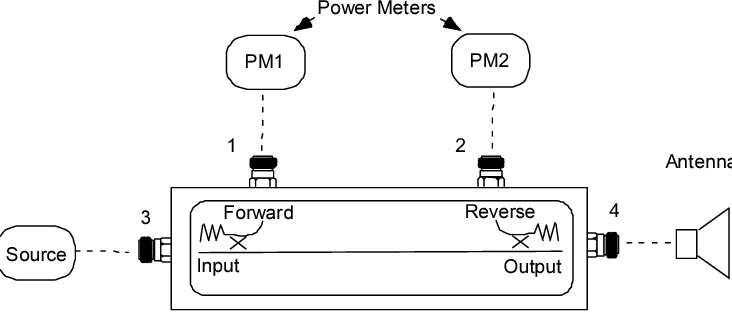
A ​​dual directional coupler​​ is a passive RF device that ​​samples forward and reflected signals​​ simultaneously in a transmission line, typically operating from ​​1 MHz to 40 GHz​​ with ​​20-30 dB coupling factor​​. It uses ​​two coupled lines​​ to achieve ​​±0.5 dB directivity​​, enabling precise ​​VSWR measurements​​ and ​​power monitoring​​ in telecom/test systems without disrupting […]

What is a dual directional coupler Read More »
Can directional coupler be planar

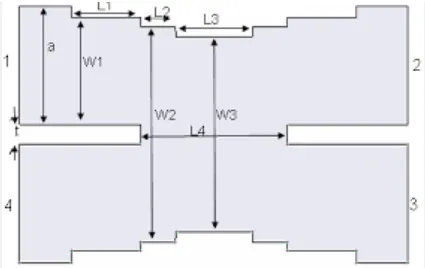
Yes, ​​planar directional couplers​​ (e.g., microstrip or stripline) enable ​​compact integration​​ (<5mm² footprint) with ​​broadband performance​​ (2-40GHz). They achieve ​​tight coupling​​ (3-20dB) via ​​λ/4 spaced traces​​ (0.1mm precision) on ​​FR4/Rogers substrates​​, offering ​​low loss​​ (<0.2dB/mm) but trade ​​isolation​​ (15-25dB vs. 30dB in waveguide). Ideal for ​​5G/MMIC​​ apps where ​​size/weight​​ matters. ​​What is a Directional Coupler?​​

Can directional coupler be planar Read More »

What advantage does a 3 port coupler have over a 4 port

A 3-port coupler offers simpler integration (30% fewer connections) and lower insertion loss (<0.3dB vs. 0.5dB in 4-port), ideal for unidirectional monitoring (e.g., 20dB coupled output). With compact size (50% smaller footprint) and reduced cost (25% savings), it excels in 5G/Wi-Fi apps where isolation (>25dB) matters more than bidirectional sampling—though lacks 4-port’s dual-path flexibility. ​​Fewer

What advantage does a 3 port coupler have over a 4 port Read More »

What is the difference between directional coupler and combiner

A ​​directional coupler​​ splits RF signals asymmetrically (e.g., 90:10 ratio) with ​​20-30 dB isolation​​ to monitor power without disrupting flow, while a ​​combiner​​ merges signals symmetrically (e.g., 3dB loss) with ​​<0.5dB insertion loss​​. Couplers operate at ​​1-40GHz​​ for measurement, combiners at ​​narrow bands​​ for coherent summation—critical differences in ​​phase matching​​ (±2°) and ​​VSWR​​ (<1.5:1). ​​Basic

What is the difference between directional coupler and combiner Read More »

How many ports does a directional coupler have

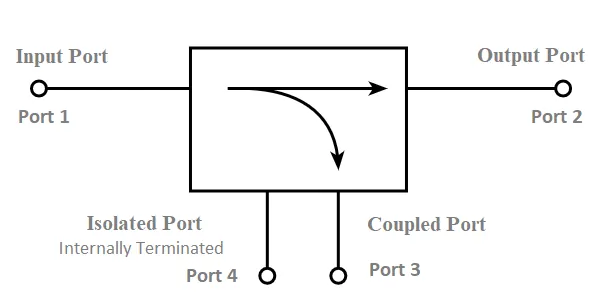
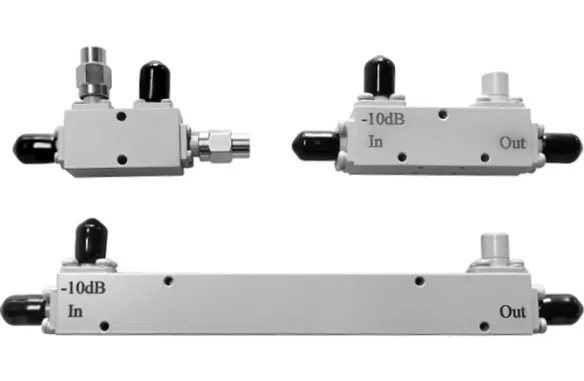
​A standard directional coupler has 4 ports: INPUT (accepts 1-100W signals), OUTPUT (through port with <0.5dB insertion loss), COUPLED (extracts -10 to -30dB of input power), and ISOLATED (terminated with 50Ω load achieving >20dB isolation). High-performance models operate from DC-40GHz with directivity >30dB. The coupling factor (e.g., 10/20/30dB) remains stable within ±0.5dB across 85% bandwidth.

How many ports does a directional coupler have Read More »

Dolph Microwave

10 Leading Microwave Waveguide Producers Globally

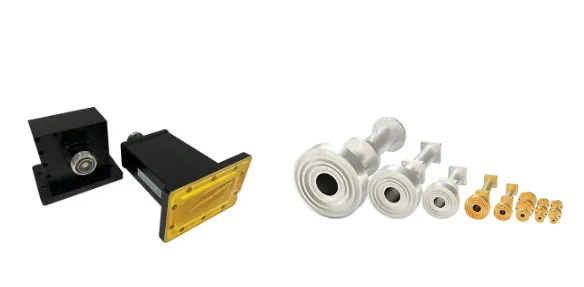
The top 10 global microwave waveguide manufacturers include L3Harris (US), Thales (France), and NEC (Japan), specializing in precision-machined aluminum/copper guides for 1-110 GHz applications. Key players like Rosenberger (Germany) and Pasternack (US) offer WR-90 to WR-650 standards with 0.1dB/m loss at 10GHz. Chinese firms CETC and Huawei supply 5G-compatible waveguides, while MVG (France) dominates aerospace-grade

10 Leading Microwave Waveguide Producers Globally Read More »

What is the difference between horn antenna and dipole antenna

Horn antennas are directional with 10-25 dBi gain, operating at 1-100 GHz for radar/satellite links, achieving 60-90% aperture efficiency. Dipoles are omnidirectional (1.5-2.15 dBi gain), typically for 100MHz-6GHz communications, with λ/2 length (e.g., 16cm at 900MHz). Horns offer 20dB front-to-back ratio, while dipoles radiate equally in azimuth. Horns need waveguide feeds; dipoles use simple coaxial

What is the difference between horn antenna and dipole antenna Read More »

What is the difference between horn antenna and parabolic dish antenna

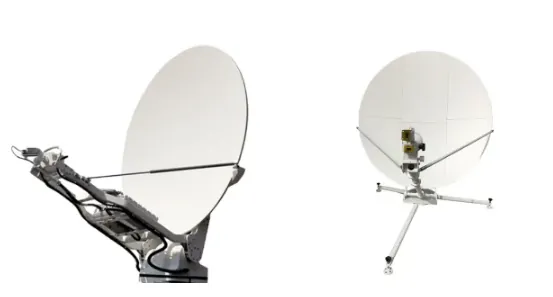
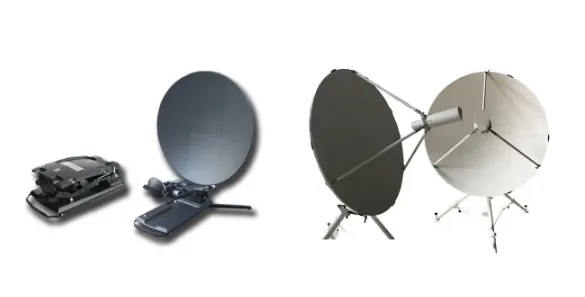
Horn antennas offer wide bandwidth (typically 10:1 ratio) with 10-20 dBi gain, ideal for short-range applications like radar feeds. Parabolic dishes achieve higher gain (30-50 dBi) through reflector focusing, but narrower bandwidth (5-10% of center frequency). Dishes provide 3° beamwidth at 10GHz vs. horns’ 25°, making dishes better for long-distance satellite links (60cm dishes reach

What is the difference between horn antenna and parabolic dish antenna Read More »

Up to 330GHz. mmWave & Microwave Products

Up to 330GHz. mmWave & Microwave Products

Excited to share you the highlights of our precision mmWave products in 2024: Standard Gain Horns, WG to Coaxial Adapters, Attenuators, Couplers, Power Dividers, Terminations, Isolators, Straights/Bends/Twists etc. We provide microwave products, assembly and engineering services for up to 330GHz. Customers ranges from telecom, government to university research, involving in military RADAR systems, EW units, Commercial RF solutions

Up to 330GHz. mmWave & Microwave Products Read More »

Scroll to Top
Blank Form (#3)