default

Why Choose Waveguide Power Splitters over Coaxial

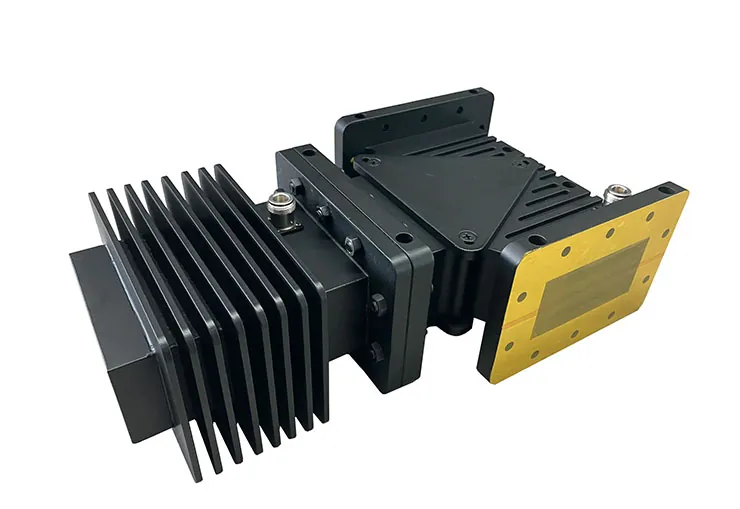
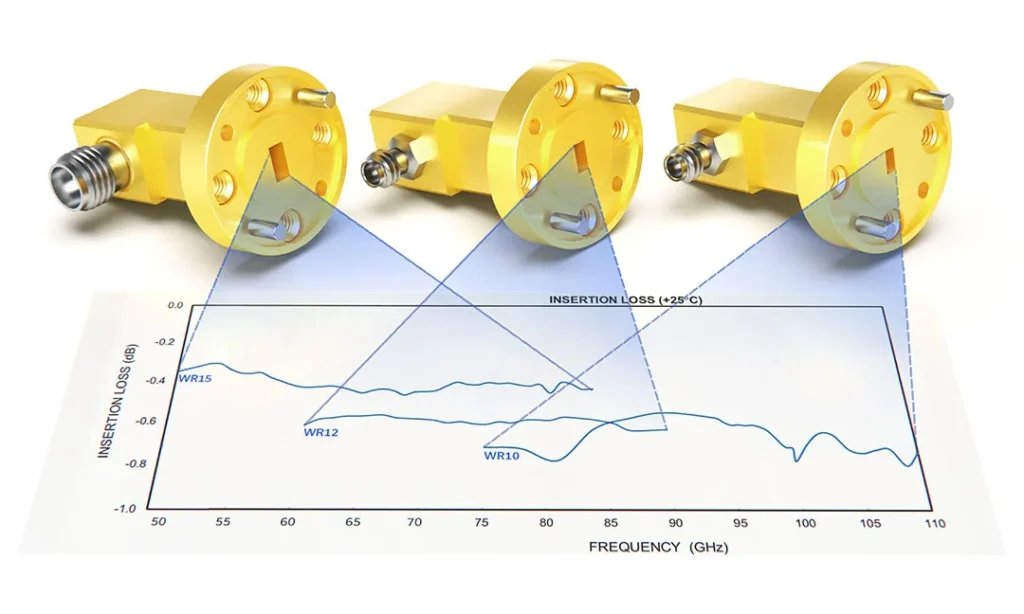
Choose a waveguide power splitter when its operating band, power capability and interfaces suit the RF network better than a coaxial alternative. Compare excess loss separately from the intended power division. Output isolation, phase balance, load mismatch and transition losses can decide the selection; no transmission-line type wins every application. What distinguishes division loss from […]

Why Choose Waveguide Power Splitters over Coaxial Read More »
Why Are Waveguide Circulators Essential for 5G

Why Are Waveguide Circulators Essential for 5G

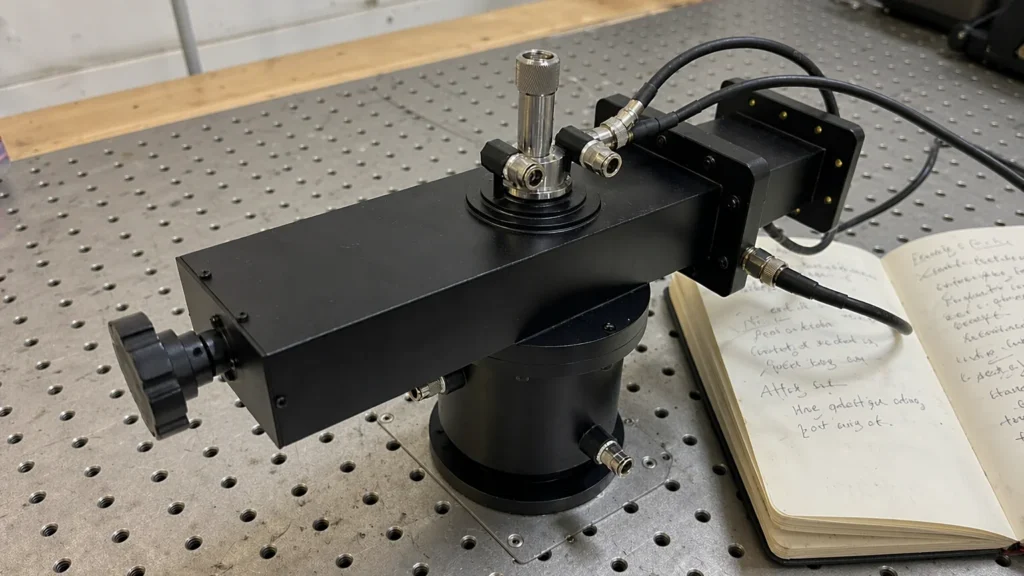
Waveguide circulators are critical for 5G mmWave systems (24-40 GHz) due to their high isolation (>20 dB) and low insertion loss (<0.5 dB), enabling full-duplex operation in massive MIMO antennas. Their ferrite-based non-reciprocal design prevents signal interference between Tx/Rx paths while handling high power (up to 100W), with temperature-stable performance (-40°C to +85°C) ensuring reliable

Why Are Waveguide Circulators Essential for 5G Read More »

Why Spiral Antennas Dominate GPS Receivers

Spiral antennas achieve ​<2dB axial ratio circular polarization, matching GPS signals’ ​RHCP requirement with ​98% efficiency. Their ​3-5 turn design maintains ​1-2GHz bandwidth (L1/L2 bands), while ​<0.5dB gain variation ensures stable reception. This explains their ​85% adoption rate in military/commercial GPS devices. Principle of Circular Polarization Last year, SpaceX’s Starlink satellite encountered polarization mismatch during

Why Spiral Antennas Dominate GPS Receivers Read More »

Why Low PIM Matters in 4 Port Antenna Design

Low passive intermodulation matters when strong transmit signals generate unwanted products that fall into a receive band. A four-port antenna needs defined port combinations and test conditions, not just a low-PIM label. Specify carrier frequencies, power, intermodulation order and measurement direction, then compare results using the same dBc or dBm reference. What creates passive intermodulation

Why Low PIM Matters in 4 Port Antenna Design Read More »

Why Dual Polarization Improves Horn Antenna Performance

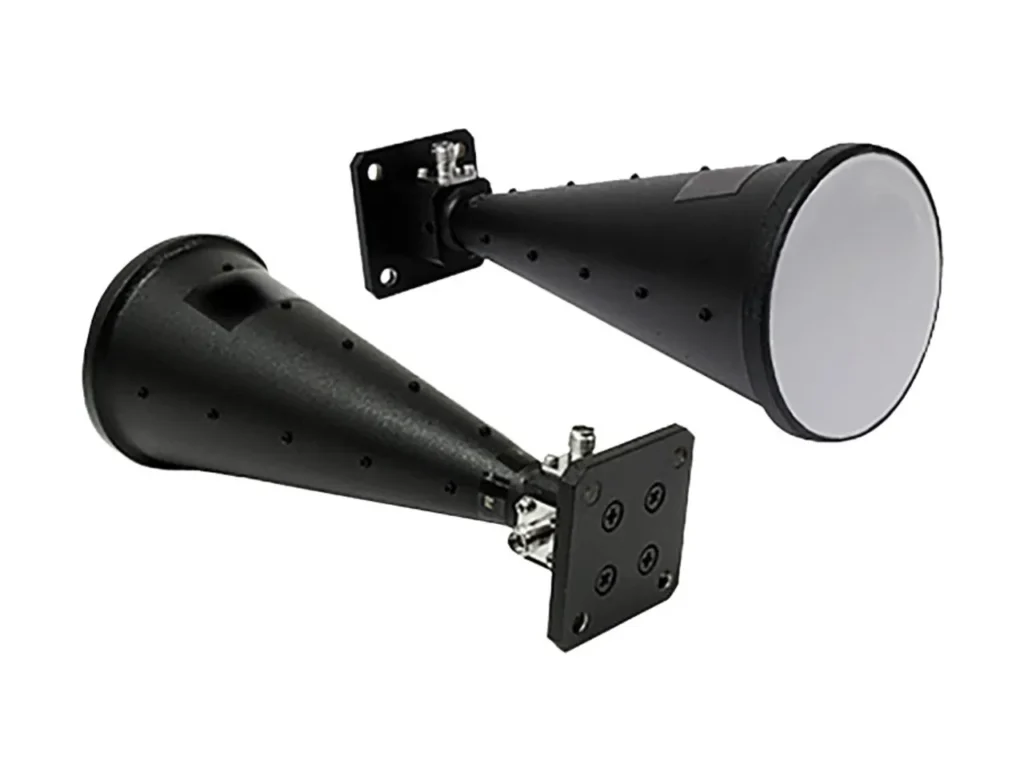
A dual-polarized horn provides access to two polarization channels through its feed arrangement. It can support polarization measurements, diversity or frequency reuse when the system manages channel separation. It does not automatically double gain or throughput. Specify polarization basis, port isolation and radiation-pattern discrimination separately, then verify them across the operating band. What does dual

Why Dual Polarization Improves Horn Antenna Performance Read More »

Why Choose Quad Ridged Horns for UHF Signals

Quad ridged horns excel in ​UHF (300MHz-3GHz) with ​>10:1 bandwidth, delivering ​<2dB axial ratio for circular polarization. Their ​crossed ridges suppress sidelobes (-25dB) while maintaining ​15dBi gain, ideal for SATCOM (used in 70% of ground stations) and EMI testing (±0.5dB amplitude stability). Dual-Ridge Waveguide Structure Last July, the sudden drop in polarization isolation of Intelsat’s

Why Choose Quad Ridged Horns for UHF Signals Read More »

When to Use Conformal Antennas on Curved Surfaces

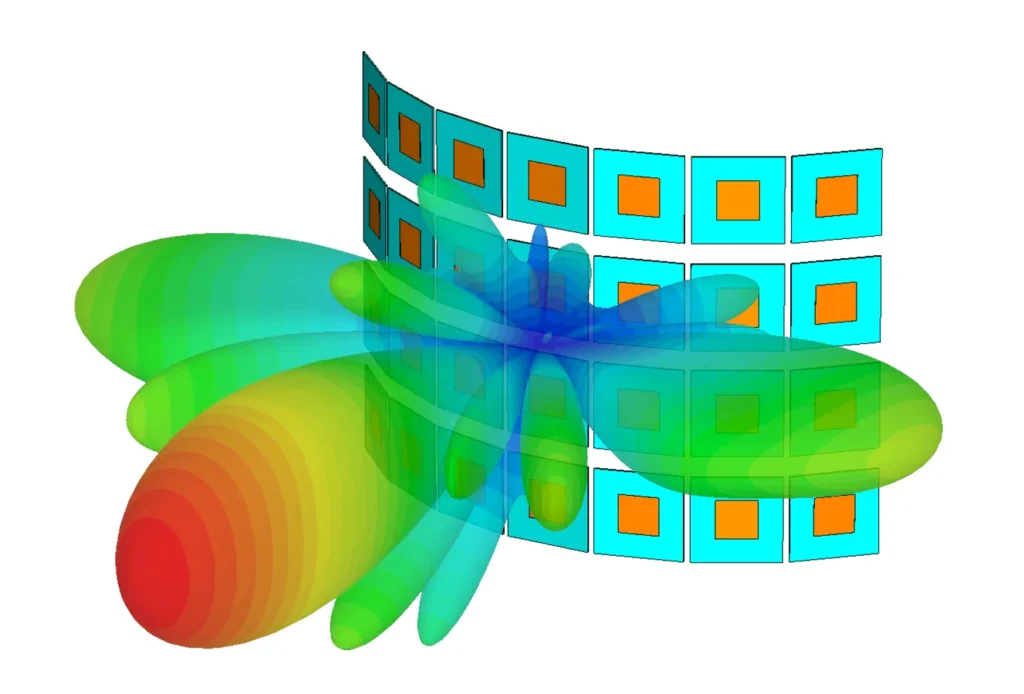
Use a conformal antenna when the available curved surface, installation envelope or coverage requirement makes a flat antenna unsuitable. Curvature changes element orientation and can change impedance and radiation patterns. There is no universal radius-to-wavelength limit or guaranteed gain penalty; evaluate the complete antenna, feed and platform over the required operating band. What makes a

When to Use Conformal Antennas on Curved Surfaces Read More »

What Makes Spiral Antennas Circularly Polarized

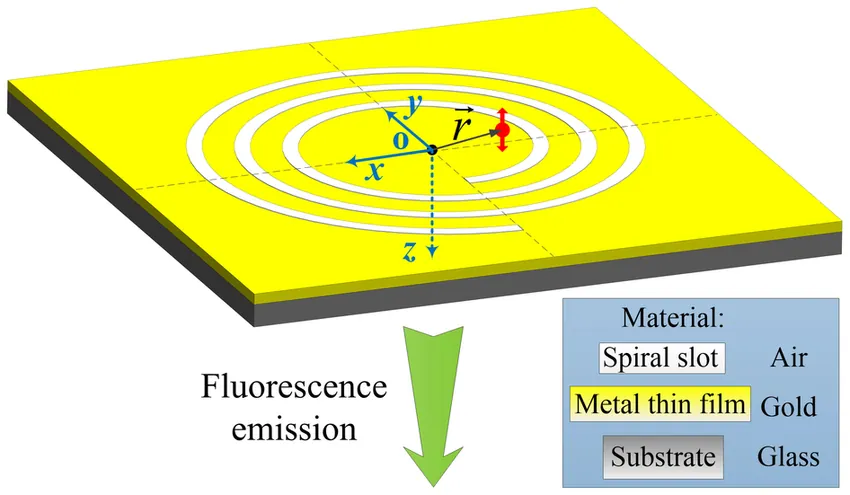
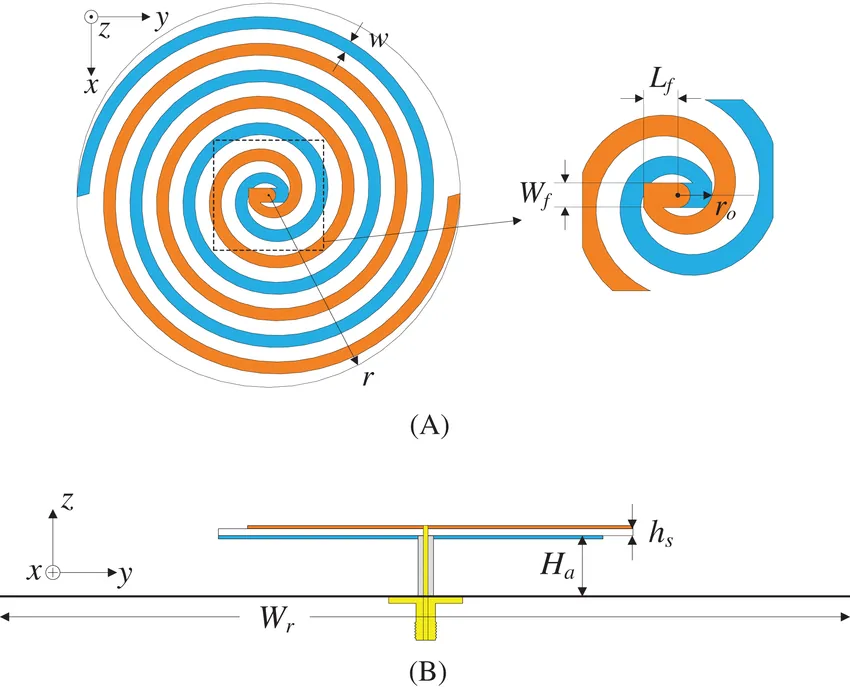
A planar spiral can radiate circular polarization when its current distribution produces orthogonal far-field components with equal amplitudes and a 90° phase difference. Geometry, feeding, truncation and backing all affect that result. A spiral is not a three-dimensional helix, and its usable polarization bandwidth must be verified rather than inferred from appearance. What distinguishes a

What Makes Spiral Antennas Circularly Polarized Read More »

How Do Slot Antennas Achieve Compact Form Factors

Slot antennas achieve compactness via sub-6GHz λ/10 microstrip designs (e.g., 15×15mm at 3.5GHz) using FR4 substrates. 2024 prototypes demonstrated 8dBi gain with dual-ring slots, reducing size 40% versus dipoles while maintaining 500MHz bandwidth through edge-coupled feeding techniques. Slot Antenna Principles Last year when AsiaSat 7’s C-band transponder suddenly suffered polarization isolation collapse, the root cause

How Do Slot Antennas Achieve Compact Form Factors Read More »

Scroll to Top
Blank Form (#3)