

What Frequencies Does Ku-Band Cover?
Ku-band generally covers 12–18 GHz. Compare U.S. satellite uplink, downlink and extended Ku ranges, and learn why some Ku reception starts below 12 GHz.
What Frequencies Does Ku-Band Cover? Read More »
Ku-band generally covers 12–18 GHz. Compare U.S. satellite uplink, downlink and extended Ku ranges, and learn why some Ku reception starts below 12 GHz.
What Frequencies Does Ku-Band Cover? Read More »
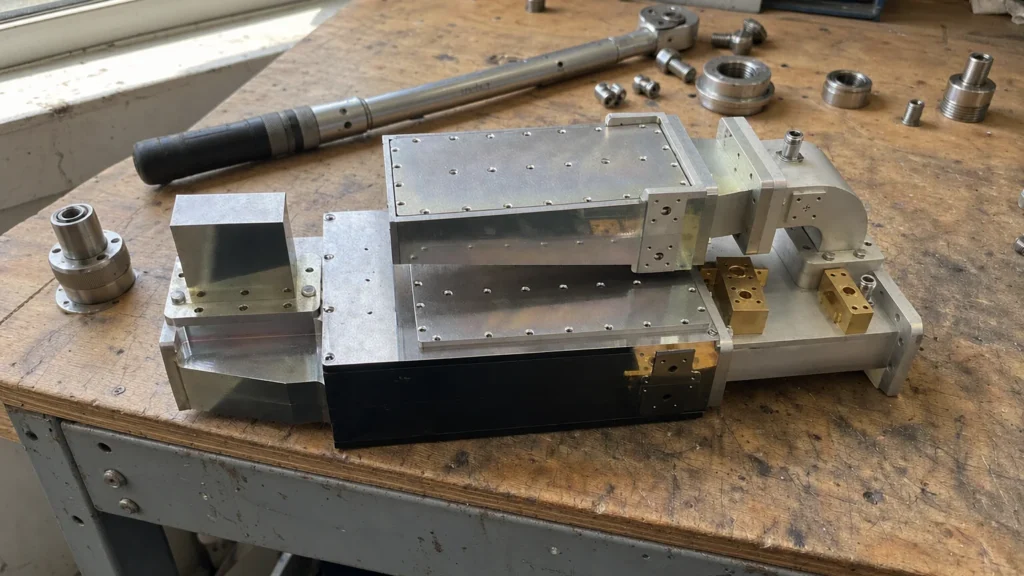
Compare L-band and S-band frequencies, antenna size, power, data rate and rain performance, with a worked 1.5 vs 3 GHz link-budget example.
How Do L-Band and S-Band Compare? Read More »

Convert GHz to wavelength in mm, cm or meters with exact free-space formulas, a checked conversion table, worked examples and spreadsheet calculations.
How Do You Convert GHz to Wavelength? Read More »
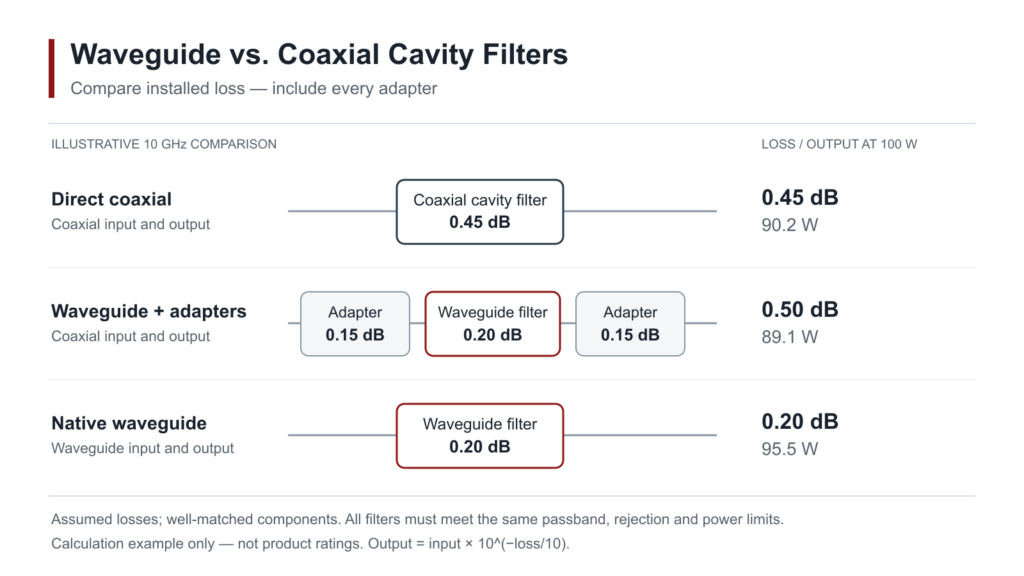
Choose a coaxial cavity filter when lower-frequency operation, compact packaging, and direct 50 Ω connections are the main constraints. Favor waveguide at microwave and millimeter-wave frequencies when low loss, power handling, or existing waveguide ports justify it. There is no universal GHz or watt threshold. Compare both designs at the same bandwidth and rejection requirements,
Waveguide vs. Coaxial Cavity Filters: Selection by Frequency, Power & Interface Read More »
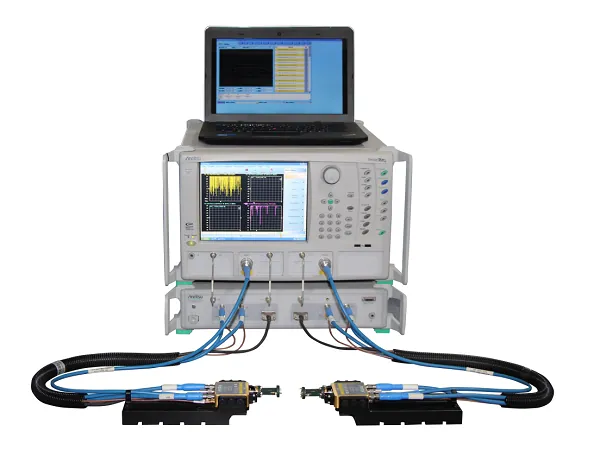
A waveguide component acceptance report needs six things: part identification, agreed limits, measured results, test conditions, calibration and uncertainty records, and an acceptance decision. Ask for results linked to the delivered serial numbers. An unlabeled plot or a model-wide specification sheet cannot replace those records. Use this checklist as a purchasing guide. Your drawing, purchase
What Should a Waveguide Component Acceptance Report Include? Read More »