C-band is used today in satellite TV distribution and business networks, US 5G and home broadband, and aircraft radio altimeters. [1] [2] Other uses include weather radar, Earth-observation satellites and fixed microwave links. [3] [4] [5]
Table of Contents
Satellite Broadcasting and Business Networks
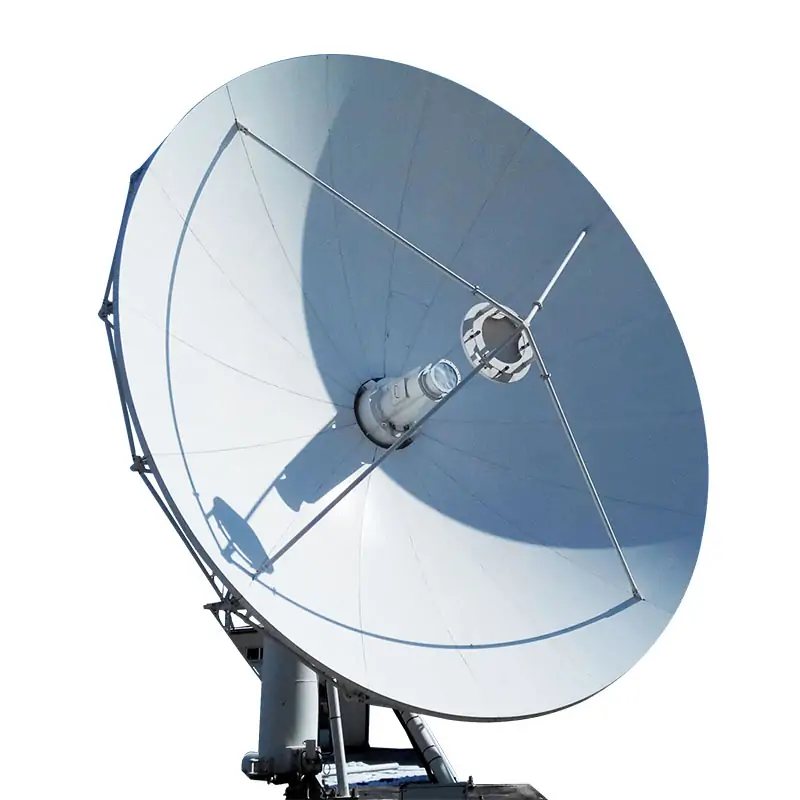
Broadcasters receive TV and radio programmes over C-band satellite links. Businesses use satellite terminals to connect their sites. Conventional C-band historically paired 3.7–4.2 GHz from satellite to Earth with 5.925–6.425 GHz from Earth to satellite. The channels available today depend on local spectrum rules. [1] [2]
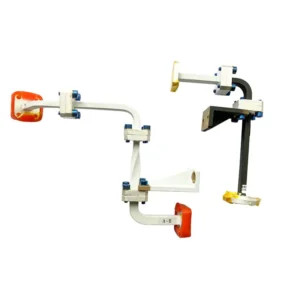
At the dish, antenna feed networks can combine feedhorns, orthomode transducers and filters. A check of Dolph Microwave’s published OMT specifications shows different frequency ranges under C-band model names, with common ports marked “TBD” (to be determined). For a satellite feed, match the transmit and receive ranges and port drawings, not just the band name.
US Mobile Networks and Home Broadband
The mobile industry’s “C-band” label includes frequencies below the broad 4–8 GHz engineering designation. These are different naming conventions, not one shared allocation for every application. [1] [2]
In the contiguous US, operators use 3.7–3.98 GHz for 5G mobile service and fixed wireless home broadband. This is a 280 MHz service band divided among licensees, not the bandwidth of an individual connection. [2]
The FCC’s October 9, 2026 clearinghouse notice confirms adopted rules for additional terrestrial use at 3.98–4.14 GHz in the contiguous US. It does not establish completed deployment across that block. [6]
Rainfall Monitoring on the Ground
In the UK, radar rainfall data supports emergency response and flood-risk planning. [7]
The Met Office’s dataset for Deanhill in Wiltshire, England, records a 5.3 cm radar wavelength and data delivery to the Nimrod system every five minutes. [3]
Earth Observation from Space
Sentinel-1 uses 5.405 GHz radar to monitor sea ice, oil spills, floods and ground movement. [4] It collects images through cloud and at night, when cloud cover or darkness can prevent visible-light imaging. [8]
Aviation and Fixed Links
| Application | Frequency | Use |
|---|---|---|
| Aircraft radio altimeters | 4.2–4.4 GHz (US allocation) | Radio altimeters measure an aircraft’s height above terrain and obstacles. [2] |
| US fixed microwave links | Examples: 5.925–6.425 and 6.525–6.875 GHz | Point-to-point microwave links carry communications between licensed fixed sites. [5] |
Discuss your C-band feed requirements
Send Dolph Microwave your transmit and receive bands, polarization, interfaces and power requirements for a configuration review.