The same drawing can produce different quotes because suppliers price different manufacturing routes, tooling, plating controls, and test coverage. One quote may cover dimensional compliance; another may include RF acceptance testing across the operating band. Even when the requirements match, existing fixtures, setup time, expected scrap, and production schedules can change the cost.
Compare the finished-part requirements and exclusions first, then the first-order and repeat-order totals. A lower unit price is only cheaper if it buys the same accepted parts.
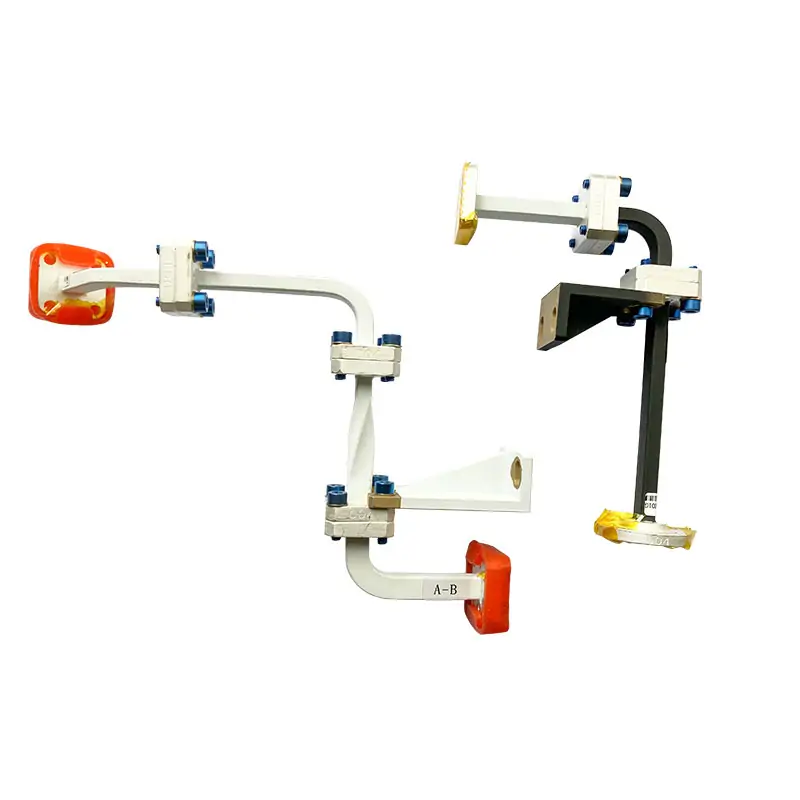
This article covers metal microwave and millimeter-wave waveguides. Prices are worked examples, not market rates or Dolph Microwave quotations. Tolerances, plating thicknesses, and RF limits are illustrative, not general specifications.
What the Unit Price Leaves Out
For 10 parts, a CNY 800 unit price becomes CNY 11,500 after tooling and testing. A CNY 1,050 quote that includes both totals CNY 10,500.
| Order of 10 Parts | Supplier A | Supplier B |
|---|---|---|
| Parts | CNY 8,000 | CNY 10,500 |
| One-Time Tooling | CNY 2,000 | Included |
| Agreed RF Testing | CNY 1,500 | Included |
| First Order Total | CNY 11,500 | CNY 10,500 |
| Repeat Order of 10 | CNY 9,500 | CNY 10,500 |
| Total for Both Orders | CNY 21,000 | CNY 21,000 |
The repeat-order figures assume Supplier A charges no further tooling fee and all other prices remain unchanged. Both suppliers meet the same drawing and acceptance requirements. Add freight, taxes, and any import charges on a consistent basis.
Why Identical Requirements Still Produce Different Prices
A supplier with suitable fixtures, stocked material, and a proven process may need less preparation than one starting from scratch. “Existing tooling” still needs checking: it must fit the current drawing revision, not just a similar part.
The manufacturing route also affects rework and scrap. A joined assembly may need distortion correction and another dimensional inspection before plating. A supplier’s price may allow for those steps even when they do not appear as separate charges.
Ask for the proposed process and included inspection stages rather than trying to infer quality from the price. A higher quote does not prove tighter control, and a lower quote does not prove that work has been omitted.
Finished Dimensions and Plating
Changing a tolerance from ±0.05 mm to ±0.01 mm reduces the full allowable range from 0.10 mm to 0.02 mm. It does not automatically multiply the price by five. The cost depends on the machining, fixturing, and measurement steps needed for that particular feature.
The quote should identify when critical dimensions are checked during manufacturing and inspection: before joining, after joining, or after plating. An inaccessible internal feature also needs an agreed verification method.
A uniform 5-micron coating on each of two opposing inner walls reduces the opening by 0.01 mm, ignoring material removed during surface preparation. If the drawing specifies the finished opening, a pre-plating measurement alone does not establish compliance. Specify the coating system, thickness limits, coverage, and inspection method.
RF Test Coverage
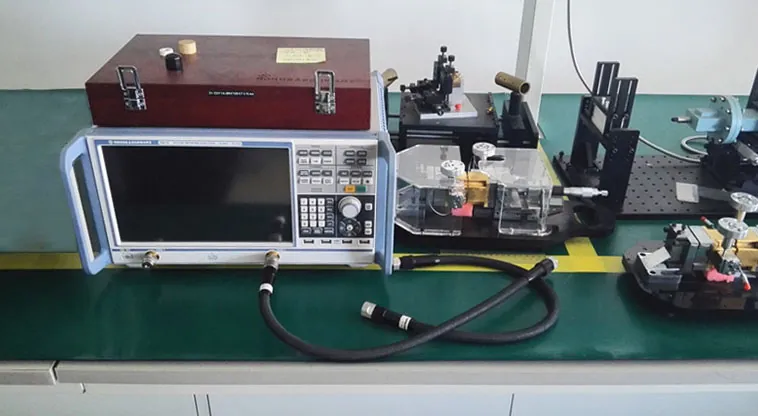
On a 20-piece order, testing one first article and testing all 20 units are different scopes. State the number tested and whether each serial number needs traceable results.
If the requirement is a return loss of at least 20 dB across 10–12 GHz, an 11 GHz measurement alone is insufficient. Agree the frequency points, calibration reference planes, and treatment of adapter effects. NIST’s rectangular-waveguide calibration research shows that test-port and interface imperfections affect measured scattering parameters.[1]
A 20 dB return loss corresponds to 1% reflected power; 30 dB corresponds to 0.1%.[2] Quotes based on those limits cover different requirements. Neither value alone establishes insertion loss or power-handling capability.
For results close to an acceptance limit, agree how measurement uncertainty will be handled. NIST’s WR15 calibration report documents how dimensional and calibration-standard uncertainties propagate into measured scattering parameters.[3] High-power, leak, and environmental tests need their own conditions and pricing.
Batch Size and Material Purchases
A CNY 3,000 one-time engineering charge adds CNY 300 per part to a batch of 10, but CNY 30 per part to a batch of 100. Give suppliers the actual order quantity and release schedule, not just the annual forecast. Ten releases of 10 parts may require repeated setup and inspection work.
If an order uses 2 meters of tube but the supplier must buy a 5-meter pack, confirm whether you are paying for consumption or the full purchase. If you pay for all 5 meters, agree who owns the remaining 3 meters and whether it will be reserved for your next order.
Tooling terms should cover ownership, storage duration, maintenance, and charges following a drawing change.
Construction and Delivery Terms
For custom waveguide assemblies, confirm seam locations, joining methods, and post-joining checks. A supplier may propose an alternative process, but any departure from the specified construction needs approval before production.
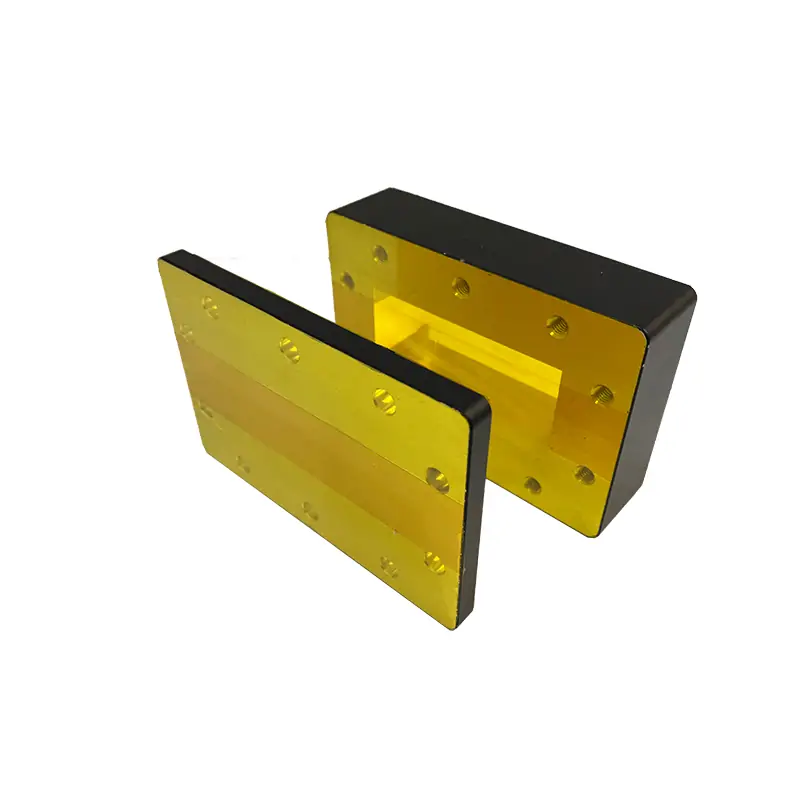
For EIA or IEC waveguide flanges, provide the full flange code, mating-face details, and gasket or alignment-pin requirements. A WR size alone does not define the complete interface.
To isolate a rush charge, ask the same supplier to price 15 and 10 working days against identical requirements. Both schedules need the same starting point, such as technical approval and deposit receipt, and the same end point. “Ready to ship” is not the same as delivery to your facility.
Evidence to Request Before Ordering
A redacted report from a comparable part can show what the supplier records, but it does not prove your part will pass. Use it to check the proposed documentation, then put the requirements for your order in writing:
- Dimensional report: drawing revision, feature references, measured values, and limits.
- RF report: part identification, test date, frequency sweep, measured results, and acceptance limits.
- Material and finish records: specified grade, coating requirements, and agreed traceability.
- Nonconformance terms: responsibility for rework, replacement, retesting, and return freight when parts fail the agreed requirements.
Supplier Quote Request
Please quote the attached drawing revision and batch quantities. Separate first-order and repeat-order totals, tooling, testing, freight, and taxes. Confirm compliance with the finished-part and test requirements. List every deviation, exclusion, and condition that could change the price or delivery date.